





Best cold-air kit for a ZO6

TECH Resident
Joined: Mar 2002
Posts: 847
Likes: 0
From: Kemah, Tx.
 Re: Best cold-air kit for a ZO6
 Jim Hall(Haltech) has a pretty cool new setup. It actually attaches to where the front lisence plate cover is and breathes thru that opening(the one that you cut). You then put a screen where the cover was. It looks pretty damn cool and supposedly works pretty damn well. Anyway, I have not heard the results from the peanut gallery but it should be interesting. BTW, I have a Blackwing.

Thread Starter
TECH Resident

Joined: Jul 2002
Posts: 782
Likes: 1
From: Left Of Self-Centered
Re: Best cold-air kit for a ZO6 Thanks for the info so far...I haven't heard of the Blackwing. Could you all provide more info on that as far as website, etc.. Also, can you all tell me some of the bolt-on's you have tried that gained horsepower results??? Thanks for the help!
TECH Resident
Joined: Mar 2002
Posts: 847
Likes: 0
From: Kemah, Tx.
Re: Best cold-air kit for a ZO6 Goblin, the ZO6 comes with all the "bolt ons" from the factory. All I am trying to say is that the intake side of things flows pretty well and the exhaust side of things flows pretty well. With that said, the intake(airbox) question has absolutely been beat to death. Vararam and the Zip tie mod(removing the lid off of the stock airbox) seem to yield the most on the dyno(10-15rwhp). The others not so much. All of the small bolton stuff(pulley, throttle body, etc.) will still help a little but some believe if you are gonna go to that trouble and expense to compile a long list of things that yield 5rwhp(or less), you may as well slap a cam in there and be done with it. Headers are the single best bolt on and usually will add about 20-25rwhp and maybe a smidge more with tuning. There are a few people on the other forums that have reached 400rwhp with boltons but their list is extensive and had me believing there is a cheaper and more efficient way of getting there(cam). A cam/headers/intake ZO6 should be around 400-425rwhp depending on the cam you choose. Add heads(fairly expensive) and you are in the 440-460rwhp range. Keep an eye on AlexWS6's thread that he just posted. He scored 389rwhp with headers/bolt ons/ tuning. He is pushing for that elusive 400rwhp without getting into the "oily" parts. Also, LS1speed is trying to do everything but a cam to gain power while retaining the stock idle. They have heads with no cam. Not the most efficient use of money but the effort is a good one if the cash doesn't bother you...they also own the shop. That then leads us to exhaust. Again, the stock Ti flows pretty damn well. Many of the systems that have shown a gain on regular C5s don't show much gain on the ZO6. Probably the only one I have seen gain in the 7-10rwhp range is Borla Stingers(I think the same could be said for the GHL). Most people change their exhaust on these cars for a different sound. As popular as the Stingers are, I don't like the noise they make....way too smooth. They almost sound like a Hollywood recording....just too "perfect" for me. I like more edge. The B&B PRTs have that edge but no power gain so I have a hard time justifying that expense and weight gain. I'm gonna stay with the stock Ti for now.
In summary, a full bolt on ZO6 will generally yield 390rwhp at the most. The heads and cam combinations are posted above.
The Donaldson Blackwing is just a filter that takes the place of the stock airbox. These generally add a decent amount of power to a stock C5 but since the ZO6 box breathes fairly well, it hasn't shown too much improvement on the dyno. It is probably the most popular filter on the C5 and that just transferred over to the ZO6. J-rod has a before and after for the Zip tie mod and he gained about 15rwhp. There are others that will argue they didn't gain much. I think some of J-rods gain was just the way he broke his car in....he drove it harder than most. Vararam has shown some gain on the Dyno as well. I'll shut up now. I hope this helps. I will be going the headers and cam route.
Disclaimer: Please realize that the information was gained from just my observations of other car owners. There is also some opinion mixed in there......your mileage may vary.
In summary, a full bolt on ZO6 will generally yield 390rwhp at the most. The heads and cam combinations are posted above.
The Donaldson Blackwing is just a filter that takes the place of the stock airbox. These generally add a decent amount of power to a stock C5 but since the ZO6 box breathes fairly well, it hasn't shown too much improvement on the dyno. It is probably the most popular filter on the C5 and that just transferred over to the ZO6. J-rod has a before and after for the Zip tie mod and he gained about 15rwhp. There are others that will argue they didn't gain much. I think some of J-rods gain was just the way he broke his car in....he drove it harder than most. Vararam has shown some gain on the Dyno as well. I'll shut up now. I hope this helps. I will be going the headers and cam route.
Disclaimer: Please realize that the information was gained from just my observations of other car owners. There is also some opinion mixed in there......your mileage may vary.
Trending Topics

6600 rpm clutch dump of death Administrator


Joined: Dec 2001
Posts: 4,983
Likes: 13
From: Texas
Re: Best cold-air kit for a ZO6 Folks have tested with the stock box and I saw IATs get down to ambient after about 4 miles of 30 MPH driving. On the higway they drop even faster. The faster the air get in, the faster the IATs drop.
Its interesting that you can see a vendor swap an airbox while still strapped to a dyno, sees a HP gains, and then says, see I just gains 15 HP. Hmm, drive off the dyno, allow PCM learning to complete, go back to the dyno & watch most of those gains disappear due to a rich condition caused by high LTFT. Some of the same vendors claim that high LTFT does not cause a rich condition at WOT. Which is incorrectdead wrong.
Someone I know was one of the members involved in the original Halltech T1-C thread. Jim Hall guaranteed 16 RWHP on the airbox. He swapped the box while still stapped to the dyno and got 8 RWHP. He drove off, put 25 miles on the car, and then went right back to the dyno. All 8 rwhp were gone. Jim also claimed a 30 degree delta between the stock box & his airbox which we have yet to see.
I found some posts from LG along this same line interesting.
Its interesting that you can see a vendor swap an airbox while still strapped to a dyno, sees a HP gains, and then says, see I just gains 15 HP. Hmm, drive off the dyno, allow PCM learning to complete, go back to the dyno & watch most of those gains disappear due to a rich condition caused by high LTFT. Some of the same vendors claim that high LTFT does not cause a rich condition at WOT. Which is incorrectdead wrong.
Someone I know was one of the members involved in the original Halltech T1-C thread. Jim Hall guaranteed 16 RWHP on the airbox. He swapped the box while still stapped to the dyno and got 8 RWHP. He drove off, put 25 miles on the car, and then went right back to the dyno. All 8 rwhp were gone. Jim also claimed a 30 degree delta between the stock box & his airbox which we have yet to see.
I found some posts from LG along this same line interesting.
The real hp of an engine doesnot change with any of these dyno techniques. Only the corrected hp of the dyno run changes.
The correct way to eliminate any of the error, and to find out what the real corrected hp of the engine is, would be to put the temp probe in the air stream directly in the air bridge.
The open hood/closed hood will change the intake air temp that is actually entering the engine, but it does not tell the Dyno weather station what that temp really is, for the correction factor to be adjusted by the computer to give a REAL sae corrected number.
The weather station (the box that tells the computer what temp to use to come up with the correction factor) is out side the car. Depending on where it is placed will change the correction factor. Thus the need for a seperate temp probe directly in the air stream.
Now, for any of the cold air systems that are out there, I will say that they are very good for power increases at speed. But you cannot simulate the speed that will increase the pressure in the intake, (even if only slightly) nor can they match the cool air effect that is eliminated on the dyno.
Hype is Hype, I have no dog in this hunt. But any system that takes air from the outside, rather than from under the hood will be better on the road than on the dyno. And any system that takes air from under the hood if run with the hood open, will show better on the dyno than on the road. Period.
We have seen almost a 12 rwhp increase when a Vortex Rammer is flipped over on the dyno, to take in air from other than the top of the radiator. The same "on the dyno" increase can be seen if we change from a Rammer to a Black Wing for the same reason.
The Rammer ( or any system like it) will suck HOT air from the radiator, and it will show less hp due to the fact that the engine is seeing HOTTER air, than the weather station. Which will skew the correction factor in a negative way.
Best way to dyno is to have a remote temp sensor for the Dyno Computer. Next best way is to have a dyno air filter/air bridge that will suck air from the room, to match the room air that the weather station is reading.
Summary: Intake air temp will affect the "Uncorrected" hp greatly. If the dyno cannot read the actual intake air temp, the correction factor is in error.
And any air intake/filter which takes air from outside in real road conditions will make more hp on the road than on the dyno.
Thanks
Lou G
The correct way to eliminate any of the error, and to find out what the real corrected hp of the engine is, would be to put the temp probe in the air stream directly in the air bridge.
The open hood/closed hood will change the intake air temp that is actually entering the engine, but it does not tell the Dyno weather station what that temp really is, for the correction factor to be adjusted by the computer to give a REAL sae corrected number.
The weather station (the box that tells the computer what temp to use to come up with the correction factor) is out side the car. Depending on where it is placed will change the correction factor. Thus the need for a seperate temp probe directly in the air stream.
Now, for any of the cold air systems that are out there, I will say that they are very good for power increases at speed. But you cannot simulate the speed that will increase the pressure in the intake, (even if only slightly) nor can they match the cool air effect that is eliminated on the dyno.
Hype is Hype, I have no dog in this hunt. But any system that takes air from the outside, rather than from under the hood will be better on the road than on the dyno. And any system that takes air from under the hood if run with the hood open, will show better on the dyno than on the road. Period.
We have seen almost a 12 rwhp increase when a Vortex Rammer is flipped over on the dyno, to take in air from other than the top of the radiator. The same "on the dyno" increase can be seen if we change from a Rammer to a Black Wing for the same reason.
The Rammer ( or any system like it) will suck HOT air from the radiator, and it will show less hp due to the fact that the engine is seeing HOTTER air, than the weather station. Which will skew the correction factor in a negative way.
Best way to dyno is to have a remote temp sensor for the Dyno Computer. Next best way is to have a dyno air filter/air bridge that will suck air from the room, to match the room air that the weather station is reading.
Summary: Intake air temp will affect the "Uncorrected" hp greatly. If the dyno cannot read the actual intake air temp, the correction factor is in error.
And any air intake/filter which takes air from outside in real road conditions will make more hp on the road than on the dyno.
Thanks
Lou G
LS1 Tech Stories
The Best V8 Stories One Small Block at Time

Amazing '71 Camaro Restomod Is Modern Muscle Car Under the Skin
Verdad Gallardo
6 Common C5 Corvette Failures and What's Involved In Repairing Them
Pouria Savadkouei
Retro Modern Bandit Pontiac Trans AM Comes With Burt Reynolds' Autograph
Verdad Gallardo
Top 10 Greatest Cadillac V Series Performance Models Ever, Ranked
Pouria Savadkouei
Top 10 Most Powerful Chevy Trucks Ever Made!

Hennessey's New Supercharged Silverado ZR2 Has 700 HP
Verdad Gallardo
Coachbuilt N2A Anteros Is an LS2-Powered C6 Corvette In Italian Clothes
Verdad Gallardo
Awesome K5 Blazer Restomod Comes With C7 Corvette Power
Verdad Gallardo
10 Camaros You Should Never Buy
TECH Resident
Joined: Mar 2002
Posts: 847
Likes: 0
From: Kemah, Tx.
Re: Best cold-air kit for a ZO6 J-rod, I understand what Lou is saying but I do not necessarily agree. The SAE correction factors are a "standard".....nothing more...a reference, if you will. And if you apply that standard equally to all cars, then that "standard"/reference is not being compromised.
 Re: Best cold-air kit for a ZO6
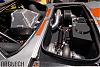
 We also custom make a cold air intake for the ZO6. It is a twin flow style and made from 4" steel tubbing w/ 2 K&N cone filters and powder coated color of choice. Used with the air bridge we have seen great gains. Just another factor to through in the mix.
Nate
Nate
6600 rpm clutch dump of death Administrator
Joined: Dec 2001
Posts: 4,983
Likes: 13
From: Texas
Re: Best cold-air kit for a ZO6 I agree flynlo, CF is CF. But the problem is that the air getting into your motor which is stagnant sitting on the dyno will skew your CF one way or the other. For instance, MTI's intake, and the Vortex draw from the bottom. on the dyno they will suck since hot air stagnates under the car. Once rolling, ambient airtemps will drop. So, which one is a fair test, a Vortex installed correctly, or one flipped over to dyno 10HP more.
SAme thing with shops who set their weather station in a hot area of the shop to skew the CF, cars dyno too high.
Its not whether they are appled correctly, its how they are measured to begin with.
SAme thing with shops who set their weather station in a hot area of the shop to skew the CF, cars dyno too high.
Its not whether they are appled correctly, its how they are measured to begin with.
Thread Starter
TECH Resident
Joined: Jul 2002
Posts: 782
Likes: 1
From: Left Of Self-Centered
Re: Best cold-air kit for a ZO6 First off, FLYNLO and everyone, thank you for the extensive replies, that really helped me with what I "needed" to know. I believe I am going to try the dual-cones as mentioned above w/ an air bridge. Also, FLYNLO, if I do the headers and keep the stock Titanium exhaust, do you know if it bolts right up or if I'll need to modify in anyway. Lastly, can some one give me a link or direction on the "zip-tie" trick? Once again thank you all! 
6600 rpm clutch dump of death Administrator
Joined: Dec 2001
Posts: 4,983
Likes: 13
From: Texas
Re: Best cold-air kit for a ZO6 I used the factory clamps. I simply removed the factory metal straps and replaced them with shorter one made from wire ties. This allows for consistent pressure to the filter frame.


TECH Resident
Joined: Mar 2002
Posts: 847
Likes: 0
From: Kemah, Tx.
Re: Best cold-air kit for a ZO6 Listen to J-rod on the zip-tie mod. I think he pioneered it.
As far as headers go and keeping the stock exhaust: If you get just headers only and retain the factory H-pipe and cats, then you would have to cut the stock manifolds off and weld the headers into place. Basically it is all one piece from manifolds back to the exhaust. Now what a lot of vendors offer is an x-pipe with hi flow cats or offroad pipes with no cats at all. This is the way I will be going if nothing more than to get rid of the exhaust "jingle" endemic to our cars. FLP has the most complete system out there....Comes with headers, X-pipe, off road pipes, and hi flo cats. They have had issues so that is why I may not go that route. TPIS just came out with an X-pipe and Random Teck cats to go with their headers...not a bad system.
To summarize my answer to your question: you can think of your exhaust manifold and h-pipe(with cats) as one piece and the catback as another. If you want to keep the factory H-pipe and cats, there will be cutting and welding involved. If you want to replace the h-pipe and cats, it becomes a "bolt-on" operation.
As far as headers go and keeping the stock exhaust: If you get just headers only and retain the factory H-pipe and cats, then you would have to cut the stock manifolds off and weld the headers into place. Basically it is all one piece from manifolds back to the exhaust. Now what a lot of vendors offer is an x-pipe with hi flow cats or offroad pipes with no cats at all. This is the way I will be going if nothing more than to get rid of the exhaust "jingle" endemic to our cars. FLP has the most complete system out there....Comes with headers, X-pipe, off road pipes, and hi flo cats. They have had issues so that is why I may not go that route. TPIS just came out with an X-pipe and Random Teck cats to go with their headers...not a bad system.
To summarize my answer to your question: you can think of your exhaust manifold and h-pipe(with cats) as one piece and the catback as another. If you want to keep the factory H-pipe and cats, there will be cutting and welding involved. If you want to replace the h-pipe and cats, it becomes a "bolt-on" operation.


