



EFI Fuel Pressure 101

Thread Starter
10 Second Club
iTrader: (4)
Joined: Feb 2004
Posts: 9,448
Likes: 0
From: Marysville, WA
 EFI Fuel Pressure 101
 I've been talking to Aeromotive about their regulator, to Racetronix about the Fuel Pump, Alky Cont about the Meth Kit & Kenne Bell about the BAP to make sure I'm not missing something. Anyway, one of the Aero techs replied to me with this little summary about fuel pressure that was so good I thought I'd share with y'all:
No problem. The operating basis most people have regarding a pump is that it somehow produces pressure that a regulator must then deal with. In fact, the pump produces flow, which if restricted, results in "back" pressure.
Creating and controlling pressure is an act of managing flow. A static regulator (normally used on carbureted cars, and has no return line) is a valve that is pressure activated to stop flow. By closing off the valve between the pump and the carb needle and seat, the valve prevents back pressure from rising too high.
When a static regulator is used in a flow system, the pump will ordinarily have it's own pressure control that relieves flow, called a bypass. Without a bypass in or on the pump, pump head pressure would rise until the pump/motor stalls or breaks. Smaller, carbureted, electric pumps have an internal bypass that relieves flow back to the inlet of the pumping mechanism, inside the pump body. Larger, racing pumps have an external bypass that relieves excess flow, and limits pressure, with a return line back to the tank.
With either an internal or external bypass, the pressure created by the pump bypass is called "line pressure". This pressure should, because the fuel in the line between the pump and the regulator is not moving, be between 2-3 times higher than the pressure between the regulator and the carburetor.
It's this "line pressure" that confuses people and makes them think the pump is "putting out pressure". Bypass regulators and dynamic fuel systems do not have a separate, or different line pressure. What you set the bypass regulator for under the hood is the system pressure throughout.
When you combine a fuel pump that does not have a bypass, with a regulator that does, in effect your creating a one pressure system that flows fuel the length of the line from pump to regulator, and the regulator is the restriction to the flow that creates the desired pressure.
By increasing the spring pressure, we're making it harder for fuel to escape on the bypass path in the valve, and if the pump is capable, back pressure will increase between the pump and the valve.
When you look at a performance EFI fuel system, the regulator is after the fuel rail, and the rail is then included in the high pressure flow loop between the pump outlet and the valve inlet. This puts the injector nozzle in an environment where there is constant fuel flow, at the desired pressure, available to be diverted into the intake runner when the injector nozzle is opened.
Hope that helps.
Amen brother.....
No problem. The operating basis most people have regarding a pump is that it somehow produces pressure that a regulator must then deal with. In fact, the pump produces flow, which if restricted, results in "back" pressure.
Creating and controlling pressure is an act of managing flow. A static regulator (normally used on carbureted cars, and has no return line) is a valve that is pressure activated to stop flow. By closing off the valve between the pump and the carb needle and seat, the valve prevents back pressure from rising too high.
When a static regulator is used in a flow system, the pump will ordinarily have it's own pressure control that relieves flow, called a bypass. Without a bypass in or on the pump, pump head pressure would rise until the pump/motor stalls or breaks. Smaller, carbureted, electric pumps have an internal bypass that relieves flow back to the inlet of the pumping mechanism, inside the pump body. Larger, racing pumps have an external bypass that relieves excess flow, and limits pressure, with a return line back to the tank.
With either an internal or external bypass, the pressure created by the pump bypass is called "line pressure". This pressure should, because the fuel in the line between the pump and the regulator is not moving, be between 2-3 times higher than the pressure between the regulator and the carburetor.
It's this "line pressure" that confuses people and makes them think the pump is "putting out pressure". Bypass regulators and dynamic fuel systems do not have a separate, or different line pressure. What you set the bypass regulator for under the hood is the system pressure throughout.
When you combine a fuel pump that does not have a bypass, with a regulator that does, in effect your creating a one pressure system that flows fuel the length of the line from pump to regulator, and the regulator is the restriction to the flow that creates the desired pressure.
By increasing the spring pressure, we're making it harder for fuel to escape on the bypass path in the valve, and if the pump is capable, back pressure will increase between the pump and the valve.
When you look at a performance EFI fuel system, the regulator is after the fuel rail, and the rail is then included in the high pressure flow loop between the pump outlet and the valve inlet. This puts the injector nozzle in an environment where there is constant fuel flow, at the desired pressure, available to be diverted into the intake runner when the injector nozzle is opened.
Hope that helps.
Amen brother.....
Originally Posted by WAHUSKER
When you look at a performance EFI fuel system, the regulator is after the fuel rail, and the rail is then included in the high pressure flow loop between the pump outlet and the valve inlet.
Even the LS6's and LS2's in Corvettes and CTSVs as well as all GTO's no longer fit into the nice style discussed. They have a single line to the fuel rail with the regulator on the rail. Naturally, sometimes one gets beyond what this will support and the retrofit will be used. Sometimes its just too hard to beat "old tech" (I say that with tongue in cheek) stuff thats works... lol
Originally Posted by WAHUSKER
Yeah, well we were talking about my 2000 Trans Am. Sorry man....I tried to post something techie just for you. 
please, continue to pay no attention to the broom in the corner

Joined: Nov 2001
Posts: 10,023
Likes: 6
From: LT1 land...the "409" of the 90s!
Originally Posted by CHarris
Unless we're talking about a 2004 and up truck... then the Pump and regulator are in the fuel tank and a dead head line runs to the injectors. This is why some go to a retrofit of the earlier "common" style you discuss.
Even the LS6's and LS2's in Corvettes and CTSVs as well as all GTO's no longer fit into the nice style discussed. They have a single line to the fuel rail with the regulator on the rail. Naturally, sometimes one gets beyond what this will support and the retrofit will be used. Sometimes its just too hard to beat "old tech" (I say that with tongue in cheek) stuff thats works... lol
Even the LS6's and LS2's in Corvettes and CTSVs as well as all GTO's no longer fit into the nice style discussed. They have a single line to the fuel rail with the regulator on the rail. Naturally, sometimes one gets beyond what this will support and the retrofit will be used. Sometimes its just too hard to beat "old tech" (I say that with tongue in cheek) stuff thats works... lol
Well they did say PERFORMANCE system not factory crap
this is the biggest reason I like a return style system

TECH Addict
Joined: May 2004
Posts: 2,564
Likes: 0
From: Bellingham/Edmonds, WA
While we are on the subject, what in-line fuel pumps are good for lots of power? Seems that two Walbro 255lph costs about the same as an Aeromotive 700HP EFI pump, but way less bling bling.
Originally Posted by Poik
While we are on the subject, what in-line fuel pumps are good for lots of power? Seems that two Walbro 255lph costs about the same as an Aeromotive 700HP EFI pump, but way less bling bling.
You also forgot way less NOISE.
Pretty much any external pump is going to make quite abit of noise, no matter how you wrap it.
Ryan K.
Trending Topics
Hey Mark, I'm assuming that your doing what this Tech has suggested and moving your regulator which is the restricting factor in your fuel setup correct? Your car should be running like a monster now then.........huh?
Or do you not have enough fuel pump?
Or do you not have enough fuel pump?
LS1 Tech Stories
The Best V8 Stories One Small Block at Time

Topdon ONE vs. Artidiag 800 BT2: Which is the Diagnostic Tablet For You?
Pouria Savadkouei
Gas Monkey Built a 6-Wheel Ferrari Testarossa With a Corvette LT4 Engine
Verdad Gallardo
7 Most Reliable High-Performance Engines GM Has Ever Built
Verdad Gallardo
Amazing '71 Camaro Restomod Is Modern Muscle Car Under the Skin
Verdad Gallardo
6 Common C5 Corvette Failures and What's Involved In Repairing Them
Pouria Savadkouei
Retro Modern Bandit Pontiac Trans AM Comes With Burt Reynolds' Autograph
Verdad Gallardo
Top 10 Greatest Cadillac V Series Performance Models Ever, Ranked
Pouria Savadkouei
Top 10 Most Powerful Chevy Trucks Ever Made!

Hennessey's New Supercharged Silverado ZR2 Has 700 HP
Verdad Gallardo There are a lot of interesting points one could say about Hydrodynamics and Fluid Flow...
You have 3 basic parts of any fuel system:
1. Fuel pump
2. Fuel Pressure Regulator
3. Fuel Supply Lines & Connectors/Adapters
Lets take a look at each, then we'll take a look at the different methods of arrainging them all together...
1. Fuel pump: 1st what kind of pump is it? Is it a Positive displacement pump or is it a turbine or vane pump? Lets figure out what that means. A positive displacement pump is a pump that always puts out the same flow based on its shaft RPM, no matter what. Or is it a vane type that as the output pressure increases, its flowrate decreases, with a constant shaft RPM. With an electric positive displacement pump, there is a maximum pressure that the pump will reach, before the electric motor "stalls", therefore limiting its pressure to some finite value. But this is based on the power of the electric motor. As the pressure increases, the motor will spin at a lower speed, producing less counter electro-motive force and the current draw will increase to the point of the motor failing or you blow the fuse. Assuming the fuel pump discharge is mearly capped and no internal bypass is present.
Now a vane type of pump on the other hand, if you capped the end, the pump may slow down a little, but its output pressure is limited to its "shut off head". This type of pump can run for a greater amount of time with its output capped.
So, if you were designing a high pressure EFI system which would you choose? If you were designing a system that ran at about 15-20 lbs (aka Throttle body injection) the answer would most likely be vane type. But if you were looking at 50-80psi, then the right answer is a positive displacement pump, and to classify it even better, a gerotor pump. So which type of pump do you think the Walbro 255/340 is? Its a gerotor...
As discussed above, if this type of pump had its discharge completely capped, it would sieze and fail electrically. So, to prevent this from happening, they are built with an internal bypass. Thus relieving the pressure built up at the disharge and allowing the motor to continue to rotate. For the Walbro 255/340 series, they will produce a maximum of 125 psi, however at that pressure the "output flow" is zero. As its all going through the bypass. And they take a marked reduction in out put flow any where above 70-90 psi (dropping from 49 gph to 35 gph over that range).
On to the next post!
You have 3 basic parts of any fuel system:
1. Fuel pump
2. Fuel Pressure Regulator
3. Fuel Supply Lines & Connectors/Adapters
Lets take a look at each, then we'll take a look at the different methods of arrainging them all together...
1. Fuel pump: 1st what kind of pump is it? Is it a Positive displacement pump or is it a turbine or vane pump? Lets figure out what that means. A positive displacement pump is a pump that always puts out the same flow based on its shaft RPM, no matter what. Or is it a vane type that as the output pressure increases, its flowrate decreases, with a constant shaft RPM. With an electric positive displacement pump, there is a maximum pressure that the pump will reach, before the electric motor "stalls", therefore limiting its pressure to some finite value. But this is based on the power of the electric motor. As the pressure increases, the motor will spin at a lower speed, producing less counter electro-motive force and the current draw will increase to the point of the motor failing or you blow the fuse. Assuming the fuel pump discharge is mearly capped and no internal bypass is present.
Now a vane type of pump on the other hand, if you capped the end, the pump may slow down a little, but its output pressure is limited to its "shut off head". This type of pump can run for a greater amount of time with its output capped.
So, if you were designing a high pressure EFI system which would you choose? If you were designing a system that ran at about 15-20 lbs (aka Throttle body injection) the answer would most likely be vane type. But if you were looking at 50-80psi, then the right answer is a positive displacement pump, and to classify it even better, a gerotor pump. So which type of pump do you think the Walbro 255/340 is? Its a gerotor...
As discussed above, if this type of pump had its discharge completely capped, it would sieze and fail electrically. So, to prevent this from happening, they are built with an internal bypass. Thus relieving the pressure built up at the disharge and allowing the motor to continue to rotate. For the Walbro 255/340 series, they will produce a maximum of 125 psi, however at that pressure the "output flow" is zero. As its all going through the bypass. And they take a marked reduction in out put flow any where above 70-90 psi (dropping from 49 gph to 35 gph over that range).
On to the next post!
Last edited by Ryan K; Aug 31, 2006 at 07:46 PM.
2. Fuel Pressure Regulators: There are pretty much two types of these also...Bypass and Dead-head types
a. Bypass type, first, this is the most common this type of fuel pressure regulator maintains line pressure by sensing the line pressure and when pressure gets too high, it opens/throttles a valve to "bleed off" the excess pressure. When pressure goes down, it shuts/throttles down the flow that was being "blead off". This keeps the pump always flowing.
b. Dead head type senses the pressure on the down stream side of the regulator and positions a valve to maintain that down stream pressure. in this case, as the down stream pressure rises, the valve is shut/throttled down. Conversly, when the pressure on the down stream side goes down the valve opens to allow more flow to the carb/efi system. In this senario the pressure going into the regulator is much higher than in the bypass system. The fuel pump is almost always at a shut off head. Not a good regulator to be used on a positive displacement type pump.
As you can see the most logical choise for a High pressure efi system is the regulator that allows the fuel to circulate, and doesn't make the pump run at shut off head. thats why our cars run the bypass type of fuel pressure regulator.
On to the next post!
a. Bypass type, first, this is the most common this type of fuel pressure regulator maintains line pressure by sensing the line pressure and when pressure gets too high, it opens/throttles a valve to "bleed off" the excess pressure. When pressure goes down, it shuts/throttles down the flow that was being "blead off". This keeps the pump always flowing.
b. Dead head type senses the pressure on the down stream side of the regulator and positions a valve to maintain that down stream pressure. in this case, as the down stream pressure rises, the valve is shut/throttled down. Conversly, when the pressure on the down stream side goes down the valve opens to allow more flow to the carb/efi system. In this senario the pressure going into the regulator is much higher than in the bypass system. The fuel pump is almost always at a shut off head. Not a good regulator to be used on a positive displacement type pump.
As you can see the most logical choise for a High pressure efi system is the regulator that allows the fuel to circulate, and doesn't make the pump run at shut off head. thats why our cars run the bypass type of fuel pressure regulator.
On to the next post!
3. Fuel Supply Lines & Connectors/Adapters:
Why bigger, really is better (to a point). As any fluid flows through a line, there is a resistance to the flow, this will cause the pressure to be higher at the source then at outlet, this loss in pressure is called head loss. As the flow rate goes up, this pressure drop will increase. This means the pressure at the injectors has gone down while the GPM capability has decreased due to the higher pressures at the pump. There are two ways of combatting this problem, reduce the head loss or by increasing pumping power. In order to reduce the head loss, you can increase the diameter of tubing, shorten the amount of tubing, and eliminate restrictions. Increasing the pumping power by raising pump voltage, or by adding additional pumps.
Next!
Why bigger, really is better (to a point). As any fluid flows through a line, there is a resistance to the flow, this will cause the pressure to be higher at the source then at outlet, this loss in pressure is called head loss. As the flow rate goes up, this pressure drop will increase. This means the pressure at the injectors has gone down while the GPM capability has decreased due to the higher pressures at the pump. There are two ways of combatting this problem, reduce the head loss or by increasing pumping power. In order to reduce the head loss, you can increase the diameter of tubing, shorten the amount of tubing, and eliminate restrictions. Increasing the pumping power by raising pump voltage, or by adding additional pumps.
Next!
Next is how its all aranged! This has to be "almost" the single most important aspect to a good performing fuel system.
Thers are SO many different ways that fuel systems can be aranged, I'll limit my self to talking about Positive displacement pumps, and bypass style regulators and how they can be setup.
First lets talk about how the fuel system is setup on a 98-02 F-body.

So, lets see what we have going on here... We have a gerotor pump and a bypass regulator. Thats the good part now for the bad. Its all about placement. There is a considerable amount of tubing between where the T-connector is and where the fuel rails are. Thus this system references the fuel pressure at the back of the car. In this system as flow demand increases, the actuall fuel pressure at the load (injectors) goes down due to head loss. basically what you see with F-bodys is exactly that, when the engine needs the most fuel, thats when you have the lowest pressure at the rails. This is not typically due to the pump being weak at all. In fact, if you had a fuel pressure gage connected at the T-connector, you would see a continuous pressure at that point. That is untill you actually run out of fuel pump flow capability. There can be as much as a 10 to 15 psi drop in fuel pressure from the T-connector to the fuel rail schrader valve.
Thers are SO many different ways that fuel systems can be aranged, I'll limit my self to talking about Positive displacement pumps, and bypass style regulators and how they can be setup.
First lets talk about how the fuel system is setup on a 98-02 F-body.
So, lets see what we have going on here... We have a gerotor pump and a bypass regulator. Thats the good part now for the bad. Its all about placement. There is a considerable amount of tubing between where the T-connector is and where the fuel rails are. Thus this system references the fuel pressure at the back of the car. In this system as flow demand increases, the actuall fuel pressure at the load (injectors) goes down due to head loss. basically what you see with F-bodys is exactly that, when the engine needs the most fuel, thats when you have the lowest pressure at the rails. This is not typically due to the pump being weak at all. In fact, if you had a fuel pressure gage connected at the T-connector, you would see a continuous pressure at that point. That is untill you actually run out of fuel pump flow capability. There can be as much as a 10 to 15 psi drop in fuel pressure from the T-connector to the fuel rail schrader valve.
Last edited by Ryan K; Aug 31, 2006 at 08:32 PM.
Thread Starter
10 Second Club
iTrader: (4)
Joined: Feb 2004
Posts: 9,448
Likes: 0
From: Marysville, WA
So, let's see a show of hands, how many of you techies are sitting around waiting for Ryan's next post? 1 here....Damn dude, WELCOME BACK!!!
To answer your question Jon, I have an Aero 1000 boost referenced regulator connected to the return line up by my fuel rails (on the fender). I have a steel braided line going from it to where it used to connect to the T in Ryans diagram. (trying to ref the regulator to the fuel rails' pressure instead of the line pressure)
And not to detract from anything Ryan posted, it was right-on. But remember boys n girls, when selecting fuel lines bigger is not always better. If you install lines that are too big, let's say 1" to be dramatic, then your pump cannot possibly keep the right pressure up against that large volume when you go WOT.
It's hydraulics, the fuel will get pushed back down the line into the tank. It's like trying to pump water out of a pond up 6' to your waterfall. Lay a 1 1/2" hose flat & you can pump 1000 gal p/hr. Raise the end of that hose up 6' & you are down to a trickle. But reduce the hose down to 3/4" & you are pumping out 100s of gallons again.
My point is, were I to install a larger fuel line (in case some of you were thinking that's my solution), I'd need a BIG Aero or dual Walbros like Ryan has for the volume I'm flowing. And I may end up there....I just don't have the time or money for that right now.
To answer your question Jon, I have an Aero 1000 boost referenced regulator connected to the return line up by my fuel rails (on the fender). I have a steel braided line going from it to where it used to connect to the T in Ryans diagram. (trying to ref the regulator to the fuel rails' pressure instead of the line pressure)
And not to detract from anything Ryan posted, it was right-on. But remember boys n girls, when selecting fuel lines bigger is not always better. If you install lines that are too big, let's say 1" to be dramatic, then your pump cannot possibly keep the right pressure up against that large volume when you go WOT.
It's hydraulics, the fuel will get pushed back down the line into the tank. It's like trying to pump water out of a pond up 6' to your waterfall. Lay a 1 1/2" hose flat & you can pump 1000 gal p/hr. Raise the end of that hose up 6' & you are down to a trickle. But reduce the hose down to 3/4" & you are pumping out 100s of gallons again.
My point is, were I to install a larger fuel line (in case some of you were thinking that's my solution), I'd need a BIG Aero or dual Walbros like Ryan has for the volume I'm flowing. And I may end up there....I just don't have the time or money for that right now.
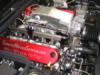
Yep, I agree on all the tech posted. this is why I changed from the return/reg at the tank, to reg/return at the rails. This was done with a '97 vette stock rails and reg (you guys can use these also). I now have rock steady 58psi at my highest demand. I did replace the stock gerator pump with a Racetronics and added the hot wire kit also. With bigger injectors thrown into the mix, a bigger n2o hit now can be had safely to try to get into the ten's with the big dogs. 

Robert
Robert
Last edited by Robert56@NitrousDirect; Aug 31, 2006 at 10:58 PM. Reason: Trying to get it to post
Thread Starter
10 Second Club
iTrader: (4)
Joined: Feb 2004
Posts: 9,448
Likes: 0
From: Marysville, WA
The weakest point left in my system is the stock regulator. I should have thrown the POS away when I replaced the pump. But at the time I didn't know it was as big of a problem as the stock pump when you run high HP setups.
And I should have said earlier that I like to compare fuel / water to electricity when I'm working on a problem. They aren't identicle, but they are very similar. You have voltage (pressure) current (flow) resistance (lines) loads (inj's) and output requirements (gas pedal turning the engine on).
Now if this was an electrical problem, and my voltage was dropping too low at the load & not supplying enough current, I would put a larger wire in the system. (e.g bigger fuel lines) Because that would tell me the resistance in the line was too high, and I was dropping my voltage across it instead of the load. But, with everything I've seen the car do I am convinced the line isn't the issue.
If the line was too small, I think the pressure would still be high, and the inj duty cycle would be thru the roof. But the duty cycle is fine UNTIL the pressure drops to 30 psi at max power. So I'm hoping feeding the pump more voltage will cure it.....tho I will have bigger lines, rails & pumps(s) eventually.
Obviously I still have much to learn about race cars.
And I should have said earlier that I like to compare fuel / water to electricity when I'm working on a problem. They aren't identicle, but they are very similar. You have voltage (pressure) current (flow) resistance (lines) loads (inj's) and output requirements (gas pedal turning the engine on).
Now if this was an electrical problem, and my voltage was dropping too low at the load & not supplying enough current, I would put a larger wire in the system. (e.g bigger fuel lines) Because that would tell me the resistance in the line was too high, and I was dropping my voltage across it instead of the load. But, with everything I've seen the car do I am convinced the line isn't the issue.
If the line was too small, I think the pressure would still be high, and the inj duty cycle would be thru the roof. But the duty cycle is fine UNTIL the pressure drops to 30 psi at max power. So I'm hoping feeding the pump more voltage will cure it.....tho I will have bigger lines, rails & pumps(s) eventually.
Obviously I still have much to learn about race cars.
Last edited by WAHUSKER; Sep 1, 2006 at 08:09 AM.
Originally Posted by WAHUSKER
I just don't have the time or money for that right now.
Isn't it a walbro? Well let me know If I can help you out. I'll give it to you for real cheap.
Let me know if it'll even work for you or solve your problem, and maybe I'll give it to you for a beer or two or a few bucks.
Thread Starter
10 Second Club
iTrader: (4)
Joined: Feb 2004
Posts: 9,448
Likes: 0
From: Marysville, WA
It won't help. I have a Racetronix (Walbro) 255/340L pump now. From what I've heard, when you go to dual pumps, you have to send your pump into Racetronix & let them mod it (as in 2 months delay). Or buy a new setup (1 month delay).

10 Second Club
Joined: Mar 2004
Posts: 1,491
Likes: 1
From: norfolk va
just run a big aromotive  will flow mor fuel han you would ever need.
Yes they are loud but you are building a race car
Mark i would call one of the sponsers who build big turbo systems and see what they sugest for a fuel system.
will flow mor fuel han you would ever need.Yes they are loud but you are building a race car
Mark i would call one of the sponsers who build big turbo systems and see what they sugest for a fuel system.
Thread Starter
10 Second Club
iTrader: (4)
Joined: Feb 2004
Posts: 9,448
Likes: 0
From: Marysville, WA
Wazzup Dog? How's that Euro-trash car treatin you? EPP suggests the big Aero pump system that Nasty sells, but it's over $1500. Hence the band aid for the rest of this year.....
EPP suggests the big Aero pump system that Nasty sells, but it's over $1500. Hence the band aid for the rest of this year.....