


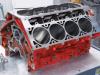

Dry decks.

Thread Starter
TECH Addict
Joined: Aug 2004
Posts: 2,866
Likes: 4
 Dry decks.
 I was reading about the 4 cylinder 4000bhp engine used in the car here,
http://www.turbomagazine.com/tech/02...gra/index.html
they say the engine is a dry deck. This got me thinking about the LS blocks and how hard people are pushing them these days. And would there be any advantage to designing a DRY BECK ls1 head and block package? you could still run water in the heads and block, but have them conected externally.
I know this is how engines used to be produced in the early 1940s and the early Merlin engines used in Spitfires and P51s used to run external water and oil lines.
Is there any disadvantages to this? Surely it would make for a MUCH stronger around the deck and would support the top of the liners better???? also lifting the heads wouldn't but such a masive problem....
What do you guys think????
Cheers
Chris.
http://www.turbomagazine.com/tech/02...gra/index.html
they say the engine is a dry deck. This got me thinking about the LS blocks and how hard people are pushing them these days. And would there be any advantage to designing a DRY BECK ls1 head and block package? you could still run water in the heads and block, but have them conected externally.
I know this is how engines used to be produced in the early 1940s and the early Merlin engines used in Spitfires and P51s used to run external water and oil lines.
Is there any disadvantages to this? Surely it would make for a MUCH stronger around the deck and would support the top of the liners better???? also lifting the heads wouldn't but such a masive problem....
What do you guys think????
Cheers
Chris.
same here,
i have been thinking about this for a long time, but my biggest concern are localised cooling hotspots
the norwood engine does not have that problem , as there is no coolant in the underblock at all
i have been thinking about this for a long time, but my biggest concern are localised cooling hotspots
the norwood engine does not have that problem , as there is no coolant in the underblock at all
I was reading about the 4 cylinder 4000bhp engine used in the car here,
http://www.turbomagazine.com/tech/02...gra/index.html
they say the engine is a dry deck. This got me thinking about the LS blocks and how hard people are pushing them these days. And would there be any advantage to designing a DRY BECK ls1 head and block package? you could still run water in the heads and block, but have them conected externally.
I know this is how engines used to be produced in the early 1940s and the early Merlin engines used in Spitfires and P51s used to run external water and oil lines.
Is there any disadvantages to this? Surely it would make for a MUCH stronger around the deck and would support the top of the liners better???? also lifting the heads wouldn't but such a masive problem....
What do you guys think????
Cheers
Chris.
http://www.turbomagazine.com/tech/02...gra/index.html
they say the engine is a dry deck. This got me thinking about the LS blocks and how hard people are pushing them these days. And would there be any advantage to designing a DRY BECK ls1 head and block package? you could still run water in the heads and block, but have them conected externally.
I know this is how engines used to be produced in the early 1940s and the early Merlin engines used in Spitfires and P51s used to run external water and oil lines.
Is there any disadvantages to this? Surely it would make for a MUCH stronger around the deck and would support the top of the liners better???? also lifting the heads wouldn't but such a masive problem....
What do you guys think????
Cheers
Chris.
fyi-i have an ls block that has a 3/4'' thick deck for support of the liners,we do have coolant through the deck but in the form of small drilled holes instead of the huge cast holes

TECH Regular
Joined: Feb 2006
Posts: 437
Likes: 2
From: Cleveland
That's a blast from the past. I was working at Batten's as the sales manager when Bob first started talking about the "Honda" and using a Batten 4v big block head on a 4 cylinder block. Back then, David Shih had the first 10 second fwd with his Silver Bullet CRX. We thought 4v sport compact was a good direction for CJ's and Bob's businesses, so "why not" show people their capabilities and build a 4000 horsepower Honda funnycar? CJ was a tremendously innovative guy, but what I liked best about his projects was "let's use the main diameter from this, the rod journal diameter from that, the rod length based on this, the piston needed to be this, the deck height was a derivative, etc.etc. Working there for that short time was a big part of my education in terms of designing combinations. Those billet 4v heads were gorgeous and I had the honor of owning both a 509 and 540ci b-4 v8 for a short time before I came to Wiseco. Nothing more intimidating awsum than the 4 cam bbc with it's multiple cogged blower belt front drive system. The 509 ended up in a Impala SS. Bob did a lot of work on that car as well.
http://www.hotrod.com/techarticles/i..._v8/index.html
http://www.hotrod.com/techarticles/i..._v8/index.html
Thread Starter
TECH Addict
Joined: Aug 2004
Posts: 2,866
Likes: 4
Do you see them being any advantage in running a dry deck? If someone could desing a system, that worked, would it be something you would be intrested in?
I was thinking more about the head sealing than anything else. be nice not to have to worry aboutpushing water at all. I know you guys have a system (dual o-ringing) that works REALLY well.
Cheers,
Chris.
Thread Starter
TECH Addict
Joined: Aug 2004
Posts: 2,866
Likes: 4
That's a blast from the past. I was working at Batten's as the sales manager when Bob first started talking about the "Honda" and using a Batten 4v big block head on a 4 cylinder block. Back then, David Shih had the first 10 second fwd with his Silver Bullet CRX. We thought 4v sport compact was a good direction for CJ's and Bob's businesses, so "why not" show people their capabilities and build a 4000 horsepower Honda funnycar? CJ was a tremendously innovative guy, but what I liked best about his projects was "let's use the main diameter from this, the rod journal diameter from that, the rod length based on this, the piston needed to be this, the deck height was a derivative, etc.etc. Working there for that short time was a big part of my education in terms of designing combinations. Those billet 4v heads were gorgeous and I had the honor of owning both a 509 and 540ci b-4 v8 for a short time before I came to Wiseco. Nothing more intimidating awsum than the 4 cam bbc with it's multiple cogged blower belt front drive system. The 509 ended up in a Impala SS. Bob did a lot of work on that car as well.
http://www.hotrod.com/techarticles/i..._v8/index.html
http://www.hotrod.com/techarticles/i..._v8/index.html
Mate thats a very nice looking BBC!

I hear that Nelson Racing Eangines are looking at doing a 4 valve per cylinder head. they want to get one of their TT engine sreving reliably to 9000rpm.
Cheers,
Chris.
TECH Regular
Joined: Feb 2006
Posts: 437
Likes: 2
From: Cleveland
I apologize for hijacking the thread. Beautiful engine, but sanctioning bodies threw up barriers every chance they got. As for Nelson, he's pretty cool and smart enough to get it done. We've got customers with ported s2000 heads flowing 370-400cfm on 3.504 bore sizes...would love to scale up one of those heads to fit on a 4.185 bore. I'm not big into 4v v engines simply because of the extra room required, but it would be a neat piece. One of my local friends and I are working on a 2.4L s2k engine, ported head with stock valves hit 350cfm, erl 89mm block, 12.5:1 pump gas, 62mm kinslers due later this week, nitrous with 4 dryshot nozzles. Looking for 330whp off the spray in a 2500lb car
Trending Topics
the reason why you push water is because there is too much cylinder pressure and it blows out the head gasket. yes if you have a dry deck you are not going to push water but the the cylinder pressure is still going to blow out the head gasket.
that being said, a dry deck block would be allot stronger and would allow you to upgrade to much thicker head studs to give more clamping force on the head to the block, but i do not see this working very well on a high hp street motor
that is a very nice looking BBC BTW
that being said, a dry deck block would be allot stronger and would allow you to upgrade to much thicker head studs to give more clamping force on the head to the block, but i do not see this working very well on a high hp street motor
that is a very nice looking BBC BTW
LS1 Tech Stories
The Best V8 Stories One Small Block at Time

7 Most Reliable High-Performance Engines GM Has Ever Built
Verdad Gallardo
Amazing '71 Camaro Restomod Is Modern Muscle Car Under the Skin
Verdad Gallardo
6 Common C5 Corvette Failures and What's Involved In Repairing Them
Pouria Savadkouei
Retro Modern Bandit Pontiac Trans AM Comes With Burt Reynolds' Autograph
Verdad Gallardo
Top 10 Greatest Cadillac V Series Performance Models Ever, Ranked
Pouria Savadkouei
Top 10 Most Powerful Chevy Trucks Ever Made!

Hennessey's New Supercharged Silverado ZR2 Has 700 HP
Verdad Gallardo
Coachbuilt N2A Anteros Is an LS2-Powered C6 Corvette In Italian Clothes
Verdad Gallardo
Awesome K5 Blazer Restomod Comes With C7 Corvette Power
Verdad Gallardo Thread Starter
TECH Addict
Joined: Aug 2004
Posts: 2,866
Likes: 4
some good points there elias. my thoughts where if the out and out drag guys are liking the dry decks and having success with them, could they be made to work on the street? How much power could a MLS headgasket take without the water/oil ways? How would the head react under very high cylinder presure(ie would it stay flatter than a normal head)?
how about running an O-ring right the way around all the liners? with a receiver groove that should stop the head gasket from blowing out......
what would your concerns be for a street engine? would it be localised hot spots or something else?
Cheers
Chris.
how about running an O-ring right the way around all the liners? with a receiver groove that should stop the head gasket from blowing out......
what would your concerns be for a street engine? would it be localised hot spots or something else?
Cheers
Chris.

https://ls1tech.com/forums/forced-in...l#post12771398
this seems to be a better idea for NOT pushing water....than trying to run a block that would sacrifice the 2nd mortgage on the house
not my cup of tea, but interesting nonetheless
this seems to be a better idea for NOT pushing water....than trying to run a block that would sacrifice the 2nd mortgage on the house
not my cup of tea, but interesting nonetheless
anybody try to upgrade to thicker head studs on a factory block ? that should give you some more clamping force, but i have no idea if the block has the meat to accept it.

Thread Starter
TECH Addict
Joined: Aug 2004
Posts: 2,866
Likes: 4
https://ls1tech.com/forums/forced-in...l#post12771398
this seems to be a better idea for NOT pushing water....than trying to run a block that would sacrifice the 2nd mortgage on the house
not my cup of tea, but interesting nonetheless
this seems to be a better idea for NOT pushing water....than trying to run a block that would sacrifice the 2nd mortgage on the house
not my cup of tea, but interesting nonetheless
The idea of this setup is you dont have to worry about this. you will NEVER push water full stop. hopefully the head gasket will be stronger as there aren't holes cut in it! lol
On the cost i cant see it costing more than the RHS, Warhawk or LSX blocks. Bascially it would need to be designed into the casting. there would obviously have to be provisons for external water and oil ways again design into the block/heads.
Cheers
Chris.
LSX block is $2k. Warhawk and RHS are over $4k. That is a big price difference. Im sure that trying to use a dry deck would run a pretty good chunk of change.
And of course there is more than one way to skin a cat. But Maybe you missed the point of there is no reason to think in such a price bracket for JUST the street unless you have a huge budget to build from. You could use the Dart block (which not alot of people think about) and just like Burger King have it your way.
I think you missed a good point earlier in the thread about not pushing water because no water would be at the deck then, you would just blow head gaskets. Trading one for the other doesnt seem like a good idea. I would rather JUST blow a head gasket, but I have seen and we have built some pretty potent FI/nitrous engines that are run on the street every day out of most of the LS blocks, and they do not have a problem with pushing water or blowing head gaskets. The only thing they have problems with is affording new tires every 2 months.
It really comes down to how well the money is spent and the quality of the parts/work, not how much and the rarity of them. One of the sponsors on here build a turbo engine with the newer Callies C series compstar crank to about 800 HP. It is an inexpensive crank, so people think it is junk. I guess some people just WANT to spend more money regardless.
And of course there is more than one way to skin a cat. But Maybe you missed the point of there is no reason to think in such a price bracket for JUST the street unless you have a huge budget to build from. You could use the Dart block (which not alot of people think about) and just like Burger King have it your way.
I think you missed a good point earlier in the thread about not pushing water because no water would be at the deck then, you would just blow head gaskets. Trading one for the other doesnt seem like a good idea. I would rather JUST blow a head gasket, but I have seen and we have built some pretty potent FI/nitrous engines that are run on the street every day out of most of the LS blocks, and they do not have a problem with pushing water or blowing head gaskets. The only thing they have problems with is affording new tires every 2 months.
It really comes down to how well the money is spent and the quality of the parts/work, not how much and the rarity of them. One of the sponsors on here build a turbo engine with the newer Callies C series compstar crank to about 800 HP. It is an inexpensive crank, so people think it is junk. I guess some people just WANT to spend more money regardless.
Thread Starter
TECH Addict
Joined: Aug 2004
Posts: 2,866
Likes: 4
John , thanks for the imput mate. I guess i wasn't putting it across very well. lol i was just trying to think of ways to make more power out of the LS platform. over the last 5 years pople have probalby doubled the amount of power that can be reilably prodcued using these engines. Just trying to think about way to build/design/make these engines hold EVEN MORE power than they do now.
I wasn't trying to put down anyone or any company or the solutions they come up with. As i said above i think VA speeds Double O-ring setup works very well and has been tested to insane power levels. even more impresive when you realise they are using GM ally blocks! lol and there have been more than a handfull of people on here say that ally blocks wont hold 1000bhp let alown 1700bhp! lol
I dont think that many people would NEED this at the moment. and like you say if you are at the level where is is neded then maybe the DART block would be the best idea anyway! and it wouldn't be that big a chunk of the massive amount of money you would be investing.
Cheers,
Chris.
I wasn't trying to put down anyone or any company or the solutions they come up with. As i said above i think VA speeds Double O-ring setup works very well and has been tested to insane power levels. even more impresive when you realise they are using GM ally blocks! lol and there have been more than a handfull of people on here say that ally blocks wont hold 1000bhp let alown 1700bhp! lol
I dont think that many people would NEED this at the moment. and like you say if you are at the level where is is neded then maybe the DART block would be the best idea anyway! and it wouldn't be that big a chunk of the massive amount of money you would be investing.
Cheers,
Chris.
Well, opposed to the normal street build, the dart block is on the high tax bracket end of the spectrum. the LSX block is the most affordable of the bigger CI stuff at $700 less than the LS7 and the least expensive of the 6 bolt blocks. I am sure you would not need the 2500 HP that they would be tested to on the street. Nor could you use it in any form but shock and awe.
You appear to want something for the street, but then it seems you are more oriented towards wanting something akin to a high budget full on race build. You did not hurt my feelings, but it appears you are stuck on this notion and are dismissing some of the other things presented even though they will get you to the end you are persuing. The only things that are different are the means and ways.
At that level, pushing water or blowing head gaskets would be the least of your concerns. Paying the michelin man would be taxing enough. Or getting the vehicle certified to run at a track (safety).
There are alot of good suggestions that are more cost effective than looking at a (somewhat) exotic block like what you want. Obviously you want that though and there is no other way around it.
Keep us updated of the progress. Pictures are worth more than all the words you can type on a forum though.
You appear to want something for the street, but then it seems you are more oriented towards wanting something akin to a high budget full on race build. You did not hurt my feelings, but it appears you are stuck on this notion and are dismissing some of the other things presented even though they will get you to the end you are persuing. The only things that are different are the means and ways.
At that level, pushing water or blowing head gaskets would be the least of your concerns. Paying the michelin man would be taxing enough. Or getting the vehicle certified to run at a track (safety).
There are alot of good suggestions that are more cost effective than looking at a (somewhat) exotic block like what you want. Obviously you want that though and there is no other way around it.
Keep us updated of the progress. Pictures are worth more than all the words you can type on a forum though.

FormerVendor
Joined: Dec 2005
Posts: 250
Likes: 1
I can say that we've been there, done that in 4 cylinders, V-6's and LS engines for dedicated drag cars. When you have 1000 WHP 4 cylinders(10 bolts per head), 1500HP v-6's (8 bolts per head) there really isn't any chance of keeping the head from flexing, so we seal the deck and head and route the water externally. Not for a street car unless you like buying expensive heads often because they need the water to allow the steam to escape and direct water feed to the valves for extended driving especially on the LS. The ERL website shows where we've been turning the open deck 4 cylinders into closed deck blocks with an insert for a long time, but allow the water to pass through.
All configurations have been tested over the years especially the IRL and F1, so not much is new from 2 & 3 o-rings to J- channels with nitrogen o-rings. I would say the pyramid rings would scare me as the sharp edge cutting into the head creates a stress point for the head to crack.
The impressive thing to me is Mike Brown running the NMCA/LSX real street with our block and doing the street cruise then 3 hot laps in a car that won the drag radial class running 7.4X's and has went 202 MPH on the same engine. That's quite a "street car" and water has to pass through or you would ruin the heads driving it that long.
All configurations have been tested over the years especially the IRL and F1, so not much is new from 2 & 3 o-rings to J- channels with nitrogen o-rings. I would say the pyramid rings would scare me as the sharp edge cutting into the head creates a stress point for the head to crack.
The impressive thing to me is Mike Brown running the NMCA/LSX real street with our block and doing the street cruise then 3 hot laps in a car that won the drag radial class running 7.4X's and has went 202 MPH on the same engine. That's quite a "street car" and water has to pass through or you would ruin the heads driving it that long.
Thread Starter
TECH Addict
Joined: Aug 2004
Posts: 2,866
Likes: 4
John, think we have our wires crossed again.  I am not after building a dry deck engine! I know there are, at the moment, much cheaper and more effective ways to make massive power. Also I would NOT be prepared to put the time and money into R&D'ing something like this. I would much rather go for a 'off the shelf' combo that has been tried and tested time and time again.
The whole point of this thread, and why it was posted in the advanced section, was to talk about the idea of dry decks and see what people thought of them. Obviously in VERY VERY high hp race applications they are useful and they do work. I was just trying to learn more about this method and about the downsides and understand 'IF' they could be adapted to work for the street.
Sorry for not putting this across very well. lol
Carl, thanks very much for sharing you knowledge. Do you think there could be a way of simply duplicating the internal water and oil ways but externally? Just thinking that that would still allow plenty of coolant to run through the head but you could keep the deck dry.... I think I have seen something like this in Skyline engines. They tap into the waterways to force the water to circulate around what would otherwise be hot spots.
I'll try and get some more info on how the early WW2 engines did it. Not sure if they where dry deck but they definitely had external water and oil ways.
Cheers,
Chris.
I am not after building a dry deck engine! I know there are, at the moment, much cheaper and more effective ways to make massive power. Also I would NOT be prepared to put the time and money into R&D'ing something like this. I would much rather go for a 'off the shelf' combo that has been tried and tested time and time again.The whole point of this thread, and why it was posted in the advanced section, was to talk about the idea of dry decks and see what people thought of them. Obviously in VERY VERY high hp race applications they are useful and they do work. I was just trying to learn more about this method and about the downsides and understand 'IF' they could be adapted to work for the street.
Sorry for not putting this across very well. lol
Carl, thanks very much for sharing you knowledge. Do you think there could be a way of simply duplicating the internal water and oil ways but externally? Just thinking that that would still allow plenty of coolant to run through the head but you could keep the deck dry.... I think I have seen something like this in Skyline engines. They tap into the waterways to force the water to circulate around what would otherwise be hot spots.
I'll try and get some more info on how the early WW2 engines did it. Not sure if they where dry deck but they definitely had external water and oil ways.
Cheers,
Chris.
OK. Well in answer to maybe an actual question that may pop up.....the dart billet block would run anywhere from 11-14k depending on what you wanted. Lead time is about 12 weeks.
Proceed with your investigation.. I thought the whole purpose of this thread was to cure your interest in it and because you were looking at one. That appeared to be your point. But as you can tell, the total outcome of the project is only reliant upon how much money you want to spend. And the idea of the dry deck is probably best associated with "race only". And not the average person's idea of it.
I think of it like the same idea that people have when they buy the "race" pump from meziere when going with an elec water pump. It pumps less GPM than the street version for a reason. And I have seen them (the race version) perform way less than stellar on the street also. This confuses alot of people. But they should know, sometimes you need to draw a line between what an actual race car is and what a street car is that gets raced.
Proceed with your investigation.
. I thought the whole purpose of this thread was to cure your interest in it and because you were looking at one. That appeared to be your point. But as you can tell, the total outcome of the project is only reliant upon how much money you want to spend. And the idea of the dry deck is probably best associated with "race only". And not the average person's idea of it.I think of it like the same idea that people have when they buy the "race" pump from meziere when going with an elec water pump. It pumps less GPM than the street version for a reason. And I have seen them (the race version) perform way less than stellar on the street also. This confuses alot of people. But they should know, sometimes you need to draw a line between what an actual race car is and what a street car is that gets raced.
Last edited by Beau@SDPC; Jan 22, 2010 at 08:42 AM.
Thread Starter
TECH Addict
Joined: Aug 2004
Posts: 2,866
Likes: 4
Thanks john. Yeah im getting the idea that this is a bit far fetched at the moment! lol
I guess the race guys have to do whatever it takes to get the power they want. Street, or even ameture racing, is alot diffrent and i fully understand that.
Cheers
Chris.
I guess the race guys have to do whatever it takes to get the power they want. Street, or even ameture racing, is alot diffrent and i fully understand that.
Cheers
Chris.