


Crankshaft bob weights & radius


Thread Starter


Joined: Jan 2002
Posts: 4,069
Likes: 74
From: Casselberry FL
 Crankshaft bob weights & radius
 Stumbled across this in another forum... I was curious what cranks for the LSx motors are similar to what he describes, or what would be involved in getting a crank to have those features?
Jim
Also, its cost prohibitive for an OE to do things like cut down bobweights, which gives insane gains. The crank has pretty much the same weight, but the weight is 1" of radius closer to center. An engine with this kind of crank practically explodes from idle to wot. On our chassis dyno, a dirt track car went from 40-120mph in under 2 seconds. The engine dyno session with this motor is the coolest thing ive ever seen.
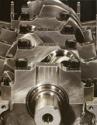
When you add weight to balance the crank, you want that weight as far away from the centerline as possible, as it's effect diminishes as the weight get closer to the centerline of the mains, so with smaller counterweights, more weight would be added than if the counterweights were larger.
Not to mention, as you cut down the counterweights, it moves the point where the crank needs to have weight added or removed in the counterweight. This can make things a little tricky.










