When you click on links to various merchants on this site and make a purchase, this can result in this site earning a commission. Affiliate programs and affiliations include, but are not limited to, the eBay Partner Network.
I asked TransGo tech about the AFL spring and hole a long time ago. Their statement was the AFL bore gets a little worn and AFL oil is reduced. The white spring is used to increase AFL oil, but it creates an imbalance in the valve. It is wound backwards of the OE AFL spring to prevent the springs from binding on each other. The larger hole floods that part of the circuit and stops the imbalance.
I don't know if it's 100% true or not. It's sounds good and I'm not in a position to argue the point...
Mark Puccinelli of Race Winning Brands (now) worked for TransGo for many years (1984-2020). He worked with Gil Younger personally. He as a face book page You may be able to get the real answer from him. He is also a member of "The Transmission Brotherhood" Facebook page.
It's worth a shot...
This idea is so outdated for 2023.
Good we have oversized AFL valves now. Plug and play with a perfect leak control in most cases.
I dont know if its legal to post link here but The best bang for buck AFL Solution
Installed a few of these. They are so high quality.
Another valueable info i learned here
Maybe I'm thinking like a plumber (which I'm not)
How does hole size effect pressure?
I can see it regulating pressure rise and fall via flow, but not pressure.
If this were true there would be no such thing as a fuel pressure regulator, there would just be different size orifices you would put in the fuel line. Another example would be a hole in your tire. .062 or .500, the air pressure will still go from 45 psi to 0 if hole size mattered it would leak down to a given pressure then stop leaking.
If there is a leak past the AFL valve the hole size isn't going to change the pressure it will change the flow going through the leak which may maintain the pressure but it's not going to increase it.
go install a .125 restrictor jet in your fuel supply line and let me know if it alters pressure or not.
The hole does more than just regulate pressure. It helps regulate response rate, via somewhat of a dampening effect. It helps keep the rest of the circuit charged with oil and not reduce the overall system.
You've gotta remember, everything in a transmission is a leak. Everything.
Valves all leak to some extent. any sealing ring with a gap will leak. Most pistons or drums have a small bleed orifice in them. etc
The drawings and pictures and diagrams make it all seem like a perfect system but that's not the reality
go install a .125 restrictor jet in your fuel supply line and let me know if it alters pressure or not.
Go out to your garden hose and install a gauge on the end. Then cut it and splice a .125 restrictor between the hose bib and gauge and tell me if the gauge pressure changes. Your example above and my example doesn't really apply to how pressure works in a transmission.
Well they both will if you decide to flow water out of the hose while reading that pressure. The whole point of an analogy is to simplify a concept to help breed understanding.
speaking of transmission fluid, if you have a 200 psi line pressure circuit feeding into another circuit via a .093 hole
How big do you think the hole would need to be after that .093 bleed to show a near 0 condition in pressure between the holes
hint... if you have a .093 in and .093 out...you'll build pressure between those orifices.
Wanted to say that the rebuilt worked perfectly . i have been driving it for about 7 months now with about 25k+ miles since then.
So if anyone is planning on rebuilding their 2008 Silverado 4L60e, these are the final separator plate hole size diameter I went with:
Tip: The Corvett Servo does add quite the kick in second gear - so if that is not to your taste might want to leave it stock. Personally, I like the sound it makes when it kicks into second and the looks from people as I speed down the road.




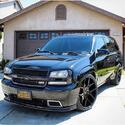





 . i have been driving it for about 7 months now with about 25k+ miles since then.
