

1973 RS Camaro LSX Swap






Man don't I wish....maybe eventually though  . I guess I neglected to say in my earlier post that one of the smaller packages in that big cardboard box is a jet kit to jet this thing down a bit. The stock jetting that comes with the Big Shot kit STARTS OUT at 190hp and goes up from there so I needed some "baby" jets to get me started at a more realistic point. So I'll be starting out with a 100hp hit and I hope to end up at a 150 hit. That should do me until I get greedy.
I only bought this big of a kit so I would have something to grow into should I ever put together a forged bottom end and wanna get buck wild with the stuff. Plus the Big Shot plate more efficient (better atomization) than the plate that comes with the Super Power Shot and Cheater kits. And this kit also has great solenoids as well (Cheater fuel and Super Pro Shot nitrous), which will make me feel better when I start running a progressive controller.
But for now I'm counting on my suspension to be able to hook whatever I throw at it because Santa couldn't afford the progressive controller just yet.....
. I guess I neglected to say in my earlier post that one of the smaller packages in that big cardboard box is a jet kit to jet this thing down a bit. The stock jetting that comes with the Big Shot kit STARTS OUT at 190hp and goes up from there so I needed some "baby" jets to get me started at a more realistic point. So I'll be starting out with a 100hp hit and I hope to end up at a 150 hit. That should do me until I get greedy.I only bought this big of a kit so I would have something to grow into should I ever put together a forged bottom end and wanna get buck wild with the stuff. Plus the Big Shot plate more efficient (better atomization) than the plate that comes with the Super Power Shot and Cheater kits. And this kit also has great solenoids as well (Cheater fuel and Super Pro Shot nitrous), which will make me feel better when I start running a progressive controller.
But for now I'm counting on my suspension to be able to hook whatever I throw at it because Santa couldn't afford the progressive controller just yet.....
I worked on getting the N2O system plumbed up this afternoon. I started by laying out all of the underhood parts and mocking all the fittings and hoses loosely together to get an idea of how everything would go together. The second large nitrous solenoid nearest the main feed line will serve as a redundant safety back up. This will be important once I install a progressive controller and start cycling the main solenoids on a regular basis. During the progressive cycling the redundant solenoid will remain open and won’t take all the abuse.

Next I pulled the carb and HVH carb spacer off, put the N2O plate on the bottom next to the manifold, and stacked the HVH back on top of it with new gaskets top and bottom. I didn’t need to install the longer carb studs that were included with the kit since I had installed long studs back when I first put on the HVH.

After messing around with a few solenoid mounting locations I decided it would be best to first assemble and mount the redundant solenoid, purge solenoid, and gauge adapter as a unit. Here it is assembled on the bench.

And here it is mounted from the rear-most passenger-side intake manifold bolt. The main nitrous feed line will ultimately be routed across the firewall and connect to the system just before the purge and pressure gauge adapters.

Next I needed a spot to mount the main nitrous solenoid. My mounting options were limited and it turned out the place the bracket really wanted to be when all the lines were hooked up was right at this 3/8th pipe plug in the number 8 manifold runner.

So I decided to improvise myself a mounting stud. I had a spare steel 3/8th pipe plug laying around so I drilled and tapped it to 3/8th and screwed a length of all-thread into it. The yellow paint you see is on the end all-thread stud.

To seal the plug off from potential vacuum leaks and to ensure the stud wouldn’t come loose I welded the stud and plug together at the bottom. Then I ground my welds to clean up the job.


Finally I cut the stud to length and installed my new stud/plug combo into the manifold runner. I now have a convenient place to mount my solenoid. I left the stud long enough so I can double-nut it to install and/or remove the plug if necessary.


Next I mounted the fuel solenoid on the driver’s side front manifold bolt. I didn’t order any parts to plumb fuel from the regulator to the solenoid because I wanted to figure out my mounting location first. Now that the fuel solenoid is in place, I just need a 3/8th NPT to 4 AN fitting for the regulator and a 8 or 9-inch long 4 AN hose to connect the solenoid to the regulator.

Here’s a pic with the carb sitting in place (not bolted down). After this picture I also installed the air cleaner and verified that the hood clearance was still good with the nitrous plate installed. It’s DAMN close......but it clears.

Above you can see an additional braided line going up under the hood cowl. That is the feed line for this nitrous pressure gauge that will ultimately be mounted next the fuel pressure gauge I installed in my cowl a few weeks ago.

Here are Little Boy and Fat Man (if you don’t get that reference, go read a history book….LOL). The 10 lb’er came with the new kit and the 15 lb’er is out of my Trans Am. I’ll be making good use of both bottles, but not both at the same time. One will be in the car and the other will be my spare. There is an NX bottle warmer currenlty installed on the 15lb bottle. I’ll be repurposing that in this car as well so there was no need to buy a new one.

Well, that’s as far as I’ve gotten for now. Next I’ll probably mount the bottle in the trunk and route the main feed line to the front. After that I’ll still need to mount the nitrous pressure gauge under the cowl, finish plumbing the purge valve, finish plumbing the fuel side, and do ALL the wiring. I’m sure I’m forgetting something but those are the main items.
Next I pulled the carb and HVH carb spacer off, put the N2O plate on the bottom next to the manifold, and stacked the HVH back on top of it with new gaskets top and bottom. I didn’t need to install the longer carb studs that were included with the kit since I had installed long studs back when I first put on the HVH.
After messing around with a few solenoid mounting locations I decided it would be best to first assemble and mount the redundant solenoid, purge solenoid, and gauge adapter as a unit. Here it is assembled on the bench.
And here it is mounted from the rear-most passenger-side intake manifold bolt. The main nitrous feed line will ultimately be routed across the firewall and connect to the system just before the purge and pressure gauge adapters.
Next I needed a spot to mount the main nitrous solenoid. My mounting options were limited and it turned out the place the bracket really wanted to be when all the lines were hooked up was right at this 3/8th pipe plug in the number 8 manifold runner.
So I decided to improvise myself a mounting stud. I had a spare steel 3/8th pipe plug laying around so I drilled and tapped it to 3/8th and screwed a length of all-thread into it. The yellow paint you see is on the end all-thread stud.
To seal the plug off from potential vacuum leaks and to ensure the stud wouldn’t come loose I welded the stud and plug together at the bottom. Then I ground my welds to clean up the job.
Finally I cut the stud to length and installed my new stud/plug combo into the manifold runner. I now have a convenient place to mount my solenoid. I left the stud long enough so I can double-nut it to install and/or remove the plug if necessary.
Next I mounted the fuel solenoid on the driver’s side front manifold bolt. I didn’t order any parts to plumb fuel from the regulator to the solenoid because I wanted to figure out my mounting location first. Now that the fuel solenoid is in place, I just need a 3/8th NPT to 4 AN fitting for the regulator and a 8 or 9-inch long 4 AN hose to connect the solenoid to the regulator.
Here’s a pic with the carb sitting in place (not bolted down). After this picture I also installed the air cleaner and verified that the hood clearance was still good with the nitrous plate installed. It’s DAMN close......but it clears.
Above you can see an additional braided line going up under the hood cowl. That is the feed line for this nitrous pressure gauge that will ultimately be mounted next the fuel pressure gauge I installed in my cowl a few weeks ago.
Here are Little Boy and Fat Man (if you don’t get that reference, go read a history book….LOL). The 10 lb’er came with the new kit and the 15 lb’er is out of my Trans Am. I’ll be making good use of both bottles, but not both at the same time. One will be in the car and the other will be my spare. There is an NX bottle warmer currenlty installed on the 15lb bottle. I’ll be repurposing that in this car as well so there was no need to buy a new one.
Well, that’s as far as I’ve gotten for now. Next I’ll probably mount the bottle in the trunk and route the main feed line to the front. After that I’ll still need to mount the nitrous pressure gauge under the cowl, finish plumbing the purge valve, finish plumbing the fuel side, and do ALL the wiring. I’m sure I’m forgetting something but those are the main items.
Great job Gary as usual! The dual purpose pipe plug is great idea. I would have never thought of that. Seems you have been busy today. You will be spraying before the weekend is out.

Well the car handles like a bread truck so I guess it's most like a Box car (Bockscar)......LOL.
Thanks man. I'm with ya on the weather. It's actually been unseasonably warm around here but that doesn't clear the salt from the roads! Having grown up in PA I obsess over road salt....LOL. I won't even trailer to the track in it.
I didn’t have a lot of time today but I slipped away into the garage for a few hours to work on mounting my bottle(s). One thing I recognized months ago when mocking in my 15lb bottle is that space is tight in my trunk and it was going to be difficult to change bottles in a traditional manner with stock bottle brackets. I already had some ideas for remedying that, but first I needed to place and mark the brackets in the trunk in preparation for drilling the mounting holes. In placing the brackets I needed to consider the ability to use both bottle sizes. Here’s where they ended up.

This gives you an idea of why my bottles can not be side loaded into these brackets due to being next to the fuel cell, nor can they be loaded from the rear because of being so close to the tail panel/tail light buckets. Obviously the same goes for loading them from the front.

So my solution was to pick up these 1 inch hinges from Lowes. All that’s needed is to cut the brackets on the left hand side and weld in the hinges so the brackets will open up and allow a bottle to be loaded from the top. I’d like to say this is an original idea but I’ve seen it done somewhere before.

I wanted to be consistent in my hinge placement so I laid the bottle brackets on top of one another to make my mark. Turns out the opening on the right hand side is clocked differently on both brackets with relation to the bottom mounting points so….so much for consistency. I just made the cut in same spot on the left side of both brackets despite the difference on the right side.

Once the sparks of cutting and welding start flying I often forget to stop and take pictures. However here’s an in-progress shot of the second bracket just before I finished welding it up. Excuse my poor welds. I blame the erratic wire feeding of this damn machine. I should buy stock in grinding wheels.

And here is the ‘almost’ finished product in place. I say almost because I still need to clean up my welds with a grinder and repaint the brackets. In fact, the powder coat NOS puts on these brackets is so poorly done, I think I’m going to completely strip them and paint the whole things rather than just touch up the spots I ground/burnt off. Anyway, there not bolted in…..just sat them in there with the bolts dropped through the holes for the pic.


This gives you an idea of why my bottles can not be side loaded into these brackets due to being next to the fuel cell, nor can they be loaded from the rear because of being so close to the tail panel/tail light buckets. Obviously the same goes for loading them from the front.
So my solution was to pick up these 1 inch hinges from Lowes. All that’s needed is to cut the brackets on the left hand side and weld in the hinges so the brackets will open up and allow a bottle to be loaded from the top. I’d like to say this is an original idea but I’ve seen it done somewhere before.
I wanted to be consistent in my hinge placement so I laid the bottle brackets on top of one another to make my mark. Turns out the opening on the right hand side is clocked differently on both brackets with relation to the bottom mounting points so….so much for consistency. I just made the cut in same spot on the left side of both brackets despite the difference on the right side.
Once the sparks of cutting and welding start flying I often forget to stop and take pictures. However here’s an in-progress shot of the second bracket just before I finished welding it up. Excuse my poor welds. I blame the erratic wire feeding of this damn machine. I should buy stock in grinding wheels.
And here is the ‘almost’ finished product in place. I say almost because I still need to clean up my welds with a grinder and repaint the brackets. In fact, the powder coat NOS puts on these brackets is so poorly done, I think I’m going to completely strip them and paint the whole things rather than just touch up the spots I ground/burnt off. Anyway, there not bolted in…..just sat them in there with the bolts dropped through the holes for the pic.

Hmmm, good question on the pinion splines. I wasn't given a choice on that and honestly didn't even know Ford used two different spline counts on their nine inch pinions. You've got me curious now though. I'll pull the gear set part number off of my receipt and see if I can figure it out.
Last edited by GC99TA; Jan 19, 2013 at 06:30 PM.
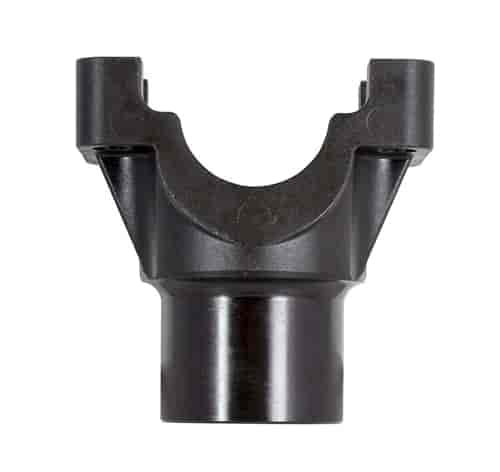
Usually the pro gears have 35 spline pinions and the street gears have 28. They probably didn't sell you a pro gear if you told them you were going to street drive it, because they don't recommend pro gear for the street. Some of the drag week guys use their pro gears on the street, though.
Edit: Sorry I posted this before I saw your last post. I am on the steep learning curve with 9s too.
Edit: Sorry I posted this before I saw your last post. I am on the steep learning curve with 9s too.
Last edited by futureuser; Jan 19, 2013 at 06:27 PM.
Usually the pro gears have 35 spline pinions and the street gears have 28. They probably didn't sell you a pro gear if you told them you were going to street drive it, because they don't recommend pro gear for the street. Some of the drag week guys use their pro gears on the street, though.


The rest of my day yesterday was spent under the car replacing the third member gasket on the nine inch. The gasket was installed dry when Strange assembled the rear end. So when I disassembled it for painting I reinstalled it dry again.....just the way it came. You know that little voice in your head that tells you when you're f'ing up? Yeah, mine was screaming at me when I did this. I guess I thought it was my wife yelling because I didn't listen. The rear held grease just fine until it thinned out under temperature. After a drive it would put about a silver dollar sized spot on the garage floor. As I was breaking in the gears I just kept a drip pan under it and kept it topped off before each drive. There was no sense in fixing it right away since Strange calls for a complete gear oil change after break in is complete.
So yesterday it was time to pay the piper. The whole process of pulling the third member wasn't horrible, except that I would have like to have had the car higher than my jack stands are capable of. The bitch was that the gasket had glued itself to the housing with the paint I had applied. Talk about a mess! It was about two and a half hours on my back with a razor, brake parts cleaner and some light sand paper before I was happy with the cleanliness of the sealing surface. The new gasket went it with Copper Kote on both sides and a little ring of Ultra Black around the base of each stud for good measure. Time will tell how it seals up. I haven't put any oil back in it yet but with 85-140, I don't expect it to leak when it's cold anyway.