


Ls7


Thread Starter
Teching In
Joined: Mar 2022
Posts: 15
Likes: 4
 Ls7
Ls7 I was curious has anybody done dyno test on a bone stock LS7? Are they underrated at 500hp? Seems to me they make more power, they are hand built so I assume their isnt as much varience from engine to engine
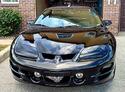


I believe John B, another forum member posted his LS7 dyno'd around ~485 whp give or take a couple of hp in his Monte Carlo a while back in basically stock trim.
I'm guessing the exhaust flowed better than stock GM manifolds & maybe air intake track was a bit less restricted.
Read about a stock LS7 making ~465whp in a 2nd Gen T/A, I think it had LS7 manifolds.
I'm guessing the exhaust flowed better than stock GM manifolds & maybe air intake track was a bit less restricted.
Read about a stock LS7 making ~465whp in a 2nd Gen T/A, I think it had LS7 manifolds.


A typical stock Z06 corvette (all stick cars) will make from 430-460 rwhp and 420-440 rwtq depending on the chassis dyno. I have seen a lot of dyno sheets on them and that is the general range. So motor wise probably in the low 500s SAE like they said 505 or so.

Exactly correct on typical #s, but that actually proves (again) that GM underrates most of its engines and has since '97. 430/.85 = 505 so if it dynos 430, that is rated power at the flywheel and anything more than that means you are getting more than rated power. Hand built actually means higher tolerances in most cases, and enhances the "factory freak" syndrome.
I don't think GM necessarily underates all that much. Sometimes GM appears to have underated.
Part of it is the difference in dyno test procedures. When GM does the offical SAE engine rating the official test procedure are grueling compared to the typical hot rodding engine dyno testing. The SAE test requires running at each measured rpm for a specific period of time before advancing to the next rpm measurement. Engine ends up testing "hotter" than most typical dyno underrated.
Likewise out of the group of engines tested the results from the worse performing engine is what's used for the engine rating. One of the LS7's didn't perform as well as the other LS7's during the SAE certification that's how the LS7 ended up rated at 505 hp. The other LS7's engines performed a fair bit better. One of the auto journalists wrote a long LS7 article that discusses some of the details of the LS7 SAE certification.
Part of it is the difference in dyno test procedures. When GM does the offical SAE engine rating the official test procedure are grueling compared to the typical hot rodding engine dyno testing. The SAE test requires running at each measured rpm for a specific period of time before advancing to the next rpm measurement. Engine ends up testing "hotter" than most typical dyno underrated.
Likewise out of the group of engines tested the results from the worse performing engine is what's used for the engine rating. One of the LS7's didn't perform as well as the other LS7's during the SAE certification that's how the LS7 ended up rated at 505 hp. The other LS7's engines performed a fair bit better. One of the auto journalists wrote a long LS7 article that discusses some of the details of the LS7 SAE certification.









