


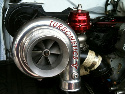



Stock LS2 + boost + spray?

This is completely incorrect. ^^^
The density of air at sea level is much greater than it is at elevation. That being said forced induction will help in high elevation but doesn't take away the thin air. A blower/turbo can only compress the air it breathes. I live in park city UT the roads I drive on are in the 5,500-7,000 ft , it can be a humbling experience. Mods are in sig, tuned at 5,600 ft and made 520rwhp, when every one else makes 100hp more with the same mods at sea level.
http://www.engineeringtoolbox.com/ai...ure-d_462.html
http://www.slowgt.com/Calc2.htm#BasAltCal
The density of air at sea level is much greater than it is at elevation. That being said forced induction will help in high elevation but doesn't take away the thin air. A blower/turbo can only compress the air it breathes. I live in park city UT the roads I drive on are in the 5,500-7,000 ft , it can be a humbling experience. Mods are in sig, tuned at 5,600 ft and made 520rwhp, when every one else makes 100hp more with the same mods at sea level.
http://www.engineeringtoolbox.com/ai...ure-d_462.html
http://www.slowgt.com/Calc2.htm#BasAltCal
Are you guys idiots? I AM AWARE of thermal dynamics and air and thinning and elevation.. you guys are missing the CRITICAL PART called a wastegate...regulates turbine speed. this little thing operates based on oh what? magic word ...PRESSURE! This PRessure rating does NOT CHANGE because you are at higher elevation... 5psi applied to a diaphragm is 5psi... doesn't matter if you are sea level or on the top of mt.Everest. TURBOS are the ONLY forced induction that works on this principal.
Raced side by side TURBO at sea level vs 3600ft... same results. PERIOD. call DYNOJET!! please...stop the madness... learn the truth.
Last edited by vmapper; Jan 20, 2010 at 02:09 PM.
do it seems to be the consensus. by the way you guys are all sort of right. ten psi is ten psi regardless of position as related to sea level. however... air density is the key factor. the more oxygen, the more power you make. you lose your overall air density, and subsequently oxygen content, when you go higher above sea level; this is the same reason helicopters "top out"
you need a chem lesson. AIR is comprised of (20.946%) oxygen... this does not change. Air is LESS higher altitude.. yes.. but we are PRESSURIZING.. or gathering 10psi... you following? so it takes more AIR from higher to reach 10psi... once you do... it has 10psi of (20.946%) by molar content/volume of oxygen...
You are all CORRECT for NA.. but once you talk about positive DISPLACEMENT.. its out the window. SC doesnt follow this becuase they are gear limited for boost... turbos work on PRESSURE... if a turbo was free spun (maxed out) then YES.. there would be a power different based on altitude...
Helicopters TOP out because there is LESS AIR to pull the chopper higher based on WEIGHT...Pushing on the AIR... has nothing to do with oxygen content... what matters for combustion.
PSI PSI... this is what really not getting to you... it TAKES MORE VOLUME OF higher altitude of ATMOSPHERE to get the SAME PSI...more volume higher up... less volume lower down... same WEIGHT OF AIR in the end...
it all has the SAME by molar content/volume... what? 20.946% of oxygen! ahhh... Hence why turbos SPOOL QUICKER down at sea level than higher up... CONTROLLED BY THE WASTEGATE but get what? same PSI.. which has same BANG power due to what? same amount of OXYGEN.... god dam!
I WISH all you guys would quite MIXING your reasoning and sit back and really think about this...
Last edited by vmapper; Jan 20, 2010 at 02:25 PM.
^^^ you are an idiot. The air is thinner the higher you go which means there are less molecules occupying the same volume of air, which means in dense(low latitude) air there are more molecules occupying the same volume of air, so there are more oxygen molecules in dense air which equals more power!

On The Tree
Joined: Jun 2007
Posts: 184
Likes: 0
THIS IS THE PERFECT EXAMPLE... runs less becuase they dont know how to PROPERY ADJUST dyno readings ... CALL DYNOJET the phone number is there USE IT!
Are you guys idiots? I AM AWARE of thermal dynamics and air and thinning and elevation.. you guys are missing the CRITICAL PART called a wastegate...regulates turbine speed. this little thing operates based on oh what? magic word ...PRESSURE! This PRessure rating does NOT CHANGE because you are at higher elevation... 5psi applied to a diaphragm is 5psi... doesn't matter if you are sea level or on the top of mt.Everest. TURBOS are the ONLY forced induction that works on this principal.
Raced side by side TURBO at sea level vs 3600ft... same results. PERIOD. call DYNOJET!! please...stop the madness... learn the truth.
Are you guys idiots? I AM AWARE of thermal dynamics and air and thinning and elevation.. you guys are missing the CRITICAL PART called a wastegate...regulates turbine speed. this little thing operates based on oh what? magic word ...PRESSURE! This PRessure rating does NOT CHANGE because you are at higher elevation... 5psi applied to a diaphragm is 5psi... doesn't matter if you are sea level or on the top of mt.Everest. TURBOS are the ONLY forced induction that works on this principal.
Raced side by side TURBO at sea level vs 3600ft... same results. PERIOD. call DYNOJET!! please...stop the madness... learn the truth.
what he is saying if u still dont understand is that it doesnt matter what elevation u are at u will always make the same amount of boost... think of it as running 10psi during the day and its 90 degrees out air is thinner takes a little longer to build the boost but at night and its 60 degrees air is denser and its eaiser for it to creat the 10psi... watch videos and compare the time it takes for the cars to build boost during the day to at night... but the only thing i could see is the difference in oxygen that could cause a power loss at a higher elevation... it might not be as sever as a NA setup would take it but it would still lose power
Last edited by rice4eatingnotdrivin; Jan 20, 2010 at 02:53 PM.
it all has the SAME by molar content/volume... what? 20.946% of oxygen! ahhh... Hence why turbos SPOOL QUICKER down at sea level than higher up... CONTROLLED BY THE WASTEGATE but get what? same PSI.. which has same BANG power due to what? same amount of OXYGEN.... god dam!
^^^^his words.
He said it has the same power. I'm not saying there is more than 20% oxygen molecules, I'm saying there are more oxygen molecules along with more of everything else in the air. If you agree with this guy, you are as dumb as he is
^^^^his words.
He said it has the same power. I'm not saying there is more than 20% oxygen molecules, I'm saying there are more oxygen molecules along with more of everything else in the air. If you agree with this guy, you are as dumb as he is
On The Tree
Joined: Jun 2007
Posts: 184
Likes: 0
it all has the SAME by molar content/volume... what? 20.946% of oxygen! ahhh... Hence why turbos SPOOL QUICKER down at sea level than higher up... CONTROLLED BY THE WASTEGATE but get what? same PSI.. which has same BANG power due to what? same amount of OXYGEN.... god dam!
^^^^his words.
He said it has the same power. I'm not saying there is more than 20% oxygen molecules, I'm saying there are more oxygen molecules along with more of everything else in the air. If you agree with this guy, you are as dumb as he is
^^^^his words.
He said it has the same power. I'm not saying there is more than 20% oxygen molecules, I'm saying there are more oxygen molecules along with more of everything else in the air. If you agree with this guy, you are as dumb as he is
LS1 Tech Stories
The Best V8 Stories One Small Block at Time

6 Common C5 Corvette Failures and What's Involved In Repairing Them
Pouria Savadkouei
Retro Modern Bandit Pontiac Trans AM Comes With Burt Reynolds' Autograph
Verdad Gallardo
Top 10 Greatest Cadillac V Series Performance Models Ever, Ranked
Pouria Savadkouei
Top 10 Most Powerful Chevy Trucks Ever Made!

Hennessey's New Supercharged Silverado ZR2 Has 700 HP
Verdad Gallardo
Coachbuilt N2A Anteros Is an LS2-Powered C6 Corvette In Italian Clothes
Verdad Gallardo
Awesome K5 Blazer Restomod Comes With C7 Corvette Power
Verdad Gallardo
10 Camaros You Should Never Buy

10 LS Engine Myths That Refuse to Die
Verdad Gallardo
We are talking turbo here not belt driven, thats a severe difference.
Turbo spools quicker and higher to achieve same boost based on elevation. But in the end, you will have a set PSI at any outside altitude that will contain the same volume of oxygen no matter what. Limiting factor is spool / fin hardware limitation and intake size. If your too high, shear 'space' of volume required to make boost is another limitation, but much beyond any road elevation you have been on.
last time I checked, 5PSI of bottled air from 30,000 ft vs 5PSI of bottled air from sea level = same (5psi)
Air comprises of the same elements and same weight of elements no matter where you are. Just further spread apart (less density) the higher you go, and yes, there are formulas for that, i know.. google.
Your statement is true for belt driven only, and if you googled wastegate, which is an important part of a turbo system you would get this:
A wastegate is a valve that diverts exhaust gases away from the turbine wheel in a turbocharged engine system. Diversion of exhaust gases regulates the turbine speed, which in turn regulates the rotating speed of the compressor. The primary function of the wastegate is to regulate the maximum boost pressure in turbocharger systems.
Ahh, regulate boost, hmm. doesnt say 'hey, im higher up' lets go down a psi it says.. we must hit xx psi. less air, turbo spins faster to get to that xx psi, is is mechanically set. 5pounds per square inch is a unit of measure not a reference to altitude.
ive talked to dynojet themselved about this thanks
Last edited by vmapper; Jun 9, 2010 at 10:54 AM.
