


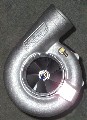

compare: GSX vs. Turbo LS1

Ok, yes the 4 cylinder cars have gone low numbers but they aren't FWD cars anymore, and almost all of the all wheel drive cars are no longer AWD anymore, and they are no longer even a GSX or Integra or whatever you chose. Now those cars running the low numbers weigh nothing because they are full blown race cars. Take an LS1 and put it in a tube chasis and it will make that time without a problem - but as you can see just about everyone's car on here gets driven on the street at some point in time. Yes, some have full cages, etc., but they still remain the stock drivetrain layout and most the same stock-style suspension setup which none of those 6 second eclipses etc are.
horsepower impresses people
TORQUE wins races
but aside from that having torque down low is very important. If you dont have enough torque you wont 60' worth a crap, that and you wont have instant acceleration.
The whole power band is also important, not just some little strech from 5k-8k where you only have 3k of usable RPM.
TORQUE wins races
but aside from that having torque down low is very important. If you dont have enough torque you wont 60' worth a crap, that and you wont have instant acceleration.
The whole power band is also important, not just some little strech from 5k-8k where you only have 3k of usable RPM.

TECH Fanatic
Joined: Mar 2002
Posts: 1,044
Likes: 0
The most basic fact of all (although the point about force being the only vector affecting acceleration was excellent!) is that horsepower is an imaginary number.
Horsepower is NOTHING but a simple calculation! A measurement of the rate at which torque is produced at any RPM in the torque curve.
The ONLY force that exists in the equation is torque, and the rate (angular velocity) at which the engine runs determines the imaginary number (horsepower).
Magazine racers have long been brain-washed into honoring the horsepower, but I assure you that it is the opposite in professional circles. I can tell you more about an engine with the TQ curve that with a HP curve.
How many slow Ferraris are there that make 400hp (woo woo) but 125lb-ft for the first 5000RPM? How about Hondas that make 260HP or 280HP (again, Woo Woo) but can't crack a 14 to save their lives because they make 79lb-ft until 6000RPMs? C'mon... no REALLY... C'MON! Sure some of these cars can attain high speeds (eventually) but only because the TQ curve is only optimized in a very narrow RPM range where it finally runs. Once it's out, it has NO capacity to create the force that provides acceleration, which is TQ.
Build for torque and let the horsepower fall where it may.
SC-
OBTW- LOL! at SSCAM. You're right!
Horsepower is NOTHING but a simple calculation! A measurement of the rate at which torque is produced at any RPM in the torque curve.
The ONLY force that exists in the equation is torque, and the rate (angular velocity) at which the engine runs determines the imaginary number (horsepower).
Magazine racers have long been brain-washed into honoring the horsepower, but I assure you that it is the opposite in professional circles. I can tell you more about an engine with the TQ curve that with a HP curve.
How many slow Ferraris are there that make 400hp (woo woo) but 125lb-ft for the first 5000RPM? How about Hondas that make 260HP or 280HP (again, Woo Woo) but can't crack a 14 to save their lives because they make 79lb-ft until 6000RPMs? C'mon... no REALLY... C'MON! Sure some of these cars can attain high speeds (eventually) but only because the TQ curve is only optimized in a very narrow RPM range where it finally runs. Once it's out, it has NO capacity to create the force that provides acceleration, which is TQ.
Build for torque and let the horsepower fall where it may.
SC-
OBTW- LOL! at SSCAM. You're right!
Last edited by SS00Blue; Nov 26, 2003 at 07:25 AM.

8 second mod
iTrader: (37)
Joined: Nov 2002
Posts: 17,879
Likes: 1
From: East Side Performance! mASShole
This kid is an idiot! Stirring the pot.
2,200 lbs? My car 3,700lbs= 10.6@132
my car -1,500lbs = 9.0-9.3@ 150+
Just to show what weight does.
But i drive everyday.
As for that, go to the track and watch. one out of every hundred imports go 13's or better.
1 of 3 LS1's are going 12's or better!
Give it up.
2,200 lbs? My car 3,700lbs= 10.6@132
my car -1,500lbs = 9.0-9.3@ 150+
Just to show what weight does.
But i drive everyday.
As for that, go to the track and watch. one out of every hundred imports go 13's or better.
1 of 3 LS1's are going 12's or better!
Give it up.

TECH Fanatic
Joined: Dec 2002
Posts: 1,200
Likes: 0
From: htown
Noyzee, are you really this dumb? Please refrain from typing!
Obviously a car has to have SOME torque, but as the RPM's increase, high torque becomes less and less important to make good horsepower. Like the Indy cars redline at 17 THOUSAND RPM! I'll bet they have shitty torque at that when compared to almost any car. But look at the way the dyno tells it. If that indy car had 200ft/lbs of torque (not much at all for a racing engine) at 17k rpm he'd have 647hp. Now that is QUITE an impressive amount for such a small amount of torque, wouldn't you say? Torque is not what determines how fast you're going to accelerate a car.
I'll give you another example: To given cars, one a 427in big block and a 1.5 liter civic. Say both pushing 1000 hp each but at different rpm's(civic at 1000hp@6000rpm) and a 427(1000ftlb@2000rpm). Now lets say we tell them to go from a roll and punch it. I garuantee you the civic will pull atlest 5 on him since the 427 is only making 380hp at that rpm.
Until one of you can actually disprove me, all of you are wrong. I would like to have actuall equations,fact and formulas, instead of unproven "LS1TECH" theories!
Obviously a car has to have SOME torque, but as the RPM's increase, high torque becomes less and less important to make good horsepower. Like the Indy cars redline at 17 THOUSAND RPM! I'll bet they have shitty torque at that when compared to almost any car. But look at the way the dyno tells it. If that indy car had 200ft/lbs of torque (not much at all for a racing engine) at 17k rpm he'd have 647hp. Now that is QUITE an impressive amount for such a small amount of torque, wouldn't you say? Torque is not what determines how fast you're going to accelerate a car.
I'll give you another example: To given cars, one a 427in big block and a 1.5 liter civic. Say both pushing 1000 hp each but at different rpm's(civic at 1000hp@6000rpm) and a 427(1000ftlb@2000rpm). Now lets say we tell them to go from a roll and punch it. I garuantee you the civic will pull atlest 5 on him since the 427 is only making 380hp at that rpm.
Until one of you can actually disprove me, all of you are wrong. I would like to have actuall equations,fact and formulas, instead of unproven "LS1TECH" theories!
Last edited by 25psi; Nov 26, 2003 at 10:40 AM.

TECH Addict
Joined: Nov 2001
Posts: 2,207
Likes: 0
From: College Station, Tx
horsepower impresses people
TORQUE wins races
Wrong. Torque delivered at the rear wheels wins races, which is flywheel torque * gear multiplication. Gear multiplication is proportional to velocity that the torque is made at, thus torque delivered is proportional to torque and velocity, which is another way of saying Power.
(A)
1000ft-lb @ 1000rpm
or
(B)
300ft-lbs @ 6000rpm
assume they are both at the same velocity (since we can look at a pass down the dragstrip as a series of infinitesimally different velocities).
In (A) let's say we are at a given velocity, V1, where the final drive ratio is 1:1 - so we are putting 1000ft-lbs of torque to the ground.
In (B) at that same velocity we would have a final drive ratio of 6:1 at the same velocity, giving a torque delivered value of 300ft-lbs * 6, or 1800ft-lbs.
So which is going to accelerate faster at that given velocity - the car that is putting down 1000ft-lbs to the rear tires, or 1800ft-lbs to the rear tires? That should be pretty obvious.
So the above shows that you can *no* only look at flywheel torque - rather you need the torque and the velocity it is made at (rpm) - force (which torque is the rotational analogue of) and velocity is proportional to power.
So basically the above is another illustration of why it is POWER that wins races.
Horsepower is NOTHING but a simple calculation! A measurement of the rate at which torque is produced at any RPM in the torque curve.
And from that perspective torque is NOTHING but a calculation - a measurement of a force and a distance.
And force is nothing but a calculation, a measurement of mass and the RATE at which velocity is changed.
And velocity is nothing but a measurement, the RATE at which position is changed
and so on - so that really doesn't prove anything
I can tell you more about an engine with the TQ curve that with a HP curve.
(A)
Not if I don't give you RPM information. I can see we have a vehicle were the average engine torque output will be 500ft-lbs for it's pass down the track. Now is that from 2000-4000rpm, or 10,000-12,000? Who knows, not telling - because, as you have pointed out, torque and rpm *is* horsepower. But you can't give me any kind of acceleration potential for that vehicle, say over a quarter mile, because you don't know the actual rate at which it will be doing work.
(B)
But if I say I have a vehicle with an average hp output of 500hp over the same range, as seen by the vehicle driving down the track. You can definitely take that average horsepower value and calculate a potential time.
So our "facts" would be
(A.1) Performance is NOT equal to just torque
(A.2) Performance = torque and rpm
(B) Performance = HP
also, from the equation relating HP and torque one can say that hp is proportional to torque and rpm, or
(C) hp = torque and rpm
This of course can be substituted in (A.2) to give us (B).
So basically we have just proven that performance is NOT proportional to engine torque, but it is proportional to engine hp.
Whether it's calculated or not is irrelevant - that fact is that it is a value, index, whatever that provides a correlation with potential to accelerate, which is what we are looking for.
LS1 Tech Stories
The Best V8 Stories One Small Block at Time

Topdon ONE vs. Artidiag 800 BT2: Which is the Diagnostic Tablet For You?
Pouria Savadkouei
Gas Monkey Built a 6-Wheel Ferrari Testarossa With a Corvette LT4 Engine
Verdad Gallardo
7 Most Reliable High-Performance Engines GM Has Ever Built
Verdad Gallardo
Amazing '71 Camaro Restomod Is Modern Muscle Car Under the Skin
Verdad Gallardo
6 Common C5 Corvette Failures and What's Involved In Repairing Them
Pouria Savadkouei
Retro Modern Bandit Pontiac Trans AM Comes With Burt Reynolds' Autograph
Verdad Gallardo
Top 10 Greatest Cadillac V Series Performance Models Ever, Ranked
Pouria Savadkouei
Top 10 Most Powerful Chevy Trucks Ever Made!

Hennessey's New Supercharged Silverado ZR2 Has 700 HP
Verdad Gallardo . I'll be back about an hour to actuall respond to your thread!
 TECH Fanatic
Joined: Dec 2002
Posts: 1,200
Likes: 0
From: htown
The reason I always use big block chevy's as an example is because they ARE typically low end power monsters. But I will not agree that Torque pulls the car out of a slow corner. Thats why people downshift before a corner, is so that when they come out of the corner, they will be at a higher RPM where their peak HP is. If torque was what was needed then lets look at the 3000GT VR-4. I believe it reaches its Torque max at 2000 or 2500rpm but I'll bet its max HP is more like 6000rpm. Now, how many VR-4 people out there shift into a HIGHER gear so that when they come out of a corner, they're right at that "2000rpm sweet spot"?



This seems argumentative and spotty, the original question has been answered several times over and 25psi you are going off on this tangent about Import drag cars.
I've seen a turbocharged Civic SI go 10.9@127mph on slicks. I would say the car was 2400 raceweight and made about 450rwhp. So what. Not comparing apples to oranges. I like the Civic too. It was neat.
I've seen a turbocharged Civic SI go 10.9@127mph on slicks. I would say the car was 2400 raceweight and made about 450rwhp. So what. Not comparing apples to oranges. I like the Civic too. It was neat.

Until one of you can actually disprove me, all of you are wrong. I would like to have actuall equations,fact and formulas, instead of unproven "LS1TECH" theories!
Your civic vs big block is a perfect example. Let us say they both punch it from their peak hp RPMs. You want facts, equations, and formulas, I think you're about to get more than you bargained for...
For the sake of comparison, let's say they both weigh the same (the big block is race prepped, the civic is full interior) 2500lbs each. You want the actual acceleration, that's determined by the formula F=ma. a=F/m
Let's say they punch it from a 40mph roll. So we have to gear appropriately so that each is at their peak hp at 40mph. Let's assume a 24inch tire diameter (that makes the radius 1 foot, and eliminates it from our conversion of torque to force) The circumference of our tire is 75.4" (Let's round it off to 75") So for each revolution, the car travels 75". 40mph is equal to 3520 feet per minute (tire circumference is 6.25ft). The tire has to rotate @ 563RPM to travel 40mph.
So, let's get to your two engines each making 1000HP. There's one flaw though. You state...
Say both pushing 1000 hp each but at different rpm's (civic at 1000hp@6000rpm) and a 427(1000ftlb@2000rpm)
You've listed the civic with 1000hp and the 427 with 1000ft/lbs of torque. As you've already stated, that's only about 380hp. Flaw number one. Let's fix it. The 427 is making 1000HP@2000rpm. That's a whopping 2625ftlb@2000rpm, but now it fits your original comparison. So we have the 427 making 2625ftlb@2000RPM, and we have the civic making 875ftlb@6000RPM.
Now, what gearing do we need to have the 427 running 2000RPM @ 40mph. Well, the tire needs to be rotating @ 563RPM, so we need gear reduction of 3.55:1 total to get 563 tire RPM and 40mph @2000RPM. Now on the Civic. 6000RPM @ 40mph will need gear reduction of 10.65:1 to get 563 tire RPM and 40mph @ 6000RPM
Now, what is the acceleration of each of these cars the moment they punch the throttle open @ 40mph.
The force pushing the 427 is going to be 2625ftlbs * 3.55 (our gear reduction) * our lever arm, which is 1 ft (hence the 24 inch tire diameter), or a total of 9318 lbs of force.
On the civic, it's 875ftlbs * 10.65 * 1 = 9318 lbs of force.
So if each has the same weight, and each has the same force pushing them forward, then both have the same acceleration. Just further proof that 1000HP IS 1000HP, no matter where it's made. You DO need gearing to take advantage of where it's being made, and that's why high revving engines have different gearing than low revving engines.
There are your actual equations, there are your actual facts, there are your actual formulas. Zero theory, zero opinion, zero assumptions, and zero unfounded conclusions.


TECH Fanatic
Joined: Mar 2002
Posts: 1,044
Likes: 0
Originally Posted by ChrisB
Torque delivered at the rear wheels wins races, which is flywheel torque * gear multiplication.
 Thanks!
Point proven.
Torque is in FACT measured, HP is in FACT calculated.
It's ok if your arguments are not based in fact, just supposition. Give me a TQ curve for a good V8 and an I4, without an RPM scale (which is your own ridiculous constraint), just give me the TQ numbers for both. I can STILL tell you which will run quicker in the same weight vehicles.
Get some experience, Chris, not just "education." For a guy in "College Station" you don't seem to have learned much...
SC-
Last edited by SS00Blue; Nov 26, 2003 at 02:31 PM.
TECH Addict
Joined: Nov 2001
Posts: 2,207
Likes: 0
From: College Station, Tx
Which STILL == TQ. Gears only multiply TQ. Thanks!
Point proven.
Torque is in FACT measured, HP is in FACT calculated.
Point proven.
Torque is in FACT measured, HP is in FACT calculated.
Did you even bother to read what I wrote?
Yes, gears multiply flywheel torque, but that multiplication value is *NOT* a fixed amount - if you have a lower flywheel torque at a higher rpm the multiplication factor can be greater - and thus you can delivery more torque to the rear wheels with a lesser engine torque.
If a car making a smaller amount of flywheel torque can out accelerate a car making a greater amount then I would say it's pretty obvious that flywheel torque isn't the primary factor.
But again, I explained that all above. Please take the time to read it.
Additionally, if you still purport that flywheel torque is the primary factor, I will give you a challenge:
Tell me the estimated quarter mile time for a 3000lb car that puts down an average of 400ft-lbs of torque as it goes down the track.
You can easily do this if I change 400ft-lbs to 400hp - but again, if flywheel torque is the primary factor you should be able to work with that?
Give me a TQ curve for a good V8 and an I4, without an RPM scale (which is your own ridiculous constraint), just give me the TQ numbers for both. I can STILL tell you which will run quicker in the same weight vehicles.
Okay, the v8 makes an average of 800ft-lbs of flywheel torque as it goes down the track, the i4 makes an average of 500ft-lbs of flywheel torque as it goes down the track, which is faster? (remember, no RPM data as torque and rpm = hp).
Torque is in FACT measured, HP is in FACT calculated.
Huh, did you even read what I posted above? Please do so. But, FWIW, I will again point out that
a) A dynojet does infact calculate torque from hp values, so there are instances where this isn't true
b) You do *not* measure torque directly. Say, with a torque wrench/strain gauge you are measuring the deflection (change in position) of a known material, and from THAT calculating torque. So torque is calculated also (there are plenty of other examples).
c) It doesn't matter - who cares if it is calculated or measured or whatever - the fact is the HP value gives me the potential to accelerate and that is what I want.
Get some experience, Chris, not just "education." For a guy in "College Station" you don't seem to have learned much...
 Good work, you got me!
 TECH Fanatic
Joined: Mar 2002
Posts: 1,044
Likes: 0
Originally Posted by ChrisB
You can easily do this if I change 400ft-lbs to 400hp - but again, if flywheel torque is the primary factor you should be able to work with that?
Originally Posted by ChrisB
a) A dynojet does infact calculate torque from hp values, so there are instances where this isn't true
Originally Posted by ChrisB
b) You do *not* measure torque directly. Say, with a torque wrench/strain gauge you are measuring the deflection (change in position) of a known material, and from THAT calculating torque. So torque is calculated also (there are plenty of other examples).
No matter how you try to get around it, HP is not, nor has it ever been directly measured. It is mearly a function of TQ at a given speed (or angular velocity). You can argue all you want, but you are not now, nor will ever be, correct.
Originally Posted by ChrisB
Good work, you got me!SC-
Last edited by SS00Blue; Nov 26, 2003 at 03:19 PM.
TECH Addict
Joined: Nov 2001
Posts: 2,207
Likes: 0
From: College Station, Tx
Yes, I can. Chris, if you don't have formulas, does that mean you can't derive this? All you're saying is that formulas are not available to you to calculate this from TQ. Since ChrisB doesn't understand physics, does that mean there IS NO WAY to calculate the outcome? It's pretty simple physics, but are you not aware of this?
You are correct, the formulas are not available to me, nor anyone I am aware of. Please, show me what I am missing here - calculate the 1/4 mile time for a 3000lb car putting out an average of 400ft-lbs of torque.
I freely admit I do not know how (as I believe it is impossible) - so since you have stated it is easy, please do so.
No. All dynos calculate HP from RPM sampled and TQ sampled. Check it out. You'll find this is correct. Why do I know? Because the TQ is found from electric motors, driven (making them generators), and that equates to TQ.
Again, I believe you are mistaken, but don't take my word for it. Go to a dyno shop (dynojet)and take off the RPM pickup. With no RPM value you only get Horsepower. A dynojet measures the acceleration of the drum and from that and it's moment of inertia it can determine how much power was added to the system - so again, no, it doesn't measure power as you purport. Other dyno's may, but the point was to illustrate that there are other methods of doing it.
No matter how you try to get around it, HP is not, nor has it ever been directly measured. It is mearly a function of TQ at a given speed (or angular velocity). You can argue all you want, but you are not now, nor will ever be, correct.
Though I still disagree with you (for reasons I pointed out previously) that torque is directly measured, it doesn't matter. I will stipulate that the point is irrelevant.
The argument is over whether hp or torque is a measure of potential to accelerate, correct?
So whether it is "calculated" or not is irrelevant - I want a number I can look at that will tell me how fast I can go. HP can definitely do that - I can take a weight and average hp and calculate a theoretical 1/4 performance index. If you would like me to I can demonstrate.
But I have challenged you above to do the same with a mass and average torque - you have mentioned that it is very easy, so I ask now - please demonstrate it.

Teching In
Joined: Nov 2003
Posts: 11
Likes: 0
hey im new hear and have a good amount of knowledge about both cars owning a DSM and having friend who are on this board with 10 sec. ls1s. but i thought i might show you something
- smithy smithoid fwd eclipse turbo
http://www.e-smithey.com/video/smithey-dyno_nabr.wmv
- john shepard awd eagle talon turbo
http://www.shepracing.com/videos/shep8944low.wmv
and there are many more. ask me and i can post vids all day long. i doesnt matter what car it is, all that matters is whos hands the car is in. all it takes is money and brains.
- smithy smithoid fwd eclipse turbo
http://www.e-smithey.com/video/smithey-dyno_nabr.wmv
- john shepard awd eagle talon turbo
http://www.shepracing.com/videos/shep8944low.wmv
and there are many more. ask me and i can post vids all day long. i doesnt matter what car it is, all that matters is whos hands the car is in. all it takes is money and brains.
TECH Addict
Joined: Nov 2001
Posts: 2,207
Likes: 0
From: College Station, Tx
Yes, I can. Chris, if you don't have formulas, does that mean you can't derive this? All you're saying is that formulas are not available to you to calculate this from TQ. Since ChrisB doesn't understand physics, does that mean there IS NO WAY to calculate the outcome? It's pretty simple physics, but are you not aware of this?
I realize you are probably quite a busy person, being the only one in the world able to perform this feat - and yes, today was a holiday - just wanted to keep this near the top so when you get a chance you could demonstrate the "pretty simple physics" you mentioned.
Just to refresh your memory, the situation was a 3000lb car making an average of 400ft-lbs of torque as it goes down the track. You can ignore traction, wind resistance, etc. - just give me a best case time. You claimed it was easy, so I hope you can find a moment to help me out - it would be much appreciated!
Thanks for your time,