






Boost is Not Just Boost

Thread Starter
Teching In
Joined: Mar 2012
Posts: 32
Likes: 0

It flows more air, but another reason it might make more power at the same boost level on the same engine is because the compressor side does not heat the air as much. If the turbo or supercharger is more efficient at a certain flow level and boost level the air/fuel mixture is more dense.
And, just to throw this out there, bigger does not always make more power. As the wheel gets bigger, it gets heavier and has a different point of efficiency. Turbo efficiency maps are as complex as they are for good reason.
And, just to throw this out there, bigger does not always make more power. As the wheel gets bigger, it gets heavier and has a different point of efficiency. Turbo efficiency maps are as complex as they are for good reason.
Also, I am definitely a fan of 2500-5000 rpm power. I might even say 2000-5000 rpm power. I am not looking for maximum effort, I just want my truck to feel more or less like it lost 1000-1500 lbs on take off.... Even though the LQ4 has more oomph than the 5.3 I took out (especially with the XR269 cam), I am still VERY aware of the truck's heft during acceleration and I have never gotten used to it....
There are guys out there running 11 sec or better with Tahoes and Yukons on youtube, I may not want to run with them, but I do want to step firmly into the middle ground between where they are and where I am now....
I thought that putting the turbo on top of H/C/I would yield great results, but it seems like that comes down to what I want to spend for what I am getting.... I can pay to do it right (slowly, but surely), but I am only scratching the surface of what 'right' is for me I now see....
a 101mm turbo will NOT make more power than a 76mm if the 76mm is at a higher efficiency region than the 101mm. plus, if the turbo is correctly sized, a 76 and 101 will deliver more flow than the engine can ingest, so the arguement for airflow is false.

TECH Resident
Joined: Jan 2011
Posts: 934
Likes: 0
From: Tulsa
I believe you're trying to over-complicate what I'm saying. In a perfect word, on the same motor, on the same style of tune, with every single thing being the same the 101mm will make more power because it flows more air. Both on a 6.0L with 317 Heads, a Z06 Cam, and intake.
Also, I am definitely a fan of 2500-5000 rpm power. I might even say 2000-5000 rpm power. I am not looking for maximum effort, I just want my truck to feel more or less like it lost 1000-1500 lbs on take off.... Even though the LQ4 has more oomph than the 5.3 I took out (especially with the XR269 cam), I am still VERY aware of the truck's heft during acceleration and I have never gotten used to it....
There are guys out there running 11 sec or better with Tahoes and Yukons on youtube, I may not want to run with them, but I do want to step firmly into the middle ground between where they are and where I am now....
I thought that putting the turbo on top of H/C/I would yield great results, but it seems like that comes down to what I want to spend for what I am getting.... I can pay to do it right (slowly, but surely), but I am only scratching the surface of what 'right' is for me I now see....
so small vs large turbo if you could have the same exhaust back pressure (obviously not going to happen with a small vs large turbo), and both intakes pressurized to 15 psi at the same temp its going to make the same power. how could it not? 15psi is 15psi, the only difference between the two turbos will be the density and the back pressure..
Last edited by got-a-ls1; Jul 2, 2012 at 12:05 AM.
It's about mass flow rate, not necessarily boost. Boost however is easy to measure and offers a decent comparison between engines of differing sizes.
15psi with free flowing intake and heads will make more power than 15psi on stock intake/heads because it is getting more mass flow through the engine.
15psi with free flowing intake and heads will make more power than 15psi on stock intake/heads because it is getting more mass flow through the engine.
wow everyone overcomplicates this!
boost is a measurement of restriction
as was also said 15lbs on stock h/c/i is less total airflow than ported therefore its less power. it really is THAT simple people.
i do agree that adding a couple psi is easier than porting heads/intake, i know this first hand from my 408w/101mm
i had box stock vic jr's and on 20lbs it made 812rwhp. had valve issues so i had the heads/intake ported.......same dyno,same tune, similar air, same boost its picked up to 841rwhp.
SAME "BOOST" BUT MORE AIRFLOW
easiest way to prove the theory is take a supercharged car.......put a stock s-trim on a 5.0 foxbody for instance. it will make in the neighborhood of 300rwhp roughly on about 8lbs. you now toss heads/intake on the same car and it will make make 5lbs and 400ish rwhp......reason for this is that the blower is still spinning the same speed(cause of being belt driven) and moving the same amount of air at less of a restriction so the boost pressure number goes down. turbo cars dont work like this since the wastegate controls the boost pressure via a boost signal and it wont realease excess till it hits its target
boost is a measurement of restriction
as was also said 15lbs on stock h/c/i is less total airflow than ported therefore its less power. it really is THAT simple people.
i do agree that adding a couple psi is easier than porting heads/intake, i know this first hand from my 408w/101mm
i had box stock vic jr's and on 20lbs it made 812rwhp. had valve issues so i had the heads/intake ported.......same dyno,same tune, similar air, same boost its picked up to 841rwhp.
SAME "BOOST" BUT MORE AIRFLOW
easiest way to prove the theory is take a supercharged car.......put a stock s-trim on a 5.0 foxbody for instance. it will make in the neighborhood of 300rwhp roughly on about 8lbs. you now toss heads/intake on the same car and it will make make 5lbs and 400ish rwhp......reason for this is that the blower is still spinning the same speed(cause of being belt driven) and moving the same amount of air at less of a restriction so the boost pressure number goes down. turbo cars dont work like this since the wastegate controls the boost pressure via a boost signal and it wont realease excess till it hits its target
LS1 Tech Stories
The Best V8 Stories One Small Block at Time

6 Common C5 Corvette Failures and What's Involved In Repairing Them
Pouria Savadkouei
Retro Modern Bandit Pontiac Trans AM Comes With Burt Reynolds' Autograph
Verdad Gallardo
Top 10 Greatest Cadillac V Series Performance Models Ever, Ranked
Pouria Savadkouei
Top 10 Most Powerful Chevy Trucks Ever Made!

Hennessey's New Supercharged Silverado ZR2 Has 700 HP
Verdad Gallardo
Coachbuilt N2A Anteros Is an LS2-Powered C6 Corvette In Italian Clothes
Verdad Gallardo
Awesome K5 Blazer Restomod Comes With C7 Corvette Power
Verdad Gallardo
10 Camaros You Should Never Buy

10 LS Engine Myths That Refuse to Die
Verdad Gallardo


It's about mass flow rate, not necessarily boost. Boost however is easy to measure and offers a decent comparison between engines of differing sizes.
15psi with free flowing intake and heads will make more power than 15psi on stock intake/heads because it is getting more mass flow through the engine.
15psi with free flowing intake and heads will make more power than 15psi on stock intake/heads because it is getting more mass flow through the engine.


TECH Fanatic
iTrader: (37)
Joined: May 2008
Posts: 1,034
Likes: 0
From: ocala,fl--- forest-ocklawaha
TECH Resident
Joined: Jan 2011
Posts: 934
Likes: 0
From: Tulsa
It's about mass flow rate, not necessarily boost. Boost however is easy to measure and offers a decent comparison between engines of differing sizes.
15psi with free flowing intake and heads will make more power than 15psi on stock intake/heads because it is getting more mass flow through the engine.
15psi with free flowing intake and heads will make more power than 15psi on stock intake/heads because it is getting more mass flow through the engine.
That is what I was trying to say!

Some good info in some of these replies but some bad info as well.
When you run forced induction you cant look at motor A's boost and motor B's boost and say its an apples to apples comparison. Boost is air backing up in the intake manifold, nothing more, nothing less. When you look at your boost gauge you see how much pressure is built up from this backing up effect, nothing more, nothing less. But this backing up effect will have a HUGE effect on the power that one particular motor will be making......
When you look at a naturally aspirated motor the three heavy hitters for how much power its going to make would be:
1. how big is it, cubic inches.
2. how fast are you spinning it, rpms
3. how well does it breath, its volumetric efficiency.
There are other factors obviously, but the three above is what we will stick to. A big motor that spins fast and breathes well doing it makes big power. A little motor that spins slow and doesnt breath well doing it makes crap for power. This is big because fuel makes power not air, but we can only burn so much fuel in a certain amount of air effectively. The bigger motor spinning faster and breathing better doing it is flowing alot of air through it, which gives us more air to burn fuel in effectively. The more fuel we get to burn the more power we can expect to make. Kind of which came first the chicken or the egg. We need to burn more fuel to make more power, and we need more air to do that.
This ties into forced induction and has a huge effect on power. The bigger a motor is, the faster it spins, the better it breaths is going to have a huge effect on how much air has to be flowing into the intake manifold for it to start backing up and causing pressure to build. Gains here can and will actually be multiplied on a forced induction motor, if your forced induction setup is designed, sized, ect to take advantage of it.
Boost is air backing up in the intake manifold. The air backing up in the intake manifold is what causes the pressure to rise. This increased pressure the air is under compresses it and packs more air molecules into the same space. This would make you think that if you doubled the pressure that you would double the amount of air molecules in the same space. This isnt correct, because i can take a 5 gallon air tank at 20 psia and heat it up to the point where the pressure rises to 40 psia. So not one more air molecule was added to the tank but yet the pressure is doubled. So when you look at the air pressure in the intake you also need to look at the temperature of the air in the intake. The intake pressure and temperature, compared to what temp and pressure it was at before you compressed and cooled it will give you your density ratio. This density ratio stuff is huge. Its what makes the 500hp n/a to 1000hp at 15psi possible. In an ideal setup 15psi would give you a 2 to 1 density ratio at 15psi, and this is what makes the 500 to 1000 a possibility. You increase your density ratio by compressing the air and by cooling it. The better job you do of compressing it and the more you compress it makes your density ratio go up. The better job you do of cooling the air back down also increases the density ratio.There are two heavy hitters that can effect your density ratio for a given boost level:
1. Improperly sized turbo will heat up the air more than it should, a properly sized turbo will heat up the air as little as possible for a given amount of boost.
2. Inner coolers have a HUGE effect on density ratio, and as boost goes up so does their effect on it. The whole system has to be looked at here, not just the IC's themselves. The cores, the piping, whats cooling the cores and how well its able to cool the core. DONT quote me on this because its been awhile but I am thinking that somewhere around 10 degree change in inlet temps to the motor is about 1% change in hp. Like I said dont quote me on that but when you start changing the inlet temps by a large amount the power changes can be really significant.
3. I know I said 2 but #3 really is #2, and it has to do with fuel. Alcohol like alky / water injection, or E85 absorbs alot of heat energy, and can actually be considered a form of innercooling. The effect here can be really big, can help make up for a car running a small or no IC. In some hardcore setups like cars running straight alky it can straight up eliminate the need for IC's, like a really high Hp car is spraying so much alky into the intake that ICE is forming in the intake w/o even using an IC.
So with a forced induction motor of a given size we can break down how to get more power into two different categories. We can try to pick up power by making it breath better and possibly revving it higher d/t its better breathing, OR we can increase the density ratio in the intake manifold. If we want to make alot of power on our motor.... this is a hard one.... dont read on unless you are a rocket scientist....YOU DO BOTH.
BANG FOR THE BUCK...
Bang for the buck usually lies in the density ratio side. Turn the boost up, run a better IC, spray some alky or water or both, switch to E85. This is almost always the cheaper path to more power, and has to be even more so with the LS motors. The thing is the LS motors breath really damn good for a stock motor. They breath so well it makes gains from heads less cost effective than they would be on some other motors. Dont get me wrong, better heads will help you make better power, but the stock heads flow well enough that they really respond to a decent cam. Because of this and from a bang for the buck standpoint a cam only is probably king.
When you run forced induction you cant look at motor A's boost and motor B's boost and say its an apples to apples comparison. Boost is air backing up in the intake manifold, nothing more, nothing less. When you look at your boost gauge you see how much pressure is built up from this backing up effect, nothing more, nothing less. But this backing up effect will have a HUGE effect on the power that one particular motor will be making......
When you look at a naturally aspirated motor the three heavy hitters for how much power its going to make would be:
1. how big is it, cubic inches.
2. how fast are you spinning it, rpms
3. how well does it breath, its volumetric efficiency.
There are other factors obviously, but the three above is what we will stick to. A big motor that spins fast and breathes well doing it makes big power. A little motor that spins slow and doesnt breath well doing it makes crap for power. This is big because fuel makes power not air, but we can only burn so much fuel in a certain amount of air effectively. The bigger motor spinning faster and breathing better doing it is flowing alot of air through it, which gives us more air to burn fuel in effectively. The more fuel we get to burn the more power we can expect to make. Kind of which came first the chicken or the egg. We need to burn more fuel to make more power, and we need more air to do that.
This ties into forced induction and has a huge effect on power. The bigger a motor is, the faster it spins, the better it breaths is going to have a huge effect on how much air has to be flowing into the intake manifold for it to start backing up and causing pressure to build. Gains here can and will actually be multiplied on a forced induction motor, if your forced induction setup is designed, sized, ect to take advantage of it.
Boost is air backing up in the intake manifold. The air backing up in the intake manifold is what causes the pressure to rise. This increased pressure the air is under compresses it and packs more air molecules into the same space. This would make you think that if you doubled the pressure that you would double the amount of air molecules in the same space. This isnt correct, because i can take a 5 gallon air tank at 20 psia and heat it up to the point where the pressure rises to 40 psia. So not one more air molecule was added to the tank but yet the pressure is doubled. So when you look at the air pressure in the intake you also need to look at the temperature of the air in the intake. The intake pressure and temperature, compared to what temp and pressure it was at before you compressed and cooled it will give you your density ratio. This density ratio stuff is huge. Its what makes the 500hp n/a to 1000hp at 15psi possible. In an ideal setup 15psi would give you a 2 to 1 density ratio at 15psi, and this is what makes the 500 to 1000 a possibility. You increase your density ratio by compressing the air and by cooling it. The better job you do of compressing it and the more you compress it makes your density ratio go up. The better job you do of cooling the air back down also increases the density ratio.There are two heavy hitters that can effect your density ratio for a given boost level:
1. Improperly sized turbo will heat up the air more than it should, a properly sized turbo will heat up the air as little as possible for a given amount of boost.
2. Inner coolers have a HUGE effect on density ratio, and as boost goes up so does their effect on it. The whole system has to be looked at here, not just the IC's themselves. The cores, the piping, whats cooling the cores and how well its able to cool the core. DONT quote me on this because its been awhile but I am thinking that somewhere around 10 degree change in inlet temps to the motor is about 1% change in hp. Like I said dont quote me on that but when you start changing the inlet temps by a large amount the power changes can be really significant.
3. I know I said 2 but #3 really is #2, and it has to do with fuel. Alcohol like alky / water injection, or E85 absorbs alot of heat energy, and can actually be considered a form of innercooling. The effect here can be really big, can help make up for a car running a small or no IC. In some hardcore setups like cars running straight alky it can straight up eliminate the need for IC's, like a really high Hp car is spraying so much alky into the intake that ICE is forming in the intake w/o even using an IC.
So with a forced induction motor of a given size we can break down how to get more power into two different categories. We can try to pick up power by making it breath better and possibly revving it higher d/t its better breathing, OR we can increase the density ratio in the intake manifold. If we want to make alot of power on our motor.... this is a hard one.... dont read on unless you are a rocket scientist....YOU DO BOTH.
BANG FOR THE BUCK...
Bang for the buck usually lies in the density ratio side. Turn the boost up, run a better IC, spray some alky or water or both, switch to E85. This is almost always the cheaper path to more power, and has to be even more so with the LS motors. The thing is the LS motors breath really damn good for a stock motor. They breath so well it makes gains from heads less cost effective than they would be on some other motors. Dont get me wrong, better heads will help you make better power, but the stock heads flow well enough that they really respond to a decent cam. Because of this and from a bang for the buck standpoint a cam only is probably king.
Thread Starter
Teching In
Joined: Mar 2012
Posts: 32
Likes: 0
Some good info in some of these replies but some bad info as well.
When you run forced induction you cant look at motor A's boost and motor B's boost and say its an apples to apples comparison. Boost is air backing up in the intake manifold, nothing more, nothing less. When you look at your boost gauge you see how much pressure is built up from this backing up effect, nothing more, nothing less. But this backing up effect will have a HUGE effect on the power that one particular motor will be making......
When you look at a naturally aspirated motor the three heavy hitters for how much power its going to make would be:
1. how big is it, cubic inches.
2. how fast are you spinning it, rpms
3. how well does it breath, its volumetric efficiency.
There are other factors obviously, but the three above is what we will stick to. A big motor that spins fast and breathes well doing it makes big power. A little motor that spins slow and doesnt breath well doing it makes crap for power. This is big because fuel makes power not air, but we can only burn so much fuel in a certain amount of air effectively. The bigger motor spinning faster and breathing better doing it is flowing alot of air through it, which gives us more air to burn fuel in effectively. The more fuel we get to burn the more power we can expect to make. Kind of which came first the chicken or the egg. We need to burn more fuel to make more power, and we need more air to do that.
This ties into forced induction and has a huge effect on power. The bigger a motor is, the faster it spins, the better it breaths is going to have a huge effect on how much air has to be flowing into the intake manifold for it to start backing up and causing pressure to build. Gains here can and will actually be multiplied on a forced induction motor, if your forced induction setup is designed, sized, ect to take advantage of it.
Boost is air backing up in the intake manifold. The air backing up in the intake manifold is what causes the pressure to rise. This increased pressure the air is under compresses it and packs more air molecules into the same space. This would make you think that if you doubled the pressure that you would double the amount of air molecules in the same space. This isnt correct, because i can take a 5 gallon air tank at 20 psia and heat it up to the point where the pressure rises to 40 psia. So not one more air molecule was added to the tank but yet the pressure is doubled. So when you look at the air pressure in the intake you also need to look at the temperature of the air in the intake. The intake pressure and temperature, compared to what temp and pressure it was at before you compressed and cooled it will give you your density ratio. This density ratio stuff is huge. Its what makes the 500hp n/a to 1000hp at 15psi possible. In an ideal setup 15psi would give you a 2 to 1 density ratio at 15psi, and this is what makes the 500 to 1000 a possibility. You increase your density ratio by compressing the air and by cooling it. The better job you do of compressing it and the more you compress it makes your density ratio go up. The better job you do of cooling the air back down also increases the density ratio.There are two heavy hitters that can effect your density ratio for a given boost level:
1. Improperly sized turbo will heat up the air more than it should, a properly sized turbo will heat up the air as little as possible for a given amount of boost.
2. Inner coolers have a HUGE effect on density ratio, and as boost goes up so does their effect on it. The whole system has to be looked at here, not just the IC's themselves. The cores, the piping, whats cooling the cores and how well its able to cool the core. DONT quote me on this because its been awhile but I am thinking that somewhere around 10 degree change in inlet temps to the motor is about 1% change in hp. Like I said dont quote me on that but when you start changing the inlet temps by a large amount the power changes can be really significant.
3. I know I said 2 but #3 really is #2, and it has to do with fuel. Alcohol like alky / water injection, or E85 absorbs alot of heat energy, and can actually be considered a form of innercooling. The effect here can be really big, can help make up for a car running a small or no IC. In some hardcore setups like cars running straight alky it can straight up eliminate the need for IC's, like a really high Hp car is spraying so much alky into the intake that ICE is forming in the intake w/o even using an IC.
So with a forced induction motor of a given size we can break down how to get more power into two different categories. We can try to pick up power by making it breath better and possibly revving it higher d/t its better breathing, OR we can increase the density ratio in the intake manifold. If we want to make alot of power on our motor.... this is a hard one.... dont read on unless you are a rocket scientist....YOU DO BOTH.
BANG FOR THE BUCK...
Bang for the buck usually lies in the density ratio side. Turn the boost up, run a better IC, spray some alky or water or both, switch to E85. This is almost always the cheaper path to more power, and has to be even more so with the LS motors. The thing is the LS motors breath really damn good for a stock motor. They breath so well it makes gains from heads less cost effective than they would be on some other motors. Dont get me wrong, better heads will help you make better power, but the stock heads flow well enough that they really respond to a decent cam. Because of this and from a bang for the buck standpoint a cam only is probably king.
When you run forced induction you cant look at motor A's boost and motor B's boost and say its an apples to apples comparison. Boost is air backing up in the intake manifold, nothing more, nothing less. When you look at your boost gauge you see how much pressure is built up from this backing up effect, nothing more, nothing less. But this backing up effect will have a HUGE effect on the power that one particular motor will be making......
When you look at a naturally aspirated motor the three heavy hitters for how much power its going to make would be:
1. how big is it, cubic inches.
2. how fast are you spinning it, rpms
3. how well does it breath, its volumetric efficiency.
There are other factors obviously, but the three above is what we will stick to. A big motor that spins fast and breathes well doing it makes big power. A little motor that spins slow and doesnt breath well doing it makes crap for power. This is big because fuel makes power not air, but we can only burn so much fuel in a certain amount of air effectively. The bigger motor spinning faster and breathing better doing it is flowing alot of air through it, which gives us more air to burn fuel in effectively. The more fuel we get to burn the more power we can expect to make. Kind of which came first the chicken or the egg. We need to burn more fuel to make more power, and we need more air to do that.
This ties into forced induction and has a huge effect on power. The bigger a motor is, the faster it spins, the better it breaths is going to have a huge effect on how much air has to be flowing into the intake manifold for it to start backing up and causing pressure to build. Gains here can and will actually be multiplied on a forced induction motor, if your forced induction setup is designed, sized, ect to take advantage of it.
Boost is air backing up in the intake manifold. The air backing up in the intake manifold is what causes the pressure to rise. This increased pressure the air is under compresses it and packs more air molecules into the same space. This would make you think that if you doubled the pressure that you would double the amount of air molecules in the same space. This isnt correct, because i can take a 5 gallon air tank at 20 psia and heat it up to the point where the pressure rises to 40 psia. So not one more air molecule was added to the tank but yet the pressure is doubled. So when you look at the air pressure in the intake you also need to look at the temperature of the air in the intake. The intake pressure and temperature, compared to what temp and pressure it was at before you compressed and cooled it will give you your density ratio. This density ratio stuff is huge. Its what makes the 500hp n/a to 1000hp at 15psi possible. In an ideal setup 15psi would give you a 2 to 1 density ratio at 15psi, and this is what makes the 500 to 1000 a possibility. You increase your density ratio by compressing the air and by cooling it. The better job you do of compressing it and the more you compress it makes your density ratio go up. The better job you do of cooling the air back down also increases the density ratio.There are two heavy hitters that can effect your density ratio for a given boost level:
1. Improperly sized turbo will heat up the air more than it should, a properly sized turbo will heat up the air as little as possible for a given amount of boost.
2. Inner coolers have a HUGE effect on density ratio, and as boost goes up so does their effect on it. The whole system has to be looked at here, not just the IC's themselves. The cores, the piping, whats cooling the cores and how well its able to cool the core. DONT quote me on this because its been awhile but I am thinking that somewhere around 10 degree change in inlet temps to the motor is about 1% change in hp. Like I said dont quote me on that but when you start changing the inlet temps by a large amount the power changes can be really significant.
3. I know I said 2 but #3 really is #2, and it has to do with fuel. Alcohol like alky / water injection, or E85 absorbs alot of heat energy, and can actually be considered a form of innercooling. The effect here can be really big, can help make up for a car running a small or no IC. In some hardcore setups like cars running straight alky it can straight up eliminate the need for IC's, like a really high Hp car is spraying so much alky into the intake that ICE is forming in the intake w/o even using an IC.
So with a forced induction motor of a given size we can break down how to get more power into two different categories. We can try to pick up power by making it breath better and possibly revving it higher d/t its better breathing, OR we can increase the density ratio in the intake manifold. If we want to make alot of power on our motor.... this is a hard one.... dont read on unless you are a rocket scientist....YOU DO BOTH.
BANG FOR THE BUCK...
Bang for the buck usually lies in the density ratio side. Turn the boost up, run a better IC, spray some alky or water or both, switch to E85. This is almost always the cheaper path to more power, and has to be even more so with the LS motors. The thing is the LS motors breath really damn good for a stock motor. They breath so well it makes gains from heads less cost effective than they would be on some other motors. Dont get me wrong, better heads will help you make better power, but the stock heads flow well enough that they really respond to a decent cam. Because of this and from a bang for the buck standpoint a cam only is probably king.
Ultimately, I don't have any hard criteria for what I want the truck to do other than to get up and out of its own way.... My '02 Tahoe is not a slug, but I dislike the sense of hesitation I get when I put down the pedal.... Tune-ups and everything else have already been done, I am just dealing with the physics of getting over 5000 lbs to move....
The truck is paid for and in decent shape and I can swing dropping a couple bucks into it over the next couple years to get it right....
I feel like there's a few of camps here:
1) The camp that seeks maximum efficiency with H/C/I AND FI or nitrous... (Probably too rich for my blood)
2) The camp that doesn't want to spend much and feels like any short comings can be made up with boost. (Might have something there)
3) The camp that feels like FI may be a bit too extreme for a street car....
(Might have something there too)
4) The camp that thinks a H/C/I should get where I want to be.
(Gotta look at this one and those last two again)
Where I get torn is that I really like my truck and I like what GM has been doing with these trucks over the last 10 years in particular. I don't want to change it too much. I like the way it looks, I like the sounds it makes, I like the ride...
It's just that when a stock or lightly modified GC SRT8 or TBSS runs up next to me on the interstate I don't want it to be a given that they are gonna chump me. They might get the best of me, but I want them LIMPIN' not RUNNIN' away from me.... if gettin' away from me at all....
I think any of y'all can appreciate that....

Thread Starter
Teching In
Joined: Mar 2012
Posts: 32
Likes: 0
Please correct me if I am wrong. I read the article ont he 5.3 putting out over 625 on a Maggie so I hear ya... Just trying to get the most bang for the buck... ya know...
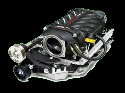

Autocruzer have you ever owned a forced induction car or truck? The reason I ask is I think people who havent been around them alot miss out on a few things. Ive ran FI for years and have helped set up multiple cars. Personally one of my absolute favorite things about a properly set up turbo car is part throttle HP and shear GRUNT. I am talking half throttle and feeling the suspension shift and reload itself, the nose raising, feeling like your sinking into the seat, blah blah all because you gave it half throttle. Now keep in mind the numbers I talk about next will seam strange because I ran 27 to 30 psi of boost back when numbers like that werent so common. So my part throttle boost numbers will sound high but they where a hell of alot less than my floored boost settings.
Now at half throttle it might take a second and a half to make that happen, but when I would hit 8psi of boost at half throttle man that motor felt strong. I felt like I could hook my V6 powered car up to a 3/4 ton truck and drag its *** right down the street. Now you start talking big race cams and turbos, I dont really know about the street with those. But a nice small probably a peanut cam in the LS world matched to a turbo that can build decent boost at part throttle and properly tuned... you will fry trannys, twist drive shafts, snap U-joints and freakin MELT tires. The torque will be crazy and all this at half throttle just gives you the feeling... it just makes for a really powerful feeling engine. I am not a H/C/I hater, but at part throttle shifting early it will never feel anywhere near as powerful as a properly set up FI motor. Keep in mind thats butt dyno seat of the pants stuff, part throttle not revving it out.
So all that stuff is mid range power and torque, ie stuff that makes a vehicle feel strong on the street, and considered prob the best way to power a heavy car or truck. Now here is the good part.... Mid range power stuff usually means cheap! You dont need big racing heads and big nasty cams or intakes to make solid mid range power. No pricey racing lifters, valve springs, pushrods, rocker arms ect ect. Alot of stock components will not only be ok to use, they would actually be considered a very good match. A baby cam and some mild up graded valve springs (as much to do with the miles on yours as anything) would give you a solid base for a mild FI set up.
Do not underestimate how well a strong FI mid range setup can make a vehicle roll out! Infact most times they will straight up fly. Heavy cars with 3.8's shifting at 5200 rpm redline have been spanking lite cars with 5.7's shifting at 7k for about two decades. Alot of times just making them look stupid in the process. (If you think I am BS'ing on this one look at the diesel boys.)
Each individual guy has to decide for himself if he thinks something is worth investing his money into. Unfortunately we also have to decide AFTER we did it whether it was worth the money, the time, the hassel ect. From my experience and from this point of view:
If you are looking at changing the overall power characteristics of your motor, and not just the wound out and cranked up numbers. Your not building a dyno sheet bragging rights motor. You want your set up to feel really strong overall on the street... You are a prime candidate for forced induction.
The next step is to start getting into the whats and the hows. If you go turbo crossing your T's and dotting your I's will go along way towards your overall opinion of the project once completed.
I didnt proof read this, I am tired from working 3rd shift and I am half brain dead...
HTH
Now at half throttle it might take a second and a half to make that happen, but when I would hit 8psi of boost at half throttle man that motor felt strong. I felt like I could hook my V6 powered car up to a 3/4 ton truck and drag its *** right down the street. Now you start talking big race cams and turbos, I dont really know about the street with those. But a nice small probably a peanut cam in the LS world matched to a turbo that can build decent boost at part throttle and properly tuned... you will fry trannys, twist drive shafts, snap U-joints and freakin MELT tires. The torque will be crazy and all this at half throttle just gives you the feeling... it just makes for a really powerful feeling engine. I am not a H/C/I hater, but at part throttle shifting early it will never feel anywhere near as powerful as a properly set up FI motor. Keep in mind thats butt dyno seat of the pants stuff, part throttle not revving it out.
So all that stuff is mid range power and torque, ie stuff that makes a vehicle feel strong on the street, and considered prob the best way to power a heavy car or truck. Now here is the good part.... Mid range power stuff usually means cheap! You dont need big racing heads and big nasty cams or intakes to make solid mid range power. No pricey racing lifters, valve springs, pushrods, rocker arms ect ect. Alot of stock components will not only be ok to use, they would actually be considered a very good match. A baby cam and some mild up graded valve springs (as much to do with the miles on yours as anything) would give you a solid base for a mild FI set up.
Do not underestimate how well a strong FI mid range setup can make a vehicle roll out! Infact most times they will straight up fly. Heavy cars with 3.8's shifting at 5200 rpm redline have been spanking lite cars with 5.7's shifting at 7k for about two decades. Alot of times just making them look stupid in the process. (If you think I am BS'ing on this one look at the diesel boys.)
Each individual guy has to decide for himself if he thinks something is worth investing his money into. Unfortunately we also have to decide AFTER we did it whether it was worth the money, the time, the hassel ect. From my experience and from this point of view:
If you are looking at changing the overall power characteristics of your motor, and not just the wound out and cranked up numbers. Your not building a dyno sheet bragging rights motor. You want your set up to feel really strong overall on the street... You are a prime candidate for forced induction.
The next step is to start getting into the whats and the hows. If you go turbo crossing your T's and dotting your I's will go along way towards your overall opinion of the project once completed.
I didnt proof read this, I am tired from working 3rd shift and I am half brain dead...
HTH
Thread Starter
Teching In
Joined: Mar 2012
Posts: 32
Likes: 0
postal14, I think you understand me best....
I want my truck to get up and go. I had researched the L92 kit that Pace Performance has out (its actually 2200 bucks),
Check out the link:
http://paceperformance.com/i-5146239...s3-blocks.html
but I get what you are saying about that 'strong' feeling that I am looking for from my car. I could care less about 1/4 miles times or anything like that, but
I miss that get up and go that I had gotten used to with my T/A....
Honestly, though.... What kind of cash are we talking with a decent turbo kit...? A lot of the problem for me would be fabricating the piping moreso than anything else...
I want my truck to get up and go. I had researched the L92 kit that Pace Performance has out (its actually 2200 bucks),
Check out the link:
http://paceperformance.com/i-5146239...s3-blocks.html
but I get what you are saying about that 'strong' feeling that I am looking for from my car. I could care less about 1/4 miles times or anything like that, but
I miss that get up and go that I had gotten used to with my T/A....
Honestly, though.... What kind of cash are we talking with a decent turbo kit...? A lot of the problem for me would be fabricating the piping moreso than anything else...