








Tips for preventing engine destruction

Teching In
Joined: Nov 2010
Posts: 44
Likes: 0
From: somewere


there are too many factors to what you can do......
the key is to start low and work you way up reading plugs as you go....
and reading plugs will tell you a lot more than a dyno will..
a Dyno might tell you where your car makes best power...but its not going to tell you if your plug heat range is too hot..you will find that out later when you blow stuff up on what was supposed to be a "safe tune"
I've tuned a lot of cars...many of them turbo or supercharger.
Air fuel does not have to be in the 10's and 11's....
15psi on an ls1, low to mid 12's all day long with the right plug heat range.
8spi...26* timing, 13.0 AFR... made 560HP thru a t56 and stock rear on a CTS-V...
and the guy flogged on it HARD......all the time...it was a really fun car to drive.
the key is to start low and work you way up reading plugs as you go....
and reading plugs will tell you a lot more than a dyno will..
a Dyno might tell you where your car makes best power...but its not going to tell you if your plug heat range is too hot..you will find that out later when you blow stuff up on what was supposed to be a "safe tune"
I've tuned a lot of cars...many of them turbo or supercharger.
Air fuel does not have to be in the 10's and 11's....
15psi on an ls1, low to mid 12's all day long with the right plug heat range.
8spi...26* timing, 13.0 AFR... made 560HP thru a t56 and stock rear on a CTS-V...
and the guy flogged on it HARD......all the time...it was a really fun car to drive.
in general.... amount of boost has nothing to do with power....
boost is a measure of back pressure....
so more back pressure = more boost....power it makes is irrelevant
also, in general... the stock bottom end of an LS1 tends to fail around 550-600 RWHP....completely unrelated to the amount of boost you make...and unrelated to the type of fuel you use.
there have been several magazines that only did a change in the ring gap on the pistons and loosened it up some and made 22psi and over 1000 hp for multiple dyno pulls...none of them published any engine longevity results...so its possible they killed the engine sometime shortly after, or its possible those cars are still going strong....nobody knows.
LS1 Tech Stories
The Best V8 Stories One Small Block at Time

Topdon ONE vs. Artidiag 800 BT2: Which is the Diagnostic Tablet For You?
Pouria Savadkouei
Gas Monkey Built a 6-Wheel Ferrari Testarossa With a Corvette LT4 Engine
Verdad Gallardo
7 Most Reliable High-Performance Engines GM Has Ever Built
Verdad Gallardo
Amazing '71 Camaro Restomod Is Modern Muscle Car Under the Skin
Verdad Gallardo
6 Common C5 Corvette Failures and What's Involved In Repairing Them
Pouria Savadkouei
Retro Modern Bandit Pontiac Trans AM Comes With Burt Reynolds' Autograph
Verdad Gallardo
Top 10 Greatest Cadillac V Series Performance Models Ever, Ranked
Pouria Savadkouei
Top 10 Most Powerful Chevy Trucks Ever Made!

Hennessey's New Supercharged Silverado ZR2 Has 700 HP
Verdad Gallardo
Pick a good engine builder. Pick a good tuner!!! I've been 7.2 over 200 mph. Been in the 7's for years. I've NEVER even hurt a sparkplug since I went boost 6 plus yrs ago. OH AND GOOD FUEL!!!!!
Last edited by LASTLS1; Nov 1, 2013 at 10:26 PM.

TECH Fanatic
Joined: Jan 2010
Posts: 1,343
Likes: 2
From: South of Augusta,GA
Well been running Grandnationals for years, but new to the LS scene. Been here long enough to break a few engines. What ive learned run as rich as you can without flooding the engine, timing make the power, and meth is the best! Make sure your AFR match your wideband as close as you can, if not power is lost and tune needs work. When someone give you a tune, makesure it works with your setup, all engines like different things.
Well been running Grandnationals for years, but new to the LS scene. Been here long enough to break a few engines. What ive learned run as rich as you can without flooding the engine, timing make the power, and meth is the best! Make sure your AFR match your wideband as close as you can, if not power is lost and tune needs work. When someone give you a tune, makesure it works with your setup, all engines like different things.
running as rich as you can, will kill power....
there is a point where A/F will be too rich and you will kill power...
you should learn to read your plugs....
you will find that you can get quite a bit of timing on far less rich than "as much as you can before it floods"
Dumping as much fuel in as you can is a recipe for disaster...too much fuel is more dangerous than not enough
Knowing when to step away from the laptop to chase mechanical/wring/fuel/ignition issues. Then of coarse solving these problems before going further thinking the laptop will fix it all.

I have been driving a SBE ls1 around for a year and half making anywhere from 600 to 700 rwhp. Depending on conditions and how much we lean on it, car is handling it very well. Like everyone said, I think a GREAT tune is most important. My car is on e85 and I really believe that has a lot to do with it. I also believe in changing oil and plugs very often. I don't beat on the car at the track without fresh plugs/oil.
I also invested in a good breather setup to properly vent the valve covers and run the kurt urban water vapor system on the car. My car just went 10.20 at 135 weighing around 3600 pounds. Hoping it lives for another 6 months as I build a motor.
I also invested in a good breather setup to properly vent the valve covers and run the kurt urban water vapor system on the car. My car just went 10.20 at 135 weighing around 3600 pounds. Hoping it lives for another 6 months as I build a motor.


Treat ignition lead as a necessary evil. You want as little as possible to get the job done IMO. Especially important when using low overlap small duration cams on the OEM LS builds. The higher the IAT the lower your timing will need to be.
When targeting an AFR The “Happy window” for alcohol based fuels is much larger than pump gas. The 93 octane pump target window for lean and max power is about .05 lambda. E85 is .15. That’s 3x the target AFR window for finding tuning “happy place”. The more alcohol you use the larger the window gets. Basically alcohol fuels are easier to tune.
If your using a gas scale WB02 on true E85 fuel your tuning window is about 10.4-12.6. I tune at the track and I’ve never seen more than 1mph increase tuning from 10.5-12.0 on e85. On my 8 second JY 5.3 I saw no noticeable difference in MPH in this window.
From what I’ve seen staying on the “Max rich power” side of the scale does a few good things…
1.) I’ve yet to see a consistent percentage of ethanol at any gas station. Varies from 60% to 90% here. Last year I couldn’t find over 75% at any station. The more pump gas in the mixture the smaller your tuning window gets. I’d rather not be on the lean side of that window.
2.) 99% of us don’t run a wb02 sensor or EGT probe in each cylinder. We have no way to know what each individual cylinder air/fuel ratio is. Running on the ragged edge of lean going by a sensor that’s averaging out 8 cylinders makes no sense. There is always variation cyl to cyl. More than you might think. Injectors don’t all flow exactly the same, Combustion chamber shapes and sizes vary, rings don’t all seat the same etc… So if your collective WB02 reading is 13.0 you may have some cylinders as lean as 13.5 and others as rich as 12.5. By running on the rich side of peak power it allows you a nice margin of error for your fuel ratios.
When targeting an AFR The “Happy window” for alcohol based fuels is much larger than pump gas. The 93 octane pump target window for lean and max power is about .05 lambda. E85 is .15. That’s 3x the target AFR window for finding tuning “happy place”. The more alcohol you use the larger the window gets. Basically alcohol fuels are easier to tune.
If your using a gas scale WB02 on true E85 fuel your tuning window is about 10.4-12.6. I tune at the track and I’ve never seen more than 1mph increase tuning from 10.5-12.0 on e85. On my 8 second JY 5.3 I saw no noticeable difference in MPH in this window.
From what I’ve seen staying on the “Max rich power” side of the scale does a few good things…
1.) I’ve yet to see a consistent percentage of ethanol at any gas station. Varies from 60% to 90% here. Last year I couldn’t find over 75% at any station. The more pump gas in the mixture the smaller your tuning window gets. I’d rather not be on the lean side of that window.
2.) 99% of us don’t run a wb02 sensor or EGT probe in each cylinder. We have no way to know what each individual cylinder air/fuel ratio is. Running on the ragged edge of lean going by a sensor that’s averaging out 8 cylinders makes no sense. There is always variation cyl to cyl. More than you might think. Injectors don’t all flow exactly the same, Combustion chamber shapes and sizes vary, rings don’t all seat the same etc… So if your collective WB02 reading is 13.0 you may have some cylinders as lean as 13.5 and others as rich as 12.5. By running on the rich side of peak power it allows you a nice margin of error for your fuel ratios.
Gasoline stoich 14.7 0.068 1 1
Gasoline Max power rich 12.5 0.08 1.176 0.8503
Gasoline Max power lean 13.23 0.0755 1.111 0.900
=======================--===============
E85 stoich 9.765 0.10235 1 1
E85 Max power rich 6.975 0.1434 1.40 0.7143
E85 Max power lean 8.4687 0.118 1.153 0.8673
Gasoline Max power rich 12.5 0.08 1.176 0.8503
Gasoline Max power lean 13.23 0.0755 1.111 0.900
=======================--===============
E85 stoich 9.765 0.10235 1 1
E85 Max power rich 6.975 0.1434 1.40 0.7143
E85 Max power lean 8.4687 0.118 1.153 0.8673

9 Second Club
iTrader: (10)
Joined: Apr 2009
Posts: 1,230
Likes: 3
From: Joliet,IL and Las Vegas 50/50
1. Datalog
2. Use quality fuel
3. Keep under hood temps down and keep motor cool/vented
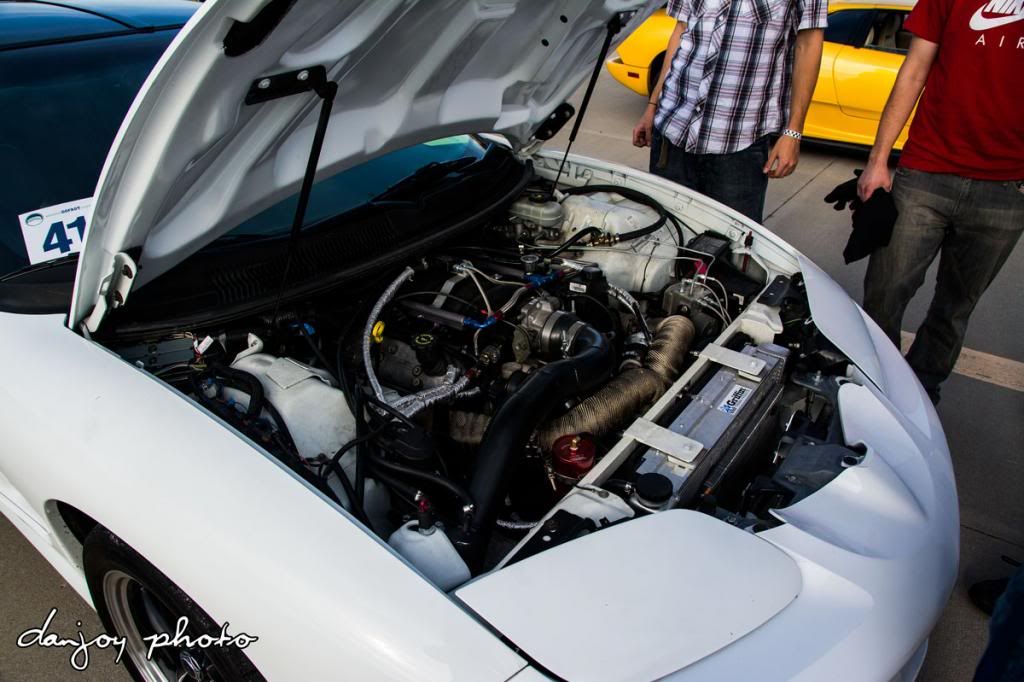
Those are my 3 big things. I datalog often especially when I make any changes. If your tune is good, then your logs will reflect that. I also am very diligent about the fuel I use. i only use e85 from one shell gas station in my area. I test it often to make sure there are no surprises in ethanol content. Last and most important is to keep your motor happy. I was melting wire looms often with my coated header/downpipe setup. I've since wrapped them to keep those under hood temps down along with a turbo blanket. I also have shrouded puller fans with a big trans cooler and neither ever see over 200*. I also vent the front and back of the heads with a KUP head vent kit. I have a WSQ hood with opened up heat extractors to help promote extraction of that heat. I run e85 because it burns so much cooler than 93 while also limiting carbon buildup and subsequent lower EGT. I have a dual catch can setup that is recirculated along with a vented oil cap to relieve positive crank case pressure(was pushing oil out rear main seal after a pull due to this). My motor has been running happy for about 3 seasons now and hope to get much more use out of it. I'm learning everyday and hardly an expert. Just things I've found to work for me.
It ain't pretty but it sure is cool under the hood.(before vented oil cap)
2. Use quality fuel
3. Keep under hood temps down and keep motor cool/vented
Those are my 3 big things. I datalog often especially when I make any changes. If your tune is good, then your logs will reflect that. I also am very diligent about the fuel I use. i only use e85 from one shell gas station in my area. I test it often to make sure there are no surprises in ethanol content. Last and most important is to keep your motor happy. I was melting wire looms often with my coated header/downpipe setup. I've since wrapped them to keep those under hood temps down along with a turbo blanket. I also have shrouded puller fans with a big trans cooler and neither ever see over 200*. I also vent the front and back of the heads with a KUP head vent kit. I have a WSQ hood with opened up heat extractors to help promote extraction of that heat. I run e85 because it burns so much cooler than 93 while also limiting carbon buildup and subsequent lower EGT. I have a dual catch can setup that is recirculated along with a vented oil cap to relieve positive crank case pressure(was pushing oil out rear main seal after a pull due to this). My motor has been running happy for about 3 seasons now and hope to get much more use out of it. I'm learning everyday and hardly an expert. Just things I've found to work for me.
It ain't pretty but it sure is cool under the hood.(before vented oil cap)

Last edited by willizm; Dec 20, 2013 at 11:37 AM.

#1 don't boost a motor that is not meant for boost. As in any high CR non forged internal engine (such as a stock LSX or LTX). Guys have done it on low boost for a while or moderate boost for a small period of time, but if you're asking for ways NOT to blow it up, do it right and just get forged internals with a lower CR.
#2 it's all about keeping away from detonation. Race gas, meth injection, intercooling, E85 are all proven methods on keeping your setup away from detonation, and will help your boosted setup run safe. Depending on how much boost and your IAT levels vary with which one of these methods may be best for you. A lightly boosted low CR engine could probably be safe on pump gas with just an intercooler. But if your running a bit more boost, or anything north of say 10:1 CR, then you may want to consider E85, meth, or race gas.
#3 the tune. If it's not tuned safe, it won't be safe. Get someone you trust, and someone with experience tuning boosted setups similar or the same as yours. You'll want to do your own research and have a good idea on where things should be with the tune as in timing, power level ect. The big thing is to keep things safe with the tune and not try and push the timing to achieve that extra 20 RWHP.
#4 have the appropriate fuel system. Make sure you have the proper injector size (you don't want to be running above 90% duty cycle), proper fuel pump setup and fuel lines needed to support the required level of power you will be making. It's better to have a little bigger than you need rather than a little to small.
If you do all these things, it will ensure you a long happy boosted life for your motor, and will help you from grenading anything. These are the most commonly made mistakes when boosting (in order) from what I have seen.
#2 it's all about keeping away from detonation. Race gas, meth injection, intercooling, E85 are all proven methods on keeping your setup away from detonation, and will help your boosted setup run safe. Depending on how much boost and your IAT levels vary with which one of these methods may be best for you. A lightly boosted low CR engine could probably be safe on pump gas with just an intercooler. But if your running a bit more boost, or anything north of say 10:1 CR, then you may want to consider E85, meth, or race gas.
#3 the tune. If it's not tuned safe, it won't be safe. Get someone you trust, and someone with experience tuning boosted setups similar or the same as yours. You'll want to do your own research and have a good idea on where things should be with the tune as in timing, power level ect. The big thing is to keep things safe with the tune and not try and push the timing to achieve that extra 20 RWHP.
#4 have the appropriate fuel system. Make sure you have the proper injector size (you don't want to be running above 90% duty cycle), proper fuel pump setup and fuel lines needed to support the required level of power you will be making. It's better to have a little bigger than you need rather than a little to small.
If you do all these things, it will ensure you a long happy boosted life for your motor, and will help you from grenading anything. These are the most commonly made mistakes when boosting (in order) from what I have seen.
...one more thing I'll add; it is a good idea to have a means to moniter things. Datalogging is good, but if you don't want to do that on every run , a simple fuel pressure gauge and wideband O2 gauge to moniter your AFR's is crutial.
You want to make sure you don't have a sudden drop in fuel pressure, and as a result go lean. I have found a safe but effective AFR level is about 11.5 for a boosted setup. Anything leaner than 12.0 and you are playing with fire. 10.0-11.0 would be a little rich but safe. Fatter than 10.0 and you are way too rich (all under WOT).
It's a good idea to moniter at all times and if you see anything out of the ordinary than you can get out of the throttle and boost before damage is done.
You want to make sure you don't have a sudden drop in fuel pressure, and as a result go lean. I have found a safe but effective AFR level is about 11.5 for a boosted setup. Anything leaner than 12.0 and you are playing with fire. 10.0-11.0 would be a little rich but safe. Fatter than 10.0 and you are way too rich (all under WOT).
It's a good idea to moniter at all times and if you see anything out of the ordinary than you can get out of the throttle and boost before damage is done.
9 Second Club
iTrader: (10)
Joined: Apr 2009
Posts: 1,230
Likes: 3
From: Joliet,IL and Las Vegas 50/50
good point on the gauges although it can be hard to watch during a pull. in addition to the wideband and fuel pressure I picked up a aeroforce gauge. I'm going to set it up so that if I see a good amount of KR it will blink at me. Just another one of those things that might warn me enough to get my foot out of it before any damage occurs.
#1 don't boost a motor that is not meant for boost. As in any high CR non forged internal engine (such as a stock LSX or LTX). Guys have done it on low boost for a while or moderate boost for a small period of time, but if you're asking for ways NOT to blow it up, do it right and just get forged internals with a lower CR.
#2 it's all about keeping away from detonation. Race gas, meth injection, intercooling, E85 are all proven methods on keeping your setup away from detonation, and will help your boosted setup run safe. Depending on how much boost and your IAT levels vary with which one of these methods may be best for you. A lightly boosted low CR engine could probably be safe on pump gas with just an intercooler. But if your running a bit more boost, or anything north of say 10:1 CR, then you may want to consider E85, meth, or race gas.
#3 the tune. If it's not tuned safe, it won't be safe. Get someone you trust, and someone with experience tuning boosted setups similar or the same as yours. You'll want to do your own research and have a good idea on where things should be with the tune as in timing, power level ect. The big thing is to keep things safe with the tune and not try and push the timing to achieve that extra 20 RWHP.
#4 have the appropriate fuel system. Make sure you have the proper injector size (you don't want to be running above 90% duty cycle), proper fuel pump setup and fuel lines needed to support the required level of power you will be making. It's better to have a little bigger than you need rather than a little to small.
If you do all these things, it will ensure you a long happy boosted life for your motor, and will help you from grenading anything. These are the most commonly made mistakes when boosting (in order) from what I have seen.
#2 it's all about keeping away from detonation. Race gas, meth injection, intercooling, E85 are all proven methods on keeping your setup away from detonation, and will help your boosted setup run safe. Depending on how much boost and your IAT levels vary with which one of these methods may be best for you. A lightly boosted low CR engine could probably be safe on pump gas with just an intercooler. But if your running a bit more boost, or anything north of say 10:1 CR, then you may want to consider E85, meth, or race gas.
#3 the tune. If it's not tuned safe, it won't be safe. Get someone you trust, and someone with experience tuning boosted setups similar or the same as yours. You'll want to do your own research and have a good idea on where things should be with the tune as in timing, power level ect. The big thing is to keep things safe with the tune and not try and push the timing to achieve that extra 20 RWHP.
#4 have the appropriate fuel system. Make sure you have the proper injector size (you don't want to be running above 90% duty cycle), proper fuel pump setup and fuel lines needed to support the required level of power you will be making. It's better to have a little bigger than you need rather than a little to small.
If you do all these things, it will ensure you a long happy boosted life for your motor, and will help you from grenading anything. These are the most commonly made mistakes when boosting (in order) from what I have seen.
Success lies in the details, if you have a well thought out setup things will normally last. Mine has been over 600hp its entire boosted life(1 full year at 630hp and the next full year at 730hp). Absolutely nothing wrong with it to this day and going for more next year.