







exhaust pressure versus boost pressure

I NEVER said that. I NEVER said you can have 15psi in the intake manifold and 30psi in the exhaust. Of course if you scale one side of any spring up to +15 or +50psi something is going to give. We dont CARE about those situations on novice applications because they rarely ever happen. Thus, the word technically in my original first unedited post. It is absolutely correct for me to neglect to break off into a discussion about these rare situations in a novice to turbochargers thread. Don't you think I type enough already?
Last edited by kingtal0n; Dec 6, 2015 at 12:26 PM.
Okay, prove it. Show me intake manifold vs exhaust pressure vs wastegate operation data in a 15psi application and you can have it. Otherwise... I am fairly certain that if manufactuers couldn't guarantee you a pressure setting, within reason, well it would be much more difficult to purchase the right gate. Because everybodys exhaust pressure changes as engine rpm changes, and everybodys engines are different. a 15psi gate works on a 4-cylinder application the same as a V8 application, and you cant tell me that they have identical exhaust pressures.
You seem to think that extreme high power instances qualify as "novice to turbochargers" relevant. The topic is about novice situations. Novices do not care about their exhaust gas pressure. Novices buy a 15psi gate and it references atmospheric pressure and opens at 15psi.
You seem to think that extreme high power instances qualify as "novice to turbochargers" relevant. The topic is about novice situations. Novices do not care about their exhaust gas pressure. Novices buy a 15psi gate and it references atmospheric pressure and opens at 15psi.
Why would tial have that note? There is no need for that according to you
I have had a gt55 and tc78 on e same entire combo....
On spring alone the gt55 makes much more boost than the tiny high drive pressure TC... Why is this?
Drive pressure = exhaust gas pressure?
TC = ?
e = ethanol ?
In answer to any further discussion, may I provide this one simple example I can test at home?
I have a turbocharger with an internal gate. I will apply 7psi to open the gate with the engine off (turbo on the floor in front of me). Then, I will use an air compressor to fill the exhaust plumbing with a couple psi of pressure, and apply 7psi again to operate the gate. Will this satisfy you? This is a great novice application of simple tools that shows the take home message I was trying to make, that the gate will not care about some extra pressure in the exhaust, that it wouldn't be a consideration in a novice turbocharger application.
Last edited by kingtal0n; Dec 6, 2015 at 12:37 PM.
This talon guy makes me think of a quote. Can't remember exactly what the quote was but it was something along the lines of, "A man of many words is often dumber than a man of few."
Seems to me you're trying to write such long sentences/paragraphs to justify your theories...
Seems to me you're trying to write such long sentences/paragraphs to justify your theories...
This talon guy makes me think of a quote. Can't remember exactly what the quote was but it was something along the lines of, "A man of many words is often dumber than a man of few."
Seems to me you're trying to write such long sentences/paragraphs to justify your theories...
Seems to me you're trying to write such long sentences/paragraphs to justify your theories...
So people that write books are dumber than people that write magazines? I dont really see any corelation between my thinking/typing speed and your reading speed or unwillingness to read. I think all of the information is plain and easy to view and you can make your own judgement based on experience. I have read a lot of books... and so I have alot to say.
I think what you are looking for is the simplest explanation as proof of understanding of the situation or topic. In that case, I think I summed it up pretty well right here
https://ls1tech.com/forums/forced-in...l#post19065319
Once we pass the novice stage we can look into improving the plumbing of our custom turbo manifold that we design ourselves to minimize backpressure, take advantage of acoustics and maximize output. This is advanced topics for maximum effort race cars, or if you have the time and money for such considerations. I would point out that the reasons for these efforts (minimizing exhaust pressure for example) is not to affect wastegate operation but to improve engine performance.
Last edited by kingtal0n; Dec 6, 2015 at 12:56 PM.
I don't know what these words mean. please clarify exactly what you mean by:
Drive pressure = exhaust gas pressure?
TC = ?
e = ethanol ?
In answer to any further discussion, may I provide this one simple example I can test at home?
I have a turbocharger with an internal gate. I will apply 7psi to open the gate with the engine off (turbo on the floor in front of me). Then, I will use an air compressor to fill the exhaust plumbing with a couple psi of pressure, and apply 7psi again to operate the gate. Will this satisfy you? This is a great novice application of simple tools that shows the take home message I was trying to make, that the gate will not care about some extra pressure in the exhaust, that it wouldn't be a consideration in a novice turbocharger application.
Drive pressure = exhaust gas pressure?
TC = ?
e = ethanol ?
In answer to any further discussion, may I provide this one simple example I can test at home?
I have a turbocharger with an internal gate. I will apply 7psi to open the gate with the engine off (turbo on the floor in front of me). Then, I will use an air compressor to fill the exhaust plumbing with a couple psi of pressure, and apply 7psi again to operate the gate. Will this satisfy you? This is a great novice application of simple tools that shows the take home message I was trying to make, that the gate will not care about some extra pressure in the exhaust, that it wouldn't be a consideration in a novice turbocharger application.
Yes there is something very simple you can do at home
Take an external gate and make a sealed test tube on the exhaust side so u can apply pressure
No pressure on exhaust.... Please record how much pressure on the diaphragm reference is needed to unseat the valve
Now do the same thing again but apply 5psi to the exhaust...
Then 10psi...
Please report back
LS1 Tech Stories
The Best V8 Stories One Small Block at Time

Gas Monkey Built a 6-Wheel Ferrari Testarossa With a Corvette LT4 Engine
Verdad Gallardo
7 Most Reliable High-Performance Engines GM Has Ever Built
Verdad Gallardo
Amazing '71 Camaro Restomod Is Modern Muscle Car Under the Skin
Verdad Gallardo
6 Common C5 Corvette Failures and What's Involved In Repairing Them
Pouria Savadkouei
Retro Modern Bandit Pontiac Trans AM Comes With Burt Reynolds' Autograph
Verdad Gallardo
Top 10 Greatest Cadillac V Series Performance Models Ever, Ranked
Pouria Savadkouei
Top 10 Most Powerful Chevy Trucks Ever Made!

Hennessey's New Supercharged Silverado ZR2 Has 700 HP
Verdad Gallardo
Coachbuilt N2A Anteros Is an LS2-Powered C6 Corvette In Italian Clothes
Verdad Gallardo Lol, i have honestly tried to explain it but you don't see it and talk in circles
Yes there is something very simple you can do at home
Take an external gate and make a sealed test tube on the exhaust side so u can apply pressure
No pressure on exhaust.... Please record how much pressure on the diaphragm reference is needed to unseat the valve
Now do the same thing again but apply 5psi to the exhaust...
Then 10psi...
Please report back
Yes there is something very simple you can do at home
Take an external gate and make a sealed test tube on the exhaust side so u can apply pressure
No pressure on exhaust.... Please record how much pressure on the diaphragm reference is needed to unseat the valve
Now do the same thing again but apply 5psi to the exhaust...
Then 10psi...
Please report back
Okay I simulated the test, Here is the result using an external gate with diameters of my choosing
With Exhaust pressure 0psi, 7psi spring
valve unseats at 5.433psi, fully open by 7.112psi
With exhaust pressure 1psi, 7psi spring
valve unseats at 5.318psi, fully open by 7.111psi
with exhaust pressure 2psi, 7psi spring
valve unseats at 5.205psi, fully open by 7.111psi
with exhaust pressure 3psi, 7psi spring
valve unseats at 5.093psi, fully open by 7.110psi
it gets easier to unseat but it still seems remarkably consistent. Almost as if, it didn't really care...
if I adjust the diameter of the valve larger, the exhaust exerts more force, the valve unseats easier. I already showed how the manufacturer controls these features in the design process to give a valve that operates at it's given/intended setting on a wide range of applications by referencing atmospheric pressure. The purchasers rarely know or care about their exhaust gas pressure when purchasing gates in novice applications.
With Exhaust pressure 0psi, 7psi spring
valve unseats at 5.433psi, fully open by 7.112psi
With exhaust pressure 1psi, 7psi spring
valve unseats at 5.318psi, fully open by 7.111psi
with exhaust pressure 2psi, 7psi spring
valve unseats at 5.205psi, fully open by 7.111psi
with exhaust pressure 3psi, 7psi spring
valve unseats at 5.093psi, fully open by 7.110psi
it gets easier to unseat but it still seems remarkably consistent. Almost as if, it didn't really care...
if I adjust the diameter of the valve larger, the exhaust exerts more force, the valve unseats easier. I already showed how the manufacturer controls these features in the design process to give a valve that operates at it's given/intended setting on a wide range of applications by referencing atmospheric pressure. The purchasers rarely know or care about their exhaust gas pressure when purchasing gates in novice applications.
Last edited by kingtal0n; Dec 6, 2015 at 01:11 PM.
Lool it seriously is face to palm.
I said external because it would be easier to perform
Why not share your "chosen diameters*?
And still haven't answered why tial has that note??
Its really sad more than entertaining at the point
Why not an actual test?
I said external because it would be easier to perform
Why not share your "chosen diameters*?
And still haven't answered why tial has that note??
Its really sad more than entertaining at the point
Why not an actual test?
I feel like I answered quite a few of your questions already and have done you the honor of asking a few to which you never responded. Why not answer my questions first.
I also made three mentions as to why tial has the note. I think the experiment results above also show why they have this note. As exhaust gas pressure gets out of hand the valve cracks open sooner and sooner. This is of no concern to novice turbocharger applications (they should not care about this situation, the wastegate will not malfunction due to a couple of extra psi in the exhaust, evidence shows that the valve is still consistent at small differentials to get you close to the advertised number).
Lets hear more about your ethanol turbo application. I bet you do not know how much exhaust pressure is in your manifold. I am not saying it like an attack, I really just mean that we rarely know or care about the exhaust gas pressure, that our parts and actions and observations rarely include the exhaust gas pressure for the majority of non-sponsor cases. It is not a novice technical detail unless you are graduating from automotive engineering school and starting a project that includes it, otherwise you have already been doing it for years and your car is already setup the way you want.
I also made three mentions as to why tial has the note. I think the experiment results above also show why they have this note. As exhaust gas pressure gets out of hand the valve cracks open sooner and sooner. This is of no concern to novice turbocharger applications (they should not care about this situation, the wastegate will not malfunction due to a couple of extra psi in the exhaust, evidence shows that the valve is still consistent at small differentials to get you close to the advertised number).
Lets hear more about your ethanol turbo application. I bet you do not know how much exhaust pressure is in your manifold. I am not saying it like an attack, I really just mean that we rarely know or care about the exhaust gas pressure, that our parts and actions and observations rarely include the exhaust gas pressure for the majority of non-sponsor cases. It is not a novice technical detail unless you are graduating from automotive engineering school and starting a project that includes it, otherwise you have already been doing it for years and your car is already setup the way you want.
Last edited by kingtal0n; Dec 6, 2015 at 01:39 PM.

Lol I monitor pressure... I know exactly what is going on..

A compound set with real data would probably blow your mind

I'm just trying to decide if it is worth my time and effort to pull a gate off and actually show you...... But I feel it would be a wasted expense and you would just talk in circles again.. About how that's what you meant

A compound set with real data would probably blow your mind

I'm just trying to decide if it is worth my time and effort to pull a gate off and actually show you...... But I feel it would be a wasted expense and you would just talk in circles again.. About how that's what you meant
Lol I monitor pressure... I know exactly what is going on..
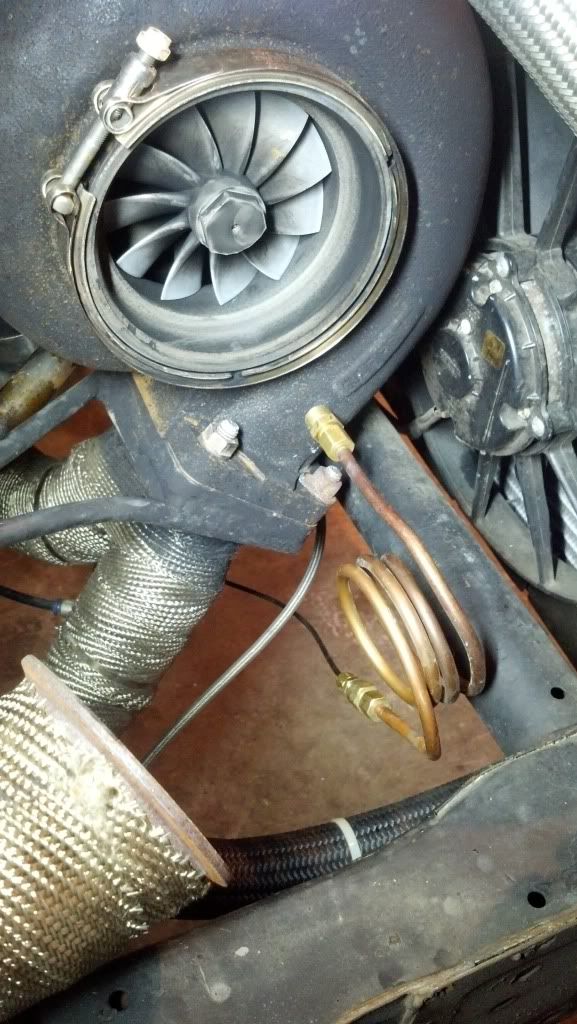
A compound set with real data would probably blow your mind
I'm just trying to decide if it is worth my time and effort to pull a gate off and actually show you...... But I feel it would be a wasted expense and you would just talk in circles again.. About how that's what you meant
A compound set with real data would probably blow your mind
I'm just trying to decide if it is worth my time and effort to pull a gate off and actually show you...... But I feel it would be a wasted expense and you would just talk in circles again.. About how that's what you meant
Well this is surprising. I am surprised you didn't share any real world information, we can all benefit from. Why does it seem like you are holding back on purpose, and you are only here to gloat about how wrong I am instead of to share or help others learn. I've never even seen a real exhaust pressure monitor device before in person, so you have the experience I lack to fill the gaps. Supply your data so that we all may benefit. I would have but like I said, I've never seen it.
This still doesn't mean that the novice should care about exhaust gas pressure when determining which gate to purchase, my recommendation from post #1 still stands. It is unlikely his wastegate will care about such things.
otherwise you have already been doing it for years and your car is already setup the way you want.
Last edited by kingtal0n; Dec 6, 2015 at 03:18 PM.


Okay I simulated the test, Here is the result using an external gate with diameters of my choosing
With Exhaust pressure 0psi, 7psi spring
valve unseats at 5.433psi, fully open by 7.112psi
With exhaust pressure 1psi, 7psi spring
valve unseats at 5.318psi, fully open by 7.111psi
with exhaust pressure 2psi, 7psi spring
valve unseats at 5.205psi, fully open by 7.111psi
with exhaust pressure 3psi, 7psi spring
valve unseats at 5.093psi, fully open by 7.110psi
it gets easier to unseat but it still seems remarkably consistent. Almost as if, it didn't really care...
if I adjust the diameter of the valve larger, the exhaust exerts more force, the valve unseats easier. I already showed how the manufacturer controls these features in the design process to give a valve that operates at it's given/intended setting on a wide range of applications by referencing atmospheric pressure. The purchasers rarely know or care about their exhaust gas pressure when purchasing gates in novice applications.
With Exhaust pressure 0psi, 7psi spring
valve unseats at 5.433psi, fully open by 7.112psi
With exhaust pressure 1psi, 7psi spring
valve unseats at 5.318psi, fully open by 7.111psi
with exhaust pressure 2psi, 7psi spring
valve unseats at 5.205psi, fully open by 7.111psi
with exhaust pressure 3psi, 7psi spring
valve unseats at 5.093psi, fully open by 7.110psi
it gets easier to unseat but it still seems remarkably consistent. Almost as if, it didn't really care...
if I adjust the diameter of the valve larger, the exhaust exerts more force, the valve unseats easier. I already showed how the manufacturer controls these features in the design process to give a valve that operates at it's given/intended setting on a wide range of applications by referencing atmospheric pressure. The purchasers rarely know or care about their exhaust gas pressure when purchasing gates in novice applications.
LMFAO!! cracking pressure of the gate is one of the most important things to know when properly setting it up. By using your own numbers it is a 2.1% decrease per pound of pressure.
This is in fact MOST important for novice turbo builders to understand as they usually pick horrible combinations the first time which lead to 2:1- 3:1 backpressure ratios.
Using your numbers on a good performing setup at 7# of boost and 2:1 BP ratio or 14# of drive pressure
Cracking pressure on the gate is markedly worse
BP cracking pressure
7 4.659
8 4.557
9 4.457
10 4.359
11 4.263
12 4.169
13 4.077
14 3.988
As you can see even at just 7# of boost and 2:1 you will be opening the gate at 4# of boost. This has a HUGE effect on how the car performs! This also isn't even taking into account how the boost is affecting the diaphragm to make the situation even worse.
Now using YOUR numbers lets look at a 6.0L setup using a TC 76 turbo that is running 2.5:1 BP at 18# of boost which is pretty common. It winds up being a 37% reduction in rated spring pressure. so if you are using a 18# rated spring setup at 18# boost, 2.5:1 BP, 45# drive pressure your gate will be cracking at 6.6# of boost FROM DRIVE PRESSURE ALONE. that will be the laziest car coming on boost you can imagine, and is why this scenario would likely have springs rated for 30# to achieve 18#. Or they will be applying co2 to the top of the gate
Just keep telling yourself you know what you are talking about, and quit posting
LMFAO!! cracking pressure of the gate is one of the most important things to know when properly setting it up. By using your own numbers it is a 2.1% decrease per pound of pressure.
This is in fact MOST important for novice turbo builders to understand as they usually pick horrible combinations the first time which lead to 2:1- 3:1 backpressure ratios.
Using your numbers on a good performing setup at 7# of boost and 2:1 BP ratio or 14# of drive pressure
Cracking pressure on the gate is markedly worse
BP cracking pressure
7 4.659
8 4.557
9 4.457
10 4.359
11 4.263
12 4.169
13 4.077
14 3.988
As you can see even at just 7# of boost and 2:1 you will be opening the gate at 4# of boost. This has a HUGE effect on how the car performs! This also isn't even taking into account how the boost is affecting the diaphragm to make the situation even worse.
Now using YOUR numbers lets look at a 6.0L setup using a TC 76 turbo that is running 2.5:1 BP at 18# of boost which is pretty common. It winds up being a 37% reduction in rated spring pressure. so if you are using a 18# rated spring setup at 18# boost, 2.5:1 BP, 45# drive pressure your gate will be cracking at 6.6# of boost FROM DRIVE PRESSURE ALONE. that will be the laziest car coming on boost you can imagine, and is why this scenario would likely have springs rated for 30# to achieve 18#. Or they will be applying co2 to the top of the gate
Just keep telling yourself you know what you are talking about, and quit posting
This is in fact MOST important for novice turbo builders to understand as they usually pick horrible combinations the first time which lead to 2:1- 3:1 backpressure ratios.
Using your numbers on a good performing setup at 7# of boost and 2:1 BP ratio or 14# of drive pressure
Cracking pressure on the gate is markedly worse
BP cracking pressure
7 4.659
8 4.557
9 4.457
10 4.359
11 4.263
12 4.169
13 4.077
14 3.988
As you can see even at just 7# of boost and 2:1 you will be opening the gate at 4# of boost. This has a HUGE effect on how the car performs! This also isn't even taking into account how the boost is affecting the diaphragm to make the situation even worse.
Now using YOUR numbers lets look at a 6.0L setup using a TC 76 turbo that is running 2.5:1 BP at 18# of boost which is pretty common. It winds up being a 37% reduction in rated spring pressure. so if you are using a 18# rated spring setup at 18# boost, 2.5:1 BP, 45# drive pressure your gate will be cracking at 6.6# of boost FROM DRIVE PRESSURE ALONE. that will be the laziest car coming on boost you can imagine, and is why this scenario would likely have springs rated for 30# to achieve 18#. Or they will be applying co2 to the top of the gate
Just keep telling yourself you know what you are talking about, and quit posting
Thanks for taking the time to explain something and give some data. My opinion that the novice doesnt need to care about such things, vs your opinion that a novice would need to know about such things, is a valid comparison. I agree that if the novice is intending to go right for the 25-35+ psi of boost application on his very first engine build then some research might be in order.
But in many cases, novices only use 5 to 15 maybe 20 psi of boost pressure on their pump gas daily drivers. This is where I am aiming my comment, do not worry about your exhaust gas pressure, focus on keeping the engine healthy and clean, do whatever is necessary to seal the exhaust leaks and trap the heat in, even if it means using OEM headers or log style solutions. As a novice, the experience is where they gain more than the performance. Very few novices have the capital to drop several thousands on baller manifolds and pressure monitoring devices; this is where I stem my opinion from, the budget builder (such as myself) will buy a wastegate with a spring without taking into account the exhaust gas pressure. In fact, on pump 93 I would want to under-estimate my spring (the opposite way of thinking) to make sure I can dial down the boost far enough for any situation (bad gas, or 87 only situations). I understand and respect your opinion of "going for the gold" when it comes to wastegates and making sure you have enough spring right off the bat, but this is competition level thinking IMO and not novice entry level first timer turbocharger thinking for stock engines.
Well this is surprising. I am surprised you didn't share any real world information, we can all benefit from. Why does it seem like you are holding back on purpose, and you are only here to gloat about how wrong I am instead of to share or help others learn. I've never even seen a real exhaust pressure monitor device before in person, so you have the experience I lack to fill the gaps. Supply your data so that we all may benefit. I would have but like I said, I've never seen it.
This still doesn't mean that the novice should care about exhaust gas pressure when determining which gate to purchase, my recommendation from post #1 still stands. It is unlikely his wastegate will care about such things.
I always have a contingency for what I report. In this case and others, by using such contingencies, (if, then statements for example) I apply higher thinking to all concepts; not just combustion engines, but any system of physics, such as the human body, blood pressure volume loop of the heart for example, there are many examples in nature of pumps as there are in mechanical sciences and everyone of them obeys physics, but not all of them operate in predictable systems. The disconnected wastegate flapper is a good example, you could never predict when it would be open or closed only that it would be found one way or the other with an established confidence interval until certain conditions are met.
This still doesn't mean that the novice should care about exhaust gas pressure when determining which gate to purchase, my recommendation from post #1 still stands. It is unlikely his wastegate will care about such things.
I always have a contingency for what I report. In this case and others, by using such contingencies, (if, then statements for example) I apply higher thinking to all concepts; not just combustion engines, but any system of physics, such as the human body, blood pressure volume loop of the heart for example, there are many examples in nature of pumps as there are in mechanical sciences and everyone of them obeys physics, but not all of them operate in predictable systems. The disconnected wastegate flapper is a good example, you could never predict when it would be open or closed only that it would be found one way or the other with an established confidence interval until certain conditions are met.
Really guy? search,read, learn. Until then STFU. rotary1307cc has provided more detailed hard data to this forum then probably anyone else. If you didn't spend so much time typing out 500 word bullshite novels and did more research you would have known that already
So this is interesting. I never thought you would actually go there, but you did. On what planet do we see 7psi of boost in the intake manifold, and 14psi in the exhaust system? I mean what vehicle/engine are you referring to, because I cannot see this as a situation in which a novice would find themselves. Oh, I am sure it could happen; I just discounted it and neglected to mention it in my first post, because I used the word "technically" to get around it. Remember when I said "technically"? I will point out once again that- technically- we are not going to run into a 7/14 split position unless parts are terribly chosen, and if that is the case, nothing will save you. You need to re-configure or make do the best you can (non-novice situations IMO). There is my opinion again- you can disagree if you want. In fact Ill put you down as disagreeing before waiting for a response. It still won't change my opinion.