







Updated Turbo FAQ?
 Updated Turbo FAQ?
 Anyone else here think that its about time to update the turbo FAQ to cover a lot more of the common stuff that is seen on this board? I have learned a LOT about turbos since I have been reading here, and even more since I started my twin turbo buildup, it would have been nice to have some of this info in the FAQ at the top of the forum.

How is this for a start? It would be great if some people could add onto this list for me and maybe correct some of my mistakes or elaborate more on things that I did not mention.
What parts make up a basic turbo kit?
Most turbo kits come with the following parts, these are talked about in further detail later in this FAQ
Hot side exhaust
Turbocharger
Wastegate (If turbo does not have a internal wastegate)
Blowoff valve
Silicone Connector pipes, tbolt clamps
Intake piping, downpipe.
Boost referenced fuel pressure regulator
Optional parts are
Intercooler & Intercooler piping
Most kits do not come with fuel components, tuning software or wideband o2 sensors, all of which are a good idea!
Whats up with methonal injection?
Methonal injection is methonal mixed with water and injected into the intake pipes, this helps prevent detonation when you are running on lower octane fuel and or non-intercooled applications. Methonal injection systems can be had for a few hundred dollars.
What is "hot side exhaust"
Hot side exhaust is the exhaust piece(s) that bolt onto the heads and work their way to the turbo(s). These pieces can be purchased from several different kits if you are making your own custom setup or if you really want, several sponsors on here can make custom hot side exhaust to fit any application.
Parts of a turbo
Here is a basic cutaway image that shows different parts of a turbo, this image does not show the exhaust inlet which can be seen under the Exhaust Turbine section of this FAQ

What is the downpipe?
The downpipe is a pipe that connects to the turbo on the other side of the exhaust turbine, this pipe generally connects to the factory exhaust system.
How is boost controlled?
The amount of boost generated by a turbo is controlled by a large valve called a Wastegate. The Wastegate is mounted on a flange that is generally welded onto the hot exhaust piece close to the turbo flange.
When boost reaches the desired level, a boost controller diverts pressure into the wastegate allowing the valve to open and vent exhaust gas out the other side of the valve, this prevents the turbo from spooling faster than it is already going and potentially slows it down some depending on how far the gate opens. There is a wide range of boost controllers manual and electronic available for fairly reasonable prices.
( Pictured : TiAL 46mm Wastegate )

Note : Some turbos have internal wastegates, which means the hot exhaust piece will not have a wastegate flange on it.
What is a blowoff valve?
Blowoff valves are to relieve pressure when your throttle blade closes, if your turbo is spooled up and pushing major air, and you let off the throttle without one, it can cause your turbo to backspin and cause excessive wear on the bearings. This valve is more important to cars with manual transmissions.
( Pictured : TiAL 50mm Blowoff Valve )

What is A/R?
What is the Exhaust Turbine?
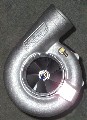
( Pictured : Garrett GT42 Turbo )

The exhaust side of the turbo is usually darker in color, this is where exhaust gas flows through the turbo to spin the compressor side.
What is the Compressor Turbine?
( Pictured : Garrett GT42 Turbo )

The lighter, or polished in some caes side of the turbo, spun by the exhaust turbine this part of the turbo actually creates the pressure.
Where can I tap and return oil on the LS1?
There is a number of places you can tap and return oil on the LS1, here are a few of them.
Tap Locations:
Above the oil filter, there is a blockoff plate that you can get filtered pressurized oil from.
Return Locations:
Oil returns need to be someplace oil can drain back into your oil pan freely, it must be above the oil level in your oil pan, and below your turbo, remember that if you make this line hard to flow oil through, your turbo may have problems with seals in the future.
The gravity oil drain line from a turbo should not be at any more than a 30 degree angle when leaving the turbo.
Who makes the "best" turbo kit?
Who makes the best cam? What is the best grind? Which turbo is best? None of these questions can be answered because each car has its own goals, so if your posting asking for help with kit selection do some homework instead of just asking which kit is best, and know what your goals are. Here are some things to consider while selecting a kit.
What is your horsepower goal?
Do you want to keep your A/C?
Do you have tuning software?
Are you willing to put the money into your fuel system?
What parts make up a basic turbo kit?
Most turbo kits come with the following parts, these are talked about in further detail later in this FAQ
Hot side exhaust
Turbocharger
Wastegate (If turbo does not have a internal wastegate)
Blowoff valve
Silicone Connector pipes, tbolt clamps
Intake piping, downpipe.
Boost referenced fuel pressure regulator
Optional parts are
Intercooler & Intercooler piping
Most kits do not come with fuel components, tuning software or wideband o2 sensors, all of which are a good idea!
Whats up with methonal injection?
Methonal injection is methonal mixed with water and injected into the intake pipes, this helps prevent detonation when you are running on lower octane fuel and or non-intercooled applications. Methonal injection systems can be had for a few hundred dollars.
What is "hot side exhaust"
Hot side exhaust is the exhaust piece(s) that bolt onto the heads and work their way to the turbo(s). These pieces can be purchased from several different kits if you are making your own custom setup or if you really want, several sponsors on here can make custom hot side exhaust to fit any application.
Parts of a turbo
Here is a basic cutaway image that shows different parts of a turbo, this image does not show the exhaust inlet which can be seen under the Exhaust Turbine section of this FAQ
What is the downpipe?
The downpipe is a pipe that connects to the turbo on the other side of the exhaust turbine, this pipe generally connects to the factory exhaust system.
How is boost controlled?
The amount of boost generated by a turbo is controlled by a large valve called a Wastegate. The Wastegate is mounted on a flange that is generally welded onto the hot exhaust piece close to the turbo flange.
When boost reaches the desired level, a boost controller diverts pressure into the wastegate allowing the valve to open and vent exhaust gas out the other side of the valve, this prevents the turbo from spooling faster than it is already going and potentially slows it down some depending on how far the gate opens. There is a wide range of boost controllers manual and electronic available for fairly reasonable prices.
( Pictured : TiAL 46mm Wastegate )
Note : Some turbos have internal wastegates, which means the hot exhaust piece will not have a wastegate flange on it.
What is a blowoff valve?
Blowoff valves are to relieve pressure when your throttle blade closes, if your turbo is spooled up and pushing major air, and you let off the throttle without one, it can cause your turbo to backspin and cause excessive wear on the bearings. This valve is more important to cars with manual transmissions.
( Pictured : TiAL 50mm Blowoff Valve )
What is A/R?
What is the Exhaust Turbine?
( Pictured : Garrett GT42 Turbo )
The exhaust side of the turbo is usually darker in color, this is where exhaust gas flows through the turbo to spin the compressor side.
What is the Compressor Turbine?
( Pictured : Garrett GT42 Turbo )
The lighter, or polished in some caes side of the turbo, spun by the exhaust turbine this part of the turbo actually creates the pressure.
Where can I tap and return oil on the LS1?
There is a number of places you can tap and return oil on the LS1, here are a few of them.
Tap Locations:
Above the oil filter, there is a blockoff plate that you can get filtered pressurized oil from.
Return Locations:
Oil returns need to be someplace oil can drain back into your oil pan freely, it must be above the oil level in your oil pan, and below your turbo, remember that if you make this line hard to flow oil through, your turbo may have problems with seals in the future.
The gravity oil drain line from a turbo should not be at any more than a 30 degree angle when leaving the turbo.
Who makes the "best" turbo kit?
Who makes the best cam? What is the best grind? Which turbo is best? None of these questions can be answered because each car has its own goals, so if your posting asking for help with kit selection do some homework instead of just asking which kit is best, and know what your goals are. Here are some things to consider while selecting a kit.
What is your horsepower goal?
Do you want to keep your A/C?
Do you have tuning software?
Are you willing to put the money into your fuel system?
Originally Posted by Camaro_Zach
very nicely done
Trending Topics
LS1 Tech Stories
The Best V8 Stories One Small Block at Time

Topdon ONE vs. Artidiag 800 BT2: Which is the Diagnostic Tablet For You?
Pouria Savadkouei
Gas Monkey Built a 6-Wheel Ferrari Testarossa With a Corvette LT4 Engine
Verdad Gallardo
7 Most Reliable High-Performance Engines GM Has Ever Built
Verdad Gallardo
Amazing '71 Camaro Restomod Is Modern Muscle Car Under the Skin
Verdad Gallardo
6 Common C5 Corvette Failures and What's Involved In Repairing Them
Pouria Savadkouei
Retro Modern Bandit Pontiac Trans AM Comes With Burt Reynolds' Autograph
Verdad Gallardo
Top 10 Greatest Cadillac V Series Performance Models Ever, Ranked
Pouria Savadkouei
Top 10 Most Powerful Chevy Trucks Ever Made!

