





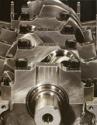


Rod bearings replacement help

Thread Starter
Teching In
Joined: Sep 2009
Posts: 49
Likes: 0
From: Colorado
 Rod bearings replacement help
 Hello all and thanks for reading,
back story: Basically a while back I did a cam/lifters/springs/pushrods and when I took it to get tuned up in denver it ended up spining rod bearings on the dyno. They were pretty stumped up there, and it took some time to figure out what happened, I towed it back, did the cam bearings/TSP oil pump and threw in magnum lifters. So now I am doing the bottom, let me say I am more then willing to put in hours but dont have alot of funds so doing a stroker kit and all that jazz is out of the question. I will have access to a side lift bay and will be droping out the engine with the suspension per the video going around from hptv.
So here are the questions:
1) I was wondering as to what I "need" and what machining might or will need to be done?
2) I have new bearings, but what is involved in replacing old ones?
3) Do you need to replace the rods or crank when doing this?
4) Finally, if these are all subjective to findings in the engine, what should I look for it there?
You guys have helped me alot in the past. So thanks in advance
Ian
back story: Basically a while back I did a cam/lifters/springs/pushrods and when I took it to get tuned up in denver it ended up spining rod bearings on the dyno. They were pretty stumped up there, and it took some time to figure out what happened, I towed it back, did the cam bearings/TSP oil pump and threw in magnum lifters. So now I am doing the bottom, let me say I am more then willing to put in hours but dont have alot of funds so doing a stroker kit and all that jazz is out of the question. I will have access to a side lift bay and will be droping out the engine with the suspension per the video going around from hptv.
So here are the questions:
1) I was wondering as to what I "need" and what machining might or will need to be done?
2) I have new bearings, but what is involved in replacing old ones?
3) Do you need to replace the rods or crank when doing this?
4) Finally, if these are all subjective to findings in the engine, what should I look for it there?
You guys have helped me alot in the past. So thanks in advance
Ian

TECH Addict
Joined: Sep 2009
Posts: 2,481
Likes: 5
From: PA/MD
It's hard to just guess, but if you have a friend or neighbor with a few extra rods and piston laying around it wouldn't hurt.
if it was me, is order and have rod and main bearings on the table ready to put in. Check your crank out very good on ALL bearing surfaces and if it looks good and smooth with no gouges, just take a peices of 400-600 grit wet/dry sandpaper and scuffle it in in a steady pattern going around the crank journals.
Check your rods and make sure they aren't stretched or deformed at the rod end. Get either ARP, or Katech bolts to replace your stock bolts ) I prefer the Katechs.
I'm going to throw out a guess and say you had stock rod bolts and they stretched allowing the bearings to spin. But I think your going to need to replace atleast one rod.
if it was me, is order and have rod and main bearings on the table ready to put in. Check your crank out very good on ALL bearing surfaces and if it looks good and smooth with no gouges, just take a peices of 400-600 grit wet/dry sandpaper and scuffle it in in a steady pattern going around the crank journals.
Check your rods and make sure they aren't stretched or deformed at the rod end. Get either ARP, or Katech bolts to replace your stock bolts ) I prefer the Katechs.
I'm going to throw out a guess and say you had stock rod bolts and they stretched allowing the bearings to spin. But I think your going to need to replace atleast one rod.
Thread Starter
Teching In
Joined: Sep 2009
Posts: 49
Likes: 0
From: Colorado
wow You are my savior.... I cannot express how much this info has helped... felt so in the dark on the subject because there is so little out there.
For the crank, how would you determine if its to much damage and needs replacing besides obvious things like gouges, say just ware on the journals, how do you know if it went down to far?
Thank you so much mark... EXACTLY what I needed to know.
For the crank, how would you determine if its to much damage and needs replacing besides obvious things like gouges, say just ware on the journals, how do you know if it went down to far?
Thank you so much mark... EXACTLY what I needed to know.
TECH Addict
Joined: Sep 2009
Posts: 2,481
Likes: 5
From: PA/MD
I'd say if you can rub a peices of 400 grit sand paper over the bearing surface a few times and have it look perfect, take it to a machine shop and have them look at it.
Worse comes to worse, the machine shop can turn the crank down a hair, then you just have to get undersized bearings to match
Worse comes to worse, the machine shop can turn the crank down a hair, then you just have to get undersized bearings to match
TECH Addict
Joined: Sep 2009
Posts: 2,481
Likes: 5
From: PA/MD
No I'm not going to have a good day... getting ready to crawl under my car right now and drop the exhaust, then pull out all the " crisp" wire from my engine fore last Sunday and start rewiring lol.
if you come anywhere near your crank with sandpaper, i will personally find you and kick your ***...that is the stupidist thing anyone can do with a crankshaft.
sorry dont mean to be a dick, but a certain pattern is required on the journal surface, thats why machine shops have a special tool for polishing cranks.
they use a lathe and a glorified belt sander basically, and the pattern has to be perfectly parallel to the journal or it will affect oil flow and cushion and you will spin another bearing eventually.
sorry dont mean to be a dick, but a certain pattern is required on the journal surface, thats why machine shops have a special tool for polishing cranks.
they use a lathe and a glorified belt sander basically, and the pattern has to be perfectly parallel to the journal or it will affect oil flow and cushion and you will spin another bearing eventually.
Trending Topics
Usually when you spin a bearing, it messes up the crank and like already mentioned, fixing it with sandpaper is just dumb.
When you pull the bottom end apart, look for discolored metal; usually a dark blue or even black around the rod housing bore and around the rod journal itself. The crank journal will likely have gouges all around as well, and the bearing will be FUBAR.
The best way to fix it is have the crank turned, resize the rods (if they're salvageable), and use a bearing like Clevite's 1776-P-10. When you switch to ARP rod bolts, you're supposed to resize the rods anyway.
If your machine shop isn't familiar with resizing the cracked cap design of the LS1 connecting rod, have them refer to ARP's instructions as well as a Clevite bearing catalog for the specs to hone the rod to. They are not like Gen I/II SBC connecting rods where you have to cut the caps to shrink the bore and then hone it out to spec. You just hone them .002" larger.
Once they're resized, have the machine shop measure the inside diameter of the bearings when they're in the cap and with the ARP bolts torqued. Take that measurement and have the crank ground roughly .002-.0025" smaller so that you end up with .002-.0025" bearing clearance.
When you pull the bottom end apart, look for discolored metal; usually a dark blue or even black around the rod housing bore and around the rod journal itself. The crank journal will likely have gouges all around as well, and the bearing will be FUBAR.
The best way to fix it is have the crank turned, resize the rods (if they're salvageable), and use a bearing like Clevite's 1776-P-10. When you switch to ARP rod bolts, you're supposed to resize the rods anyway.
If your machine shop isn't familiar with resizing the cracked cap design of the LS1 connecting rod, have them refer to ARP's instructions as well as a Clevite bearing catalog for the specs to hone the rod to. They are not like Gen I/II SBC connecting rods where you have to cut the caps to shrink the bore and then hone it out to spec. You just hone them .002" larger.
Once they're resized, have the machine shop measure the inside diameter of the bearings when they're in the cap and with the ARP bolts torqued. Take that measurement and have the crank ground roughly .002-.0025" smaller so that you end up with .002-.0025" bearing clearance.
LS1 Tech Stories
The Best V8 Stories One Small Block at Time

Gas Monkey Built a 6-Wheel Ferrari Testarossa With a Corvette LT4 Engine
Verdad Gallardo
7 Most Reliable High-Performance Engines GM Has Ever Built
Verdad Gallardo
Amazing '71 Camaro Restomod Is Modern Muscle Car Under the Skin
Verdad Gallardo
6 Common C5 Corvette Failures and What's Involved In Repairing Them
Pouria Savadkouei
Retro Modern Bandit Pontiac Trans AM Comes With Burt Reynolds' Autograph
Verdad Gallardo
Top 10 Greatest Cadillac V Series Performance Models Ever, Ranked
Pouria Savadkouei
Top 10 Most Powerful Chevy Trucks Ever Made!

Hennessey's New Supercharged Silverado ZR2 Has 700 HP
Verdad Gallardo
Coachbuilt N2A Anteros Is an LS2-Powered C6 Corvette In Italian Clothes
Verdad Gallardo TECH Addict
Joined: Sep 2009
Posts: 2,481
Likes: 5
From: PA/MD
Sorry of you took it, or I typed it wrong.... If you wrap a peices of fine sand paper round the journal and rub it around, Just a little....you guys are right, do not go hog wild...it can show you if there are any imperfections in the crank journal....

