


Too many miles on engine for cam swap?


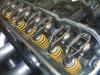

Asking around with friends they've all said do it except for one guy who made good points about the bottom end not being touched and why go through replacing half the top end without freshening the bottom. He makes good points.
And by his logic, if you shouldn't refresh the top half without the bottom half then why not refresh the rest of the powertrain? I mean why refresh the whole entire engine but then leave the transmission or rear end stock. If you're going to refresh the entire powertrain then why not refresh the rest of the car like new seats, interior, suspension, paint etc. If you're going to do all that and spend tens of thousands of dollars, why not get a new car?
See where I'm going with that? It can snowball into so much more...but you're being smart and tackling the weakpoints of the engine and upgrading those that really make a difference in performance and reliability. The benefit of the LS enigne is more in the bottom end, so take advantage of that. Most people would say that OHV setups are inherantly weak and unreliable, so that's why you upgrade those first.
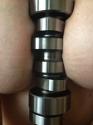


I did mine at 146K. I had pulled the heads at 141 to clean them up from a fubared PCV. while off, ported. Anyway, I could still see the factory cross-hatched hone on the cylinder walls. That gave me alot of confidence to proceed. A cam with 228 on a 112 is a very rational choice. You might maintain a bit more low end torque if it's on a 110.
One thing to watch out for is the notch in the heads. some 853's and some 241's had a notch in the head near the middle. It limits your head gasket choices. If you use the wrong head gasket with a notched head, you'll leak coolant and never get it to stop.
One thing to watch out for is the notch in the heads. some 853's and some 241's had a notch in the head near the middle. It limits your head gasket choices. If you use the wrong head gasket with a notched head, you'll leak coolant and never get it to stop.