











0.045 Quench, 8.43 DCR, 91 octane Pushing it? Please help.
 0.045 Quench, 8.43 DCR, 91 octane Pushing it? Please help.
 I'm trying to figure out how far to mill the 243 heads I'm putting on my LS1, if at all. I've tried contacting a few people including the person that spec'd the cam but haven't had any luck getting any answers or opinions. As soon as I can come to a conclusion I can give the heads to the machine shop to be rebuilt.
The engine currently has 120K miles, untouched 853 heads, and TSP 1 7/8" longtubes. Compression is 10.28:1 SCR and 7.89:1 DCR. I will either keep the TSP YPipe or run a set of duals with a good merge. Car is an m6 and will be tuned at 600ft and driven from there to around 1200ft elevation. Outside temperature will range from 40*F to 100*F when driven. It does have a 160* degree thermostat and reprogrammed fans. While 93 can be found here, 91 is the most common. I'd like to tune for 91 just in case I find myself in weird places.
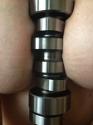
My cam is a Comp LSL 13017R/13019R 227/235 .614"/.621" 113+2 cam:
Cam Valve Events 0.006
Intake Duration - ID 277
Exhaust Duration - ED 285
Lobe Center Angle - LSA 113
Intake Centerline - ICL 111
Intake Valve opens - IVO 27.5
Intake Valve closes - IVC 69.5
Exhaust Valve Opens - EVO 77.5
Exhaust Valve Closes - EVC 27.5
Exhaust Centerline - ECL 115
Overlap 55
The cam has been degreed to be within .5 degrees of the rated numbers.
My pistons measured from .006 to .007 out of the hole. I'm for sure using the GM MLS head gaskets. That puts me around a .045-.048 quench depending on what you believe compressed thickness of a GM MLS gasket is fully torqued.
I ran my specs through the Pat Kelley and Project Pontiac calculators and get 8.1:1 DCR and 10.7:1 SCR with untouched 243s and 8.4:1 DCR and 11:1 SCR with 2cc taken off of the 243s.
Considering all of the above factors (if you need more data that I missed I can provide it) is the 8.4:1 DCR and 11:1 SCR pushing it with a .045-.048 quench on 91 even with a good tune?
I've tried to do all the homework I can but most of the articles that get really deep into the octane limits talk about iron blocks and carbs and other less relevant factors. Some say 8.4 is pushing it without a fully blue printed block, super tight quench, and high octane fuel. Some say 8.3-4 is the sweet spot for 91 octane. I'm really lost at this point.
At the end of the day I'm looking for reliable fun. The car is a weekend cream puff not a drag car or max effort build. I'm just trying maximize what I have to add some responsiveness and pep to her step. I have no problems paying someone for their time and advice if that's what it takes to get help. I work in consulting myself and understand not wanting to give away knowledge and expertise for free.
The engine currently has 120K miles, untouched 853 heads, and TSP 1 7/8" longtubes. Compression is 10.28:1 SCR and 7.89:1 DCR. I will either keep the TSP YPipe or run a set of duals with a good merge. Car is an m6 and will be tuned at 600ft and driven from there to around 1200ft elevation. Outside temperature will range from 40*F to 100*F when driven. It does have a 160* degree thermostat and reprogrammed fans. While 93 can be found here, 91 is the most common. I'd like to tune for 91 just in case I find myself in weird places.
My cam is a Comp LSL 13017R/13019R 227/235 .614"/.621" 113+2 cam:
Cam Valve Events 0.006
Intake Duration - ID 277
Exhaust Duration - ED 285
Lobe Center Angle - LSA 113
Intake Centerline - ICL 111
Intake Valve opens - IVO 27.5
Intake Valve closes - IVC 69.5
Exhaust Valve Opens - EVO 77.5
Exhaust Valve Closes - EVC 27.5
Exhaust Centerline - ECL 115
Overlap 55
The cam has been degreed to be within .5 degrees of the rated numbers.
My pistons measured from .006 to .007 out of the hole. I'm for sure using the GM MLS head gaskets. That puts me around a .045-.048 quench depending on what you believe compressed thickness of a GM MLS gasket is fully torqued.
I ran my specs through the Pat Kelley and Project Pontiac calculators and get 8.1:1 DCR and 10.7:1 SCR with untouched 243s and 8.4:1 DCR and 11:1 SCR with 2cc taken off of the 243s.
Considering all of the above factors (if you need more data that I missed I can provide it) is the 8.4:1 DCR and 11:1 SCR pushing it with a .045-.048 quench on 91 even with a good tune?
I've tried to do all the homework I can but most of the articles that get really deep into the octane limits talk about iron blocks and carbs and other less relevant factors. Some say 8.4 is pushing it without a fully blue printed block, super tight quench, and high octane fuel. Some say 8.3-4 is the sweet spot for 91 octane. I'm really lost at this point.
At the end of the day I'm looking for reliable fun. The car is a weekend cream puff not a drag car or max effort build. I'm just trying maximize what I have to add some responsiveness and pep to her step. I have no problems paying someone for their time and advice if that's what it takes to get help. I work in consulting myself and understand not wanting to give away knowledge and expertise for free.

On The Tree
Joined: Jan 2004
Posts: 166
Likes: 2
From: Bahrain

Whats the density altitude in your area? With higher DA, you can run more compression.
Don't worry about it too much, you can always retard the ignition timing if it knocks and and set it to where its safe. I tune cars running 8.5 DCR running 91 octane all the time and i adjust the ignition timing with no issues.
Don't worry about it too much, you can always retard the ignition timing if it knocks and and set it to where its safe. I tune cars running 8.5 DCR running 91 octane all the time and i adjust the ignition timing with no issues.
Have you considered running a .040" gasket? I'm putting on a mamo top end and after talking with him and measuring piston rock and all that, he was comfortable with the .033" quench I'll be at. Stock Bottom End. The gasket is more but you may not have to mess with the heads as much.
I'm running a smaller cam but 93 octane(well 98 in Europe but they measure differently). Will be at 11.52 and 8.96. 225/227 114+3 Heads milled to 60cc.
I get with .051/3.91 and 64cc heads
SCR 10.7
DCR 8.08
With .040/3.91 and 64cc heads
SCR 11.0
DCR 8.31
With .040/3.91 and 62cc heads
SCR 11.3
DCR 8.53
Tighter quench should allow you to run the 62cc heads and the .040 gasket.
I'm running a smaller cam but 93 octane(well 98 in Europe but they measure differently). Will be at 11.52 and 8.96. 225/227 114+3 Heads milled to 60cc.
I get with .051/3.91 and 64cc heads
SCR 10.7
DCR 8.08
With .040/3.91 and 64cc heads
SCR 11.0
DCR 8.31
With .040/3.91 and 62cc heads
SCR 11.3
DCR 8.53
Tighter quench should allow you to run the 62cc heads and the .040 gasket.
Last edited by Exidous; Jul 23, 2015 at 02:11 AM.
Have you considered running a .040" gasket? I'm putting on a mamo top end and after talking with him and measuring piston rock and all that, he was comfortable with the .033" quench I'll be at. Stock Bottom End. The gasket is more but you may not have to mess with the heads as much.
I'm running a smaller cam but 93 octane(well 98 in Europe but they measure differently). Will be at 11.52 and 8.96. 225/227 114+3 Heads milled to 60cc.
I get with .051/3.91 and 64cc heads
SCR 10.7
DCR 8.08
With .040/3.91 and 64cc heads
SCR 11.0
DCR 8.31
With .040/3.91 and 62cc heads
SCR 11.3
DCR 8.53
Tighter quench should allow you to run the 62cc heads and the .040 gasket.
I'm running a smaller cam but 93 octane(well 98 in Europe but they measure differently). Will be at 11.52 and 8.96. 225/227 114+3 Heads milled to 60cc.
I get with .051/3.91 and 64cc heads
SCR 10.7
DCR 8.08
With .040/3.91 and 64cc heads
SCR 11.0
DCR 8.31
With .040/3.91 and 62cc heads
SCR 11.3
DCR 8.53
Tighter quench should allow you to run the 62cc heads and the .040 gasket.
Whats the density altitude in your area? With higher DA, you can run more compression.
Don't worry about it too much, you can always retard the ignition timing if it knocks and and set it to where its safe. I tune cars running 8.5 DCR running 91 octane all the time and i adjust the ignition timing with no issues.
Don't worry about it too much, you can always retard the ignition timing if it knocks and and set it to where its safe. I tune cars running 8.5 DCR running 91 octane all the time and i adjust the ignition timing with no issues.
Which would make a more responsive motor, a slighter lower compression without pulling as much timing or higher compression and pulling more timing?
Have you considered running a .040" gasket? I'm putting on a mamo top end and after talking with him and measuring piston rock and all that, he was comfortable with the .033" quench I'll be at. Stock Bottom End. The gasket is more but you may not have to mess with the heads as much.
I'm running a smaller cam but 93 octane(well 98 in Europe but they measure differently). Will be at 11.52 and 8.96. 225/227 114+3 Heads milled to 60cc.
I get with .051/3.91 and 64cc heads
SCR 10.7
DCR 8.08
With .040/3.91 and 64cc heads
SCR 11.0
DCR 8.31
With .040/3.91 and 62cc heads
SCR 11.3
DCR 8.53
Tighter quench should allow you to run the 62cc heads and the .040 gasket.
I'm running a smaller cam but 93 octane(well 98 in Europe but they measure differently). Will be at 11.52 and 8.96. 225/227 114+3 Heads milled to 60cc.
I get with .051/3.91 and 64cc heads
SCR 10.7
DCR 8.08
With .040/3.91 and 64cc heads
SCR 11.0
DCR 8.31
With .040/3.91 and 62cc heads
SCR 11.3
DCR 8.53
Tighter quench should allow you to run the 62cc heads and the .040 gasket.
Since I have no way of knowing if my surface meets the RA requirement of the Cometic gaskets I'd rather not risk wasting such an expensive gasket set if it doesn't seal. I also don't want to have to pull the motor apart twice. I'm ok with going with a lower DCR because of the looser quench and lower octane fuel if that's what I need to do. If my block was being surfaced I would definitely run the Cometics.
Don't worry too much about DCR. It's a swag calculation.
Aim more for the SCR.
11.5-11.8:1 good for 93.
11.1-11.3:1 good for 91.
You can push higher with either, but you'd need a sizeable cam and a very efficient chamber.
Aim more for the SCR.
11.5-11.8:1 good for 93.
11.1-11.3:1 good for 91.
You can push higher with either, but you'd need a sizeable cam and a very efficient chamber.
lets say i build mine for dcr instead of scr. 12:0 scr,224/114 cam or so,guessing 9.5 dcr . even on 93 motor will prolly sound like rocks in a tin can. take that same motor and throw in a bigger cam like a 23x with say 8:5-8:8 dcr and it will live a long happy life on 93.
Trending Topics
I wouldn't run 12:1 with that cam. You could conceivably live with 11.5:1. But that's a small cam. 11.5:1 would run better with a bigger cam like you say - 230s.
And all DCR does is give you a calculation of IVC to SCR. That's it. Actual dynamic compression changes throughout the 4-cycle stroke. That's why it's of very little value. Better exhaust scavenging, for example, can produce more of an intake charge based on valve events. The DCR calculation has almost no bearing on that, but yet, the intake charge will be aided by the exhaust scavenging effect and add cylinder pressure on the power stroke due to better cylinder filling. DCR does not calculate cylinder pressure.
It's useful to compare IVC points of different cams to see how they may behave with a certain amount of compression.
In your example, you can see that the cam is too small for that much compression. But would you rather have an 11:1 + 224 cam or a 234 + 11.8:1 cam? What if the DCR is the same? Will the torque output be the same? Depends on the other valve events.
But there is a point where it's of no useful value. Say, you throw a 255/265 cam into a 346, and even if the DCR says it's only 8.3:1 DCR with 13.5:1 SCR... the car is going to detonate. 93 octane can't support 13.5 with any kind of meaningful timing, regardless of the cam. It doesn't bleed off compression.
And all DCR does is give you a calculation of IVC to SCR. That's it. Actual dynamic compression changes throughout the 4-cycle stroke. That's why it's of very little value. Better exhaust scavenging, for example, can produce more of an intake charge based on valve events. The DCR calculation has almost no bearing on that, but yet, the intake charge will be aided by the exhaust scavenging effect and add cylinder pressure on the power stroke due to better cylinder filling. DCR does not calculate cylinder pressure.
It's useful to compare IVC points of different cams to see how they may behave with a certain amount of compression.
In your example, you can see that the cam is too small for that much compression. But would you rather have an 11:1 + 224 cam or a 234 + 11.8:1 cam? What if the DCR is the same? Will the torque output be the same? Depends on the other valve events.
But there is a point where it's of no useful value. Say, you throw a 255/265 cam into a 346, and even if the DCR says it's only 8.3:1 DCR with 13.5:1 SCR... the car is going to detonate. 93 octane can't support 13.5 with any kind of meaningful timing, regardless of the cam. It doesn't bleed off compression.
LS1 Tech Stories
The Best V8 Stories One Small Block at Time

Top 10 Greatest Cadillac V Series Performance Models Ever, Ranked
Pouria Savadkouei
Top 10 Most Powerful Chevy Trucks Ever Made!

Hennessey's New Supercharged Silverado ZR2 Has 700 HP
Verdad Gallardo
Coachbuilt N2A Anteros Is an LS2-Powered C6 Corvette In Italian Clothes
Verdad Gallardo
Awesome K5 Blazer Restomod Comes With C7 Corvette Power
Verdad Gallardo
10 Camaros You Should Never Buy

10 LS Engine Myths That Refuse to Die
Verdad Gallardo
Five Reasons the Camaro Was the Most Pivotal Player in the Pony Car Wars 2.0
Brett Foote
10 Reasons the LS7 Is GM's Most Extreme Naturally Aspirated V8 Engine Ever
Verdad Gallardo I wouldn't run 12:1 with that cam. You could conceivably live with 11.5:1. But that's a small cam. 11.5:1 would run better with a bigger cam like you say - 230s.
And all DCR does is give you a calculation of IVC to SCR. That's it. Actual dynamic compression changes throughout the 4-cycle stroke. That's why it's of very little value. Better exhaust scavenging, for example, can produce more of an intake charge based on valve events. The DCR calculation has almost no bearing on that, but yet, the intake charge will be aided by the exhaust scavenging effect and add cylinder pressure on the power stroke due to better cylinder filling. DCR does not calculate cylinder pressure.
It's useful to compare IVC points of different cams to see how they may behave with a certain amount of compression.
In your example, you can see that the cam is too small for that much compression. But would you rather have an 11:1 + 224 cam or a 234 + 11.8:1 cam? What if the DCR is the same? Will the torque output be the same? Depends on the other valve events.
But there is a point where it's of no useful value. Say, you throw a 255/265 cam into a 346, and even if the DCR says it's only 8.3:1 DCR with 13.5:1 SCR... the car is going to detonate. 93 octane can't support 13.5 with any kind of meaningful timing, regardless of the cam. It doesn't bleed off compression.
And all DCR does is give you a calculation of IVC to SCR. That's it. Actual dynamic compression changes throughout the 4-cycle stroke. That's why it's of very little value. Better exhaust scavenging, for example, can produce more of an intake charge based on valve events. The DCR calculation has almost no bearing on that, but yet, the intake charge will be aided by the exhaust scavenging effect and add cylinder pressure on the power stroke due to better cylinder filling. DCR does not calculate cylinder pressure.
It's useful to compare IVC points of different cams to see how they may behave with a certain amount of compression.
In your example, you can see that the cam is too small for that much compression. But would you rather have an 11:1 + 224 cam or a 234 + 11.8:1 cam? What if the DCR is the same? Will the torque output be the same? Depends on the other valve events.
But there is a point where it's of no useful value. Say, you throw a 255/265 cam into a 346, and even if the DCR says it's only 8.3:1 DCR with 13.5:1 SCR... the car is going to detonate. 93 octane can't support 13.5 with any kind of meaningful timing, regardless of the cam. It doesn't bleed off compression.
hmmmm, i may try to find out on my next project. thanks for clarifying
