



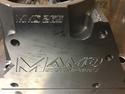


main and rod bolt torque

TECH Senior Member


Joined: Jun 2016
Posts: 22,300
Likes: 3,625
From: Central Cal.

To re-state as I and others here have repeatedly explained-
Rod and main bolts are angle-torqued to WITHIN their elastic limit
Head bolts are angle-torqued to BEYOND their elastic limit
Pay attention to the all-capped words and look up their definition, which seems to escape you.
Realize the difference between staying within elastic limits, or exceeding .
It all has to do with the way the particular fastener was engineered and designed. TTA fasteners are basically a fastener that’s designed to be torqued to a certain value. Values could be whatever ft lb plus angle…which is a more credible (I won’t say accurate here, but that’s debatable for sure) form of ensuring proper bolt stretch, according to how the fastener was designed. Keeping a TTA fastener inside of this value will ensure that the fastener has not reached its elastic limits, and therefor it’s molecular makeup wasn’t harmed, and it’s reusable.
TTY fasteners are designed to be torqued to a certain value…ft lb plus angle…and the designed angle will put that particular fastener into its elastic limits. having reached its elastic limit means the fastener has been compromised and therefore this fastener is a one time use fastener.
Now…why design fasteners this way? That’s not for me to say. I feel like TTY fasteners are a waste of resources beings throw-away fastener, but I’m sure a GM engineer could explain the reasons. I’ll say this to add to this discussion…if you over-torque an ARP fastener past it’s designed value, it’s ruined. It’s elastic limit was compromised, and it’s failure point has been opened up in a much closer window. It might not break, but it likely will on the next usage. Maybe that makes sense?
TTY fasteners are designed to be torqued to a certain value…ft lb plus angle…and the designed angle will put that particular fastener into its elastic limits. having reached its elastic limit means the fastener has been compromised and therefore this fastener is a one time use fastener.
Now…why design fasteners this way? That’s not for me to say. I feel like TTY fasteners are a waste of resources beings throw-away fastener, but I’m sure a GM engineer could explain the reasons. I’ll say this to add to this discussion…if you over-torque an ARP fastener past it’s designed value, it’s ruined. It’s elastic limit was compromised, and it’s failure point has been opened up in a much closer window. It might not break, but it likely will on the next usage. Maybe that makes sense?
TECH Senior Member
Joined: Jun 2016
Posts: 22,300
Likes: 3,625
From: Central Cal.
Maybe, somehow, on a production line basis, it works for GM to do the TTY thing.
I agree with Scott, it seems a waste, but once an engine is built it is out of GM's hands AND minds.
They're not worried about anything after the next teardown and rebuild.
It likely is cheaper to make TTY hardware than stuff that can be DEPENDABLY reused.
I agree with Scott, it seems a waste, but once an engine is built it is out of GM's hands AND minds.
They're not worried about anything after the next teardown and rebuild.
It likely is cheaper to make TTY hardware than stuff that can be DEPENDABLY reused.
Maybe, somehow, on a production line basis, it works for GM to do the TTY thing.
I agree with Scott, it seems a waste, but once an engine is built it is out of GM's hands AND minds.
They're not worried about anything after the next teardown and rebuild.
It likely is cheaper to make TTY hardware than stuff that can be DEPENDABLY reused.
I agree with Scott, it seems a waste, but once an engine is built it is out of GM's hands AND minds.
They're not worried about anything after the next teardown and rebuild.
It likely is cheaper to make TTY hardware than stuff that can be DEPENDABLY reused.
TECH Senior Member
Joined: Jun 2016
Posts: 22,300
Likes: 3,625
From: Central Cal.
We can be thankful that in spite of it possibly being a throwaway design, it sure is a few large steps ahead of whatever came before it!
AND, we CAN rebuild them! ARP to the rescue... among many others

On The Tree
Joined: Oct 2021
Posts: 147
Likes: 56
Also, for anyone who works on a variety of cars and engines, not all "Torque to Yield" bolts have to be discarded and replaced every time.
Mercedes Benz often specifies a "maximum length" for many of their torque to yield head bolts (or at least they used to). You're supposed to measure the bolt, and if it's still shorter than the maximum length, you can use it again, and do the torque+angle again. If you're working at a dealership and doing a R&R head for a gasket or any other warranty repair, they will ask for the old bolts back, and if any/all of them are short enough to reuse, they'll deny the parts for the replacement bolts on the warranty claim from the dealership.
That's the exception, not the rule. GM either stretches them to the point where they can't be reused, or just doesn't trust their "factory trained" techs at the dealerships to accurately measure the bolts to determine if they can be reused or not. Either way, it's always safer to replace them than reuse them.
Because they're PERMANENTLY stretched. They're longer than new bolts, and the skinniest part of the bolt (usually between the head and the threads on bolts designed to be TTY) is where most of the stretch occured, and it got skinnier, so the amount of additonal stretch (and hence the angle needed) changes. Also, it might break during the second (or fifth) use.
Mercedes Benz often specifies a "maximum length" for many of their torque to yield head bolts (or at least they used to). You're supposed to measure the bolt, and if it's still shorter than the maximum length, you can use it again, and do the torque+angle again. If you're working at a dealership and doing a R&R head for a gasket or any other warranty repair, they will ask for the old bolts back, and if any/all of them are short enough to reuse, they'll deny the parts for the replacement bolts on the warranty claim from the dealership.
That's the exception, not the rule. GM either stretches them to the point where they can't be reused, or just doesn't trust their "factory trained" techs at the dealerships to accurately measure the bolts to determine if they can be reused or not. Either way, it's always safer to replace them than reuse them.

TECH Resident

Joined: Mar 2012
Posts: 871
Likes: 411
From: Texas
As I've said before, I think it's a scam to force you to buy new bolts.
TECH Senior Member
Joined: Jun 2016
Posts: 22,300
Likes: 3,625
From: Central Cal.
I think the metallurgy is similar or the same, but head bolts are thinner and still are torqued pretty heavily, so get stretched beyond the elastic limit, where rod and main bolts do not.
But GM doesn't want to sell you bolts; oh no, they want to sell you an ENGINE! Disposable, remember??
LS1 Tech Stories
The Best V8 Stories One Small Block at Time

Topdon ONE vs. Artidiag 800 BT2: Which is the Diagnostic Tablet For You?
Pouria Savadkouei
Gas Monkey Built a 6-Wheel Ferrari Testarossa With a Corvette LT4 Engine
Verdad Gallardo
7 Most Reliable High-Performance Engines GM Has Ever Built
Verdad Gallardo
Amazing '71 Camaro Restomod Is Modern Muscle Car Under the Skin
Verdad Gallardo
6 Common C5 Corvette Failures and What's Involved In Repairing Them
Pouria Savadkouei
Retro Modern Bandit Pontiac Trans AM Comes With Burt Reynolds' Autograph
Verdad Gallardo
Top 10 Greatest Cadillac V Series Performance Models Ever, Ranked
Pouria Savadkouei
Top 10 Most Powerful Chevy Trucks Ever Made!

Hennessey's New Supercharged Silverado ZR2 Has 700 HP
Verdad Gallardo

Joined: May 2004
Posts: 1,593
Likes: 267
From: Halfway back on the Highway to Hell...again!
Read Racer-X's post. it's true with many manufacturers. Subaru is one of them. A new head bolt for a subi gets pre-stretched, then loosened then retorqued. I know a few Subi master techs that been with them over 30 years. None will ever use a new head bolt if they don't have to. My son is also friends with one of the Premier subi builders in the world in Tampa. He rarely uses brand new head bolts.
Nowthen, on new dodge hemis, their OE bolts are one shot, one kill. I made the mistake of getting in a hurry on one not paying attention to the head gaskets, there is a left and right side. Torqued the bolts. Of course it leaks coolant when the gasket are on the wrong side. I pulled it back apart, tried to reuse the head bolts and they stretched enough to bottom out in the block before torque yield was met. Boss man was pissed LOL Lesson lernt...PAY ATTENTION DUMMY!
But its safe to say my coolant vacuum fill tool wouldn't pull vacuum before I actually put coolant in. Had me baffled for a few min, then realized my stupid mistake.
But if anyone knows, I would really like to know if GM OE headbolts were ever tested are reusable. I think Next one I pull down, I'm gonna do some measuring vs a new bolt. I think we have one getting lifters this week, gonna get one or 3 from that tech and see what's up.
Nowthen, on new dodge hemis, their OE bolts are one shot, one kill. I made the mistake of getting in a hurry on one not paying attention to the head gaskets, there is a left and right side. Torqued the bolts. Of course it leaks coolant when the gasket are on the wrong side. I pulled it back apart, tried to reuse the head bolts and they stretched enough to bottom out in the block before torque yield was met. Boss man was pissed LOL Lesson lernt...PAY ATTENTION DUMMY!
But its safe to say my coolant vacuum fill tool wouldn't pull vacuum before I actually put coolant in. Had me baffled for a few min, then realized my stupid mistake.
But if anyone knows, I would really like to know if GM OE headbolts were ever tested are reusable. I think Next one I pull down, I'm gonna do some measuring vs a new bolt. I think we have one getting lifters this week, gonna get one or 3 from that tech and see what's up.
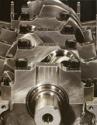
As to why they use them, it seems it has something to do with aluminum heads and MLS gaskets…
https://www.onallcylinders.com/2017/...nes-need-know/
Joined: May 2004
Posts: 1,593
Likes: 267
From: Halfway back on the Highway to Hell...again!
So I did my own little test today. I measured some Gen 4 head bolts. I have a few on my bench from a 100k+ mile 5.3 and measured them vs a few brand new bolts. They are all within .020 of each other and surprisingly, some of the used bolts are shorter than the new bolts.
So now the question is can they be reused or is there a fatigue factor involved......???
I am no metallurgist but inquiring minds want to know.
So now the question is can they be reused or is there a fatigue factor involved......???
I am no metallurgist but inquiring minds want to know.
TECH Resident
Joined: Mar 2012
Posts: 871
Likes: 411
From: Texas
So I did my own little test today. I measured some Gen 4 head bolts. I have a few on my bench from a 100k+ mile 5.3 and measured them vs a few brand new bolts. They are all within .020 of each other and surprisingly, some of the used bolts are shorter than the new bolts.
So now the question is can they be reused or is there a fatigue factor involved......???
I am no metallurgist but inquiring minds want to know.
So now the question is can they be reused or is there a fatigue factor involved......???
I am no metallurgist but inquiring minds want to know.
There was one member on here - his name escapes me - who mentioned using the old SBC torque specs, since the 11mm Gen III/ IV bolt size was very close to the 7/16" SBC size.


TECH Senior Member
Joined: Jun 2016
Posts: 22,300
Likes: 3,625
From: Central Cal.
For $42 from Summit you have a set of new stock-spec head bolts.
If you don't think your engine is worth that kind of insurance, you deserve whatever befalls it.


TECH Fanatic


Joined: May 2016
Posts: 1,292
Likes: 436
From: St. Louis
There have been far far far far far far more successful reuses of head bolts in LS engines than there ever have or will be of failures.
Think about it geniuses every single o-ringed gasket in that engine is reusable, tons of you guys do multiple cam swaps engine in the car and reuse the same timing chain over and over, The only time I've had an LS engine leak oil it was because it had a cracked oil pan, My fault not the engine.
Go ahead and buy head bolts if you want but if you're worried about it or think you'll need to take them back out again then maybe a better idea would be head studs? Why aren't you just recommending head studs to everyone Gasma? I mean that would be the safest most logical logical smart guy thing to do right then you'd only have to get close to those scary cylinder block head bolt threads threads one time and then you'd have a nice hard stud in there wouldn't you?
But no head studs are only actually for boost right because that's what you've read and regurgitate huh? If it's NA you need stock replacement bolts right? How many boosted apps are out there that have reused the stock head bolts and rod and main bolt over and over?
The need to buy new or just reuse the head bolts, gaskets, or any other fastener is 100% dependent on the application and the condition of the fasteners and gaskets in question of being replaced. it is not a catch-all for every f****** time a cylinder head has to come off the block. People reuse head gaskets all the time and have no problems. have you ever heard of this company called fel-pro?
That's the real genius of these engines though is that someone like you that doesn't understand them at all and will never even try to take one apart actually could take one completely apart and put it back together again and it would probably still work even though you have no idea what the hell you're doing or talking about. That's why these engines are so great It's because they are so simple and forgiving.
TECH Senior Member
Joined: Jun 2016
Posts: 22,300
Likes: 3,625
From: Central Cal.
Look at you marching around looking down at everyone telling everyone to buy new head bolts boy aren't you important. This guy has never put a hand to one of these engines and he's on here posting more than anyone else ever all the time about stuff he has no actual experience with.
So you've had good luck reusing TTY bolts. Goody for you. You have no idea what I have or haven't done, so knock off the put-downs. I don't feel I need to blow my horn about any mechanical accomplishments big or small.
There have been failures with reused TTY bolts, enough to be a concern. For less than $50 I know it doesn't have to be. Whether you put $500 or $5000 into a build, $50 of it to know the head bolts will hold is a minor concern. Like I said, good insurance. Never said you HAVE to do it. Just a good idea. You don't need to be a master mechanic to figure that out. But then there are guys like you....
On The Tree
Joined: Oct 2021
Posts: 147
Likes: 56
So I did my own little test today. I measured some Gen 4 head bolts. I have a few on my bench from a 100k+ mile 5.3 and measured them vs a few brand new bolts. They are all within .020 of each other and surprisingly, some of the used bolts are shorter than the new bolts.
So now the question is can they be reused or is there a fatigue factor involved......???
I am no metallurgist but inquiring minds want to know.
So now the question is can they be reused or is there a fatigue factor involved......???
I am no metallurgist but inquiring minds want to know.
If you opt to reuse them, use the same torque-angle spec as new bolts. If you really want to do a little extra research, use one of the shortest old bolts in one of the last holes, do the correct torque-angle spec on that bolt, then pull it out and measure again and see if it really did stretch.
And to whoever mentioned the Gen I small block bolts (7/16-20 IIRC, I don't remember the SAE grade on those), those bolts are definitely different, and the torque spec is different. In the later Gen I engines (the Gen-I "vortec 5700" truck engines and especially the late 4.3L Vortec V6 engines), those bolts had a torque-angle spec as well. If you followed proper procedures, the end result for the torque-angle spec was identical to the ft. lb. specification. I did this once with my fancy electronic torque-angle wrench, using one of those "torque extensions" to read peak torque. The results were 67-68 ft. lbs. every time, which is about the same as the earlier foot pound tightening torque specification.
Now, if you use a different sealant on the threads, or you lube under the bolt heads, the torque is different when you tighten it by the torque-angle method, but the preload stress on the bolt is the exact same (and so is the amount of "stretch" in the bolt). That's the purpose of torque-angle specifications, to reduce the variables in the preload that are introduced by different lube on the threads, possibly dirty threads, different thread lockers or sealants. They pick a torque where the preload stress (and stretch) is small, and even a 40% or 50% difference in preload at that low tightening torque doesn't change the total ending preload and stretch by much. Then the rest of the preload is applied with the angle, which applies stress based on the thread pitch and nothing else. The end result is much more consistent preload regardless of thread conditions, lube used (or not used) when installing the bolts, and any other variables.
And one final thing, if there is a section between the head and the threads where the diameter is smaller (the bolt is thinner) than the minor diameter of the threaded portion, that's an identifying design feature of a "torque to yield" fastener. Conventional (usually reusable, depending on fatigue factors) bolts will be as thick (or thicker) than the major diameter of the threads from the top of the threaded section to the head of the bolt, even if the tightening specification is a torque + angle spec.
Joined: May 2004
Posts: 1,593
Likes: 267
From: Halfway back on the Highway to Hell...again!
I, personally, would never reuse the bolts. Considering I work here at a dealer. So my bolts are in stock.. But it's conversation and definitely informative as well as maybe an answer for those "Sloppy budget" guys. This is forum life. Discussions, info and opinions from all aspects and people who have personal experience.
And to think, this one made it without arguments...so far.
But it would be great to see a test on something like this. I don't know if the youtube channel, Torque Test does anything like this but if anyone who knows of a test center that videos this kind of test, I would be more than happy to supply them with an array of new and used bolts to conduct it. I even have some extra ARP gen 4 bolts from the 2 sets that I had failures. Brand new, never run, only torqued once.
And to think, this one made it without arguments...so far.
But it would be great to see a test on something like this. I don't know if the youtube channel, Torque Test does anything like this but if anyone who knows of a test center that videos this kind of test, I would be more than happy to supply them with an array of new and used bolts to conduct it. I even have some extra ARP gen 4 bolts from the 2 sets that I had failures. Brand new, never run, only torqued once.
TECH Senior Member
Joined: Jun 2016
Posts: 22,300
Likes: 3,625
From: Central Cal.
But it would be great to see a test on something like this. I don't know if the youtube channel, Torque Test does anything like this but if anyone who knows of a test center that videos this kind of test, I would be more than happy to supply them with an array of new and used bolts to conduct it. I even have some extra ARP gen 4 bolts from the 2 sets that I had failures. Brand new, never run, only torqued once.
I would like to see tested-
New vs old (1-300k miles) TTY bolts.
New TTY vs. ARP bolts
ARP bolts vs. ARP studs (not sure just a tensile test would tell anything here)