














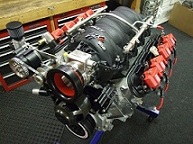

Interesting Flow Data....(Long thread)

Yeah, Tony went through all the time to test all of these heads and then in return share his findings....it needs to be a sticky. Sure, he may have been doing some R&D for designing the AFR heads but he shared the data, thats what a great forum is made of.
I just took the time to read this entire thread, and all I can say is "WOW." There is a lot of very good information in here. Thanks to Tony for all of his work in not only flow testing the heads, but sharing the data with us. 
I just read this whole thread last night at work while I was sitting around not doing anything. This thread has a lot of good information in them. I just had a set of heads done for me and independently tested. I am very happy with the results.
Tony, when can we look forward to seeing results out of you new larger runner heads? You mentioned you were expecting them out in early 2008...

What ever happened to this helpful Bret?
Tony, when can we look forward to seeing results out of you new larger runner heads? You mentioned you were expecting them out in early 2008...
J-Rod.... From what I have heard PS is over 1.000" lift and sometimes 1.100" and really tight to the coil bind on the springs they run. There are RPM ranges when the whole port is moving air but with the durations that they run there is time when the piston is moving the wrong way in the cylinder.... The problem is the pressure in the port is not just effected by the motion of the cylinder, you also have resonant tuining in there that can add 5-7psi into the intake charge... All depending on the runner lengths and cross section related to the cubes and RPM of the motor, and the main reason the LS1 is so strong compared to classic OEM small blocks. Ain't just the head flow, but it is the total cylinder filling.
One thing that I think is interesting on the AFR is that it is SO small... I'd like to see what the effective port cross section is in the head with a velocity probe. That's a big thing to look at in a LS1 head, that whole cross section isin't moving air in that port, it's actually one of those head designs that isin't very sensitive to port size nearly as much as traditional heads. IMHO it has to do with the tall and narrow port shape.
BTW I just looked at a cam I'm doing for a motor now.... Hyd Roller over .600 lift (.630 range) medium sized duration, sub 7500rpm and a "street motor"
.000-.100 68 degs 22%
.100-.200 40 degs 13%
.200-.300 26 degs 8.5%
.300-.400 34 degs 11%
.400-.500 32 degs 10.5%
.500-.600 60 degs 20%
.600 + 44 degs 14.5%
Now making a change in that motors flow curve from .200-.400" lift of 4.4% nets less than a 1% loss in max power and about .4% in average power. Now if you changed the flow at the top end .600+ 4.4% you would see a 1% loss in average power. This is with big changes in flow of 15-20cfm at the top end. That's 150% more loss in average power.
To add a little more to this the lowest pressures seen in the port (highest vacuum) at the max VE occur between .420-.520" lobe lift (opening) and the highest pressures occur between .150-.020" lift (closing), from lowest vacuum to highest pressure there is roughly a 15psi change in pressures. The highest average velocities occured for 84 degs at lifts over .500". The more flow you have in that lift area will raise the amount of duration that the motor pulls that high of a velocity given the same sized port.
So you can see the time when the port is filling the motor the fastest is around max lift, and the time it's filling it with the most pressure is around valve closing while the piston is coming up the bore.
Bret
One thing that I think is interesting on the AFR is that it is SO small... I'd like to see what the effective port cross section is in the head with a velocity probe. That's a big thing to look at in a LS1 head, that whole cross section isin't moving air in that port, it's actually one of those head designs that isin't very sensitive to port size nearly as much as traditional heads. IMHO it has to do with the tall and narrow port shape.
BTW I just looked at a cam I'm doing for a motor now.... Hyd Roller over .600 lift (.630 range) medium sized duration, sub 7500rpm and a "street motor"
.000-.100 68 degs 22%
.100-.200 40 degs 13%
.200-.300 26 degs 8.5%
.300-.400 34 degs 11%
.400-.500 32 degs 10.5%
.500-.600 60 degs 20%
.600 + 44 degs 14.5%
Now making a change in that motors flow curve from .200-.400" lift of 4.4% nets less than a 1% loss in max power and about .4% in average power. Now if you changed the flow at the top end .600+ 4.4% you would see a 1% loss in average power. This is with big changes in flow of 15-20cfm at the top end. That's 150% more loss in average power.
To add a little more to this the lowest pressures seen in the port (highest vacuum) at the max VE occur between .420-.520" lobe lift (opening) and the highest pressures occur between .150-.020" lift (closing), from lowest vacuum to highest pressure there is roughly a 15psi change in pressures. The highest average velocities occured for 84 degs at lifts over .500". The more flow you have in that lift area will raise the amount of duration that the motor pulls that high of a velocity given the same sized port.
So you can see the time when the port is filling the motor the fastest is around max lift, and the time it's filling it with the most pressure is around valve closing while the piston is coming up the bore.
Bret
Beaflag...
The big cathedral port project got temporarily shelved as management decided my efforts were better placed elsewhere.....LOL
The good news is I secretly worked on that pet project of mine during some of my down time between projects and epoxy drying etc. and have managed to squeeze even more from the design. Its grown a little (about 240 cc's or so) and will be fitted with a 2.165 intake valve....1.600 exhaust. Its by far the highest flowing cathedral port I have personally ever seen or tested (approaching 360 CFM at .650 lift). Im still putting a few finishing touches on it and the new castings we will be cutting them in are do in shortly. When I start cutting some production style ports with the CNC (and am closer to seeing what realistic production figures will be) I will share more of the flow information but its looking like they will be shipping out our doors with a .600 number in the 350 CFM range (on my "real world" bench) and with just as impressive a curve thru out the entire range. My gut tells me you will see some cathedral head large displacement dyno barriors broken with this new head design. I will be building a solid roller 447 to feature some of the benefits of this head in the next few months. Likely on the dyno in the late summer with results to follow....
Exciting stuff
-Tony
The big cathedral port project got temporarily shelved as management decided my efforts were better placed elsewhere.....LOL
The good news is I secretly worked on that pet project of mine during some of my down time between projects and epoxy drying etc. and have managed to squeeze even more from the design. Its grown a little (about 240 cc's or so) and will be fitted with a 2.165 intake valve....1.600 exhaust. Its by far the highest flowing cathedral port I have personally ever seen or tested (approaching 360 CFM at .650 lift). Im still putting a few finishing touches on it and the new castings we will be cutting them in are do in shortly. When I start cutting some production style ports with the CNC (and am closer to seeing what realistic production figures will be) I will share more of the flow information but its looking like they will be shipping out our doors with a .600 number in the 350 CFM range (on my "real world" bench) and with just as impressive a curve thru out the entire range. My gut tells me you will see some cathedral head large displacement dyno barriors broken with this new head design. I will be building a solid roller 447 to feature some of the benefits of this head in the next few months. Likely on the dyno in the late summer with results to follow....
Exciting stuff
-Tony
LS1 Tech Stories
The Best V8 Stories One Small Block at Time

6 Gifts Neither Your Dad Nor Grad Will Shove Into the 'Trinket Drawer'
Brett Foote
Topdon ONE vs. Artidiag 800 BT2: Which is the Diagnostic Tablet For You?
Pouria Savadkouei
Gas Monkey Built a 6-Wheel Ferrari Testarossa With a Corvette LT4 Engine
Verdad Gallardo
7 Most Reliable High-Performance Engines GM Has Ever Built
Verdad Gallardo
Amazing '71 Camaro Restomod Is Modern Muscle Car Under the Skin
Verdad Gallardo
6 Common C5 Corvette Failures and What's Involved In Repairing Them
Pouria Savadkouei
Retro Modern Bandit Pontiac Trans AM Comes With Burt Reynolds' Autograph
Verdad Gallardo
Top 10 Greatest Cadillac V Series Performance Models Ever, Ranked
Pouria Savadkouei
Top 10 Most Powerful Chevy Trucks Ever Made!

Beaflag...
The big cathedral port project got temporarily shelved as management decided my efforts were better placed elsewhere.....LOL
The good news is I secretly worked on that pet project of mine during some of my down time between projects and epoxy drying etc. and have managed to squeeze even more from the design. Its grown a little (about 240 cc's or so) and will be fitted with a 2.165 intake valve....1.600 exhaust. Its by far the highest flowing cathedral port I have personally ever seen or tested (approaching 360 CFM at .650 lift). Im still putting a few finishing touches on it and the new castings we will be cutting them in are do in shortly. When I start cutting some production style ports with the CNC (and am closer to seeing what realistic production figures will be) I will share more of the flow information but its looking like they will be shipping out our doors with a .600 number in the 350 CFM range (on my "real world" bench) and with just as impressive a curve thru out the entire range. My gut tells me you will see some cathedral head large displacement dyno barriors broken with this new head design. I will be building a solid roller 447 to feature some of the benefits of this head in the next few months. Likely on the dyno in the late summer with results to follow....
Exciting stuff
-Tony
The big cathedral port project got temporarily shelved as management decided my efforts were better placed elsewhere.....LOL
The good news is I secretly worked on that pet project of mine during some of my down time between projects and epoxy drying etc. and have managed to squeeze even more from the design. Its grown a little (about 240 cc's or so) and will be fitted with a 2.165 intake valve....1.600 exhaust. Its by far the highest flowing cathedral port I have personally ever seen or tested (approaching 360 CFM at .650 lift). Im still putting a few finishing touches on it and the new castings we will be cutting them in are do in shortly. When I start cutting some production style ports with the CNC (and am closer to seeing what realistic production figures will be) I will share more of the flow information but its looking like they will be shipping out our doors with a .600 number in the 350 CFM range (on my "real world" bench) and with just as impressive a curve thru out the entire range. My gut tells me you will see some cathedral head large displacement dyno barriors broken with this new head design. I will be building a solid roller 447 to feature some of the benefits of this head in the next few months. Likely on the dyno in the late summer with results to follow....
Exciting stuff
-Tony
That is really good news to hear. I look forward to seeing results out of these heads. If they are in the price range of your current heads and they can as CNCed flow in the range you are talking about they will sell like hot cakes.
With the 2.165 intake valve is it canted or the angle rolled on it any? That is a rather large valve in conjunction with a 1.60 exhaust. What do you potentially see as the minimum recommended bore size? If they are available for a 4.03 bore and priced around your other heads I will more than likely end up picking up a set for my Formula down the road. I was eventually going to get another set of aftermarket castings that I had before (had to sell / lost old job), but this really has me interested.
I am a large proponent of cathedral port heads. I really think they are some of the best street / strip heads out there. Only being surpassed by all out aftermarket castings like the All Pro LSw, Canted Valve, and C5R units. I think people went a little crazy thinking they were outdated when the LS7 and L92 stuff came out. I'm glad a lot of that has died down.
Random, but with all of the testing you do have you ever done a back to back comparison of the same or similar heads where the only variable was the valve stem diameter? I have a set of 7mm titanium intake valves that I am wondering about installing at some point and am interested in seeing how the stem diameter would affect flow aspects.
Another series of questions from this thread.
https://ls1tech.com/forums/generatio...eal-world.html
In talking about CFM in regards to real world combinations, velocity, post size, CSA, and a heads usable flow curve.
Tony, I have that article in an older magazine. What you say peaks my interest more in working towards further educating myself in this subject.
With the variances in cam design now how would the ever changing lobe technology affect this sort of selection? With super aggresive LSK lobes we are seeing much faster ramp rates than lesser lobes. Are we still trying to effectively maximize velocity through the port or slightly opening up the ports to flow more air? With velocity I see the advantages of ramming air into the cylinder, but with a static flow rate would decreasing the pressure and increasing the flow make more of a difference? How would that change with having a super aggresive LSK lobe versus a relatively lazy XE lobe?
With the ideas of maximum performance in mind getting the most air in the cylinders is the goal. I remember with Patrick Gs heads that you worked over for him your whole goal was maximimizing the airflow in the lower CFM range where you'll spend the most time. The results were great and with the super efficient ports of the AFR 205s, tight quench, and small combustion chambers resulting in an effective burn it put out great numbers.
Now, on the other side of the equation where do you draw the boundary between optimal velocity and flow? Do you just work a port with the ideas of maintaining a maximum velocity with flow as the added advantage or the other way around?
With the variances in cam design now how would the ever changing lobe technology affect this sort of selection? With super aggresive LSK lobes we are seeing much faster ramp rates than lesser lobes. Are we still trying to effectively maximize velocity through the port or slightly opening up the ports to flow more air? With velocity I see the advantages of ramming air into the cylinder, but with a static flow rate would decreasing the pressure and increasing the flow make more of a difference? How would that change with having a super aggresive LSK lobe versus a relatively lazy XE lobe?
With the ideas of maximum performance in mind getting the most air in the cylinders is the goal. I remember with Patrick Gs heads that you worked over for him your whole goal was maximimizing the airflow in the lower CFM range where you'll spend the most time. The results were great and with the super efficient ports of the AFR 205s, tight quench, and small combustion chambers resulting in an effective burn it put out great numbers.
Now, on the other side of the equation where do you draw the boundary between optimal velocity and flow? Do you just work a port with the ideas of maintaining a maximum velocity with flow as the added advantage or the other way around?

More info on the 240 stuff soon....starting to "play" with the CNC porting programs right now....the last leg of all my R&D work related to new product development and refinement.
-Tony

TECH Senior Member
iTrader: (3)
Joined: Apr 2006
Posts: 6,524
Likes: 1
From: Western Burbs of Detroit


Not only were the AFR 245s at the PRI show, but I also got to pet bigfoot!
Just busting Tony's *****. They had some setbacks on the originally scheduled release of these heads but it sounds like they are ready to go.
I also had the opportunity to see flow numbers on these bad boys compared directly to a leading competitors off-the-shelf 245 CNC cathedral port production head (on the same flow bench) and the numbers were impressive. Specially up top. This data is all still classified though so I can't supply any details.
The only thing missing are the 2 additional bolt holes required per cylinder in order to bolt them to the LSX block.
Just busting Tony's *****. They had some setbacks on the originally scheduled release of these heads but it sounds like they are ready to go.
I also had the opportunity to see flow numbers on these bad boys compared directly to a leading competitors off-the-shelf 245 CNC cathedral port production head (on the same flow bench) and the numbers were impressive. Specially up top. This data is all still classified though so I can't supply any details.
The only thing missing are the 2 additional bolt holes required per cylinder in order to bolt them to the LSX block.

TECH Regular
Joined: Feb 2009
Posts: 426
Likes: 0
From: Geneva, IL
I was wondering....for those heads that had the "T" for turbulent.......would that greatly effect the power of the car at givin lift b/c of the turbulence?...any explination would also be great.
Neat Thread, I think Most Important is what these heads do on the engine in the Car, I Guaranty that list would look quite a Bit different if you tested each set on the same car, Also FWIW i'd be one to argue the Engine Doesn't see some/any of the turbulence in some heads, not all, IDK man There is Soooo Much more to this than Numbers/cc's, valve angles, ect IMHO