








ARP Head stud torque for 402
 ARP Head stud torque for 402
 Engine is a 402 ls2 stroker with ETP Heads, gm ls2 6.0 head gaskets and arp head studs
What are the torque specs? I didn't think they were angle torque ,and 65 lbs doesn't sound enough.
Sequence is the same as ls1 right?
Please help, thanks
What are the torque specs? I didn't think they were angle torque ,and 65 lbs doesn't sound enough.
Sequence is the same as ls1 right?
Please help, thanks

Banned
Joined: May 2006
Posts: 421
Likes: 0
Originally Posted by roadtrip120
Engine is a 402 ls2 stroker with ETP Heads, gm ls2 6.0 head gaskets and arp head studs
What are the torque specs? I didn't think they were angle torque ,and 65 lbs doesn't sound enough.
Sequence is the same as ls1 right?
Please help, thanks
What are the torque specs? I didn't think they were angle torque ,and 65 lbs doesn't sound enough.
Sequence is the same as ls1 right?
Please help, thanks
If so use this:
First pass 25lbft second pass at 50lbft, and finally a 3rd at 70lbft.
Finally install the 5 smaller ARP bolts and torque them to 22lbft.
If using motor oil use this:
First pass 30lbft second pass at 60lbft, and finally a 3rd at 80lbft.
Finally install the 5 smaller ARP bolts and torque them to 28lbft.
(Incase you didn't know you have to lube the threads and washers before installing... you must use either arp lube or motor oil. )
Install in this order:
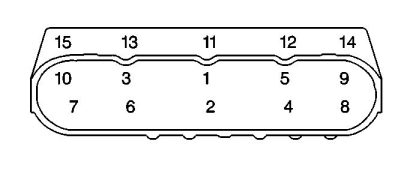
The standard oil used for the lubrication of fasteners is Conventional SAE30 NOT a multiweight and NOT a synthetic.
Do yourself a favor and get the ARP lube. IT'll make life much easier and it works better.
DO NOT FORGET NEW fasteners must be BURNISHED for proper installation. This means you should perform the TQ sequence then loosen the fasteners and repeat. Do this a total of 3 times to make sure all surfaces are burnished.
Do yourself a favor and get the ARP lube. IT'll make life much easier and it works better.
DO NOT FORGET NEW fasteners must be BURNISHED for proper installation. This means you should perform the TQ sequence then loosen the fasteners and repeat. Do this a total of 3 times to make sure all surfaces are burnished.
Originally Posted by Cheatin' Chad
Th
DO NOT FORGET NEW fasteners must be BURNISHED for proper installation. This means you should perform the TQ sequence then loosen the fasteners and repeat. Do this a total of 3 times to make sure all surfaces are burnished.
DO NOT FORGET NEW fasteners must be BURNISHED for proper installation. This means you should perform the TQ sequence then loosen the fasteners and repeat. Do this a total of 3 times to make sure all surfaces are burnished.
Banned
Joined: May 2006
Posts: 421
Likes: 0
Originally Posted by Joel_SS
Is this process required for ARP head bolts as well?
The directions also said you could use a 5w-30 oil... and said nothing about not using syn...
Hmmmm.... Not saying you are wrong.... Just saying Arp did not mention these things.
Originally Posted by Joel_SS
Is this process required for ARP head bolts as well?
It is however neccessary for them to work to their fullest ability.
Last edited by Cheatin' Chad; Aug 3, 2006 at 01:55 PM.
Originally Posted by viewsonic
Not to discount what chad said... but the directions that came with my arp bolts mentioned nothing of what he said above.
The directions also said you could use a 5w-30 oil... and said nothing about not using syn...
Hmmmm.... Not saying you are wrong.... Just saying Arp did not mention these things.
The directions also said you could use a 5w-30 oil... and said nothing about not using syn...
Hmmmm.... Not saying you are wrong.... Just saying Arp did not mention these things.
Allow me to explain myself so you can understand where I am coming from.
Multiweight oils are blended with a multitude of friction modifiers and detergents.Their viscosity is also by design supposed to change with heat.
Unless ARP has tested their fasteners with the brand and more importantly viscosity of oil you are using they cannot accurately predict what your end results will be.
ARP does not test their standard production fasteners with Synthetic oils. Most Synthetic oils are of a different lubricity than conventional oils of the same advertised "weight".
By using a a straight "weight" conventional oil we are simply eliminating a variable. Going one step further we could use ARP's moly lube and get as close as we can (at small cost) to their original testing procedures.
I believe the best way to succeed in Motorsports is to leave as few things as possible to chance. In this case the best thing to do is use ARP's own moly lube as ALL of their fasteners are tested with this lubricant. It is of a known quantity as you are using the same stuff they are using. It might not be EXACT can to can but it is certainly closer to testing conditions than some random quart of oil we bought at the parts store.
Now this mindset could be taken one step further and you could try to replicate weather conditions and use the same tools they are using,etc.
At some point due to money and time we as normal people sponsored by ourselves have to draw the line.
I would suggest however that you do whatever is reasonable and possible within your means to eliminate variables.

Trending Topics
Originally Posted by Cheatin' Chad
Yes, it's required with any fastener that is in a "mission critical" position. Is it NECCESSARY for them to function? NO!..
It is however neccessary for them to work to their fullest ability.
It is however neccessary for them to work to their fullest ability.
LS1 Tech Stories
The Best V8 Stories One Small Block at Time

Topdon ONE vs. Artidiag 800 BT2: Which is the Diagnostic Tablet For You?
Pouria Savadkouei
Gas Monkey Built a 6-Wheel Ferrari Testarossa With a Corvette LT4 Engine
Verdad Gallardo
7 Most Reliable High-Performance Engines GM Has Ever Built
Verdad Gallardo
Amazing '71 Camaro Restomod Is Modern Muscle Car Under the Skin
Verdad Gallardo
6 Common C5 Corvette Failures and What's Involved In Repairing Them
Pouria Savadkouei
Retro Modern Bandit Pontiac Trans AM Comes With Burt Reynolds' Autograph
Verdad Gallardo
Top 10 Greatest Cadillac V Series Performance Models Ever, Ranked
Pouria Savadkouei
Top 10 Most Powerful Chevy Trucks Ever Made!

Hennessey's New Supercharged Silverado ZR2 Has 700 HP
Verdad Gallardo
Originally Posted by Joel_SS
Oopps! When I put my heads on I torqued my ARP head bolts with ARP moly lube to ARP spec and called it a day. 1000 miles later no leaks.. Hope it stays that way..
Like I said before the steps I talked about are not MANDATORY. They are useful for making sure that you get the most out of your fasteners.

We ussually torque studs to 75-80ft/lbs ussing ARP lube. Never retorque and they have held on many motor's running 16lbs+ of boost. Not a bad idea to back them off and redo,we just don't.
