


Turning a crank?


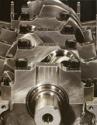


.010" is fine, no big deal at all.
A word of advice, if you get your bearings in advance you can measure the ID of the bearings in the mains and/or rods with the caps torqued and tell the machinist exactly what OD to turn the crank to to get your exact bearing clearance. I do this all the time and if you do t work in a shop and have access to a large selection of different sizes, this is a good way to avoid buying several sets and mixing and matching.
A word of advice, if you get your bearings in advance you can measure the ID of the bearings in the mains and/or rods with the caps torqued and tell the machinist exactly what OD to turn the crank to to get your exact bearing clearance. I do this all the time and if you do t work in a shop and have access to a large selection of different sizes, this is a good way to avoid buying several sets and mixing and matching.
Thing is, I don't want to do .01" now because that gives me 1 more time less life on the crank. So I'm trying to stay with .002" (found these SP bearings, don't know how good are they)

TECH Apprentice


Joined: Oct 2007
Posts: 301
Likes: 20
Don't worry about .010 cut on the crank. That's less than 1/2 of 1% of either main or rod journals. If it's done right with a good radius on the filet, it will be stronger when he's finished than when he started. And a .010 cut means you'll have taken .005 off of each side of each journal, should be well under the depth of any hardening done by Eagle. Racers cut rods down to Honda journal size all the time with no crank issues.
Trending Topics
I'm sure .01 less diameter (diameter, correct??) will be still within hardened layer, but what if I ever need to turn it again? .02" might fall below the thickness of the hardening :s