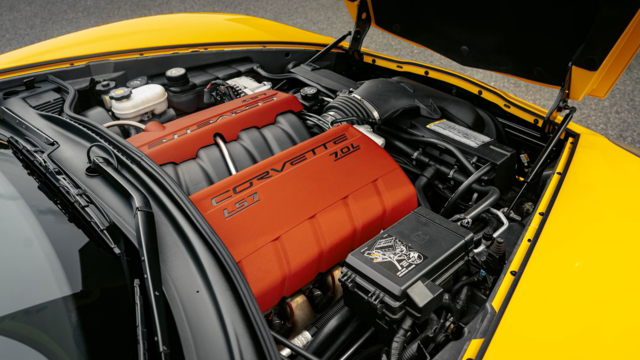




lifter preload question

i have the pushrod checker, but im a bit confused on how to use it.it has two vertical lines on it and i know one revolution equals .050.i know you put the checkecker between the rocker and lifter and torque the rocker bolt to 22 ftlbs and then adjust the checker so there is zero lash.my question is how do you measure the lenght of the checker? i have a caliper ,but it only measures up to 6"
https://ls1tech.com/forums/generatio...g-checker.html
I used a vernier caliper similar to what you might have.
I carefully measured each part of the push rod length checker and then added those measurements together.
The stationary part + the area with the threads + the small rotation part without the threads=
The part of the pushrod checker with the threads, I took an inside measurements with the caliper.
Here's the actual measurements from my last head/cam swap.
5.560
+
.415
+
1.320 = 7.295 + .080 = 7.375
.
You can use a 8" mic to check the length of the pushrod checker. You need to standard the mic then messure the pushrod with zero lash and then add the amount of preload you want to this number and order the pushrod closest to that length but still within alowwable tolerance.

Thread Starter
Staging Lane
Joined: Jul 2009
Posts: 59
Likes: 0
From: virginia beach va
i finally got around to measuring the pushrods and i needed 7.425's.i installed them and its alot quieter now.the only noise now is coming from the headers down where the pipes merge into the collector.
It sounds like you're good to go on the preload.
7.425's are actually 7.400's ... 7.400 are actually 7.375's.
I've always wondered why they do that.
On your headers, hopefully it's only a matter of tightening a flange
or slip-joint.
Glad to hear you got the valve-train noise quieted down.
7.425's are actually 7.400's ... 7.400 are actually 7.375's.
I've always wondered why they do that.
On your headers, hopefully it's only a matter of tightening a flange
or slip-joint.
Glad to hear you got the valve-train noise quieted down.
It sounds like you're good to go on the preload.
7.425's are actually 7.400's ... 7.400 are actually 7.375's.
I've always wondered why they do that.
On your headers, hopefully it's only a matter of tightening a flange
or slip-joint.
Glad to hear you got the valve-train noise quieted down.
7.425's are actually 7.400's ... 7.400 are actually 7.375's.
I've always wondered why they do that.
On your headers, hopefully it's only a matter of tightening a flange
or slip-joint.
Glad to hear you got the valve-train noise quieted down.
This is another reason why I prefer to use a known length pushrod instead of a checker. For 99% of cam swaps done by people here, this method will always give an accurate result. Don't get me wrong, I love selling PR length checkers but they are really not necessary. There is no big mystery to figuring pushrod length. It is very simple:
FWIW, EVERY cam install I have done using the LS7 lifter with a cam with greater than .600" lift (read smaller base circle) AND stock heads w/GM MLS gaskets has taken 7.425" pushrods for ~.050"-.060" preload. We measure lifter preload on each and every cam install we do. I have never had a lifter failure nor do we end up with the dreaded "sewing machine" noise.
Its very simple, If you change ANY of the following:
valve sizes, valve job, head milling, thinner/thicker head gaskets, decked block, cam with an altered base circle, etc... YOU MUST CHECK FOR PROPER PUSHROD LENGTH.
I have helped countless numbers of individuals with this process over the phone, via email, and PM's. I've posted the process on at least 3 occasions.
Here it is again in a nutshell:
1. Using the EO/IC method, get the lifter to the base circle of the cam.
2. Using a known length pushrod (7.400" is a good start with stock rockers) run the rocker arm bolt down to zero lash. This is easily done with your fingers "wiggling" the rocker, the point at which the "slack" is just gone is zero lash.
3. Set your torque wrench to 22 lb./ft. Tighten the rocker to full torque and count the number of turns it takes to get there. 1 full turn wtih a stock 8mm X 1.25 bolt is ~.047" preload as measured at the pushrod/rocker interface.
4. I normally shoot for 1 1/4 to 1 3/4 turns with stock type lifters like Comp 850's, LS1, LS7 etc.
For an example, if you use a 7.400" pushrod and come up with 3/4 of a turn, you will need at least .025" longer pushrod to get into range. If you end up with 2 1/4 turns, you will need one .025" shorter...
I might not know everything but I will tell you that this method has worked for me year after year cam swap after cam swap. We average 3 cam swaps a week here so you can do the math.
If you are not familiar with the EO/IC method for determining valve events in a 4 stroke engine, its very simple:
For a given cylinder as the Exhaust valve is Opening, the intake lifter will be on the base circle of the cam and lash/preload should be checked for that intake valve.
For a given cylinder as the Intake valve is Closing, the exhaust lifter will be on the base circle of the cam and lash/preload should be checked for that exhaust valve.
THIS METHOD ALWAYS WORKS!!!
I hope this helps someone. I have explained it so many times I think I do it in my sleep!!!
Shane
FWIW, EVERY cam install I have done using the LS7 lifter with a cam with greater than .600" lift (read smaller base circle) AND stock heads w/GM MLS gaskets has taken 7.425" pushrods for ~.050"-.060" preload. We measure lifter preload on each and every cam install we do. I have never had a lifter failure nor do we end up with the dreaded "sewing machine" noise.
Its very simple, If you change ANY of the following:
valve sizes, valve job, head milling, thinner/thicker head gaskets, decked block, cam with an altered base circle, etc... YOU MUST CHECK FOR PROPER PUSHROD LENGTH.
I have helped countless numbers of individuals with this process over the phone, via email, and PM's. I've posted the process on at least 3 occasions.
Here it is again in a nutshell:
1. Using the EO/IC method, get the lifter to the base circle of the cam.
2. Using a known length pushrod (7.400" is a good start with stock rockers) run the rocker arm bolt down to zero lash. This is easily done with your fingers "wiggling" the rocker, the point at which the "slack" is just gone is zero lash.
3. Set your torque wrench to 22 lb./ft. Tighten the rocker to full torque and count the number of turns it takes to get there. 1 full turn wtih a stock 8mm X 1.25 bolt is ~.047" preload as measured at the pushrod/rocker interface.
4. I normally shoot for 1 1/4 to 1 3/4 turns with stock type lifters like Comp 850's, LS1, LS7 etc.
For an example, if you use a 7.400" pushrod and come up with 3/4 of a turn, you will need at least .025" longer pushrod to get into range. If you end up with 2 1/4 turns, you will need one .025" shorter...
I might not know everything but I will tell you that this method has worked for me year after year cam swap after cam swap. We average 3 cam swaps a week here so you can do the math.
If you are not familiar with the EO/IC method for determining valve events in a 4 stroke engine, its very simple:
For a given cylinder as the Exhaust valve is Opening, the intake lifter will be on the base circle of the cam and lash/preload should be checked for that intake valve.
For a given cylinder as the Intake valve is Closing, the exhaust lifter will be on the base circle of the cam and lash/preload should be checked for that exhaust valve.
THIS METHOD ALWAYS WORKS!!!
I hope this helps someone. I have explained it so many times I think I do it in my sleep!!!
Shane
If you are measuring with a vernier and counting turns in comparison, there is approximately a 0.020" difference. The Comp adjustable (Made by Trend) used the gauge length of the pushrod. With the vernier you are measuring the overall length. Comp uses gauge length to determine pushrod length, hence the difference you are noting.

.
This is another reason why I prefer to use a known length pushrod instead of a checker. For 99% of cam swaps done by people here, this method will always give an accurate result. Don't get me wrong, I love selling PR length checkers but they are really not necessary. There is no big mystery to figuring pushrod length. It is very simple:
FWIW, EVERY cam install I have done using the LS7 lifter with a cam with greater than .600" lift (read smaller base circle) AND stock heads w/GM MLS gaskets has taken 7.425" pushrods for ~.050"-.060" preload. We measure lifter preload on each and every cam install we do. I have never had a lifter failure nor do we end up with the dreaded "sewing machine" noise.
Its very simple, If you change ANY of the following:
valve sizes, valve job, head milling, thinner/thicker head gaskets, decked block, cam with an altered base circle, etc... YOU MUST CHECK FOR PROPER PUSHROD LENGTH.
I have helped countless numbers of individuals with this process over the phone, via email, and PM's. I've posted the process on at least 3 occasions.
Here it is again in a nutshell:
1. Using the EO/IC method, get the lifter to the base circle of the cam.
2. Using a known length pushrod (7.400" is a good start with stock rockers) run the rocker arm bolt down to zero lash. This is easily done with your fingers "wiggling" the rocker, the point at which the "slack" is just gone is zero lash.
3. Set your torque wrench to 22 lb./ft. Tighten the rocker to full torque and count the number of turns it takes to get there. 1 full turn wtih a stock 8mm X 1.25 bolt is ~.047" preload as measured at the pushrod/rocker interface.
4. I normally shoot for 1 1/4 to 1 3/4 turns with stock type lifters like Comp 850's, LS1, LS7 etc.
For an example, if you use a 7.400" pushrod and come up with 3/4 of a turn, you will need at least .025" longer pushrod to get into range. If you end up with 2 1/4 turns, you will need one .025" shorter...
I might not know everything but I will tell you that this method has worked for me year after year cam swap after cam swap. We average 3 cam swaps a week here so you can do the math.
If you are not familiar with the EO/IC method for determining valve events in a 4 stroke engine, its very simple:
For a given cylinder as the Exhaust valve is Opening, the intake lifter will be on the base circle of the cam and lash/preload should be checked for that intake valve.
For a given cylinder as the Intake valve is Closing, the exhaust lifter will be on the base circle of the cam and lash/preload should be checked for that exhaust valve.
THIS METHOD ALWAYS WORKS!!!
I hope this helps someone. I have explained it so many times I think I do it in my sleep!!!
Shane
FWIW, EVERY cam install I have done using the LS7 lifter with a cam with greater than .600" lift (read smaller base circle) AND stock heads w/GM MLS gaskets has taken 7.425" pushrods for ~.050"-.060" preload. We measure lifter preload on each and every cam install we do. I have never had a lifter failure nor do we end up with the dreaded "sewing machine" noise.
Its very simple, If you change ANY of the following:
valve sizes, valve job, head milling, thinner/thicker head gaskets, decked block, cam with an altered base circle, etc... YOU MUST CHECK FOR PROPER PUSHROD LENGTH.
I have helped countless numbers of individuals with this process over the phone, via email, and PM's. I've posted the process on at least 3 occasions.
Here it is again in a nutshell:
1. Using the EO/IC method, get the lifter to the base circle of the cam.
2. Using a known length pushrod (7.400" is a good start with stock rockers) run the rocker arm bolt down to zero lash. This is easily done with your fingers "wiggling" the rocker, the point at which the "slack" is just gone is zero lash.
3. Set your torque wrench to 22 lb./ft. Tighten the rocker to full torque and count the number of turns it takes to get there. 1 full turn wtih a stock 8mm X 1.25 bolt is ~.047" preload as measured at the pushrod/rocker interface.
4. I normally shoot for 1 1/4 to 1 3/4 turns with stock type lifters like Comp 850's, LS1, LS7 etc.
For an example, if you use a 7.400" pushrod and come up with 3/4 of a turn, you will need at least .025" longer pushrod to get into range. If you end up with 2 1/4 turns, you will need one .025" shorter...
I might not know everything but I will tell you that this method has worked for me year after year cam swap after cam swap. We average 3 cam swaps a week here so you can do the math.
If you are not familiar with the EO/IC method for determining valve events in a 4 stroke engine, its very simple:
For a given cylinder as the Exhaust valve is Opening, the intake lifter will be on the base circle of the cam and lash/preload should be checked for that intake valve.
For a given cylinder as the Intake valve is Closing, the exhaust lifter will be on the base circle of the cam and lash/preload should be checked for that exhaust valve.
THIS METHOD ALWAYS WORKS!!!
I hope this helps someone. I have explained it so many times I think I do it in my sleep!!!
Shane
Interesting info on the EO/IC method. It took me a minute to wrap my mind around it but it does
make sense.

.
Last edited by bearcatt; Nov 1, 2009 at 09:31 PM.
LS1 Tech Stories
The Best V8 Stories One Small Block at Time

Top 10 Greatest Cadillac V Series Performance Models Ever, Ranked
Pouria Savadkouei
Top 10 Most Powerful Chevy Trucks Ever Made!

Hennessey's New Supercharged Silverado ZR2 Has 700 HP
Verdad Gallardo
Coachbuilt N2A Anteros Is an LS2-Powered C6 Corvette In Italian Clothes
Verdad Gallardo
Awesome K5 Blazer Restomod Comes With C7 Corvette Power
Verdad Gallardo
10 Camaros You Should Never Buy

10 LS Engine Myths That Refuse to Die
Verdad Gallardo
Five Reasons the Camaro Was the Most Pivotal Player in the Pony Car Wars 2.0
Brett Foote