









Poor OEM LS deck surface...

Thread Starter
Joined: May 2011
Posts: 8,487
Likes: 1,034
From: Wichita, KS
 Poor OEM LS deck surface...
 Just thought this was interesting. I actually cleaned the deck surface "properly" and you can really see how poor it is.
This is my first alum block motor. 2008 5.3. I had always used the plastic roloc wheels on my iron blocks and never noticed any of the OEM mill marks. Probably ground them all off.
So this time I used a razor blade at 90* and scraped the surface clean, then used a large 9" sanding block to cover the whole deck surface and wetsanded it with 400g a bit.
Anyway look at this thing. Every dark stripe is a low spot. Same deal with the heads. Looks like a zebra!
If this wasn't a $500 motor I'd tear it back down and go have this machined out. Instead it's getting some LS9 gaskets/studs and 25lbs of boost.
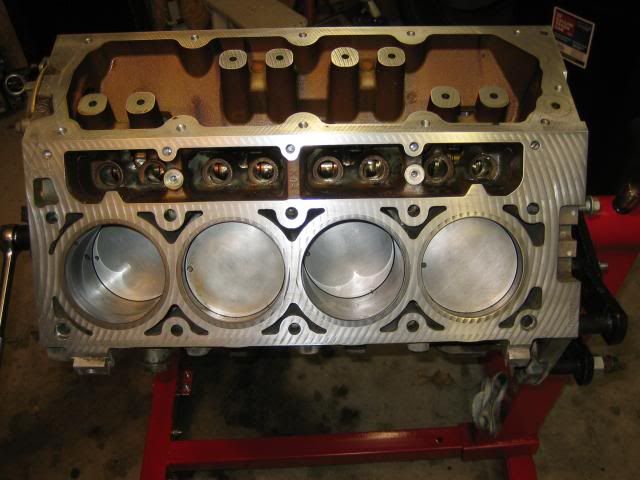
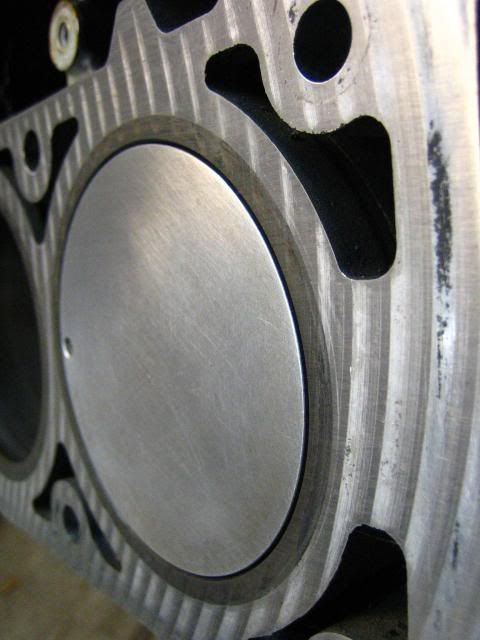
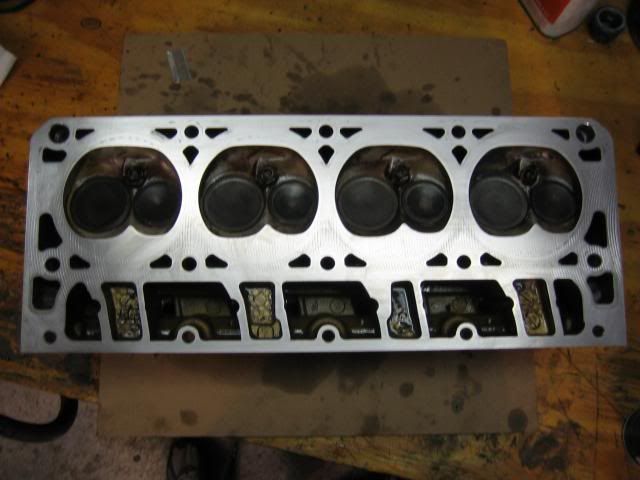
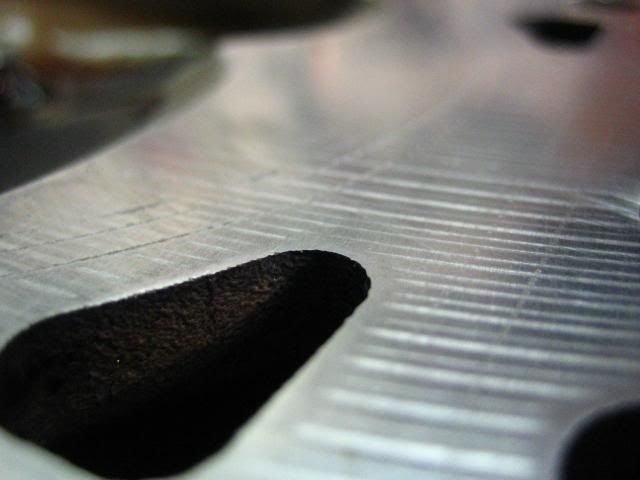
You really couldn't see it until I scraped it completely clean. Then after the wet sanding it really brought it out.
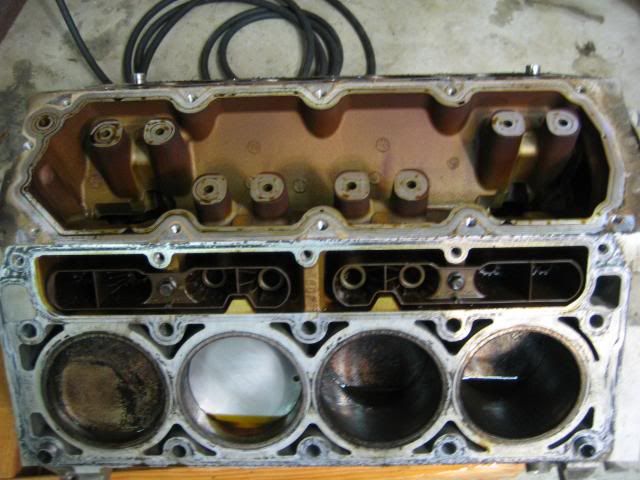
This is where I got the idea not to use a roloc wheel like I always had...
This is my first alum block motor. 2008 5.3. I had always used the plastic roloc wheels on my iron blocks and never noticed any of the OEM mill marks. Probably ground them all off.
So this time I used a razor blade at 90* and scraped the surface clean, then used a large 9" sanding block to cover the whole deck surface and wetsanded it with 400g a bit.
Anyway look at this thing. Every dark stripe is a low spot. Same deal with the heads. Looks like a zebra!
If this wasn't a $500 motor I'd tear it back down and go have this machined out. Instead it's getting some LS9 gaskets/studs and 25lbs of boost.
You really couldn't see it until I scraped it completely clean. Then after the wet sanding it really brought it out.
This is where I got the idea not to use a roloc wheel like I always had...
Last edited by Forcefed86; Jan 13, 2014 at 01:29 PM.
...
This is where I got the idea not to use a roloc wheel like I always had...
Subaru Head Gasket Preparation - YouTube
This is where I got the idea not to use a roloc wheel like I always had...
Subaru Head Gasket Preparation - YouTube
Thread Starter
Joined: May 2011
Posts: 8,487
Likes: 1,034
From: Wichita, KS
Not strange at all, both will remove material. You get low spots with a wheel because you can't remove it on a level plane, you can with a sanding block.
Production machining leaves something to be desired. Dull cutters, aggressive milling pressure, speed production, etc., etc. The main thing with
boost is quality fasteners pulled up in three stages, MLS style headgaskets,
and the correct RA finish to grab the gasket surface. IIWY I'd tip the deck
perpendicular to the ground and block sand it again with either 60 or 80
grit to reduce the high spots and make it rougher to lock the gasket material.
I normally go with 36 grit on an iron block/composition gasket application
where I'm trying to save a few bucks. Aluminum doesn't need it quite that
coarse...but remember too smooth allows the gasket to move around a bit.
boost is quality fasteners pulled up in three stages, MLS style headgaskets,
and the correct RA finish to grab the gasket surface. IIWY I'd tip the deck
perpendicular to the ground and block sand it again with either 60 or 80
grit to reduce the high spots and make it rougher to lock the gasket material.
I normally go with 36 grit on an iron block/composition gasket application
where I'm trying to save a few bucks. Aluminum doesn't need it quite that
coarse...but remember too smooth allows the gasket to move around a bit.
Thread Starter
Joined: May 2011
Posts: 8,487
Likes: 1,034
From: Wichita, KS
Production machining leaves something to be desired. Dull cutters, aggressive milling pressure, speed production, etc., etc. The main thing with
boost is quality fasteners pulled up in three stages, MLS style headgaskets,
and the correct RA finish to grab the gasket surface. IIWY I'd tip the deck
perpendicular to the ground and block sand it again with either 60 or 80
grit to reduce the high spots and make it rougher to lock the gasket material.
I normally go with 36 grit on an iron block/composition gasket application
where I'm trying to save a few bucks. Aluminum doesn't need it quite that
coarse...but remember too smooth allows the gasket to move around a bit.
boost is quality fasteners pulled up in three stages, MLS style headgaskets,
and the correct RA finish to grab the gasket surface. IIWY I'd tip the deck
perpendicular to the ground and block sand it again with either 60 or 80
grit to reduce the high spots and make it rougher to lock the gasket material.
I normally go with 36 grit on an iron block/composition gasket application
where I'm trying to save a few bucks. Aluminum doesn't need it quite that
coarse...but remember too smooth allows the gasket to move around a bit.
I’m not confident enough in my ability to sand it on a level plane with 60-80 grit. I honestly don’t believe it needs anywhere near that level of material removed. I think a few hundred strokes with 280 will remove all the high spots. Like I said I can’t even catch a razor blade in the low spots. As far as a coarse deck surface the MLS gaskets strictly call for the opposite from what I’ve read? More specifically cometic calls out 50RA or better for there MLS gaskets to seal properly. Ive seen that 50RA surface a few times and it looks like a mirror. I could see installing a composite gasket with “rough” mating surfaces. But not an MLS… from what I’ve read anyway.
GM released some service letters about there MLS gaskets awhile back because of all the improper installations being done at dealerships. It said you want the HG to move. That’s one of the reasons they went to MLS gaskets in the first place. The block and head are going to expand and contract at different rates, there is no getting around that. (Esp. with iron block and alum. head). Also one of the reasons they suggest dry install is so the gasket can move. They say you don’t want the gasket glued to the deck/head with sealers. Another reason they suggest dry install is because the direct contact of the metal gasket helps transfer heat more efficiently between the block and head. There were a couple more reasons but you get the idea...
I've been playing with these LS series engines for over a dozen years now. Done many head swaps and engine builds. Never had a problem with the deck surface on any of these OEM blocks. Just clean them squeaky clean put on Cometic or multi layer metal head gaskets dry and they seal up fine. I think your making your own problem by sanding and using wheels and such on them. If they are flat and clean they work fine. I worked in a Chevy dealer for ten years can't remember any blocks being sent out to be milled. Sometimes people over think things and create their own problems with something that was not wrong to begin with....

Thread Starter
Joined: May 2011
Posts: 8,487
Likes: 1,034
From: Wichita, KS
I've been playing with these LS series engines for over a dozen years now. Done many head swaps and engine builds. Never had a problem with the deck surface on any of these OEM blocks. Just clean them squeaky clean put on Cometic or multi layer metal head gaskets dry and they seal up fine. I think your making your own problem by sanding and using wheels and such on them. If they are flat and clean they work fine. I worked in a Chevy dealer for ten years can't remember any blocks being sent out to be milled. Sometimes people over think things and create their own problems with something that was not wrong to begin with....
I understand what your saying, but I don’t think you read the thread if you think I created any of those markings or used a wheel of any sort on this block. I cleaned this block the correct way and this is what the OEM surface looks like. It’s very clean, but obviously not flat.
Spoke to a friend today, his newly purchased “ready for assembly” from GM LS3 has the same machine markings as my block. Obviously GM has deemed this finish as “goof enuff” for some of the new gen 4 motors. (Maybe only truck NA applications.) On that same note if GM was pushing 25lbs of boost through the engine I’d bet they would have a flatter deck/head surface. My 98 Ls1 block had a better finish, so did my 2001 iron 5.3. Spoke to several people now that said their ls1’s all had a better deck finishes than the one pictured. Most of them wet-sanded the deck as well before final assembly. This is common place with performance gaskets/applications. Though it may not be necessary when fixing Joe Blows pickup.
Last edited by Forcefed86; Jan 14, 2014 at 10:29 PM.
Trending Topics
LS1 Tech Stories
The Best V8 Stories One Small Block at Time

Topdon ONE vs. Artidiag 800 BT2: Which is the Diagnostic Tablet For You?
Pouria Savadkouei
Gas Monkey Built a 6-Wheel Ferrari Testarossa With a Corvette LT4 Engine
Verdad Gallardo
7 Most Reliable High-Performance Engines GM Has Ever Built
Verdad Gallardo
Amazing '71 Camaro Restomod Is Modern Muscle Car Under the Skin
Verdad Gallardo
6 Common C5 Corvette Failures and What's Involved In Repairing Them
Pouria Savadkouei
Retro Modern Bandit Pontiac Trans AM Comes With Burt Reynolds' Autograph
Verdad Gallardo
Top 10 Greatest Cadillac V Series Performance Models Ever, Ranked
Pouria Savadkouei
Top 10 Most Powerful Chevy Trucks Ever Made!

Hennessey's New Supercharged Silverado ZR2 Has 700 HP
Verdad Gallardo Thread Starter
Joined: May 2011
Posts: 8,487
Likes: 1,034
From: Wichita, KS
I can tell you they aren't just markings though. The dark areas are low spots. The polished looking lines are from the sanding block riding on the high spots. The dull lines in between are untouched by the sand paper as it is riding on the highspots. As has been said, it may seal fine as is. I’ll do another quick sanding session, then slap the HG’s on and be done with it. If the HG fails, at least I’ll have something to blame it on other than my tune.

Not saying your wrong and I'm right...when GM is dealing with multi millions of engine blocks and only a very few using forced induction (LS9) the machine work is not as precise as on a high out put forced induction application like yours. I would have had the block decked to begin with doing what your doing. Good luck with the project sir.
PS I'm in the 6 second club. 6.05 @ 216 not street legal.
PS I'm in the 6 second club. 6.05 @ 216 not street legal.
Last edited by slt200mph; Jan 14, 2014 at 02:28 PM.

Did you try to depth mic it? I'm guessing it may not be as off as it looks. Like stated above, that's just the production finish using what looks like a flycutter. When doing the amount of blocks GM does the blade(s) dull out a bit or get overheated. I have more machining experience than engine experience so I'm not too sure about your application, but I would say try and depth mic it or even maybe use the back side of vernier calipers and see what you can come up with? Not sure if this helps or not, but just a suggestion...
Hmmm, you missed my point completely. I understand about the Roloc wheel possibly causing low spots. At 2:02 in the vid the guy said the Roloc causes sanding scratches but after that, never mentioned once that a sanding block would or would not do the same. Deception by omission, kinda like our (in)famous gov't. BTW, our local shop uses a belt sander for decking. The heads on my turbo truck were finished using this method and hold 23# boost just fine.
Thread Starter
Joined: May 2011
Posts: 8,487
Likes: 1,034
From: Wichita, KS
Hmmm, you missed my point completely. I understand about the Roloc wheel possibly causing low spots. At 2:02 in the vid the guy said the Roloc causes sanding scratches but after that, never mentioned once that a sanding block would or would not do the same. Deception by omission, kinda like our (in)famous gov't. BTW, our local shop uses a belt sander for decking. The heads on my turbo truck were finished using this method and hold 23# boost just fine.
The type of scratches made by a free handed roloc disc with widely spaced plastic "fingers" the size of pencil lead VS a piece appropriate grit wet sand paper on a sanding block the size of your entire deck surface. The "scratches" the sand paper make are uniform across the entire surface almost microscopic. While Rolocs will make larger visible deep scratches by comparison. I don't see the conspiracy...
Not saying your wrong and I'm right...when GM is dealing with multi millions of engine blocks and only a very few using forced induction (LS9) the machine work is not as precise as on a high out put forced induction application like yours. I would have had the block decked to begin with doing what your doing. Good luck with the project sir.
PS I'm in the 6 second club. 6.05 @ 216 not street legal.
PS I'm in the 6 second club. 6.05 @ 216 not street legal.
As you say, I'm sure it will be fine. Thanks for the info, esp. the last part. Very helpful!

Last edited by Forcefed86; Jan 14, 2014 at 10:51 PM.
