





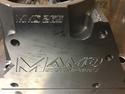


5.1L build and tech thread

Thread Starter
Teching In
Joined: Dec 2022
Posts: 5
Likes: 3
From: Shelton, WA
 5.1L build and tech thread
 Hi All,
I'm starting this as a build thread for an engine in progress. The purpose of this is to gain information and, eventually, to share results. Also, because this a little bit of a unique application, information that is specifically helpful is rather scattered and hard to come by (the LS world is a little bit of an odd duck, but we'll maybe get to that). My hope is that if anyone decides to do something similar, this will be A playbook (not THE playbook) that can lead to success.
Application: I am building a '73 Camaro for SCCA autocross. This CAN be a bit of a "run what you brung" class, but there are some strange weight breaks. There is no maximum cubic inch limit, but there is a practical limit on how much power is useful in the lower (1st and 2nd) gears. There is, however, a 300 pound weight break for V8 engines AOB 5100cc (311.221 cubic inches). This weight break is impactful during acceleration, braking, cornering, and tire wear. This is not, and will never be, a street car. At a minimum weight of 2700 pounds, this car will be fully gutted. Most other engine specs are unlimited, although cylinder heads must fall into the realm of "high performance versions of stock-type cylinder heads (OEM or aftermarket).
The induction side of this is pretty well squared away, with few unanswered questions. Tony@Mamomotorsports is helping me quite a bit with this part.
-MMS 205 heads with 55cc chambers. Hand finished by the man himself with Manley springs (200# on the seat)
-Mamofied FAST LSXRT
-Matching Yella Terra 1.8 ratio adjustable rockers
-Custom spec solid roller cam. We haven't gotten into the weeds on this yet, but mid-240s @.050 and ~.700 lift is in the ballpark. We have a goal/estimate of around 1.85 hp/ci (~575 FWHP). I'd like to see ~1.38-1.42 ft-lbs/ci.
ATI damper and dry sump system is going to be a must in order to help this little guy live. The 3-stage systems can be made to fit with the stock subframe crossmember (as required to take full advantage of the weight break. Aftermarket subframe is 150# penalty as of 2023 rule book)
The short block is... where I have the most questions. I have one 5.3 aluminum block, and a second on the way. Both are the vaunted 048 castings. Sonic testing on the one I have bears out the rumor that a 3.9 bore is plenty achievable. Crankshaft availability is frustrating at best. It boggles my mind that I'm stuck with either a cast 4.8 crank (I'm going to need some convincing to make a cast crank even slightly okay), or a nearly $4000 crank ($3765 from Callies). There is ZERO middle ground here, and it bothers me a lot. Peak power is likely to fall into the 73-7500rpm range, with some overrun capability to ~8000 (only if course configuration requires). While do have a short block complete at this point, I've learned some things along the way. I am, to put a long story short, starting over.
Lessons learned, leading to engineering questions:
-Washington State isn't exactly a hotbed of the high performance industry. Finding a machine shop that doesn't refuse to even deck my block has been a struggle. Why? The answer is that 99.9% of the machine shops here in this state haven't gotten much past the 1970's, and claim issues with surface finish due to smeared iron filings or an inability to get the decks square. I've finally managed to find TWO shops (within 200 miles) that have a CNC machine with fixturing capability AND the ability to machine an aluminum block with the proper finish. One of them pretty much doesn't want, or need the work from a non-regular customer. So it looks like I go to Portland.
-I'm going to need custom pistons for this deal. First is the oddbball 3.893 bore size. Second is the thin ring package I'll need to make this work (looking into a 1.0/1.0/2.0 or a .9/.9/2.0 ring package. Those will also have to be custom due to the aforementioned oddball bore size).
-The rods I originally purchased were too heavy (660g), as was the piston package (610g for piston and pin). This led to an 1869g bobweight. I need to do better.
-We're going to have to figure out at which point compression ratio and dome height begin to cancel each other out in terms of power production. This is a race fuel/E85/E98 type of engine, so detonation isn't a huge concern. Combustion efficiency, thermal efficiency, and volumetric efficiency ARE huge concerns. It's going to take a 9cc dome to get to 13:1, 12cc to get to 13.5.
-So, just how strong IS a 4.8 crank? I've heard some pretty high power figures, but torque tolerance MAY be different than toleration high-RPM N/A?
Let's have a discussion on this. I may have some gross conceptual errors that need correcting. A few caveats... N/A is required. Any blend of gasoline and/or ethanol are allowed. No methanol anywhere in the system (no water-meth injection for example). Also no nitrous. Displacement is fixed. I lose my weight break at any displacement above 5100cc (5100.01 is a no-go. Let's not figure out the hard way how accurately the SCCA can measure displacement, or what their methods are in the case of a protest). A higher-displacement track-day engine is a separate conversation (probably much simpler TBH)
Thank you all. I will post updates as this goes forward
Tad
I'm starting this as a build thread for an engine in progress. The purpose of this is to gain information and, eventually, to share results. Also, because this a little bit of a unique application, information that is specifically helpful is rather scattered and hard to come by (the LS world is a little bit of an odd duck, but we'll maybe get to that). My hope is that if anyone decides to do something similar, this will be A playbook (not THE playbook) that can lead to success.
Application: I am building a '73 Camaro for SCCA autocross. This CAN be a bit of a "run what you brung" class, but there are some strange weight breaks. There is no maximum cubic inch limit, but there is a practical limit on how much power is useful in the lower (1st and 2nd) gears. There is, however, a 300 pound weight break for V8 engines AOB 5100cc (311.221 cubic inches). This weight break is impactful during acceleration, braking, cornering, and tire wear. This is not, and will never be, a street car. At a minimum weight of 2700 pounds, this car will be fully gutted. Most other engine specs are unlimited, although cylinder heads must fall into the realm of "high performance versions of stock-type cylinder heads (OEM or aftermarket).
The induction side of this is pretty well squared away, with few unanswered questions. Tony@Mamomotorsports is helping me quite a bit with this part.
-MMS 205 heads with 55cc chambers. Hand finished by the man himself with Manley springs (200# on the seat)
-Mamofied FAST LSXRT
-Matching Yella Terra 1.8 ratio adjustable rockers
-Custom spec solid roller cam. We haven't gotten into the weeds on this yet, but mid-240s @.050 and ~.700 lift is in the ballpark. We have a goal/estimate of around 1.85 hp/ci (~575 FWHP). I'd like to see ~1.38-1.42 ft-lbs/ci.
ATI damper and dry sump system is going to be a must in order to help this little guy live. The 3-stage systems can be made to fit with the stock subframe crossmember (as required to take full advantage of the weight break. Aftermarket subframe is 150# penalty as of 2023 rule book)
The short block is... where I have the most questions. I have one 5.3 aluminum block, and a second on the way. Both are the vaunted 048 castings. Sonic testing on the one I have bears out the rumor that a 3.9 bore is plenty achievable. Crankshaft availability is frustrating at best. It boggles my mind that I'm stuck with either a cast 4.8 crank (I'm going to need some convincing to make a cast crank even slightly okay), or a nearly $4000 crank ($3765 from Callies). There is ZERO middle ground here, and it bothers me a lot. Peak power is likely to fall into the 73-7500rpm range, with some overrun capability to ~8000 (only if course configuration requires). While do have a short block complete at this point, I've learned some things along the way. I am, to put a long story short, starting over.
Lessons learned, leading to engineering questions:
-Washington State isn't exactly a hotbed of the high performance industry. Finding a machine shop that doesn't refuse to even deck my block has been a struggle. Why? The answer is that 99.9% of the machine shops here in this state haven't gotten much past the 1970's, and claim issues with surface finish due to smeared iron filings or an inability to get the decks square. I've finally managed to find TWO shops (within 200 miles) that have a CNC machine with fixturing capability AND the ability to machine an aluminum block with the proper finish. One of them pretty much doesn't want, or need the work from a non-regular customer. So it looks like I go to Portland.
-I'm going to need custom pistons for this deal. First is the oddbball 3.893 bore size. Second is the thin ring package I'll need to make this work (looking into a 1.0/1.0/2.0 or a .9/.9/2.0 ring package. Those will also have to be custom due to the aforementioned oddball bore size).
-The rods I originally purchased were too heavy (660g), as was the piston package (610g for piston and pin). This led to an 1869g bobweight. I need to do better.
-We're going to have to figure out at which point compression ratio and dome height begin to cancel each other out in terms of power production. This is a race fuel/E85/E98 type of engine, so detonation isn't a huge concern. Combustion efficiency, thermal efficiency, and volumetric efficiency ARE huge concerns. It's going to take a 9cc dome to get to 13:1, 12cc to get to 13.5.
-So, just how strong IS a 4.8 crank? I've heard some pretty high power figures, but torque tolerance MAY be different than toleration high-RPM N/A?
Let's have a discussion on this. I may have some gross conceptual errors that need correcting. A few caveats... N/A is required. Any blend of gasoline and/or ethanol are allowed. No methanol anywhere in the system (no water-meth injection for example). Also no nitrous. Displacement is fixed. I lose my weight break at any displacement above 5100cc (5100.01 is a no-go. Let's not figure out the hard way how accurately the SCCA can measure displacement, or what their methods are in the case of a protest). A higher-displacement track-day engine is a separate conversation (probably much simpler TBH)
Thank you all. I will post updates as this goes forward
Tad
Last edited by TLWiltman; Jan 8, 2023 at 12:36 AM.

TECH Enthusiast


Joined: Sep 2019
Posts: 532
Likes: 630
This sounds like a good time, and I think you can do something worthwhile in this venture.
The 5.3 blocks are good. I wouldn't worry too much about getting every last cubic inch, but if you need an oddball bore size you can get pistons and rings with a phone call or email. The stock LS1 bore size is 3.89, the 4.8 stroke is 3.267, thats 310ci on the nose.
The cast 4.8 crank is strong, very strong, taking 1000hp without issue. You will need to have everything balanced, though.
Good luck.
The 5.3 blocks are good. I wouldn't worry too much about getting every last cubic inch, but if you need an oddball bore size you can get pistons and rings with a phone call or email. The stock LS1 bore size is 3.89, the 4.8 stroke is 3.267, thats 310ci on the nose.
The cast 4.8 crank is strong, very strong, taking 1000hp without issue. You will need to have everything balanced, though.
Good luck.
Hi All,
I'm starting this as a build thread for an engine in progress. The purpose of this is to gain information and, eventually, to share results. Also, because this a little bit of a unique application, information that is specifically helpful is rather scattered and hard to come by (the LS world is a little bit of an odd duck, but we'll maybe get to that). My hope is that if anyone decides to do something similar, this will be A playbook (not THE playbook) that can lead to success.
Application: I am building a '73 Camaro for SCCA autocross. This CAN be a bit of a "run what you brung" class, but there are some strange weight breaks. There is no maximum cubic inch limit, but there is a practical limit on how much power is useful in the lower (1st and 2nd) gears. There is, however, a 300 pound weight break for V8 engines AOB 5100cc (311.221 cubic inches). This weight break is impactful during acceleration, braking, cornering, and tire wear. This is not, and will never be, a street car. At a minimum weight of 2700 pounds, this car will be fully gutted. Most other engine specs are unlimited, although cylinder heads must fall into the realm of "high performance versions of stock-type cylinder heads (OEM or aftermarket).
The induction side of this is pretty well squared away, with few unanswered questions. Tony Mamo is helping me quite a bit with this part.
-MMS 205 heads with 55cc chambers. Hand finished by the man himself with Manley springs (200# on the seat)
-Mamofied FAST LSXRT
-Matching Yella Terra 1.8 ratio adjustable rockers
-Custom spec solid roller cam. We haven't gotten into the weeds on this yet, but mid-240s @.050 and ~.700 lift is in the ballpark. We have a goal/estimate of around 1.85 hp/ci (~575 FWHP). I'd like to see ~1.38-1.42 ft-lbs/ci.
ATI damper and dry sump system is going to be a must in order to help this little guy live. The 3-stage systems can be made to fit with the stock subframe crossmember (as required to take full advantage of the weight break. Aftermarket subframe is 150# penalty as of 2023 rule book)
The short block is... where I have the most questions. I have one 5.3 aluminum block, and a second on the way. Both are the vaunted 048 castings. Sonic testing on the one I have bears out the rumor that a 3.9 bore is plenty achievable. Crankshaft availability is frustrating at best. It boggles my mind that I'm stuck with either a cast 4.8 crank (I'm going to need some convincing to make a cast crank even slightly okay), or a nearly $4000 crank ($3765 from Callies). There is ZERO middle ground here, and it bothers me a lot. Peak power is likely to fall into the 73-7500rpm range, with some overrun capability to ~8000 (only if course configuration requires). While do have a short block complete at this point, I've learned some things along the way. I am, to put a long story short, starting over.
Lessons learned, leading to engineering questions:
-Washington State isn't exactly a hotbed of the high performance industry. Finding a machine shop that doesn't refuse to even deck my block has been a struggle. Why? The answer is that 99.9% of the machine shops here in this state haven't gotten much past the 1970's, and claim issues with surface finish due to smeared iron filings or an inability to get the decks square. I've finally managed to find TWO shops (within 200 miles) that have a CNC machine with fixturing capability AND the ability to machine an aluminum block with the proper finish. One of them pretty much doesn't want, or need the work from a non-regular customer. So it looks like I go to Portland.
-I'm going to need custom pistons for this deal. First is the oddbball 3.893 bore size. Second is the thin ring package I'll need to make this work (looking into a 1.0/1.0/2.0 or a .9/.9/2.0 ring package. Those will also have to be custom due to the aforementioned oddball bore size).
-The rods I originally purchased were too heavy (660g), as was the piston package (610g for piston and pin). This led to an 1869g bobweight. I need to do better.
-We're going to have to figure out at which point compression ratio and dome height begin to cancel each other out in terms of power production. This is a race fuel/E85/E98 type of engine, so detonation isn't a huge concern. Combustion efficiency, thermal efficiency, and volumetric efficiency ARE huge concerns. It's going to take a 9cc dome to get to 13:1, 12cc to get to 13.5.
-So, just how strong IS a 4.8 crank? I've heard some pretty high power figures, but torque tolerance MAY be different than toleration high-RPM N/A?
Let's have a discussion on this. I may have some gross conceptual errors that need correcting. A few caveats... N/A is required. Any blend of gasoline and/or ethanol are allowed. No methanol anywhere in the system (no water-meth injection for example). Also no nitrous. Displacement is fixed. I lose my weight break at any displacement above 5100cc (5100.01 is a no-go. Let's not figure out the hard way how accurately the SCCA can measure displacement, or what their methods are in the case of a protest). A higher-displacement track-day engine is a separate conversation (probably much simpler TBH)
Thank you all. I will post updates as this goes forward
Tad
I'm starting this as a build thread for an engine in progress. The purpose of this is to gain information and, eventually, to share results. Also, because this a little bit of a unique application, information that is specifically helpful is rather scattered and hard to come by (the LS world is a little bit of an odd duck, but we'll maybe get to that). My hope is that if anyone decides to do something similar, this will be A playbook (not THE playbook) that can lead to success.
Application: I am building a '73 Camaro for SCCA autocross. This CAN be a bit of a "run what you brung" class, but there are some strange weight breaks. There is no maximum cubic inch limit, but there is a practical limit on how much power is useful in the lower (1st and 2nd) gears. There is, however, a 300 pound weight break for V8 engines AOB 5100cc (311.221 cubic inches). This weight break is impactful during acceleration, braking, cornering, and tire wear. This is not, and will never be, a street car. At a minimum weight of 2700 pounds, this car will be fully gutted. Most other engine specs are unlimited, although cylinder heads must fall into the realm of "high performance versions of stock-type cylinder heads (OEM or aftermarket).
The induction side of this is pretty well squared away, with few unanswered questions. Tony Mamo is helping me quite a bit with this part.
-MMS 205 heads with 55cc chambers. Hand finished by the man himself with Manley springs (200# on the seat)
-Mamofied FAST LSXRT
-Matching Yella Terra 1.8 ratio adjustable rockers
-Custom spec solid roller cam. We haven't gotten into the weeds on this yet, but mid-240s @.050 and ~.700 lift is in the ballpark. We have a goal/estimate of around 1.85 hp/ci (~575 FWHP). I'd like to see ~1.38-1.42 ft-lbs/ci.
ATI damper and dry sump system is going to be a must in order to help this little guy live. The 3-stage systems can be made to fit with the stock subframe crossmember (as required to take full advantage of the weight break. Aftermarket subframe is 150# penalty as of 2023 rule book)
The short block is... where I have the most questions. I have one 5.3 aluminum block, and a second on the way. Both are the vaunted 048 castings. Sonic testing on the one I have bears out the rumor that a 3.9 bore is plenty achievable. Crankshaft availability is frustrating at best. It boggles my mind that I'm stuck with either a cast 4.8 crank (I'm going to need some convincing to make a cast crank even slightly okay), or a nearly $4000 crank ($3765 from Callies). There is ZERO middle ground here, and it bothers me a lot. Peak power is likely to fall into the 73-7500rpm range, with some overrun capability to ~8000 (only if course configuration requires). While do have a short block complete at this point, I've learned some things along the way. I am, to put a long story short, starting over.
Lessons learned, leading to engineering questions:
-Washington State isn't exactly a hotbed of the high performance industry. Finding a machine shop that doesn't refuse to even deck my block has been a struggle. Why? The answer is that 99.9% of the machine shops here in this state haven't gotten much past the 1970's, and claim issues with surface finish due to smeared iron filings or an inability to get the decks square. I've finally managed to find TWO shops (within 200 miles) that have a CNC machine with fixturing capability AND the ability to machine an aluminum block with the proper finish. One of them pretty much doesn't want, or need the work from a non-regular customer. So it looks like I go to Portland.
-I'm going to need custom pistons for this deal. First is the oddbball 3.893 bore size. Second is the thin ring package I'll need to make this work (looking into a 1.0/1.0/2.0 or a .9/.9/2.0 ring package. Those will also have to be custom due to the aforementioned oddball bore size).
-The rods I originally purchased were too heavy (660g), as was the piston package (610g for piston and pin). This led to an 1869g bobweight. I need to do better.
-We're going to have to figure out at which point compression ratio and dome height begin to cancel each other out in terms of power production. This is a race fuel/E85/E98 type of engine, so detonation isn't a huge concern. Combustion efficiency, thermal efficiency, and volumetric efficiency ARE huge concerns. It's going to take a 9cc dome to get to 13:1, 12cc to get to 13.5.
-So, just how strong IS a 4.8 crank? I've heard some pretty high power figures, but torque tolerance MAY be different than toleration high-RPM N/A?
Let's have a discussion on this. I may have some gross conceptual errors that need correcting. A few caveats... N/A is required. Any blend of gasoline and/or ethanol are allowed. No methanol anywhere in the system (no water-meth injection for example). Also no nitrous. Displacement is fixed. I lose my weight break at any displacement above 5100cc (5100.01 is a no-go. Let's not figure out the hard way how accurately the SCCA can measure displacement, or what their methods are in the case of a protest). A higher-displacement track-day engine is a separate conversation (probably much simpler TBH)
Thank you all. I will post updates as this goes forward
Tad
Trending Topics
I had a great opportunity to grab a Bryant billet 3.25” stroke crank this past summer for $250. It was used of course, but was super low mile. Came out of one of the LS9 Prototype engines ran in 24 hour races. I didn’t want anything else piling up on the shop, and I figured no one would ever want it. Having said that, an OEM 4.8 crank is plenty strong for for what your doing. Because of its shorter arm, it’s actually the strongest cast LS crank available. No worries there for your use.
LS1 Tech Stories
The Best V8 Stories One Small Block at Time

6 Gifts Neither Your Dad Nor Grad Will Shove Into the 'Trinket Drawer'
Brett Foote
Topdon ONE vs. Artidiag 800 BT2: Which is the Diagnostic Tablet For You?
Pouria Savadkouei
Gas Monkey Built a 6-Wheel Ferrari Testarossa With a Corvette LT4 Engine
Verdad Gallardo
7 Most Reliable High-Performance Engines GM Has Ever Built
Verdad Gallardo
Amazing '71 Camaro Restomod Is Modern Muscle Car Under the Skin
Verdad Gallardo
6 Common C5 Corvette Failures and What's Involved In Repairing Them
Pouria Savadkouei
Retro Modern Bandit Pontiac Trans AM Comes With Burt Reynolds' Autograph
Verdad Gallardo
Top 10 Greatest Cadillac V Series Performance Models Ever, Ranked
Pouria Savadkouei
Top 10 Most Powerful Chevy Trucks Ever Made!




TECH Addict
Joined: Jul 2013
Posts: 2,189
Likes: 123
From: Portland, Oregon
What ever happened to this? I am always looking for MMS205 results.
And why go through all the effort of custom/wierd piston and ring sizes? You could just offset grind a stock crank... pretty sure you could get to 3.45" using either a 4.8 or 5.3 crank cut down to Honda journals.
3.78" bore × 3.45" stroke = 309.73ci (5.1L)
3.40" gives you ~305ci (5.0L), if you must be under 5.1L... sure, the bigger bore will breath a little better, but you could get there just by changing the stroke.
Granted, if you are having trouble finding a machine shop that will deck an aluminum block, you probably won't find one that will offset grind a crankshaft. Lol.
And why go through all the effort of custom/wierd piston and ring sizes? You could just offset grind a stock crank... pretty sure you could get to 3.45" using either a 4.8 or 5.3 crank cut down to Honda journals.
3.78" bore × 3.45" stroke = 309.73ci (5.1L)
3.40" gives you ~305ci (5.0L), if you must be under 5.1L... sure, the bigger bore will breath a little better, but you could get there just by changing the stroke.
Granted, if you are having trouble finding a machine shop that will deck an aluminum block, you probably won't find one that will offset grind a crankshaft. Lol.

Teching In

Joined: Jan 2005
Posts: 22
Likes: 3
From: Snohomish, WA
 I wish it wasn't so.......
 Hi All,
Lessons learned, leading to engineering questions:
-Washington State isn't exactly a hotbed of the high performance industry. Finding a machine shop that doesn't refuse to even deck my block has been a struggle. Why? The answer is that 99.9% of the machine shops here in this state haven't gotten much past the 1970's, and claim issues with surface finish due to smeared iron filings or an inability to get the decks square. I've finally managed to find TWO shops (within 200 miles) that have a CNC machine with fixturing capability AND the ability to machine an aluminum block with the proper finish. One of them pretty much doesn't want, or need the work from a non-regular customer. So it looks like I go to Portland.
Lessons learned, leading to engineering questions:
-Washington State isn't exactly a hotbed of the high performance industry. Finding a machine shop that doesn't refuse to even deck my block has been a struggle. Why? The answer is that 99.9% of the machine shops here in this state haven't gotten much past the 1970's, and claim issues with surface finish due to smeared iron filings or an inability to get the decks square. I've finally managed to find TWO shops (within 200 miles) that have a CNC machine with fixturing capability AND the ability to machine an aluminum block with the proper finish. One of them pretty much doesn't want, or need the work from a non-regular customer. So it looks like I go to Portland.
I will be subscribing to this tread, looks very interesting.
Thread Starter
Teching In
Joined: Dec 2022
Posts: 5
Likes: 3
From: Shelton, WA
Finally, an update... it's been quite the saga. Some parts of it have been easier than others. The configuration is "set" enough to be able to go through that part of it. A small handful of things are still subject to optimization.
First issue. My luck with 5.3 blocks is completely atrocious. 1st block had a .025 defect/gouge in the #2 main saddle. After beginning assembly on that one... I just couldn't quite "sleep at night" with the lack of support behind the main bearing. Enter block #2. This block was sourced from a friend of a friend. After inspection, there was a gouge/defect near the parting line of the #2 main saddle that measured to be about .015 deep. This lead to block #3... this block had spun the #4 cam bearing. Fixable? Perhaps, but we'll get to why I didn't feel that was a great foundation in a bit.
The project went on temporary hold while I made some engineering decisions. One recommendation id recieved from the lifter manufacturer was that i would need to sleeve the lifter bores due to most used ls blocks having excessive clearances. When doing a mod like that, it became apparent that i needed to start with a rather pristine block, rather than what would amount to a one-time-use throwaway. After nearly a month plotting weights, making a spreadsheet for CG, and gathering weights and locations, I found that an iron block is doable. Soon, I was in possession of a brand-new LSX block. This single plan change... changed the whole build. Soon, the block, and a boatload of components, made their way to Action Machine in Shoreline, WA for probing and measurement in their CNC. Measurement revealed that the block would accept bores centered in blueprint locations at a minimum of 3.900. This made the build far more "racy". The components reflect this...
MMS 205 heads. These guys got the extra love from Tony. All of the transitions and tool path quirks inherent to all CNC heads are as smooth as a politician's lie. Assembled valve heights are perfect. Combustion chambers are milled to 54.5cc. That said, I haven't seen an official flow curve. Other modifications to the standard were hollow-stem intake valves (96 grams), 10mm rocker bolts and the Manley nextek spring upgrade (shimmed to 200# on the seat).
YT 10mm 1.8 rockers (adjustable). These did require some light handwork to the heads for rocker clearance, which was really simple. A dremel made quick work of this.
247/254@.050 camshaft 113+4 .693/.671. These are hybrid low-shock lobes. Compression >13:1 will help with mid-range torque. This is more exhaust split than Tony would normally do, but should help the power curve carry at the top-end.
We went with the MSD intake, ported by Tony. This gives me an 8.5" runner length (total, including the head, is ~14"). Power peak is projected to be around 7000-7100rpm. A lot of the work is in the area of the throttle body entry and in the removable runners. Theres a fair amount of taper in the runners, which start at around 4.5 in² at the bellmouth. This will also help with carrying the powerband upward.
Lifters are from Jesel. Tie-bar, dlc coated. Lifter bore sleeves are also from Jesel
Pistons (3.903x1.258) were designed by HorsePower Research and Wiseco. They did a 3d scan of the chamber, so should have no fitment issues at all. You can see where the double quench pad would have caused some issue with a shelf piston. They also came with an APGP 1/1/2 ring stack from total seal. These have a .165 dome. This is similar in design to their 12cc dome, but the valve reliefs are shrunk down radially given the 1.975/1.575 valves in the 205 head. We considered going to a piston-guided rod, but decided against that for this iteration.
Dailey dry sump. Absolute work of art! Dry sump solutions provided some great tech during the purchase. The ATI balancer came with the dry sump system, so this works together as it should.
Dyers rods, small-journal (2.000") 6.4 long. Weight on these came out to 630g, and they're hell-for stout.
The latest purchase, that I just sent out the deposit for, was for the crankshaft. After much research, it was actually Bryant Racing that had the best pricing. Jim was great, and answered every question I had. Stroke will be at 3.195, which gives me a max bore of 3.937. I have ring sets planned out for 3.907, 3.917, 3.927, and 3.937 before the bore diameter gods go into "no-mans-land mode". This gives me an initial displacement of just under 306cid. This is coming with center counterweights as well.
Clevite coated bearings, ARP head and main studs, and ARP fasteners are used throughout. I do have Katech oil squirters, but they are not being installed at this time. It looks as though I will have to take the block somewhere to have that done, but there's a debate on whether I need them at all.
At this point, this will be an overbuilt and understressed engine. Other than valve springs, lifter rebuilds, and eventual wear and tear... im curious as to how it will do as is, but there are a couple of potential areas to continue development. Camshaft, intake manifold, and exhaust... Cam timing on a deal like this... needs all the help it can get. I am also unsure whether a Carbon pTr intake will fit under the rules regulated 4" cowl hood. If so, there MAY be gains to be had there, along with alleviating some potential equipment interference. With exhaust, there's been a common theme that the 4.8-5.3 variants tend to be very insensitive to header primary diameter. One theory that I have heard, but have yet to test, is that the implication is that both 1.75 AND 1.875 header primaries are too big for the application. If able to have them made, a 1.625-1.75 step may work really well. If going to the trouble of a custom header, I may be able to have the tubes laid out to the collector such to allow a tri-y collector to be installed for packaging
so... why did I not stay with the 4.8 crank? At the end of the day, it was all about availability of good blocks, the mods i was needing to make to them to make the lifters live, and availability of rings in appropriate bore diameters (nothing available at 3.890). I was looking at having race-block money into a stock block... after some 100k+ miles of who knows what use case. Why not an AL block? Nobody makes one in the 3.9 bore size. $7000 block that I'd have to have sleeved wasn't in the cards this time. But, the search continues... the build continues... in about 6 months, I'll have the crank, which is the last component. The block gets out of machine shop jail... back to my own shop, and the real fit-up begins.
First issue. My luck with 5.3 blocks is completely atrocious. 1st block had a .025 defect/gouge in the #2 main saddle. After beginning assembly on that one... I just couldn't quite "sleep at night" with the lack of support behind the main bearing. Enter block #2. This block was sourced from a friend of a friend. After inspection, there was a gouge/defect near the parting line of the #2 main saddle that measured to be about .015 deep. This lead to block #3... this block had spun the #4 cam bearing. Fixable? Perhaps, but we'll get to why I didn't feel that was a great foundation in a bit.
The project went on temporary hold while I made some engineering decisions. One recommendation id recieved from the lifter manufacturer was that i would need to sleeve the lifter bores due to most used ls blocks having excessive clearances. When doing a mod like that, it became apparent that i needed to start with a rather pristine block, rather than what would amount to a one-time-use throwaway. After nearly a month plotting weights, making a spreadsheet for CG, and gathering weights and locations, I found that an iron block is doable. Soon, I was in possession of a brand-new LSX block. This single plan change... changed the whole build. Soon, the block, and a boatload of components, made their way to Action Machine in Shoreline, WA for probing and measurement in their CNC. Measurement revealed that the block would accept bores centered in blueprint locations at a minimum of 3.900. This made the build far more "racy". The components reflect this...
MMS 205 heads. These guys got the extra love from Tony. All of the transitions and tool path quirks inherent to all CNC heads are as smooth as a politician's lie. Assembled valve heights are perfect. Combustion chambers are milled to 54.5cc. That said, I haven't seen an official flow curve. Other modifications to the standard were hollow-stem intake valves (96 grams), 10mm rocker bolts and the Manley nextek spring upgrade (shimmed to 200# on the seat).
YT 10mm 1.8 rockers (adjustable). These did require some light handwork to the heads for rocker clearance, which was really simple. A dremel made quick work of this.
247/254@.050 camshaft 113+4 .693/.671. These are hybrid low-shock lobes. Compression >13:1 will help with mid-range torque. This is more exhaust split than Tony would normally do, but should help the power curve carry at the top-end.
We went with the MSD intake, ported by Tony. This gives me an 8.5" runner length (total, including the head, is ~14"). Power peak is projected to be around 7000-7100rpm. A lot of the work is in the area of the throttle body entry and in the removable runners. Theres a fair amount of taper in the runners, which start at around 4.5 in² at the bellmouth. This will also help with carrying the powerband upward.
Lifters are from Jesel. Tie-bar, dlc coated. Lifter bore sleeves are also from Jesel
Pistons (3.903x1.258) were designed by HorsePower Research and Wiseco. They did a 3d scan of the chamber, so should have no fitment issues at all. You can see where the double quench pad would have caused some issue with a shelf piston. They also came with an APGP 1/1/2 ring stack from total seal. These have a .165 dome. This is similar in design to their 12cc dome, but the valve reliefs are shrunk down radially given the 1.975/1.575 valves in the 205 head. We considered going to a piston-guided rod, but decided against that for this iteration.
Dailey dry sump. Absolute work of art! Dry sump solutions provided some great tech during the purchase. The ATI balancer came with the dry sump system, so this works together as it should.
Dyers rods, small-journal (2.000") 6.4 long. Weight on these came out to 630g, and they're hell-for stout.
The latest purchase, that I just sent out the deposit for, was for the crankshaft. After much research, it was actually Bryant Racing that had the best pricing. Jim was great, and answered every question I had. Stroke will be at 3.195, which gives me a max bore of 3.937. I have ring sets planned out for 3.907, 3.917, 3.927, and 3.937 before the bore diameter gods go into "no-mans-land mode". This gives me an initial displacement of just under 306cid. This is coming with center counterweights as well.
Clevite coated bearings, ARP head and main studs, and ARP fasteners are used throughout. I do have Katech oil squirters, but they are not being installed at this time. It looks as though I will have to take the block somewhere to have that done, but there's a debate on whether I need them at all.
At this point, this will be an overbuilt and understressed engine. Other than valve springs, lifter rebuilds, and eventual wear and tear... im curious as to how it will do as is, but there are a couple of potential areas to continue development. Camshaft, intake manifold, and exhaust... Cam timing on a deal like this... needs all the help it can get. I am also unsure whether a Carbon pTr intake will fit under the rules regulated 4" cowl hood. If so, there MAY be gains to be had there, along with alleviating some potential equipment interference. With exhaust, there's been a common theme that the 4.8-5.3 variants tend to be very insensitive to header primary diameter. One theory that I have heard, but have yet to test, is that the implication is that both 1.75 AND 1.875 header primaries are too big for the application. If able to have them made, a 1.625-1.75 step may work really well. If going to the trouble of a custom header, I may be able to have the tubes laid out to the collector such to allow a tri-y collector to be installed for packaging
so... why did I not stay with the 4.8 crank? At the end of the day, it was all about availability of good blocks, the mods i was needing to make to them to make the lifters live, and availability of rings in appropriate bore diameters (nothing available at 3.890). I was looking at having race-block money into a stock block... after some 100k+ miles of who knows what use case. Why not an AL block? Nobody makes one in the 3.9 bore size. $7000 block that I'd have to have sleeved wasn't in the cards this time. But, the search continues... the build continues... in about 6 months, I'll have the crank, which is the last component. The block gets out of machine shop jail... back to my own shop, and the real fit-up begins.
Last edited by TLWiltman; Sep 16, 2024 at 12:10 PM.



Joined: Apr 2006
Posts: 3,931
Likes: 1,162
From: Grand Rapids, Michigan
An LH6 aluminum block will easily take up to a 3.905" bore. It's also likely the strongest LS block outside of the rare 4.8/5.3/6.0 blocks that are only bored to 3.780". Siamesed bores and a lot of material around thick liners, it was my choice for my turbo build. You can find them in all of the Trailblazer clones, I got mine from a Saab 9-7x that I paid $500 for. Sold all the extra parts for a profit, and I only had $1300 into a bored, torque plate honed, decked, and align bored block that will easily handle 1000+ to the wheels.


Thread Starter
Teching In
Joined: Dec 2022
Posts: 5
Likes: 3
From: Shelton, WA
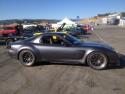
As seen above, I'm at a milestone here in the 360. The long block is complete (a couple of odds and ends like the rear cover and final torquing of the harmonic damper excepted). Final compression ratio maths out to 13.6:1, which should work great with E85. Injectors are FIC 650s, which would even work with E98 if so desired. There's a lot of hours of mocking up, measuring, adjusting, fussing, realizing I'd made a mistake somewhere, fixing or working around those mistakes (valve reliefs not deep enough, requiring a future re-design chief among those mistakes. This was a symptom of me not working close enough with the help I had... it made me better and more knowledgable in the end, but was highly annoying). The assembled short block rotated at ~7.8-8.2 ft-lbs, which seems pretty slick to me. More to come, as I need to pull the engine off the stand, put it on a different stand assembly, finish (rear cover, damper, valley cover, intake, etc)