When you click on links to various merchants on this site and make a purchase, this can result in this site earning a commission. Affiliate programs and affiliations include, but are not limited to, the eBay Partner Network.
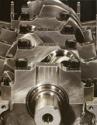
That is the question. Anyway, I recently took my 243 heads to a local machine shop for resurfacing. The exhaust valve seats were rather pitted, and they reground both the seats and valves to clean them up. Intake valves and seats are good with the exception of the number two, which had rust on the back of the head. That valve will be replaced with a brand new one. Anyway, I brought up lapping to the machine shop, and they told me NOT to lap the valves. They claim that lapping does more harm than good, and as long as the valves and seats are good, no lapping is necessary. Also, they said there is no need for lapping if the valves and seats have been reground.
On the other hand, everyone seems to lap valves, even if everything is good and you are just reinstalling the original valves. And most people will certainly lap valves when installing a brand new one of if the seats have been cut. Who is right here? And does it even matter what you do?
When I worked as a machinist, I would lap the valves after a valve job to check the size and concentricity of the seat. The shop I use now for cylinder head work does the same thing.
Not needed if the work was done correctly.
I have some very fine compound that I use lightly and quickly just to check the contact position and concentricity.
You should lap new valves in on the seats of new and used cylinder heads and yes on lapping in used valves on the seats when both are deedmed re-usable. Even with new in the box GM cylinder heads and you've chose to purchase a new set of valves you should check the valve guide clearance and lap them onto their new seats to get a good seal between the surface of the valves and their seats. You'll know when you've achieved a good seal when you can set an assembled head upright so the combustion chambers are pointing up and fill them with water or rubbing alcohol then lightly send air up the intake and exhaust runners and not see any air bubbles. At least that's how I've checked the ones I've worked on and it hasn't let me down yet.
With modern day tooling that is well maintained lapping is not required. It can be checked with machinists dye if needed.
The reason you hear about it so often is because we seem to be in a day where budget rebuilding is common. People seem to be ok with lapping valves instead of having a machine shop do a proper valve job.
One problem with lapping valves is the compound. I have had a set of heads I could see light through one side of the intake valves. I lapped them and it showed a consistant, even mark around the entire seating area of the valve and seat. It's because the compound takes up space.
Proper machining and dye takes up no space.
If one wanted to compare it to brakes or rings let's also compare it to piston pins and bearings. Would you grind on those too.... Why not? Why not lap the guides?
Well because you don't want to create an abnormal wear pattern. Valves basically hammer the seats. Lapping doesn't replicate that action.
It’s a question that will fall into the category of…ask 5 shops, get 5 opinions. To me, lapping valves gives me a picture of exactly where the two pieces are married. That’s the advantage. Back in my days of doing high end R&D stuff, we lapped everything, no question. The visual of seeing where the valve hit the seat, via rub lines, was a data point for us, and I still use this reasoning today. On the other hand, I talk to guys at shops that don’t bother lapping, and don’t care where the two end up at. When I raced asphalt late models, I bought my engines from a shop, instead of building my own…just simply didn’t have the time between running my business and working on my cars at night. That builder was a very competent guy (RIP) who was extremely detailed, however he didn’t lap valves in. We had discussions about this and he simply trusted his tooling, and went with it. Everything sealed well. Engines always ran terrific. I think the topic is an old school vs new school deal…
3 years ago, when AHP did my LS7 guides and seats, I reused my 8 exhaust valves, and bought 8 new Ferrea F2014P hollow intakes. I checked AHPs work on a CMM. It was so dead nuts that I didn't lap the intakes or exhausts. I've never had an issue. Also, the stock LS7 Ti intakes can not be lapped.....
The key to success is using the right lapping compound also.....
Dont use the crap you find in an auto parts store or Ebay etc. That stuff is waaaay too course and gritty (even the side marked fine if it offers both which some do)
I check the seal of every valvejob I ship....16 on a pair of heads. With a Newen CNC seat and guide machine they are almost always spot on but it also depends on how well the pilot fits the guide also
In fact I have about 10 carbide pilots from that move up in .0002 increments (four decimal places.....two ten thousandths of an inch between them). Getting the right fit helps improve seat concentricity.
All that said and knowing your machine and the correct speeds and feeds you occasionally get one that is just a smidge from perfection.....it happens.
In that case I use 400 grit lapping compound from Goodson to make a perfect seal and still the the surface finish of the seat itself in excellent condition.
This stuff is amazing.....without having any "grit" you can feel it can still work effectively on a hardened seat and leaves the very narrow seat angle crisp and smooth with a light gray color to it after its lapped.
If you need more than this to get a seat leak free than you should simply touch up the valvejob in that one hole instead.
Grinder brings up a good point about the LS7 Ti valves (or any aftermarket Ti valves that are coated). You cant lap a coated valve. In this situation I check seat concentricity/seal using a steel valve in the same size as the Ti valve meant to be installed in it.
If there is a slight issue with the seat concentricity in a valve seat meant for a Ti valve, then I lap that seat using a steel valve of the same size (I have boxes of different size lapping valves....use them once and then reface on my valve grinder so its perfectly true for the next seat that might need a slight tune up)
My collection of lapping valves.....LOL I have at least a dozen in each box so I can go awhile before having to reface them
This is one of those things Im convinced most other cylinder heads shops do not do. Literally check (and correct if need be) every seat in your set of heads before sliding them in a box.
I will tell you right now that NO production shop does this.....Im talking about Dart, AFR, TFS, Brodix, Texas Speed etc etc.
Not a chance.....only a really high end specialty shop is going to take the time to check seat concentricity on every set of heads they ship I assure you.
Guys that know me know Im a perfectionist and take great pride in everything I ship out with my name on it.
Anyway.....just wanted to pass along some very important info regarding the lapping situation.
Don't just use any lapping compound.....you will do more harm than good with the over the counter crap out there
Amazon has this in different grits, some even finer.
Makes sense as Amazon sells just about everything.....LOL
If your working with modern (typically harder) valve seat inserts, I feel 400 is the happy compromise of cutting (without spending a bunch of time) and still leaving a really nice surface finish.
Goodson offers 800 grit as well but the 400 really is the "not too hot / not too cold" solution here IMO
With modern day tooling that is well maintained lapping is not required. It can be checked with machinists dye if needed.
The reason you hear about it so often is because we seem to be in a day where budget rebuilding is common. People seem to be ok with lapping valves instead of having a machine shop do a proper valve job.
One problem with lapping valves is the compound. I have had a set of heads I could see light through one side of the intake valves. I lapped them and it showed a consistant, even mark around the entire seating area of the valve and seat. It's because the compound takes up space.
Proper machining and dye takes up no space.
If one wanted to compare it to brakes or rings let's also compare it to piston pins and bearings. Would you grind on those too.... Why not? Why not lap the guides?
Well because you don't want to create an abnormal wear pattern. Valves basically hammer the seats. Lapping doesn't replicate that action.
Spoiler!
You can't compare to piston pins and bearings. The valve has to seal metal to metal. If you don't get a good seal you could burn a valve and or seat. Wrist pins and bearings are bearing surfaces with a slight film of oil during operation so there never should be metal to metal contact. If you have metal to metal the components would wear out prematurely. No comparison.
Gas Monkey Built a 6-Wheel Ferrari Testarossa With a Corvette LT4 Engine
Slideshow: The controversial Ferrari F6 swaps its original flat-12 for a Corvette Z06-derived LT4 V8 and sends power to four rear wheels through a custom-built drivetrain.
7 Most Reliable High-Performance Engines GM Has Ever Built
Slideshow:These GM engines didn't just make huge power, they survived abuse, boost, track days, and six-digit mileage with a reputation for refusing to quit.
6 Common C5 Corvette Failures and What's Involved In Repairing Them
Slideshow: From wobbling harmonic balancers to failed EBCMs, these are the issues that define long-term C5 ownership and what repairs typically involve.
Retro Modern Bandit Pontiac Trans AM Comes With Burt Reynolds' Autograph
Slideshow: A modern Camaro transformed into a retro icon, this limited-run "Bandit" build blends nostalgia with brute force in a way few revivals manage.
Top 10 Greatest Cadillac V Series Performance Models Ever, Ranked
Slideshow: Cadillac didn't just crash the high-performance luxury vehicle party, it showed up loud, supercharged, and occasionally a little unhinged...












 To lap or not to lap?