





OnStar Controversy

ONstar may be under investigation soon:
Senator charges GM's OnStar invades privacy
General Motors' OnStar in-car communications system violates privacy, a U.S. senator is charging.
An OnStar engineer demonstrates OnStar MyLink for mobile phone applications . Chevrolet, Buick, GMC and Cadillac mobile apps powered by OnStar will allow owners to remotely activate all functions available on a traditional key fob,
CAPTIONBy Steve Fecht, Steve Fecht for OnStarOnStar, used by 6 million Americans, maintains its two-way connection with a customer even after the service is discontinued, while reserving the right to sell data from that connection, the Associated Press reports.
U.S. Sen. Charles Schumer, D-New York, says that's a blatant invasion of privacy and is calling on the Federal Trade Commission to investigate. But OnStar says former customers can stop the two-way transmission, and no driving data of customers has been shared or sold.
"OnStar is attempting one of the most brazen invasions of privacy in recent memory," said Schumer, a Democrat.
But the General Motors OnStar service says customers are thoroughly informed of the new practice. If a customer says he or she doesn't want to have data collected after service is ended, OnStar disconnects the tracking.
And although OnStar reserves the right to share or sell data on customers' speed, location, use of seat belts and other practices, a spokesman says it hasn't done so and doesn't plan to.
"We apologize for creating any confusion about our terms and conditions," said Joanne Finnor, vice president of subscriber services. "We want to make sure we are as clear with our customers as possible, but it's apparent that we have failed to do this. ... We will continue to be open to their suggestions and concerns."
A week ago, OnStar changed its policy and began continuing the connection for ex-customers unless they asked for it to be discontinued:
Finnor noted keeping the two-communication active for former customers could someday allow for emergency messages to be sent even to ex-customers about severe weather or evacuations. The open line could also allow OnStar to alert drivers about warranty information or recalls, she said.
Schumer said he isn't persuaded. He said customers shouldn't have to "opt out" of the tracking after they end service. He accuses OnStar of actively deceiving customers.
Schumer is announcing the effort today by releasing a letter to the Federal Trade Commission seeking an investigation.
OnStar charges about $199 a year for basic service and $299 a year for service that includes navigation aid.
http://www.morrissuntribune.com/even...31/group/News/
http://www.thenewamerican.com/tech-m...data-to-police
Senator charges GM's OnStar invades privacy
General Motors' OnStar in-car communications system violates privacy, a U.S. senator is charging.
An OnStar engineer demonstrates OnStar MyLink for mobile phone applications . Chevrolet, Buick, GMC and Cadillac mobile apps powered by OnStar will allow owners to remotely activate all functions available on a traditional key fob,
CAPTIONBy Steve Fecht, Steve Fecht for OnStarOnStar, used by 6 million Americans, maintains its two-way connection with a customer even after the service is discontinued, while reserving the right to sell data from that connection, the Associated Press reports.
U.S. Sen. Charles Schumer, D-New York, says that's a blatant invasion of privacy and is calling on the Federal Trade Commission to investigate. But OnStar says former customers can stop the two-way transmission, and no driving data of customers has been shared or sold.
"OnStar is attempting one of the most brazen invasions of privacy in recent memory," said Schumer, a Democrat.
But the General Motors OnStar service says customers are thoroughly informed of the new practice. If a customer says he or she doesn't want to have data collected after service is ended, OnStar disconnects the tracking.
And although OnStar reserves the right to share or sell data on customers' speed, location, use of seat belts and other practices, a spokesman says it hasn't done so and doesn't plan to.
"We apologize for creating any confusion about our terms and conditions," said Joanne Finnor, vice president of subscriber services. "We want to make sure we are as clear with our customers as possible, but it's apparent that we have failed to do this. ... We will continue to be open to their suggestions and concerns."
A week ago, OnStar changed its policy and began continuing the connection for ex-customers unless they asked for it to be discontinued:
Finnor noted keeping the two-communication active for former customers could someday allow for emergency messages to be sent even to ex-customers about severe weather or evacuations. The open line could also allow OnStar to alert drivers about warranty information or recalls, she said.
Schumer said he isn't persuaded. He said customers shouldn't have to "opt out" of the tracking after they end service. He accuses OnStar of actively deceiving customers.
Schumer is announcing the effort today by releasing a letter to the Federal Trade Commission seeking an investigation.
OnStar charges about $199 a year for basic service and $299 a year for service that includes navigation aid.
http://www.morrissuntribune.com/even...31/group/News/
Franken battles OnStar
U.S. Sen. Al Franken, D-Minn., told OnStar that it should not track the location of its customers, and sell information about them.
Franken, making a name for himself battling big companies, wrote a letter to the company after it recently said it may track vehicles with the OnStar service via its global positioning system equipment, even after customers cancel the service.
“OnStar’s actions appear to violate basic principles of privacy and fairness for OnStar’s approximately six million customers -- especially for those customers who have already ended their relationships with your company...” said a letter written by Franken and Sen. Chris Coons, D-Del. “We believe that OnStar’s actions underscore the urgent need for prompt congressional action to enact privacy laws that protect private, sensitive information like location. In the meantime, we believe that it is the responsibility of corporate citizens like OnStar to take every step possible to safeguard the privacy of their customers.”
OnStar, mostly on General Motors vehicles, provides navigation and communications services. One of its selling points is the technology can notify emergency services personnel if a vehicle has been in an accident, and provide them with the exact location. However, OnStar’s location service remains active even if the vehicle owner does not pay for the service.
U.S. Sen. Al Franken, D-Minn., told OnStar that it should not track the location of its customers, and sell information about them.
Franken, making a name for himself battling big companies, wrote a letter to the company after it recently said it may track vehicles with the OnStar service via its global positioning system equipment, even after customers cancel the service.
“OnStar’s actions appear to violate basic principles of privacy and fairness for OnStar’s approximately six million customers -- especially for those customers who have already ended their relationships with your company...” said a letter written by Franken and Sen. Chris Coons, D-Del. “We believe that OnStar’s actions underscore the urgent need for prompt congressional action to enact privacy laws that protect private, sensitive information like location. In the meantime, we believe that it is the responsibility of corporate citizens like OnStar to take every step possible to safeguard the privacy of their customers.”
OnStar, mostly on General Motors vehicles, provides navigation and communications services. One of its selling points is the technology can notify emergency services personnel if a vehicle has been in an accident, and provide them with the exact location. However, OnStar’s location service remains active even if the vehicle owner does not pay for the service.
http://www.thenewamerican.com/tech-m...data-to-police
One of the first experts to draw attention to the policy changes was Jonathan Zdziarski, senior forensic scientist at Via Forensics, who promptly canceled his OnStar subscription and blasted the new terms and conditions. He noted on his blog that the updates were “very unsettling” and “too shady.”
Making matters worse, claims that OnStar would normally make the GPS data anonymous before selling it are hard to swallow. “It’s impossible,” Zdziarski said. “If your vehicle is consistently parked at your home, driving down your driveway, or taking a left or right turn onto your street every single day, its pretty obvious that this is where you live!”
The potential for abuse is huge, he noted. OnStar could, for example, provide information on speeders or seat-belt usage to the police. Or insurance companies could use the data to monitor their customers and raise their rates.
“Shame on you, OnStar, for even giving yourselves the right to do this,” wrote Zdziarski. “Even more insulting, it was difficult to ensure the data connection was shut down after canceling,” he noted, saying the company repeatedly ignored his request to shut down the connection.
OnStar and other “large abusive data warehousing companies desperately need to be investigated,” he concluded. “When will our congress pass legislation that stops the American people’s privacy from being raped by large data warehousing interests?”
Making matters worse, claims that OnStar would normally make the GPS data anonymous before selling it are hard to swallow. “It’s impossible,” Zdziarski said. “If your vehicle is consistently parked at your home, driving down your driveway, or taking a left or right turn onto your street every single day, its pretty obvious that this is where you live!”
The potential for abuse is huge, he noted. OnStar could, for example, provide information on speeders or seat-belt usage to the police. Or insurance companies could use the data to monitor their customers and raise their rates.
“Shame on you, OnStar, for even giving yourselves the right to do this,” wrote Zdziarski. “Even more insulting, it was difficult to ensure the data connection was shut down after canceling,” he noted, saying the company repeatedly ignored his request to shut down the connection.
OnStar and other “large abusive data warehousing companies desperately need to be investigated,” he concluded. “When will our congress pass legislation that stops the American people’s privacy from being raped by large data warehousing interests?”

Staging Lane

Joined: Dec 2010
Posts: 99
Likes: 0
From: Buffalo, NY
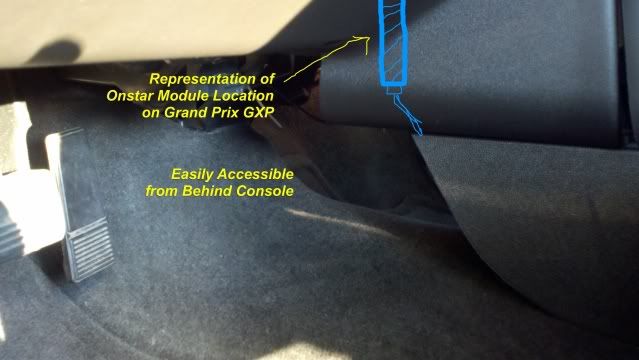
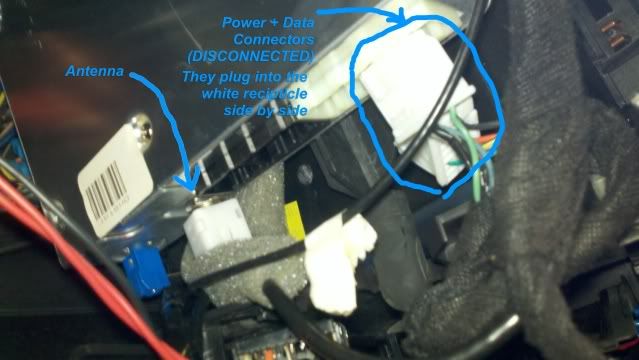
Pulled mine this morning. Xm radio works just fine still. Xm module is on the right side of the trunk. Just curious, there was a two wire plug not connected to anything mounted to the top of the on star module. Anyone know what that is for?
I don't think it will happen all of a sudden. They are just putting the rules in effect now. I don't htink they are going to change anything for a while. This way they can just say that they are still doing things the same way and give people time to get over the new rules and forget about it.
I don't think that it is right that they even gave themself the right to do it.
They are going to sell you data that you collect for them and you don't get a dime of it.

Launching!
Joined: Mar 2010
Posts: 237
Likes: 0
From: Buffalo, NY
Just a crazy rumor, (note, i do not believe it one bit) that i always hear....A guy is doing 120+ or something on a barren 65 mph highway, and onstar comes on and tells him to slow down......... Like I said, just a crazy rumor, hear it every once in a while though lol
when i swapped out head units the on star did kill my battery...pulled the fuse and it never happened again

Thread Starter
TECH Enthusiast
Joined: Oct 2008
Posts: 593
Likes: 0
From: Rochester, NY
LS1 Tech Stories
The Best V8 Stories One Small Block at Time

6 Gifts Neither Your Dad Nor Grad Will Shove Into the 'Trinket Drawer'
Brett Foote
Topdon ONE vs. Artidiag 800 BT2: Which is the Diagnostic Tablet For You?
Pouria Savadkouei
Gas Monkey Built a 6-Wheel Ferrari Testarossa With a Corvette LT4 Engine
Verdad Gallardo
7 Most Reliable High-Performance Engines GM Has Ever Built
Verdad Gallardo
Amazing '71 Camaro Restomod Is Modern Muscle Car Under the Skin
Verdad Gallardo
6 Common C5 Corvette Failures and What's Involved In Repairing Them
Pouria Savadkouei
Retro Modern Bandit Pontiac Trans AM Comes With Burt Reynolds' Autograph
Verdad Gallardo
Top 10 Greatest Cadillac V Series Performance Models Ever, Ranked
Pouria Savadkouei
Top 10 Most Powerful Chevy Trucks Ever Made!


Launching!
Joined: Oct 2009
Posts: 291
Likes: 1
From: Toronto, Canada
Thanks for the pics as well, will be doing this tomorrow. If they lose enough subscriptions then they will be forced to backtrack. There must be millions of people that don't belong to instate and will never hear of this. I have to say my battery drains quickly when the vehicle is not in use.

IIRC the Hennessey CTS-V got an Onstar call during a road test flogging.


On The Tree
Joined: Sep 2007
Posts: 164
Likes: 0
From: Dayton, OH
Come on guys disconnect your Onstar but keep your government tracked cell phone. Which monitors location, speed, texts, emails, pictures, Facebook web browsing and calls. Then sells this information just like Onstar.
Why bother?
Why bother?

TECH Enthusiast
Joined: May 2011
Posts: 640
Likes: 1
I think you need Bama's Dale Gribble avatar...




Interesting stuff. I might be picking up a Park Ave Ultra on wednesday that I noticed had onstar. Anyone know where the onstar module would be in that? It's getting thrown away...I'm with dale gribble. 

Onstar decided NOT to track data after people unsubscribe, but I guess they will still sell data of subscribers.
General Motors' OnStar service on Tuesday said it has dropped plans to keep collecting data from OnStar-equipped vehicles after owners have canceled the service.
The move comes in the wake of complaints about the data-collection plan from consumers and at least two members of Congress.
OnStar had told subscribers that, starting on Dec. 1, the company would have been able to sell or share anonymized data--data that doesn't identify an individual customer or vehicle--about vehicle location, speed and safety-belt usage with third parties. A customer would specifically have to ask OnStar to shut down the data connection, separate from canceling the service.
"We realize that our proposed amendments did not satisfy our subscribers," OnStar president Linda Marshall said in a statement. "This is why we are leaving the decision in our customers' hands. We listened, we responded and we hope to maintain the trust of our more than 6 million customers."
Democratic Sens. Chuck Schumer of New York and Al Franken of Minnesota objected to the plan, saying that it violated consumers' privacy.
"By tracking drivers even after they've canceled their service, OnStar is attempting one of the most brazen invasions of privacy in recent memory," Schumer said.
In a letter to the Federal Trade Commission, Schumer called for an investigation of the potentially unfair practice. Schumer also contacted OnStar, asking it to abandon the changes to its policy.
Read more: http://www.autoweek.com/article/2011...#ixzz1ZBALdjCz
General Motors' OnStar service on Tuesday said it has dropped plans to keep collecting data from OnStar-equipped vehicles after owners have canceled the service.
The move comes in the wake of complaints about the data-collection plan from consumers and at least two members of Congress.
OnStar had told subscribers that, starting on Dec. 1, the company would have been able to sell or share anonymized data--data that doesn't identify an individual customer or vehicle--about vehicle location, speed and safety-belt usage with third parties. A customer would specifically have to ask OnStar to shut down the data connection, separate from canceling the service.
"We realize that our proposed amendments did not satisfy our subscribers," OnStar president Linda Marshall said in a statement. "This is why we are leaving the decision in our customers' hands. We listened, we responded and we hope to maintain the trust of our more than 6 million customers."
Democratic Sens. Chuck Schumer of New York and Al Franken of Minnesota objected to the plan, saying that it violated consumers' privacy.
"By tracking drivers even after they've canceled their service, OnStar is attempting one of the most brazen invasions of privacy in recent memory," Schumer said.
In a letter to the Federal Trade Commission, Schumer called for an investigation of the potentially unfair practice. Schumer also contacted OnStar, asking it to abandon the changes to its policy.
Read more: http://www.autoweek.com/article/2011...#ixzz1ZBALdjCz