





AFR Heads.

TECH Regular
Joined: Jun 2009
Posts: 448
Likes: 0
From: new york

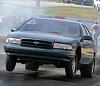
Ok , I bought a set of a.f.r 210,s last yr to compliment my 383 solid roller going into car this yr . Well I got a case of whatevers and wanted to see what the car would do with them on my 355 . I put em on and the car loved it esp up top I did lose a little low end but that's what the high stall conv is for ! So after tuning the setup and what not I went to the track and on the a.f.r 210 setup that most on this board said would slow me down , I did a 10.82 on a 100/150 shot with a 4k stalled performabuilt 4l60 . That was a little faster than my 11.2 I bested with my stock ported and the were ported by l/e . Those same heads now are goin on my STREETCAR s.r 383 with a stalled 4l80 behind it .
it started as a golen motor i bought used. it put out 520 flywheel when new. when i got it, the heads wer untouched 195cc street afrs, the intake was a factory stock lt4. cam was a 238/242 .575/.575 112. it trashed a 1.5 rocker so i replaced them all with comp ultra mags. u cant get them in 1.5 so i went with 1.52 which brought the lift up to .582. the local porter i had more than exceeded my expectations. if you want his contact info, ill pm you. guy is god with a dremel. 6 speed car, numbers made through a moser 12 with 4.10s.
I miss anything?
I miss anything?
I have nothing against AFR heads. No doubt at all they're capable of producing amazing power with the right work applied to them. The tone of the OP's first couple of posts sure indicated to me he had unrealistic expectations of "out of the box" heads.
I was trying to get information to offer advice for a so called weekend street car. When that led to a 500 rwhp goal for a car to "putt around town with", I clearly have nothing to offer.
I'm sure you'll enjoy the car either way, Steve. Sounds like budget isn't a big concern. Good luck with it
I was trying to get information to offer advice for a so called weekend street car. When that led to a 500 rwhp goal for a car to "putt around town with", I clearly have nothing to offer.
I'm sure you'll enjoy the car either way, Steve. Sounds like budget isn't a big concern. Good luck with it
wow, no disrespect intended but I completely disagree. My mamofied afrs shipped yesterday. If you love your car, want the best, and want heads that you could put on your mantle go ahead.
It a an expensive path, but it depends on the op's needs. I recommend you pm Tony mamo and see what he can do for .
It a an expensive path, but it depends on the op's needs. I recommend you pm Tony mamo and see what he can do for .
it started as a golen motor i bought used. it put out 520 flywheel when new. when i got it, the heads wer untouched 195cc street afrs, the intake was a factory stock lt4. cam was a 238/242 .575/.575 112. it trashed a 1.5 rocker so i replaced them all with comp ultra mags. u cant get them in 1.5 so i went with 1.52 which brought the lift up to .582. the local porter i had more than exceeded my expectations. if you want his contact info, ill pm you. guy is god with a dremel. 6 speed car, numbers made through a moser 12 with 4.10s.
I miss anything?
I miss anything?
dont know what to tell you, supprised me too. its not an off the shelf cam, i can tell u that. it was pulling 5 degrees of timing at peak torque so its pretty low (455rwtq) it was still pulling .5 degrees at peak hp tho
LS1 Tech Stories
The Best V8 Stories One Small Block at Time

6 Common C5 Corvette Failures and What's Involved In Repairing Them
Pouria Savadkouei
Retro Modern Bandit Pontiac Trans AM Comes With Burt Reynolds' Autograph
Verdad Gallardo
Top 10 Greatest Cadillac V Series Performance Models Ever, Ranked
Pouria Savadkouei
Top 10 Most Powerful Chevy Trucks Ever Made!

Hennessey's New Supercharged Silverado ZR2 Has 700 HP
Verdad Gallardo
Coachbuilt N2A Anteros Is an LS2-Powered C6 Corvette In Italian Clothes
Verdad Gallardo
Awesome K5 Blazer Restomod Comes With C7 Corvette Power
Verdad Gallardo
10 Camaros You Should Never Buy

10 LS Engine Myths That Refuse to Die
Verdad Gallardo
Speccing a cam a bit past max lift is beneficial, since it increases the valves dwell time at max lift instead of only spending a fraction of a second there.
he also did the combustion chambers and back cut the valves. we also found the intake gasket was hanging into the runner and who ever ported the intake for the 58mm tb didnt open it up far enough. those may have contributed

TECH Fanatic
Joined: Sep 2010
Posts: 1,037
Likes: 2
While you can over-head an engine, too much lift wont cost you power unless your heads were poorly ported and instead of plateauing they plummit or go turbulent.
Speccing a cam a bit past max lift is beneficial, since it increases the valves dwell time at max lift instead of only spending a fraction of a second there.
Speccing a cam a bit past max lift is beneficial, since it increases the valves dwell time at max lift instead of only spending a fraction of a second there.
If your head flows the best at .650 there is no reason to put a higher lift in it. Its doing nothing for you but causing more strain on the valvetrain.
A head can't flow more air than its max flow.
If your head peaks at .650 and you spec, say, a. 675 cam, the valve will be at or above Max flow for longer, and make more power.
TECH Fanatic
Joined: Sep 2010
Posts: 1,037
Likes: 2
Sure go for it.
Its called run a longer duration.
Lift
Lift and duration are the two cam specs that get the most attention. Lift is simply how far the cam lobe will open the valve at its peak. More lift generally equals more flow, but too much lift is very hard on valve springs and lifters and if your heads have a definite flow peak then lifting the valve beyond that point usually does not give increased power. Lift is generally expressed as a decimal value of less than an inch, and a distinction must be made between lobe lift and valve lift. Lobe lift is the physical measurement of the lift of the actual cam lobe. Valve lift will always be higher because the rocker arm multiplies the lobe lift through the use of the fulcrum. Valve lift can be calculated by multiplying the lobe lift by the rocker arm ratio (e.g. .300 lobe lift x 1.6 rocker = .480 valve lift). Valve lift in excess of .600" is usually not worth any extra flow on a street Small Block Chevy head.
www.lt1howto.com/articles/camshafts.htm
http://www.hipermath.com/engines/intake_valve_lift
Apparently you are one who believes "bigger is better".
Its called run a longer duration.
Lift
Lift and duration are the two cam specs that get the most attention. Lift is simply how far the cam lobe will open the valve at its peak. More lift generally equals more flow, but too much lift is very hard on valve springs and lifters and if your heads have a definite flow peak then lifting the valve beyond that point usually does not give increased power. Lift is generally expressed as a decimal value of less than an inch, and a distinction must be made between lobe lift and valve lift. Lobe lift is the physical measurement of the lift of the actual cam lobe. Valve lift will always be higher because the rocker arm multiplies the lobe lift through the use of the fulcrum. Valve lift can be calculated by multiplying the lobe lift by the rocker arm ratio (e.g. .300 lobe lift x 1.6 rocker = .480 valve lift). Valve lift in excess of .600" is usually not worth any extra flow on a street Small Block Chevy head.
www.lt1howto.com/articles/camshafts.htm
http://www.hipermath.com/engines/intake_valve_lift
Apparently you are one who believes "bigger is better".
Last edited by F0x Slaughter; Mar 19, 2012 at 09:49 PM.

300 cfm @ .600",
310 cfm @ .625",
315 cfm @ .650",
then starts falling to say - 300 cfm @ .675" and drops all the way to
280 cfm by .700", you will still move more air through that port by having it open the valve past the peak flow lift.
This is why class racers with lift restrictions find ways to "vault" valves off the nose of the lobe even with uported crappy heads. That's a whole other subject and it is all very controlled chaos, but it's very common practice.
TECH Fanatic
Joined: Sep 2010
Posts: 1,037
Likes: 2
The problem is if you run a high lift low duration the ramp speed will be high tearing parts up. High lift high duration will have a lower ramp speed giving a more gentle lift, thus keeping the valve open longer.


Apologies if my first response was overly simple or blunt - I was posting from my nearly dead cell phone.
You suggest adding duration, but I am somehow the one who thinks "bigger is better"?
Duration is one method of increasing the valves time at higher lifts, but you can only run so much duration for any given application based on desired peak, engine rpm, engine size, idle, streetability concerns, etc. Increasing lift will generally not have the same negative effects of increasing duration. People then bandaid their too high duration cam by widening the LSA to get back the drivability issues they got by going to high duration in the first place. Although its not the correct way to do things, this is a common practice among shelf and "house" grind cams.
Its not a hard concept to understand. Increased dwell time @ max lift = more air per valve event, which equals more power. Wearing down parts is a completely different problem, caused by poor part selection.
Only if you don't run the proper valvetrain - which many people do not. Valvetrains are often waaayyy underappreciated and overlooked, since most people are hesitant to spend close to what their heads cost in "just" valvetrain parts, and they skimp on extremely important things like springs and pushrods since they are not considered a power mod. Then, when their pushrods turn to spaghetti and their cheap springs let the valves bounce off the seat, they end up peaking way too early, making crappy power, and breaking stuff.
Sure go for it.
Its called run a longer duration.
Lift
Lift and duration are the two cam specs that get the most attention. Lift is simply how far the cam lobe will open the valve at its peak. More lift generally equals more flow, but too much lift is very hard on valve springs and lifters and if your heads have a definite flow peak then lifting the valve beyond that point usually does not give increased power. Lift is generally expressed as a decimal value of less than an inch, and a distinction must be made between lobe lift and valve lift. Lobe lift is the physical measurement of the lift of the actual cam lobe. Valve lift will always be higher because the rocker arm multiplies the lobe lift through the use of the fulcrum. Valve lift can be calculated by multiplying the lobe lift by the rocker arm ratio (e.g. .300 lobe lift x 1.6 rocker = .480 valve lift). Valve lift in excess of .600" is usually not worth any extra flow on a street Small Block Chevy head.
www.lt1howto.com/articles/camshafts.htm
http://www.hipermath.com/engines/intake_valve_lift
Apparently you are one who believes "bigger is better".
Its called run a longer duration.
Lift
Lift and duration are the two cam specs that get the most attention. Lift is simply how far the cam lobe will open the valve at its peak. More lift generally equals more flow, but too much lift is very hard on valve springs and lifters and if your heads have a definite flow peak then lifting the valve beyond that point usually does not give increased power. Lift is generally expressed as a decimal value of less than an inch, and a distinction must be made between lobe lift and valve lift. Lobe lift is the physical measurement of the lift of the actual cam lobe. Valve lift will always be higher because the rocker arm multiplies the lobe lift through the use of the fulcrum. Valve lift can be calculated by multiplying the lobe lift by the rocker arm ratio (e.g. .300 lobe lift x 1.6 rocker = .480 valve lift). Valve lift in excess of .600" is usually not worth any extra flow on a street Small Block Chevy head.
www.lt1howto.com/articles/camshafts.htm
http://www.hipermath.com/engines/intake_valve_lift
Apparently you are one who believes "bigger is better".
Duration is one method of increasing the valves time at higher lifts, but you can only run so much duration for any given application based on desired peak, engine rpm, engine size, idle, streetability concerns, etc. Increasing lift will generally not have the same negative effects of increasing duration. People then bandaid their too high duration cam by widening the LSA to get back the drivability issues they got by going to high duration in the first place. Although its not the correct way to do things, this is a common practice among shelf and "house" grind cams.
Its not a hard concept to understand. Increased dwell time @ max lift = more air per valve event, which equals more power. Wearing down parts is a completely different problem, caused by poor part selection.
Only if you don't run the proper valvetrain - which many people do not. Valvetrains are often waaayyy underappreciated and overlooked, since most people are hesitant to spend close to what their heads cost in "just" valvetrain parts, and they skimp on extremely important things like springs and pushrods since they are not considered a power mod. Then, when their pushrods turn to spaghetti and their cheap springs let the valves bounce off the seat, they end up peaking way too early, making crappy power, and breaking stuff.

Not sure if that was pointed at me.....or directions for replying to what I said, but either way that cracked me up. LOL I'm gonna try to get outta this one so not to clutter up the OP's AFR cylinder head thread any more.