





5.7 to 383 tuning question
TECH Addict
Joined: Dec 2010
Posts: 2,610
Likes: 4
From: Maricopa, AZ

so if I changed the 355 injectors to 80s, entered the new injector size via tunercats, would I need a retune or is changing the injector size all that is needed?
Somehow I am guessing retune!
Is there any way to know the limits of the 42s?
Somehow I am guessing retune!
Is there any way to know the limits of the 42s?
TECH Addict
Joined: Dec 2010
Posts: 2,610
Likes: 4
From: Maricopa, AZ
Should just be the injector constant. But you'll want to log and verify because your injectors were too small your tune could've been off already. Not sure you'll need 80lb injectors with the 355, but 42lbs were too small.
383 goes in the corner, I think I am going to put that in a 56 Dodge truck.
I am going to build another 355 as exact to what I had originally as possible.
Going to datalog it and see what the injector duty cycle is. If I need larger ones then so be it I will get them, change the injector constant, and log again. If it needs a tune adjustment I will have to send it out to be done.
Remember if this truck hits the drag strip it will be once a year, so not worried about getting every last HP from it. I just want it daily driver reliable and not on the edge of blowing up.
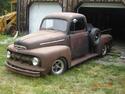
If the 42s will be enough for 500HP and 5500 RPM that is good enough for me, this is in a 51 Ford pickup that probably wasnt designed to go faster than 70mph without flying apart


TECH Resident

Joined: Jun 2013
Posts: 853
Likes: 32
From: Kernersville, NC
There is no need for 80# injectors in this supercharged engine. Nothing but overkill....
The C6 ZR1 makes 638hp on 53-54# injectors.
One massive mistake some people make is to oversize the injector so much that they stay in the non-linear region when they don't need to be. Compound that with the fact that they don't have the proper data to characterize that injector on the low end and you end up with a mess on your hands.
I'll need to do the math, but I think 42# will be good for 500hp.
The C6 ZR1 makes 638hp on 53-54# injectors.
One massive mistake some people make is to oversize the injector so much that they stay in the non-linear region when they don't need to be. Compound that with the fact that they don't have the proper data to characterize that injector on the low end and you end up with a mess on your hands.
I'll need to do the math, but I think 42# will be good for 500hp.
Last edited by ACE1252; Mar 21, 2015 at 09:47 AM.
There is no need for 80# injectors in this supercharged engine. Nothing but overkill....
The C6 ZR1 makes 638hp on 53-54# injectors.
One massive mistake some people make is to oversize the injector so much that they stay in the non-linear region when they don't need to be. Compound that with the fact that they don't have the proper data to characterize that injector on the low end and you end up with a mess on your hands.
The C6 ZR1 makes 638hp on 53-54# injectors.
One massive mistake some people make is to oversize the injector so much that they stay in the non-linear region when they don't need to be. Compound that with the fact that they don't have the proper data to characterize that injector on the low end and you end up with a mess on your hands.
The corvette you reference also raise rail pressure to ~88psi at high boost. That changes your injector quite a lot. I do not think the LT1 pcm can handle such things, so you either run a crap ton of rail pressure or size injectors larger.
Not disagreeing with you, but a larger injector at lower pressure makes sourcing fuel pump systems a hell of a lot easier. Versus a smaller injector and large high volume and high pressure electric pump.
On 10psi with my 383ci motor, I ran out of injector at 42 rail pressure and a 1:1 rise. Thats with 80# injectors. Had to change rail to 55psi area to get DC into happy areas.
The corvette you reference also raise rail pressure to ~88psi at high boost. That changes your injector quite a lot. I do not think the LT1 pcm can handle such things, so you either run a crap ton of rail pressure or size injectors larger.
Not disagreeing with you, but a larger injector at lower pressure makes sourcing fuel pump systems a hell of a lot easier. Versus a smaller injector and large high volume and high pressure electric pump.
The corvette you reference also raise rail pressure to ~88psi at high boost. That changes your injector quite a lot. I do not think the LT1 pcm can handle such things, so you either run a crap ton of rail pressure or size injectors larger.
Not disagreeing with you, but a larger injector at lower pressure makes sourcing fuel pump systems a hell of a lot easier. Versus a smaller injector and large high volume and high pressure electric pump.
LS1 Tech Stories
The Best V8 Stories One Small Block at Time

Topdon ONE vs. Artidiag 800 BT2: Which is the Diagnostic Tablet For You?
Pouria Savadkouei
Gas Monkey Built a 6-Wheel Ferrari Testarossa With a Corvette LT4 Engine
Verdad Gallardo
7 Most Reliable High-Performance Engines GM Has Ever Built
Verdad Gallardo
Amazing '71 Camaro Restomod Is Modern Muscle Car Under the Skin
Verdad Gallardo
6 Common C5 Corvette Failures and What's Involved In Repairing Them
Pouria Savadkouei
Retro Modern Bandit Pontiac Trans AM Comes With Burt Reynolds' Autograph
Verdad Gallardo
Top 10 Greatest Cadillac V Series Performance Models Ever, Ranked
Pouria Savadkouei
Top 10 Most Powerful Chevy Trucks Ever Made!

Hennessey's New Supercharged Silverado ZR2 Has 700 HP
Verdad Gallardo Doesnt the FMU that comes with the supercharger kit raise the fuel pressure under boost conditions? I thought that was the whole idea of having it? I am not sure if the 2nd inline pump is always on or only comes on under boost? I have to check the schematic. I wouldnt think it would be possible to flow fuel through a shut off inline pump.
I would get a adjustable 1:1 fuel reg and ditch the FMU.
TECH Resident
Joined: Jun 2013
Posts: 853
Likes: 32
From: Kernersville, NC
On 10psi with my 383ci motor, I ran out of injector at 42 rail pressure and a 1:1 rise. Thats with 80# injectors. Had to change rail to 55psi area to get DC into happy areas.
The corvette you reference also raise rail pressure to ~88psi at high boost. That changes your injector quite a lot. I do not think the LT1 pcm can handle such things, so you either run a crap ton of rail pressure or size injectors larger.
Not disagreeing with you, but a larger injector at lower pressure makes sourcing fuel pump systems a hell of a lot easier. Versus a smaller injector and large high volume and high pressure electric pump.
The corvette you reference also raise rail pressure to ~88psi at high boost. That changes your injector quite a lot. I do not think the LT1 pcm can handle such things, so you either run a crap ton of rail pressure or size injectors larger.
Not disagreeing with you, but a larger injector at lower pressure makes sourcing fuel pump systems a hell of a lot easier. Versus a smaller injector and large high volume and high pressure electric pump.
Pulling this equation info from one of Banish's books....
For BSFC....
Typical NA = 0.3 - 0.5
Typical supercharged = 0.55 - 0.7
Assume 20% safety margin.
Assuming 0.5 BSFC for a NA engine @ 500hp
Injector size = (BSFC x FlywheelHP) / (#injectors x (100% - safety margin%))
Injector size = (0.5 x 500) / (8 x 0.8)
Injector size = 39.0625
For the C6 ZR1....assume 0.7 BSFC(high end)
Injector size = (BSFC x FlywheelHP) / (#injectors x (100% - safety margin%))
Injector size = (0.7 x 638) / (8 x 0.8)
Injector size = 69.78
Last edited by ACE1252; Mar 21, 2015 at 10:21 AM.
TECH Addict
Joined: Dec 2010
Posts: 2,610
Likes: 4
From: Maricopa, AZ
There is no need for 80# injectors in this supercharged engine. Nothing but overkill....
The C6 ZR1 makes 638hp on 53-54# injectors.
One massive mistake some people make is to oversize the injector so much that they stay in the non-linear region when they don't need to be. Compound that with the fact that they don't have the proper data to characterize that injector on the low end and you end up with a mess on your hands.
I'll need to do the math, but I think 42# will be good for 500hp.
The C6 ZR1 makes 638hp on 53-54# injectors.
One massive mistake some people make is to oversize the injector so much that they stay in the non-linear region when they don't need to be. Compound that with the fact that they don't have the proper data to characterize that injector on the low end and you end up with a mess on your hands.
I'll need to do the math, but I think 42# will be good for 500hp.
Everyday driving and he'll be fine, but he's likely going lean on PE modes and that's probably where he's getting a lot of power.
On 10psi with my 383ci motor, I ran out of injector at 42 rail pressure and a 1:1 rise. Thats with 80# injectors. Had to change rail to 55psi area to get DC into happy areas.
The corvette you reference also raise rail pressure to ~88psi at high boost. That changes your injector quite a lot. I do not think the LT1 pcm can handle such things, so you either run a crap ton of rail pressure or size injectors larger.
Not disagreeing with you, but a larger injector at lower pressure makes sourcing fuel pump systems a hell of a lot easier. Versus a smaller injector and large high volume and high pressure electric pump.
The corvette you reference also raise rail pressure to ~88psi at high boost. That changes your injector quite a lot. I do not think the LT1 pcm can handle such things, so you either run a crap ton of rail pressure or size injectors larger.
Not disagreeing with you, but a larger injector at lower pressure makes sourcing fuel pump systems a hell of a lot easier. Versus a smaller injector and large high volume and high pressure electric pump.

I don't know where the math came from in the compression ratio discussion, but it is way off. Those numbers are low.
And, anybody that actually builds these LT1s knows 52cc chambers are damn tough to come by without taking out the top cut on the intake seats on that side, usually putting a small flat on top of the 45 degree seat angle it's self. That is the published blueprint spec, but with most castings you just can't get there without screwing up your valve job.
It is bore X bore X .5874 X stroke X 16.387 = cylinder volume in CCs. Add chamber CCs, Gasket CCs, and piston at TDC CCs. Add that total to the cylinder volume, then divide that total by the chamber, deck & gasket total, that is your compression ratio. If you do not CC the piston at TDC, you are just guessing.
Most do just guess. You would have to build a really sloppy LT1 to be 9.4-1, and/or have some big chambers and dished pistons. If your too lazy to CC the deck with a used gasket, you can calculate the gasket CCs same as the cylinder volume to get pretty close. Many gasket's hole for the bore is not perfectly round.
14-1 with a 383" ain't hard. Done it a few times.
Using .036" total deck & gasket leaves clean areas on the piston deck in an 8000RPM SBC, with good steel rods, and no loose piston or bearing clearances. Less than that leaves deck machine marks on the pistons. Mahle pistons don't need near the cylinder wall clearance as something like Bill Millers do, meaning you can run the deck closer. I use CP pistons, they don't expand as much either, so can be run them closer. Mahle also has some really nice ring groove machining. Promotes ring seal, which = HP.
And, anybody that actually builds these LT1s knows 52cc chambers are damn tough to come by without taking out the top cut on the intake seats on that side, usually putting a small flat on top of the 45 degree seat angle it's self. That is the published blueprint spec, but with most castings you just can't get there without screwing up your valve job.
It is bore X bore X .5874 X stroke X 16.387 = cylinder volume in CCs. Add chamber CCs, Gasket CCs, and piston at TDC CCs. Add that total to the cylinder volume, then divide that total by the chamber, deck & gasket total, that is your compression ratio. If you do not CC the piston at TDC, you are just guessing.
Most do just guess. You would have to build a really sloppy LT1 to be 9.4-1, and/or have some big chambers and dished pistons. If your too lazy to CC the deck with a used gasket, you can calculate the gasket CCs same as the cylinder volume to get pretty close. Many gasket's hole for the bore is not perfectly round.
14-1 with a 383" ain't hard. Done it a few times.
Using .036" total deck & gasket leaves clean areas on the piston deck in an 8000RPM SBC, with good steel rods, and no loose piston or bearing clearances. Less than that leaves deck machine marks on the pistons. Mahle pistons don't need near the cylinder wall clearance as something like Bill Millers do, meaning you can run the deck closer. I use CP pistons, they don't expand as much either, so can be run them closer. Mahle also has some really nice ring groove machining. Promotes ring seal, which = HP.
TECH Addict
Joined: Dec 2010
Posts: 2,610
Likes: 4
From: Maricopa, AZ
I don't know where the math came from in the compression ratio discussion, but it is way off. Those numbers are low.
And, anybody that actually builds these LT1s knows 52cc chambers are damn tough to come by without taking out the top cut on the intake seats on that side, usually putting a small flat on top of the 45 degree seat angle it's self. That is the published blueprint spec, but with most castings you just can't get there without screwing up your valve job.
It is bore X bore X .5874 X stroke X 16.387 = cylinder volume in CCs. Add chamber CCs, Gasket CCs, and piston at TDC CCs. Add that total to the cylinder volume, then divide that total by the chamber, deck & gasket total, that is your compression ratio. If you do not CC the piston at TDC, you are just guessing.
Most do just guess. You would have to build a really sloppy LT1 to be 9.4-1, and/or have some big chambers and dished pistons. If your too lazy to CC the deck with a used gasket, you can calculate the gasket CCs same as the cylinder volume to get pretty close. Many gasket's hole for the bore is not perfectly round.
14-1 with a 383" ain't hard. Done it a few times.
Using .036" total deck & gasket leaves clean areas on the piston deck in an 8000RPM SBC, with good steel rods, and no loose piston or bearing clearances. Less than that leaves deck machine marks on the pistons. Mahle pistons don't need near the cylinder wall clearance as something like Bill Millers do, meaning you can run the deck closer. I use CP pistons, they don't expand as much either, so can be run them closer. Mahle also has some really nice ring groove machining. Promotes ring seal, which = HP.
And, anybody that actually builds these LT1s knows 52cc chambers are damn tough to come by without taking out the top cut on the intake seats on that side, usually putting a small flat on top of the 45 degree seat angle it's self. That is the published blueprint spec, but with most castings you just can't get there without screwing up your valve job.
It is bore X bore X .5874 X stroke X 16.387 = cylinder volume in CCs. Add chamber CCs, Gasket CCs, and piston at TDC CCs. Add that total to the cylinder volume, then divide that total by the chamber, deck & gasket total, that is your compression ratio. If you do not CC the piston at TDC, you are just guessing.
Most do just guess. You would have to build a really sloppy LT1 to be 9.4-1, and/or have some big chambers and dished pistons. If your too lazy to CC the deck with a used gasket, you can calculate the gasket CCs same as the cylinder volume to get pretty close. Many gasket's hole for the bore is not perfectly round.
14-1 with a 383" ain't hard. Done it a few times.
Using .036" total deck & gasket leaves clean areas on the piston deck in an 8000RPM SBC, with good steel rods, and no loose piston or bearing clearances. Less than that leaves deck machine marks on the pistons. Mahle pistons don't need near the cylinder wall clearance as something like Bill Millers do, meaning you can run the deck closer. I use CP pistons, they don't expand as much either, so can be run them closer. Mahle also has some really nice ring groove machining. Promotes ring seal, which = HP.
Just a bit more info on the 383..
I was mistaken, checked my notes and the PO stated 10.5 compression ratio with the -31cc dished piston. Assuming an off the shelf head gasket like a felpro 1074, what would the compression ratio be with normal LT1 58cc heads? How much would the heads be decked, if at all, to get 10.5?
another crazy idea, if it really is 10.5, would it be safe to run 5psi with the blower on this engine as is and just get the LS computer tuned for it? Or too much static compression?
Ah forget it, gotta sleep on this one.
I was mistaken, checked my notes and the PO stated 10.5 compression ratio with the -31cc dished piston. Assuming an off the shelf head gasket like a felpro 1074, what would the compression ratio be with normal LT1 58cc heads? How much would the heads be decked, if at all, to get 10.5?
another crazy idea, if it really is 10.5, would it be safe to run 5psi with the blower on this engine as is and just get the LS computer tuned for it? Or too much static compression?
Ah forget it, gotta sleep on this one.
Last edited by drptop70ss; Mar 21, 2015 at 02:01 PM.
TECH Resident
Joined: Jun 2013
Posts: 853
Likes: 32
From: Kernersville, NC
I think some of the systems that came out for a stock LT1 were running 4psi.
Seems like though I read of several stock engines having land problems when boosted. I'm not sure if it was the compression, piston design, or combos of both that gave the trouble.
Need someone much more experienced than me to chime in on this one.
Seems like though I read of several stock engines having land problems when boosted. I'm not sure if it was the compression, piston design, or combos of both that gave the trouble.
Need someone much more experienced than me to chime in on this one.
I think some of the systems that came out for a stock LT1 were running 4psi.
Seems like though I read of several stock engines having land problems when boosted. I'm not sure if it was the compression, piston design, or combos of both that gave the trouble.
Need someone much more experienced than me to chime in on this one.
Seems like though I read of several stock engines having land problems when boosted. I'm not sure if it was the compression, piston design, or combos of both that gave the trouble.
Need someone much more experienced than me to chime in on this one.
Still leaning towards building another 355, my head hurts lol..
Back again and confused as ever..
Finished tearing down the original 355. No spun rods, but some of the main bearings are wiped pretty good, and I am sure now the crank will have to be cut and it is already .010 / .010.
I am guessing this was from either running with the coolant in the oil, or the fact that cam bearing holes are not where I have read they should be for an LT1 (The GM LT1 cam bearings should be up like this....
(perspective of man looking at front of motor)
#1 (front) bearing oil holes are 1 and 5 o-clock
#2, #3, #4 bearing oil hole is at 5 o-clock----pointing to the oil filter in other words.
#5 (rear) bearing oil hole is at 12 o-clock)
Mine had #1 at 12 o'clock, and #2,#3,#4,#5 at 6 o'clock (pointing towards the crank).
So now with more and more cash that may be needed to build the 355 it may be better to use the 383 and just play mail tag with the tune.
To keep this simple my first question to those who can compute compression ratio better than me why do you all think my compression cannot get to 9:1 with the 58CC heads and -31CC dished pistons? Assuming zero deck and felpro 1074 gaskets. (Compressed Thickness .039'' compressed Volume 8.7c)
I am not arguing just confused since this is from the Mahle website, see the line with the -31cc pistons for the 383 with the 5.7 rods.

Finished tearing down the original 355. No spun rods, but some of the main bearings are wiped pretty good, and I am sure now the crank will have to be cut and it is already .010 / .010.
I am guessing this was from either running with the coolant in the oil, or the fact that cam bearing holes are not where I have read they should be for an LT1 (The GM LT1 cam bearings should be up like this....
(perspective of man looking at front of motor)
#1 (front) bearing oil holes are 1 and 5 o-clock
#2, #3, #4 bearing oil hole is at 5 o-clock----pointing to the oil filter in other words.
#5 (rear) bearing oil hole is at 12 o-clock)
Mine had #1 at 12 o'clock, and #2,#3,#4,#5 at 6 o'clock (pointing towards the crank).
So now with more and more cash that may be needed to build the 355 it may be better to use the 383 and just play mail tag with the tune.
To keep this simple my first question to those who can compute compression ratio better than me why do you all think my compression cannot get to 9:1 with the 58CC heads and -31CC dished pistons? Assuming zero deck and felpro 1074 gaskets. (Compressed Thickness .039'' compressed Volume 8.7c)
I am not arguing just confused since this is from the Mahle website, see the line with the -31cc pistons for the 383 with the 5.7 rods.


TECH Addict
Joined: Dec 2010
Posts: 2,610
Likes: 4
From: Maricopa, AZ