


1996 Range Rover Overfinch 570

Thread Starter
Registered User
Joined: Jan 2008
Posts: 5
Likes: 0
 1996 Range Rover Overfinch 570
 Hello all. I've just posted on here after one of the guys at rangerovers.net suggested I asked my question here. I've simply copied and pasted the original thread. A company called Overfinch in the UK do performance bits for Range Rover models. These photos are taken of a Range Rover which I looked at to buy the other day. It's originally a 1996 p38a (Second generation Range Rover) which was converted by Overfinch around 1998 from Rover V8 4.6 to Chevy 350 Small Block 5.7 (330bhp?). 2 Photos below if you don't know what a p38 looks like. I'll pass on any info you can give me. Thanks in advance.
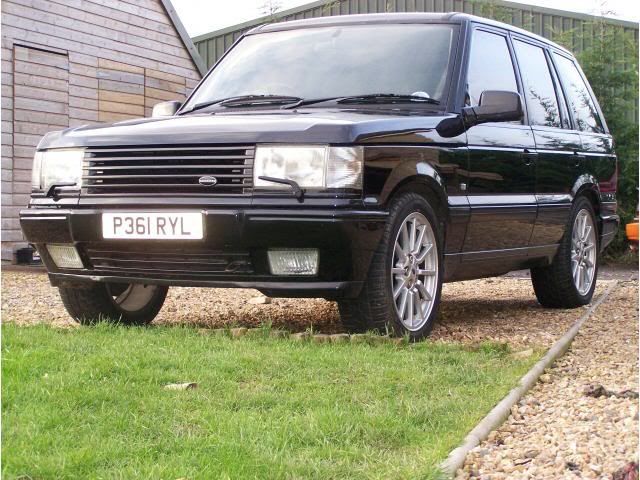
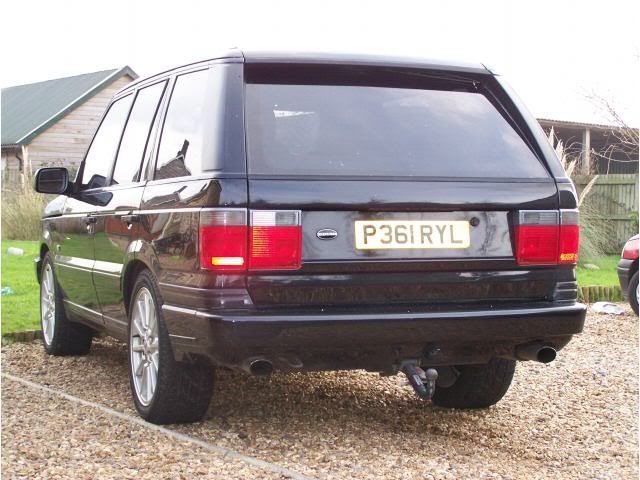
I'm trying to find out where this engine may have come from and what sort of date and specifications it may have. Overfinch fitted it to one of their conversions towards the end of the 1990's but I get the feeling it may be older than it looks.
I'm having real problems researching the vehicle because Overfinch don't appear to care too much about their conversions once they leave their workshops and there is very little on the internet. I've just purchased a book about performance and special edition Range Rovers so there may be something in there.
Having talked to a few people about their conversions (you know who you are :wink: ), it would appear that they were (on Classics) a little shoddy. This particular 38a has untidy elements created as a result of the conversion. One example is the melting of the front wheel arch liners by the exhaust manifolds. Some simple heat shielding or manifold wrap could have prevented this during the conversion.
I read the engine is used on the Camaro but being a bit 'shielded' from the US car market, I'm hoping one of my US cousins may be able to help.
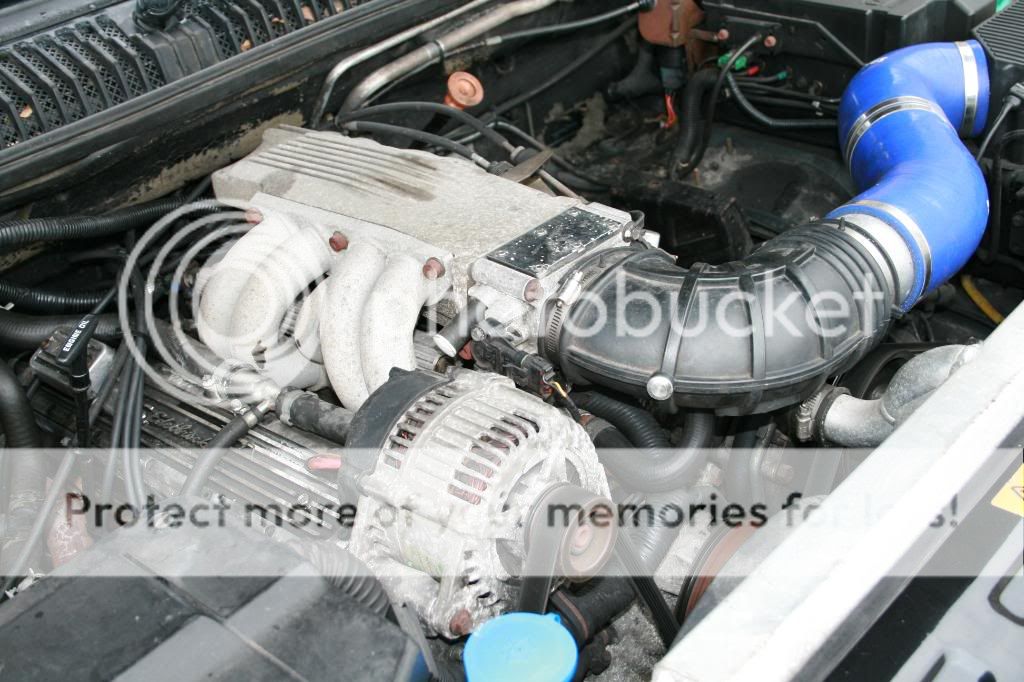

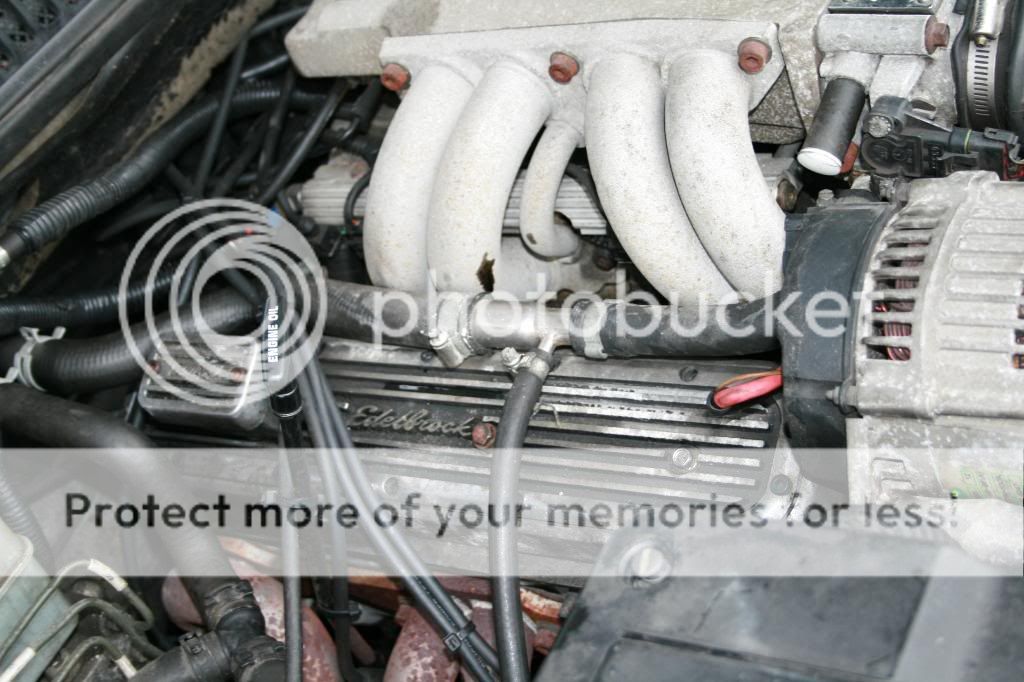

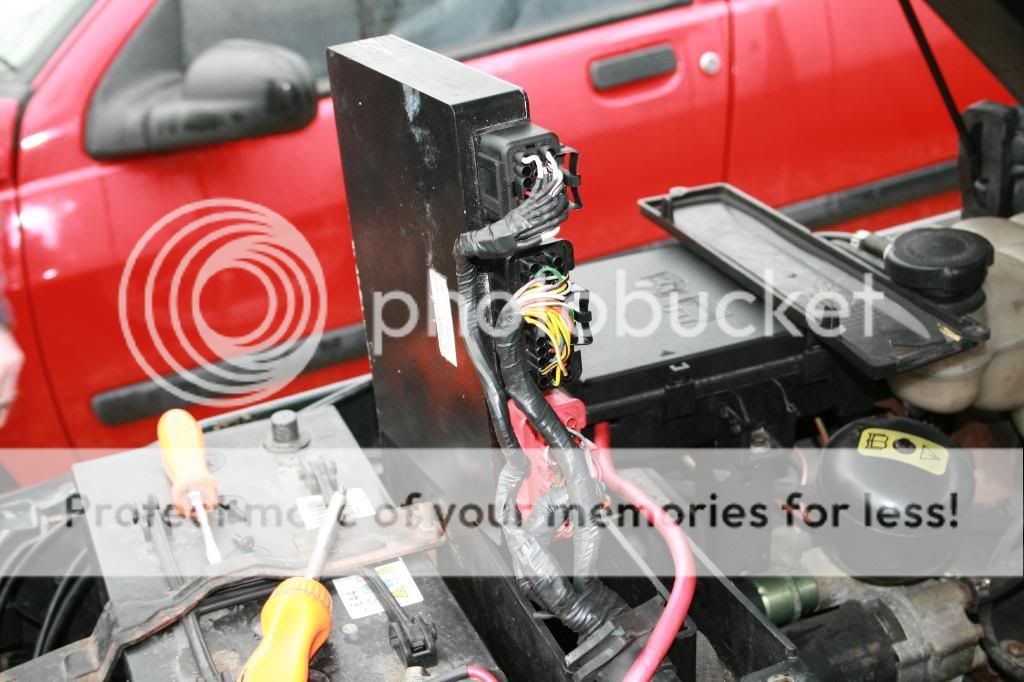
I'm trying to find out where this engine may have come from and what sort of date and specifications it may have. Overfinch fitted it to one of their conversions towards the end of the 1990's but I get the feeling it may be older than it looks.
I'm having real problems researching the vehicle because Overfinch don't appear to care too much about their conversions once they leave their workshops and there is very little on the internet. I've just purchased a book about performance and special edition Range Rovers so there may be something in there.
Having talked to a few people about their conversions (you know who you are :wink: ), it would appear that they were (on Classics) a little shoddy. This particular 38a has untidy elements created as a result of the conversion. One example is the melting of the front wheel arch liners by the exhaust manifolds. Some simple heat shielding or manifold wrap could have prevented this during the conversion.
I read the engine is used on the Camaro but being a bit 'shielded' from the US car market, I'm hoping one of my US cousins may be able to help.
Depending on the year, and size of that engine it could have come from an 85-92 Camaro. I can't tell what the year is on it nor can I tell the type of heads as that would help a lot. If it has iron heads it is for sure from a Camaro, but if they are aluminum that means it is more than likely from a Corvette from the same time period or that they are aftermarket.
If you can find out more information about engine modifications that would be very helpful as well. All that it appears to have is a cold air intake and a pair of exhaust headers (instead of stock manifolds) but other than that it is hard to tell.
Lastly, that engine never had 330bhp. The most it could have was in Corvette form and I think that was around 275 or less. The Camaro with the 5.7 Tuned Port Injection (TPI) was rated at 245hp in the 91-92 variants because of them having dual cats instead of 1. The 87-90 cars were 230hp I believe. And the Camaros that came with a TPI engine in 85-86 were all 305 cubic inch (5.0 liter) engines. The 5.7 engine code for both the Corvette and the Camaro was L98. Doing a search for L98 might yield some results as well. Just be warned, GM just released a new engine with the L98 code which is all aluminum and much more powerful.
If anything I typed doesn't make sense, just let me know. I just woke up and I still have that early morning fog...LOL
If you can find out more information about engine modifications that would be very helpful as well. All that it appears to have is a cold air intake and a pair of exhaust headers (instead of stock manifolds) but other than that it is hard to tell.
Lastly, that engine never had 330bhp. The most it could have was in Corvette form and I think that was around 275 or less. The Camaro with the 5.7 Tuned Port Injection (TPI) was rated at 245hp in the 91-92 variants because of them having dual cats instead of 1. The 87-90 cars were 230hp I believe. And the Camaros that came with a TPI engine in 85-86 were all 305 cubic inch (5.0 liter) engines. The 5.7 engine code for both the Corvette and the Camaro was L98. Doing a search for L98 might yield some results as well. Just be warned, GM just released a new engine with the L98 code which is all aluminum and much more powerful.
If anything I typed doesn't make sense, just let me know. I just woke up and I still have that early morning fog...LOL
Thread Starter
Registered User
Joined: Jan 2008
Posts: 5
Likes: 0
Ok - I've managed to find out some more about the unit. ISBN 1-855-20619-6 is a book called Range Rover 4x4 Performance Portfolio 1995-2001. There is a copy of a journalist report on Overfinch but there isn't much to go with. I've also purchased on eBay.com a 4 page brochure from Overfinch covering this model so maybe that will help even more.
It is confirmed that the engine (should be) is a 5.7litre tuned to 330bhp with 425lb ft at 3150rpm.
Quoted from the article:
'Cast aluminium low-friction pistons, high-swirl combustion chamber, aluminium cylinder heads, torque-enhancing multi-branch exhaust manifolds - 130mph, 7.2sec 0 - 60mph ans 12.7mpg'
There is a rather crap black and white photo of the engine and it's exactly the same as the photos I posted EXCEPT that for some reason, the rocker covers are back to front and some of the pipework is better - probably due it it being a show vehicle rather than a customers.
It is confirmed that the engine (should be) is a 5.7litre tuned to 330bhp with 425lb ft at 3150rpm.
Quoted from the article:
'Cast aluminium low-friction pistons, high-swirl combustion chamber, aluminium cylinder heads, torque-enhancing multi-branch exhaust manifolds - 130mph, 7.2sec 0 - 60mph ans 12.7mpg'
There is a rather crap black and white photo of the engine and it's exactly the same as the photos I posted EXCEPT that for some reason, the rocker covers are back to front and some of the pipework is better - probably due it it being a show vehicle rather than a customers.
Thread Starter
Registered User
Joined: Jan 2008
Posts: 5
Likes: 0
I think (using the internet) the fuel injection is a ACCEL Street Ram Kit no. 77130 for the 1992 Corvette.
Another owner has said the engine in their Overfinch Range Rover Classic is a 1992 Corvette 5.7 and was identified by an American performance company in Norway.
Another owner has said the engine in their Overfinch Range Rover Classic is a 1992 Corvette 5.7 and was identified by an American performance company in Norway.

TECH Senior Member
iTrader: (3)
Joined: Oct 2006
Posts: 7,564
Likes: 4
From: Decatur, TN (N-W of Athens)
That motor is WEIRD. Some points on it: Firstly, it appears to be a 85-88 TPI setup, but then it has no MAF. Then it looks like an 89-92 TPI, but it has no MAP o_0 THEN it uses the 85-88 runners. It's been awhile since I looked at a TPI ECM, but that doesn't even look right to me :\ I'm baffled.
Also, that motor looks stock from what you quoted from the article, and that won't be 330hp, but more like 330ft/lbs of torque... That motor is more around 235hp stock at the flywheel and around 210 at the wheels. That's assuming it's a 89-92 motor. If it's the 85-88 then it has about 225hp at the flywheel. Also, there weren't any 92 TPI Vette motors. In 92 they went to LT1s. TPI persisted through 92 in F-Bodies though (Camaro and Firebird).
Also, that motor looks stock from what you quoted from the article, and that won't be 330hp, but more like 330ft/lbs of torque... That motor is more around 235hp stock at the flywheel and around 210 at the wheels. That's assuming it's a 89-92 motor. If it's the 85-88 then it has about 225hp at the flywheel. Also, there weren't any 92 TPI Vette motors. In 92 they went to LT1s. TPI persisted through 92 in F-Bodies though (Camaro and Firebird).
Trending Topics
LS1 Tech Stories
The Best V8 Stories One Small Block at Time

Gas Monkey Built a 6-Wheel Ferrari Testarossa With a Corvette LT4 Engine
Verdad Gallardo
7 Most Reliable High-Performance Engines GM Has Ever Built
Verdad Gallardo
Amazing '71 Camaro Restomod Is Modern Muscle Car Under the Skin
Verdad Gallardo
6 Common C5 Corvette Failures and What's Involved In Repairing Them
Pouria Savadkouei
Retro Modern Bandit Pontiac Trans AM Comes With Burt Reynolds' Autograph
Verdad Gallardo
Top 10 Greatest Cadillac V Series Performance Models Ever, Ranked
Pouria Savadkouei
Top 10 Most Powerful Chevy Trucks Ever Made!

Hennessey's New Supercharged Silverado ZR2 Has 700 HP
Verdad Gallardo
Coachbuilt N2A Anteros Is an LS2-Powered C6 Corvette In Italian Clothes
Verdad Gallardo TECH Senior Member
iTrader: (3)
Joined: Oct 2006
Posts: 7,564
Likes: 4
From: Decatur, TN (N-W of Athens)
Thread Starter
Registered User
Joined: Jan 2008
Posts: 5
Likes: 0
I thought it was an LT1 engine but you guys would know way more about it than me. I really appreciate you help. It seems I may need to find an Overfinch engineer from somewhere who would know what it is just to confirm.
By the way, the link to the thread is here just in case you see someting else:
http://rangerovers.net/forum/viewtop...er=asc&start=0
By the way, the link to the thread is here just in case you see someting else:
http://rangerovers.net/forum/viewtop...er=asc&start=0


Registered User
Joined: Sep 2010
Posts: 2
Likes: 0
From: England
 More Intake Questions
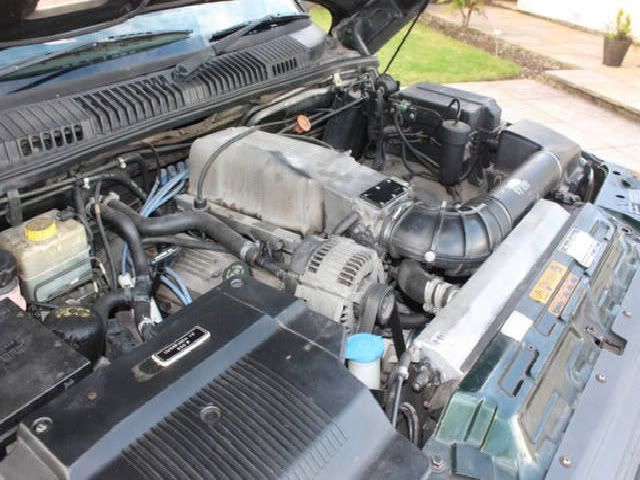
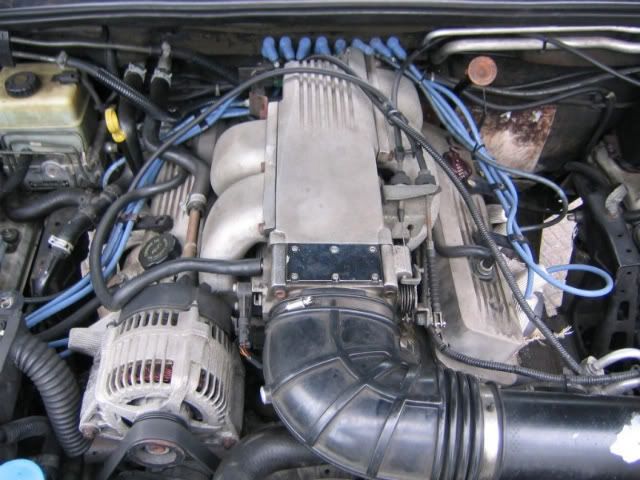
 Apologies for resurrecting such an old thread, but you people seem to know about these things - I'm trying to identify what the two intakes pictured below are (or indeed anything else of note about them).
Both are 350s stroked to 383, both put into Range Rovers by Overfinch (as above). Both were built around the same time, so I'm wondering why they used different parts (it wasn't a customer choice).
Any ideas?
Thanks in advance ...
Both are 350s stroked to 383, both put into Range Rovers by Overfinch (as above). Both were built around the same time, so I'm wondering why they used different parts (it wasn't a customer choice).
Any ideas?
Thanks in advance ...

Apologies for resurrecting such an old thread, but you people seem to know about these things - I'm trying to identify what the two intakes pictured below are (or indeed anything else of note about them).
Both are 350s stroked to 383, both put into Range Rovers by Overfinch (as above). Both were built around the same time, so I'm wondering why they used different parts (it wasn't a customer choice).
Any ideas?
Thanks in advance ...
Both are 350s stroked to 383, both put into Range Rovers by Overfinch (as above). Both were built around the same time, so I'm wondering why they used different parts (it wasn't a customer choice).
Any ideas?
Thanks in advance ...
The second pic is a 90-92 TPI system with SLP siamesed runners and a distributerless system similar to a motec or deltec. IMO they were probably using what was available to them at the moment when building those conversions.
