





Speed Density tuning

Thread Starter
Launching!
Joined: Sep 2004
Posts: 246
Likes: 0
 Speed Density tuning
 Motor: 408ci Fast 90mm Intake/Nick Williams 90 TB S-Cam(238/242) Stg 3 heads daily driver
I tuned for 4 hours tonight with the wideband hooked to HPTuners and I have to say the histogram feature is badass. Any serious tuner should have the enhanced I/O interface. These guys did a great job with this software.
ANyway...
Like I said after 4 hours I got 95% of my cells under 4000rpm at between 14.0 and 14.9 w00t!
What I am wondering though is...
Is there any dis-advantage of running SD with a daily driver car??? I am going to tune PE tomorrow and see what happens if I re-enable closed loop, if it changes things. If closed loop changes things too much I will just run in open forever I guess right??
Its amazing how stable the AFR seems to be in SD.
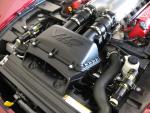
Anyone know what I should do about joining my Lid to my 90mm TB???
I was thinking maybe large turbo piping hose (the $$ blue stuff)???
I tuned for 4 hours tonight with the wideband hooked to HPTuners and I have to say the histogram feature is badass. Any serious tuner should have the enhanced I/O interface. These guys did a great job with this software.
ANyway...
Like I said after 4 hours I got 95% of my cells under 4000rpm at between 14.0 and 14.9 w00t!
What I am wondering though is...
Is there any dis-advantage of running SD with a daily driver car??? I am going to tune PE tomorrow and see what happens if I re-enable closed loop, if it changes things. If closed loop changes things too much I will just run in open forever I guess right??
Its amazing how stable the AFR seems to be in SD.
Anyone know what I should do about joining my Lid to my 90mm TB???
I was thinking maybe large turbo piping hose (the $$ blue stuff)???
Thread Starter
Launching!
Joined: Sep 2004
Posts: 246
Likes: 0
Originally Posted by Black02SS
You need to look at the afr% and see where you are at. What is your commanded AFR set to?? In the AFR % histogram, you need to shoot for 2 to -2 throughout the entire table.
But now I am re-thinking and if I am tuning with the VE table only with PE and CLosed loop DISABLED then that doesnt make sense right?
Should I set my commanded AFR to 14.7?? Will setting it to 14.7 screw up my PE or no????
So I guess with the commanded set to 13:1 and the VE actually dialed in at 14.0-14.9, the VE table is actually fighting against the commanded huh??????
You need to keep the commanded at 13:1 like you have it, disable PE by setting the map to enable at like 115 and re-do your VE table. As of now, your VE table is all out of wack. After you get it dialed in to where the commanded is, you can either A) re-enable closed loop or B) stay in open loop and say to hell with the o2's. Which ever method you choose to do, you will need to re-enable your PE table and then dial it in as well as reset your open loop ARF multiplier table back to stock. 

TECH Fanatic
Joined: Mar 2003
Posts: 1,839
Likes: 0
From: La Porte, TX
Originally Posted by Black02SS
You need to keep the commanded at 13:1 like you have it, disable PE by setting the map to enable at like 115 and re-do your VE table. As of now, your VE table is all out of wack. After you get it dialed in to where the commanded is, you can either A) re-enable closed loop or B) stay in open loop and say to hell with the o2's. Which ever method you choose to do, you will need to re-enable your PE table and then dial it in as well as reset your open loop ARF multiplier table back to stock.
Sounds about right to me.

Thread Starter
Launching!
Joined: Sep 2004
Posts: 246
Likes: 0
Originally Posted by Black02SS
You need to keep the commanded at 13:1 like you have it, disable PE by setting the map to enable at like 115 and re-do your VE table. As of now, your VE table is all out of wack. After you get it dialed in to where the commanded is, you can either A) re-enable closed loop or B) stay in open loop and say to hell with the o2's. Which ever method you choose to do, you will need to re-enable your PE table and then dial it in as well as reset your open loop ARF multiplier table back to stock.

And now its all 14.0-14.7 under 4000rpm. How is that out of whack? Yes I have my PE table and Closed Loop mode DISABLED already.
Are you saying I need to redo it for 13:1?? Why?
Are you saying tune it for 13:1 and then when I put the AFR multiplier back to stock, it will correct it to 14.7????
Originally Posted by Black02SS
You need to keep the commanded at 13:1 like you have it, disable PE by setting the map to enable at like 115 and re-do your VE table. As of now, your VE table is all out of wack. After you get it dialed in to where the commanded is, you can either A) re-enable closed loop or B) stay in open loop and say to hell with the o2's. Which ever method you choose to do, you will need to re-enable your PE table and then dial it in as well as reset your open loop ARF multiplier table back to stock.
Trending Topics
LS1 Tech Stories
The Best V8 Stories One Small Block at Time

Amazing '71 Camaro Restomod Is Modern Muscle Car Under the Skin
Verdad Gallardo
6 Common C5 Corvette Failures and What's Involved In Repairing Them
Pouria Savadkouei
Retro Modern Bandit Pontiac Trans AM Comes With Burt Reynolds' Autograph
Verdad Gallardo
Top 10 Greatest Cadillac V Series Performance Models Ever, Ranked
Pouria Savadkouei
Top 10 Most Powerful Chevy Trucks Ever Made!

Hennessey's New Supercharged Silverado ZR2 Has 700 HP
Verdad Gallardo
Coachbuilt N2A Anteros Is an LS2-Powered C6 Corvette In Italian Clothes
Verdad Gallardo
Awesome K5 Blazer Restomod Comes With C7 Corvette Power
Verdad Gallardo
10 Camaros You Should Never Buy

Originally Posted by MeentSS02
So can you explain to me why the 13.1 to get the VE table in line across the board when you are only eventually going to go back to stock (even without 02 sensors)? Man, I'm kinda confused...I just got HPTuners yesterday, and I'm already confused as all hell man.
We tune the VE for one sole purpose. To produce the AFR that is commanded. In closed loop, you will always be running 14.7 but if your tune is way off (ie. the motor itself is not producing 14.7 when commanded) then your trims will compensate (+ or - trimming). The idea is to have as little trimming as possible since that indicates the fuel system is not having to compensate for a too rich or too lean operating condition.
When you tune in open loop, you are essentially taking all your fuel control sensors offline that way you can directly manipulate the VE to produce the sought after AFR. You want to command 13.0 across the board for open lopp tuning so that you can map out your VE table at a safe AFR from idle all the way up to where you shift. (13.0 is rich for part throttle and idle, but it is necessary to use one consistent AFR across your whole VE table to align it with commanded AFR).
Once your VE is producing your commanded AFR (in this case 13.0) for all histogram values, then it doesn't matter what you command of it, it should produce it. If you change the commander to 14.0 it will produce it, 13.5 it will do it, 12.0 it will do it... well, up to the limit of the fuel system, but you get the idea. The stock VE is not aligned with commanded AFR after modding, which is why most of us see trims stray from a good place. The VE does not create the AFR itself, the VE is sort of the mother of an airflow calculation so that your PCM knows how much fuel to shoot to produce your commanded AFR. If the VE airmass calculation is off, that means the fuel shot is off, that means AFR production is off from what is commanded, and inevitably you will have trimming to compensate for it.
But the idea is to have as little compensation as possible b/c that means that your motor was doing what it was supposed to in the first place. As said before, you will always be running at 14.7 in closed loop due to trimming. But in closed loop it's better to have less trimming even though you know you will always be at 14.7. Again, it's just getting the motor to run like it supposed to instead of having the PCM correct for its inconsistency. When you got to WOT, you switch over from closed loop to a fuel multiplier in PE mode and command a different AFR than stoich (12.0-13.0). If your VE was dialed in at one specific AFR (doesn't matter what AFR, but we pick 13.0 cuz it's safe for all RPMs), you would see 14.7 at part throttle with very little trimming (since in closed loop, non-PE mode you are always commanding 14.7), and 12.0-13.0 at WOT (since this is what you want to command for power production).
BTW, this is all assuming you don't want to put your MAF back on. If you do, then you must go through another process to align the MAF with your fueling. I would recommend though using the MAF since it helps anchor your tune despite weather changes. In SD Mode (MAFless) trims will stray around with the weather which is not a good thing. Even worse is running SD-mode and open loop operation. For a daily driven car you really do want to be running O2s and a MAF to ensure that your tune will be good in any type of weather. Running SD mode and open loop all the time is better suited for a track car, that way you can dial in your tune for maximum efficiency for that day or moment or track pass.
Sorry for the novel, hope this helps...

Last edited by txhorns281; Apr 15, 2005 at 11:46 AM.
TECH Fanatic
Joined: Mar 2003
Posts: 1,839
Likes: 0
From: La Porte, TX
Originally Posted by txhorns281
Ok here's the deal:
We tune the VE for one sole purpose. To produce the AFR that is commanded. In closed loop, you will always be running 14.7 but if your tune is way off (ie. the motor itself is not producing 14.7 when commanded) then your trims will compensate (+ or - trimming). The idea is to have as little trimming as possible since that indicates the fuel system is not having to compensate for a too rich or too lean operating condition.
When you tune in open loop, you are essentially taking all your fuel control sensors offline that way you can directly manipulate the VE to produce the sought after AFR. You want to command 13.0 across the board for open lopp tuning so that you can map out your VE table at a safe AFR from idle all the way up to where you shift. (13.0 is rich for part throttle and idle, but it is necessary to use one consistent AFR across your whole VE table to align it with commanded AFR).
Once your VE is producing your commanded AFR (in this case 13.0) for all histogram values, then it doesn't matter what you command of it, it should produce it. If you change the commander to 14.0 it will produce it, 13.5 it will do it, 12.0 it will do it... well, up to the limit of the fuel system, but you get the idea. The stock VE is not aligned with commanded AFR after modding, which is why most of us see trims stray from a good place. The VE does not create the AFR itself, the VE is sort of the mother of an airflow calculation so that your PCM knows how much fuel to shoot to produce your commanded AFR. If the VE airmass calculation is off, that means the fuel shot is off, that means AFR production is off from what is commanded, and inevitably you will have trimming to compensate for it.
But the idea is to have as little compensation as possible b/c that means that your motor was doing what it was supposed to in the first place. As said before, you will always be running at 14.7 in closed loop due to trimming. But in closed loop it's better to have less trimming even though you know you will always be at 14.7. Again, it's just getting the motor to run like it supposed to instead of having the PCM correct for its inconsistency. When you got to WOT, you switch over from closed loop to a fuel multiplier in PE mode and command a different AFR than stoich (12.0-13.0). If your VE was dialed in at one specific AFR (doesn't matter what AFR, but we pick 13.0 cuz it's safe for all RPMs), you would see 14.7 at part throttle with very little trimming (since in closed loop, non-PE mode you are always commanding 14.7), and 12.0-13.0 at WOT (since this is what you want to command for power production).
BTW, this is all assuming you don't want to put your MAF back on. If you do, then you must go through another process to align the MAF with your fueling. I would recommend though using the MAF since it helps anchor your tune despite weather changes. In SD Mode (MAFless) trims will stray around with the weather which is not a good thing. Even worse is running SD-mode and open loop operation. For a daily driven car you really do want to be running O2s and a MAF to ensure that your tune will be good in any type of weather. Running SD mode and open loop all the time is better suited for a track car, that way you can dial in your tune for maximum efficiency for that day or moment or track pass.
Sorry for the novel, hope this helps...
We tune the VE for one sole purpose. To produce the AFR that is commanded. In closed loop, you will always be running 14.7 but if your tune is way off (ie. the motor itself is not producing 14.7 when commanded) then your trims will compensate (+ or - trimming). The idea is to have as little trimming as possible since that indicates the fuel system is not having to compensate for a too rich or too lean operating condition.
When you tune in open loop, you are essentially taking all your fuel control sensors offline that way you can directly manipulate the VE to produce the sought after AFR. You want to command 13.0 across the board for open lopp tuning so that you can map out your VE table at a safe AFR from idle all the way up to where you shift. (13.0 is rich for part throttle and idle, but it is necessary to use one consistent AFR across your whole VE table to align it with commanded AFR).
Once your VE is producing your commanded AFR (in this case 13.0) for all histogram values, then it doesn't matter what you command of it, it should produce it. If you change the commander to 14.0 it will produce it, 13.5 it will do it, 12.0 it will do it... well, up to the limit of the fuel system, but you get the idea. The stock VE is not aligned with commanded AFR after modding, which is why most of us see trims stray from a good place. The VE does not create the AFR itself, the VE is sort of the mother of an airflow calculation so that your PCM knows how much fuel to shoot to produce your commanded AFR. If the VE airmass calculation is off, that means the fuel shot is off, that means AFR production is off from what is commanded, and inevitably you will have trimming to compensate for it.
But the idea is to have as little compensation as possible b/c that means that your motor was doing what it was supposed to in the first place. As said before, you will always be running at 14.7 in closed loop due to trimming. But in closed loop it's better to have less trimming even though you know you will always be at 14.7. Again, it's just getting the motor to run like it supposed to instead of having the PCM correct for its inconsistency. When you got to WOT, you switch over from closed loop to a fuel multiplier in PE mode and command a different AFR than stoich (12.0-13.0). If your VE was dialed in at one specific AFR (doesn't matter what AFR, but we pick 13.0 cuz it's safe for all RPMs), you would see 14.7 at part throttle with very little trimming (since in closed loop, non-PE mode you are always commanding 14.7), and 12.0-13.0 at WOT (since this is what you want to command for power production).
BTW, this is all assuming you don't want to put your MAF back on. If you do, then you must go through another process to align the MAF with your fueling. I would recommend though using the MAF since it helps anchor your tune despite weather changes. In SD Mode (MAFless) trims will stray around with the weather which is not a good thing. Even worse is running SD-mode and open loop operation. For a daily driven car you really do want to be running O2s and a MAF to ensure that your tune will be good in any type of weather. Running SD mode and open loop all the time is better suited for a track car, that way you can dial in your tune for maximum efficiency for that day or moment or track pass.
Sorry for the novel, hope this helps...
Correctamundo....What Will is saying is 100% correct... Here is link to help get you started, and explain the how's and why's:
http://www.hptuners.com/forum/YaBB.p...num=1100894562
Matt

Thread Starter
Launching!
Joined: Sep 2004
Posts: 246
Likes: 0
tx great info!
I went ahead and did as stated and put all the cells about 12.8-13.2 avg nice and smooth.
Then I re-enabled closed loop and put my commanded AFR table back to stock and WOW AFR jumps all around from 14.0 to 17.00, idles around 14.6-15.9 and goes up and down.
When I have it in FULL OPEN LOOP for VE tuning, the AFR always looks good and generally stays very steady.
I thought closed loop was supposed to be so good?
Seems like I should think about just running Open Loop full time???
I also tried the maf again (plugged it back in) and drove for 15 mins...LTFT were -14
So I scaled entire maf table down 10%. Drove around 15mins again, LTFT -14
What the hell??? A 10% scale and no change? I set everything back to the way it was before VE tuning so it couldnt be that. Only thing I didnt do is turn back on the SES lights for the MAF...which shouldnt matter
I went ahead and did as stated and put all the cells about 12.8-13.2 avg nice and smooth.
Then I re-enabled closed loop and put my commanded AFR table back to stock and WOW AFR jumps all around from 14.0 to 17.00, idles around 14.6-15.9 and goes up and down.
When I have it in FULL OPEN LOOP for VE tuning, the AFR always looks good and generally stays very steady.
I thought closed loop was supposed to be so good?
Seems like I should think about just running Open Loop full time???
I also tried the maf again (plugged it back in) and drove for 15 mins...LTFT were -14
So I scaled entire maf table down 10%. Drove around 15mins again, LTFT -14
What the hell??? A 10% scale and no change? I set everything back to the way it was before VE tuning so it couldnt be that. Only thing I didnt do is turn back on the SES lights for the MAF...which shouldnt matter
Originally Posted by SSkeet
tx great info!
I went ahead and did as stated and put all the cells about 12.8-13.2 avg nice and smooth.
Then I re-enabled closed loop and put my commanded AFR table back to stock and WOW AFR jumps all around from 14.0 to 17.00, idles around 14.6-15.9 and goes up and down.
When I have it in FULL OPEN LOOP for VE tuning, the AFR always looks good and generally stays very steady.
I thought closed loop was supposed to be so good?
Seems like I should think about just running Open Loop full time???
I also tried the maf again (plugged it back in) and drove for 15 mins...LTFT were -14
So I scaled entire maf table down 10%. Drove around 15mins again, LTFT -14
What the hell??? A 10% scale and no change? I set everything back to the way it was before VE tuning so it couldnt be that. Only thing I didnt do is turn back on the SES lights for the MAF...which shouldnt matter
I went ahead and did as stated and put all the cells about 12.8-13.2 avg nice and smooth.
Then I re-enabled closed loop and put my commanded AFR table back to stock and WOW AFR jumps all around from 14.0 to 17.00, idles around 14.6-15.9 and goes up and down.
When I have it in FULL OPEN LOOP for VE tuning, the AFR always looks good and generally stays very steady.
I thought closed loop was supposed to be so good?
Seems like I should think about just running Open Loop full time???
I also tried the maf again (plugged it back in) and drove for 15 mins...LTFT were -14
So I scaled entire maf table down 10%. Drove around 15mins again, LTFT -14
What the hell??? A 10% scale and no change? I set everything back to the way it was before VE tuning so it couldnt be that. Only thing I didnt do is turn back on the SES lights for the MAF...which shouldnt matter
In Closed Loop, SD-mode, you will have the functionality of O2s, but your trims will still bounce around with weather changes since VE airmass is more sensitive than MAF airmass. If the idea is to get your trims close to 0, and keep them there, Closed Loop - MAF mode is the best way to anchor your tune down. I've been on the same tune since December and my trims all sit right at 0 in full closed loop/MAF mode. When i was running SD, a 20-30 degree change blew my tune up.
You may have already done this, but did you input the new size of your motor? This can also affect VE calculations. Another thing to look at is since you're building averages on your AFR histogram, sample the heck out of it and try to pass over all the spots where you're seeing 15,16,17.xx AFR and see if those come down any. If you just crossed one cell for a short amount of time, the scanner may not have picked up enough data to show you that you're actually running stoich. And then there's the ill fated effects of cam overlap, this can distort what AFR your vehicle is truly making. Just some thoughts....

Originally Posted by txhorns281
Ok here's the deal:
We tune the VE for one sole purpose. To produce the AFR that is commanded. In closed loop, you will always be running 14.7 but if your tune is way off (ie. the motor itself is not producing 14.7 when commanded) then your trims will compensate (+ or - trimming). The idea is to have as little trimming as possible since that indicates the fuel system is not having to compensate for a too rich or too lean operating condition.
When you tune in open loop, you are essentially taking all your fuel control sensors offline that way you can directly manipulate the VE to produce the sought after AFR. You want to command 13.0 across the board for open lopp tuning so that you can map out your VE table at a safe AFR from idle all the way up to where you shift. (13.0 is rich for part throttle and idle, but it is necessary to use one consistent AFR across your whole VE table to align it with commanded AFR).
Once your VE is producing your commanded AFR (in this case 13.0) for all histogram values, then it doesn't matter what you command of it, it should produce it. If you change the commander to 14.0 it will produce it, 13.5 it will do it, 12.0 it will do it... well, up to the limit of the fuel system, but you get the idea. The stock VE is not aligned with commanded AFR after modding, which is why most of us see trims stray from a good place. The VE does not create the AFR itself, the VE is sort of the mother of an airflow calculation so that your PCM knows how much fuel to shoot to produce your commanded AFR. If the VE airmass calculation is off, that means the fuel shot is off, that means AFR production is off from what is commanded, and inevitably you will have trimming to compensate for it.
But the idea is to have as little compensation as possible b/c that means that your motor was doing what it was supposed to in the first place. As said before, you will always be running at 14.7 in closed loop due to trimming. But in closed loop it's better to have less trimming even though you know you will always be at 14.7. Again, it's just getting the motor to run like it supposed to instead of having the PCM correct for its inconsistency. When you got to WOT, you switch over from closed loop to a fuel multiplier in PE mode and command a different AFR than stoich (12.0-13.0). If your VE was dialed in at one specific AFR (doesn't matter what AFR, but we pick 13.0 cuz it's safe for all RPMs), you would see 14.7 at part throttle with very little trimming (since in closed loop, non-PE mode you are always commanding 14.7), and 12.0-13.0 at WOT (since this is what you want to command for power production).
BTW, this is all assuming you don't want to put your MAF back on. If you do, then you must go through another process to align the MAF with your fueling. I would recommend though using the MAF since it helps anchor your tune despite weather changes. In SD Mode (MAFless) trims will stray around with the weather which is not a good thing. Even worse is running SD-mode and open loop operation. For a daily driven car you really do want to be running O2s and a MAF to ensure that your tune will be good in any type of weather. Running SD mode and open loop all the time is better suited for a track car, that way you can dial in your tune for maximum efficiency for that day or moment or track pass.
Sorry for the novel, hope this helps...
We tune the VE for one sole purpose. To produce the AFR that is commanded. In closed loop, you will always be running 14.7 but if your tune is way off (ie. the motor itself is not producing 14.7 when commanded) then your trims will compensate (+ or - trimming). The idea is to have as little trimming as possible since that indicates the fuel system is not having to compensate for a too rich or too lean operating condition.
When you tune in open loop, you are essentially taking all your fuel control sensors offline that way you can directly manipulate the VE to produce the sought after AFR. You want to command 13.0 across the board for open lopp tuning so that you can map out your VE table at a safe AFR from idle all the way up to where you shift. (13.0 is rich for part throttle and idle, but it is necessary to use one consistent AFR across your whole VE table to align it with commanded AFR).
Once your VE is producing your commanded AFR (in this case 13.0) for all histogram values, then it doesn't matter what you command of it, it should produce it. If you change the commander to 14.0 it will produce it, 13.5 it will do it, 12.0 it will do it... well, up to the limit of the fuel system, but you get the idea. The stock VE is not aligned with commanded AFR after modding, which is why most of us see trims stray from a good place. The VE does not create the AFR itself, the VE is sort of the mother of an airflow calculation so that your PCM knows how much fuel to shoot to produce your commanded AFR. If the VE airmass calculation is off, that means the fuel shot is off, that means AFR production is off from what is commanded, and inevitably you will have trimming to compensate for it.
But the idea is to have as little compensation as possible b/c that means that your motor was doing what it was supposed to in the first place. As said before, you will always be running at 14.7 in closed loop due to trimming. But in closed loop it's better to have less trimming even though you know you will always be at 14.7. Again, it's just getting the motor to run like it supposed to instead of having the PCM correct for its inconsistency. When you got to WOT, you switch over from closed loop to a fuel multiplier in PE mode and command a different AFR than stoich (12.0-13.0). If your VE was dialed in at one specific AFR (doesn't matter what AFR, but we pick 13.0 cuz it's safe for all RPMs), you would see 14.7 at part throttle with very little trimming (since in closed loop, non-PE mode you are always commanding 14.7), and 12.0-13.0 at WOT (since this is what you want to command for power production).
BTW, this is all assuming you don't want to put your MAF back on. If you do, then you must go through another process to align the MAF with your fueling. I would recommend though using the MAF since it helps anchor your tune despite weather changes. In SD Mode (MAFless) trims will stray around with the weather which is not a good thing. Even worse is running SD-mode and open loop operation. For a daily driven car you really do want to be running O2s and a MAF to ensure that your tune will be good in any type of weather. Running SD mode and open loop all the time is better suited for a track car, that way you can dial in your tune for maximum efficiency for that day or moment or track pass.
Sorry for the novel, hope this helps...
I come from the SD world of tuning (Honda's) so MAF's are a completley new animal to me, but it's nice to read of some familiar grounds every now again.

Thread Starter
Launching!
Joined: Sep 2004
Posts: 246
Likes: 0
Originally Posted by txhorns281
When in closed loop, do you have your LTFT learn on? Regardless of what trims you have, you should still be seeing anywhere b/w 14.6-15.0ish on your closed loop AFR histogram. This is also regardless of MAF or SD operation. But know this, AFR production is not constant so don't totally expect a perfect 14.7 always. Over time your fuel trims will help stabilize stoich operation. So if you see a 15.xx here and there it's not a big deal. Believe me when I say that you don't want to rely on an open loop tune for daily driveability. It may look stable for now, but once you get a really dramatic weather change that tune won't be worth didly anymore. Let's make things simple and use EFI for what it's good for, adjusting fueling for you. Unless you like having your laptop hooked up 24-7, essentially you become the adjustment factor.
In Closed Loop, SD-mode, you will have the functionality of O2s, but your trims will still bounce around with weather changes since VE airmass is more sensitive than MAF airmass. If the idea is to get your trims close to 0, and keep them there, Closed Loop - MAF mode is the best way to anchor your tune down. I've been on the same tune since December and my trims all sit right at 0 in full closed loop/MAF mode. When i was running SD, a 20-30 degree change blew my tune up.
You may have already done this, but did you input the new size of your motor? This can also affect VE calculations. Another thing to look at is since you're building averages on your AFR histogram, sample the heck out of it and try to pass over all the spots where you're seeing 15,16,17.xx AFR and see if those come down any. If you just crossed one cell for a short amount of time, the scanner may not have picked up enough data to show you that you're actually running stoich. And then there's the ill fated effects of cam overlap, this can distort what AFR your vehicle is truly making. Just some thoughts....
In Closed Loop, SD-mode, you will have the functionality of O2s, but your trims will still bounce around with weather changes since VE airmass is more sensitive than MAF airmass. If the idea is to get your trims close to 0, and keep them there, Closed Loop - MAF mode is the best way to anchor your tune down. I've been on the same tune since December and my trims all sit right at 0 in full closed loop/MAF mode. When i was running SD, a 20-30 degree change blew my tune up.
You may have already done this, but did you input the new size of your motor? This can also affect VE calculations. Another thing to look at is since you're building averages on your AFR histogram, sample the heck out of it and try to pass over all the spots where you're seeing 15,16,17.xx AFR and see if those come down any. If you just crossed one cell for a short amount of time, the scanner may not have picked up enough data to show you that you're actually running stoich. And then there's the ill fated effects of cam overlap, this can distort what AFR your vehicle is truly making. Just some thoughts....
Cam is 238/242 .608/.608 115LSA
I have Thunder MAF Ends on, but I am thinking I should still be able to get my LTFT to change around a bit.
Maybe I did turn off learning by mistake. So I just go into the scanner while car is on/running and turn learning ON?
OK so lets assume I have the VE dialed in pretty well, LTFT learning is on, and MAF is plugged in and operational. As for logging MAF data (frequency vs. airflow), do I need to disable anything? I forget where I read, but I remember something about hooking up the maf but not allowing it to make adjustments while logging the raw freq vs. airflow that was coming through. Can you elaborate on this?
I appreciate the help, and Im sure many will learn from this thread. You are explaining things very well!


Originally Posted by hc_performance
to log maf frequency you need to set you maf fail frequency to 0 if I am not mistaken.
You want to do this so that you will remain in SD mode and the PCM will be using VE airmass calcs to determine fueling. That way when you recalibrate your MAF, it should be inline with the type of airflow your motor uses with, or without the MAF's presence. The only reason why I say use the MAF is simply through my personal experience my tune has never stayed consistent over a long period while running in SD mode and/or in Open Loop mode either. Mainly, colder weather seemed to have more destructive effects on my tune such as richer than commanded AFR production, surging, etc. I have yet to see what warmer climates will bring but I don't really care since for the last 2 months or so my tune has stayed VERY consistent as far as trimming goes and WOT AFR production as well.And once you've dialed in a new MAF table, consider that starting point. You may need to do some minor tweaking to certain frequency ranges to even out all your trimming. Consider the MAF curve, at this point, to be like an average at all frequencies of the possible dynamic airflow sampled/used in VE mode. The more data you can log to create a MAF curve, the better off you'll be. Which means go from idle all the way up to what you can (160+ did it for me!) and try to sample even amounts of data over the frequency range. City driving takes care of most low end, and then a few variant cruise runs on the highway can take care of the higher end.