





Quick question on LS1 head design

Thread Starter
On The Tree
Joined: Mar 2006
Posts: 185
Likes: 0
From: Knoxville, Tennessee
 Quick question on LS1 head design
 So, I currently own a 93 5.0 Mustang (my first "performance" car) and in doing so, I've found my way to a few mustang forums. One of the more resourceful ones I've come to is corral.net. Now, this forum is full of some really good info, but a lot of the guys seem to be older (30s-40s) and completely against everything Chevy has ever done, most notably though, the LT1 and LSx motors.
One of the things I keep on reading is that Chevy "stole" the head design from Ford because they were too stupid to make it themselves. Now, I've got a few LS1 books and from what I've read, the head design, as well as the rest of the engine, was a totally clean-sheet design. However, I don't know if LS1 heads will bolt up to a Ford motor or not. Is there any truth to this? Anyone heard of this "arguement" before?
One of the things I keep on reading is that Chevy "stole" the head design from Ford because they were too stupid to make it themselves. Now, I've got a few LS1 books and from what I've read, the head design, as well as the rest of the engine, was a totally clean-sheet design. However, I don't know if LS1 heads will bolt up to a Ford motor or not. Is there any truth to this? Anyone heard of this "arguement" before?

TECH Fanatic
Joined: Jun 2002
Posts: 1,979
Likes: 3
From: Upstate NY
I've found my way to a few mustang forums. One of the more resourceful ones I've come to is corral.net. Now, this forum is full of some really good info, but a lot of the guys seem to be older (30s-40s) and completely against everything Chevy has ever done, most notably though, the LT1 and LSx motors.
You might tell them that a quick, inexpensive way to make a Mustang fast is bolt in an LS1. The Ford headers can be made to fit. It's not that GM copied Ford, they just wanted to make the swap easier so Ford guys could experience some serious performance.

OK, serious question: anyone know why the Gen III Ls head has the "cathedral " ports?
Jon
Thread Starter
On The Tree
Joined: Mar 2006
Posts: 185
Likes: 0
From: Knoxville, Tennessee
I know exactly what you're talking about. Might have to go stir up some dust in that thread. I'm tired of reading all the LS1 bashing on that forum. It gets a little old.
TECH Fanatic
Joined: Jun 2002
Posts: 1,979
Likes: 3
From: Upstate NY
Nope, not from what I hear. That was a secondary result, even though that was the first thing everyone (perhaps including GM) said in '97.
It has much more to do with making power, increasing durability and lowering cost. More power, longer life (and maybe higher rpm capabilities) and less cost...imagine that! Just like with OHC engines, right?
Hint: Look at the differences in LS7 & L92 vs. the cath. port head assemblies.
OK, another LS question: Why the "D" shaped openings in the caps over the ends of the LS rocker arm trunnion bearings? This is easier.
Also, why are these "Ds" not used in the Comp or other LS trunnion/bearing conversions?
Jon
PS: Please link me to the E85 thread you mentioned.
It has much more to do with making power, increasing durability and lowering cost. More power, longer life (and maybe higher rpm capabilities) and less cost...imagine that! Just like with OHC engines, right?
Hint: Look at the differences in LS7 & L92 vs. the cath. port head assemblies.
OK, another LS question: Why the "D" shaped openings in the caps over the ends of the LS rocker arm trunnion bearings? This is easier.
Also, why are these "Ds" not used in the Comp or other LS trunnion/bearing conversions?
Jon
PS: Please link me to the E85 thread you mentioned.
Pushrod location for the cathedral ports
I will hazard a guess on the D-shaped question. Is to keep them from being put on upside down. Much quicker on the assembly with not having to look and see if the trunion is countersunk on the side you want to use.
As far as them not being on the aftermarket kits, maybe at the upper limits they could possibly limit the travel on the rockers?? Need to sit down and look at a stock rocker....
I will hazard a guess on the D-shaped question. Is to keep them from being put on upside down. Much quicker on the assembly with not having to look and see if the trunion is countersunk on the side you want to use.
As far as them not being on the aftermarket kits, maybe at the upper limits they could possibly limit the travel on the rockers?? Need to sit down and look at a stock rocker....
Trending Topics
TECH Fanatic
Joined: Jun 2002
Posts: 1,979
Likes: 3
From: Upstate NY
Pushrod location for the cathedral ports
I will hazard a guess on the D-shaped question. Is to keep them from being put on upside down. Much quicker on the assembly with not having to look and see if the trunion is countersunk on the side you want to use.
As far as them not being on the aftermarket kits, maybe at the upper limits they could possibly limit the travel on the rockers?? Need to sit down and look at a stock rocker....
I will hazard a guess on the D-shaped question. Is to keep them from being put on upside down. Much quicker on the assembly with not having to look and see if the trunion is countersunk on the side you want to use.
As far as them not being on the aftermarket kits, maybe at the upper limits they could possibly limit the travel on the rockers?? Need to sit down and look at a stock rocker....
There was an old saying in the OEM business: "If it can be put together wrong...it will be!" One OEM had a headbolt pattern that let you index the head one cylinder off (three covered and one uncovered on a V8 bank). The locating dowel fit into the combustion chamber. One engine came down the line with the off-indexed head torqued in place.
The aftermarket assumes folks will look at the round side vs the flat/c'sunk side of a trunnion and install it correctly. Oops, not so fast. I did see a thread where a guy tried to install a rebearinged LS rocker round side up.
Reminds me of the old landscape joke: "Green side up."
Jon
LS1 Tech Stories
The Best V8 Stories One Small Block at Time

Top 10 Greatest Cadillac V Series Performance Models Ever, Ranked
Pouria Savadkouei
Top 10 Most Powerful Chevy Trucks Ever Made!

Hennessey's New Supercharged Silverado ZR2 Has 700 HP
Verdad Gallardo
Coachbuilt N2A Anteros Is an LS2-Powered C6 Corvette In Italian Clothes
Verdad Gallardo
Awesome K5 Blazer Restomod Comes With C7 Corvette Power
Verdad Gallardo
10 Camaros You Should Never Buy

10 LS Engine Myths That Refuse to Die
Verdad Gallardo
Five Reasons the Camaro Was the Most Pivotal Player in the Pony Car Wars 2.0
Brett Foote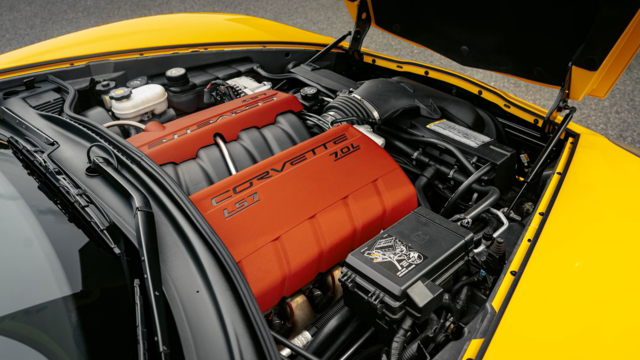
10 Reasons the LS7 Is GM's Most Extreme Naturally Aspirated V8 Engine Ever
Verdad Gallardo


the story i got from one of my instructors who used to be in tight with Ford's engine department, told me that 3 ford engineers left and went to GM and helped design the GEN III articheture. i didnt beleive him when he told me it would bolt up, but we had a 302 block and a set of LS heads laying around the shop and sure enough they bolted right up.
TECH Fanatic
Joined: Jun 2002
Posts: 1,979
Likes: 3
From: Upstate NY
the GEN I and II heads will not bolt on, but....the LS heads WILL bolt on to a SBF. now it wont work, but it will bolt up.
the story i got from one of my instructors who used to be in tight with Ford's engine department, told me that 3 ford engineers left and went to GM and helped design the GEN III articheture. i didnt beleive him when he told me it would bolt up, but we had a 302 block and a set of LS heads laying around the shop and sure enough they bolted right up.
the story i got from one of my instructors who used to be in tight with Ford's engine department, told me that 3 ford engineers left and went to GM and helped design the GEN III articheture. i didnt beleive him when he told me it would bolt up, but we had a 302 block and a set of LS heads laying around the shop and sure enough they bolted right up.

Last I heard the vast majority of LS engines still use the cathedral port head.
Jon


TECH Fanatic
Joined: Jun 2002
Posts: 1,979
Likes: 3
From: Upstate NY
The VAST majority of all LS engines built to date are not "car" engines, but rather truck and SUV engines...but you knew that.
There is no way an OEM could/would design, develop and tool up (for about 3/4 billion $) the relatively inexpensive to buy LS engine in order to build only about 35,000 engines annually (after old F-body and before 2010 Camaro). OK, with the Camaro it might be double that this year. It's the nearly million or at least high hundred-thousands of truck LS engines per year that made it affordable, and will continue to do so. The majority of them (4.8L & 5.3L) have cathedral port heads.
I don't think it strange that variants of the LS family do a good job slugging around Silverado work trucks as well as CTS-V Cadillacs and ZR1 Vettes. Our favorite "car" engines are really truck engines wearing some better underwear.
My $.02
Jon
There is no way an OEM could/would design, develop and tool up (for about 3/4 billion $) the relatively inexpensive to buy LS engine in order to build only about 35,000 engines annually (after old F-body and before 2010 Camaro). OK, with the Camaro it might be double that this year. It's the nearly million or at least high hundred-thousands of truck LS engines per year that made it affordable, and will continue to do so. The majority of them (4.8L & 5.3L) have cathedral port heads.
I don't think it strange that variants of the LS family do a good job slugging around Silverado work trucks as well as CTS-V Cadillacs and ZR1 Vettes. Our favorite "car" engines are really truck engines wearing some better underwear.
My $.02
Jon
TECH Fanatic
Joined: Jun 2002
Posts: 1,979
Likes: 3
From: Upstate NY
It would be nice if that were true. Nope, the LS was designed to go into the largest use of V8 power in GM....trucks. It could also be used in Y & F,etc CARS also. A good design is a good design no matter what it is put into. Cars got aluminum blocks and pretty intake manifolds, but the fugly 90mm truck manifold is better for power than the LS6 in some applications.
I suspect we'll be seeing many more LS truck engines with aluminum blocks.
A used 6.0L truck engine makes a hell of a basis for a 155 mph 8.50 bracket dragster. Stock bottom end (with better rod bolts), mildly reworked 5.3 heads, single plane carb intake with a 4-bbl throttle body, stock lifters and rocker arms, a hydraulic cam, good springs and pushrods...result is 7900 every run. They could call the engine a GMC and not be wrong.
Corvette got the initial LS1 for a number of reasons:
The C5 needed a new engine. It was exclusive for a year or two. Great image builder for the car AND the LS (Gen III).
It was easier to start building engines slowly and then increase capacity by tooling additional engine plants. It also helps work out the build and assembly bugs.
Adding the F-car increased production by 100-200%, but adding the trucks increased it 10-20 times.
Sorry to burst your bubble.
Jon

Very true about the engines being built to work well in the trucks...because of the volume needed. GM uses the vette for test bed on small volume. LS engines, then ETC, Aluminum blocks, etc. You watch, the direct injection will come in the vette and then become available in the trucks in a year or two. I have no afiliation with GM, but the pattern is easy to see.


Joined: Aug 2007
Posts: 24,241
Likes: 89
From: Turnin' Wrenches Infractions: 005
About 12K ls1s a year in the final years of f body production, meanwhile 100k+ trucks a year. Business is business. The world doesnt revolve around f bodies.
TECH Fanatic
Joined: Jun 2002
Posts: 1,979
Likes: 3
From: Upstate NY
In 2007 GM sold over 2.5 million Chevy and GMC trucks. They all weren't Gen III, Gen IV engines, of course. At 1.5 million, that's 15 times 100,000. We are talking lots of engines!
Jon

