




porting cylinder heads = better mpg

Maybe I'm the only one who's done an h/c/i with ported heads and actually gained MPGs on the highway. City is a different story alltogether, but on steady state driving my efficiency has gone up (and verified)
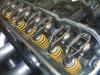
I just swapped from an LS1 with barely touched 799 heads and 230/238 cam to an LS2 with fully ported 799 heads and a 230/238 cam.
Went from 19-19.5 average MPG to 21mpg so far similar driving conditions (all highway). Time will tell if that gain continues to present itself.
Went from 19-19.5 average MPG to 21mpg so far similar driving conditions (all highway). Time will tell if that gain continues to present itself.

Teching In

Joined: Mar 2013
Posts: 32
Likes: 1
From: Upstate NY
I bet this is the best answer.
As far as fuel economy is concerned, you are principally concerned with lower flow, relatively low throttle, higher vacuum states. I don't see how you can presume that porting the heads would actually improve the efficiency of filling the cylinder in this state.
If you want to imagine that the improved flow means that you get more VE and more power at low throttle and that somehow translates into efficiency, I do not think in this scenario it is necessarily the case. Say I want to cruise at 60mph. That will take a predetermined amount of power. Perhaps that is at 10% throttle on whatever stock car. If porting the heads increases the flow at 10% throttle (which it very well may not) and whatever vacuum then all that will happen is that you will end up using 9% throttle with perhaps more vacuum to make the same amount of power. The higher vacuum from the closed throttle blade may in turn rob any of the efficiency you have gained. In addition, the point about fuel atomization and swirl is important. What is your ported head going to do to those variables?
I do not think that you will find that the porting really improves cylinder filling in a way that results in greater efficiency. If you look at AFM (formerly Displacement on Demand) the whole way it get's its limited efficiency gains is by cutting half the cylinders so that you can run the same RPM but with a wider open throttle blade and less vacuum, which means more efficient cylinder filling for the remaining cylinders.
As far as fuel economy is concerned, you are principally concerned with lower flow, relatively low throttle, higher vacuum states. I don't see how you can presume that porting the heads would actually improve the efficiency of filling the cylinder in this state.
If you want to imagine that the improved flow means that you get more VE and more power at low throttle and that somehow translates into efficiency, I do not think in this scenario it is necessarily the case. Say I want to cruise at 60mph. That will take a predetermined amount of power. Perhaps that is at 10% throttle on whatever stock car. If porting the heads increases the flow at 10% throttle (which it very well may not) and whatever vacuum then all that will happen is that you will end up using 9% throttle with perhaps more vacuum to make the same amount of power. The higher vacuum from the closed throttle blade may in turn rob any of the efficiency you have gained. In addition, the point about fuel atomization and swirl is important. What is your ported head going to do to those variables?
I do not think that you will find that the porting really improves cylinder filling in a way that results in greater efficiency. If you look at AFM (formerly Displacement on Demand) the whole way it get's its limited efficiency gains is by cutting half the cylinders so that you can run the same RPM but with a wider open throttle blade and less vacuum, which means more efficient cylinder filling for the remaining cylinders.

TECH Apprentice
Joined: Feb 2014
Posts: 328
Likes: 1
From: Baton Rouge La
G If you make the exhaust port better it could help. You may need to change the cam to compliment the new exhaust port. The combustion chamber could be ported/reshaped to help combustion which could lead to lower timing making the
Engine more efficent😊 = better MPG so to answer your question yes it could help.
Engine more efficent😊 = better MPG so to answer your question yes it could help.

Registered User
Joined: Aug 2019
Posts: 3
Likes: 0
In the last 50 years i've had some good powerful mpg motors and you can study their specs, '67 Galaxy 302 2brrl 21mpg., '71 Newport 383 2brrl with electric retard/advance 26 mpg highway 9:3:1. '72 New Yorker 440 19 mpg highway 4brrl., '69 Polara 318 21mpg, '68 coronet 500 426 2x4 7-9mpg. But then I was filling up a 20 gallon tank for $6.75. I have a 99 burb now, 383 blueprinted and i get 22-24 stock, pistons are wpc coated and the rear gears are ceramic coated. Looking at the 5.3 LS (325c.i.) there is nothing you can do to improve the heads and the 2019 Suburbans are getting upwards of 28.5 mpg stock with a 6-speed. I'm sure with some high tech tweaks it will be close to 38. Sometimes headers will give 4-5 extra on a stock exhaust. You just never know what will do the trick. I changed the New Yorker over to Amsoil and it went from 12 to 19 mpg. There is a ton of friction, 50% more in uncoated rings, gears and bearings. Anything that gets more power to the pavement on stock fuel will get you more mpg and more kick in the pants.
Registered User
Joined: Aug 2019
Posts: 3
Likes: 0
The best mpg improvement would be to blend the bowls and polish,polish the intake, gasket match, very carefully. Do not open them up. Maintain .035- .040 quench!. On Iron heads polishing off sharp spots and edges to avoid detonation and unburned pockets of fuel. The Flame front travels in a straight line. On LS heads you might have only to blend the intake seat and bowl but they are near flawless out of the box like a R07 head but the rotating assembly is a good 30-80 grams off!!!!. That said, I'm glad i wont have to polish anymore iron heads!!!

TECH Senior Member


Joined: Jun 2016
Posts: 22,303
Likes: 3,619
From: Central Cal.
The best mpg improvement would be to blend the bowls and polish,polish the intake, gasket match, very carefully. Do not open them up. Maintain .035- .040 quench!. On Iron heads polishing off sharp spots and edges to avoid detonation and unburned pockets of fuel. The Flame front travels in a straight line. On LS heads you might have only to blend the intake seat and bowl but they are near flawless out of the box like a R07 head but the rotating assembly is a good 30-80 grams off!!!!. That said, I'm glad i wont have to polish anymore iron heads!!!
BTW I just got it 2 months ago, and THINK it has full synthetic or synthetic blend in it, but next oil change it WILL get a good full synthetic.
LS1 Tech Stories
The Best V8 Stories One Small Block at Time

Gas Monkey Built a 6-Wheel Ferrari Testarossa With a Corvette LT4 Engine
Verdad Gallardo
7 Most Reliable High-Performance Engines GM Has Ever Built
Verdad Gallardo
Amazing '71 Camaro Restomod Is Modern Muscle Car Under the Skin
Verdad Gallardo
6 Common C5 Corvette Failures and What's Involved In Repairing Them
Pouria Savadkouei
Retro Modern Bandit Pontiac Trans AM Comes With Burt Reynolds' Autograph
Verdad Gallardo
Top 10 Greatest Cadillac V Series Performance Models Ever, Ranked
Pouria Savadkouei
Top 10 Most Powerful Chevy Trucks Ever Made!

Hennessey's New Supercharged Silverado ZR2 Has 700 HP
Verdad Gallardo
Coachbuilt N2A Anteros Is an LS2-Powered C6 Corvette In Italian Clothes
Verdad Gallardo
In the last 50 years i've had some good powerful mpg motors and you can study their specs, '67 Galaxy 302 2brrl 21mpg., '71 Newport 383 2brrl with electric retard/advance 26 mpg highway 9:3:1. '72 New Yorker 440 19 mpg highway 4brrl., '69 Polara 318 21mpg, '68 coronet 500 426 2x4 7-9mpg. But then I was filling up a 20 gallon tank for $6.75. I have a 99 burb now, 383 blueprinted and i get 22-24 stock, pistons are wpc coated and the rear gears are ceramic coated. Looking at the 5.3 LS (325c.i.) there is nothing you can do to improve the heads and the 2019 Suburbans are getting upwards of 28.5 mpg stock with a 6-speed. I'm sure with some high tech tweaks it will be close to 38. Sometimes headers will give 4-5 extra on a stock exhaust. You just never know what will do the trick. I changed the New Yorker over to Amsoil and it went from 12 to 19 mpg. There is a ton of friction, 50% more in uncoated rings, gears and bearings. Anything that gets more power to the pavement on stock fuel will get you more mpg and more kick in the pants.
TECH Senior Member
Joined: Jun 2016
Posts: 22,303
Likes: 3,619
From: Central Cal.


Teching In

Joined: Jun 2008
Posts: 9
Likes: 0
From: Columbus, Ohio
Part throttle fuel economy is gained by reducing pumping loss. Closing the throttle to reduce torque for cruise causes high intake vacuum. The engine has to work to pull air into the cylinders. This harms efficiency. Non throttle means to reduce torque improves fuel economy. High valve overlap to dilute the air with exhaust, big EGR to also dilute the air, retarded cam timing, tall gear for low rpm, lean fuel mixture are all strategies used to improve fuel economy. Porting has nothing to do with any of these strategies. DOHC engines with double cam phasers add a lot of overlap at part throttle to reduce VE. LS engines with a single cam are limited to retarding the cam at part throttle.

On The Tree
iTrader: (1)
Joined: Nov 2005
Posts: 179
Likes: 7
From: Braking Point, Turn In, Apex, Exit - Repeat
We recently built a 5.3L for endurance racing - we had Cam Motion spec us out a cam and we tweaked the heads a little - blended the intake ports and touched up the exhaust ports a little - but for the most part we left the heads as cast. I have to say I was amazed by the results.
The same car previously had a real torque monster LS7 installed with LS3 heads and it was designed for sprint races. We could only run that combo for about 45 minutes with a full tank of gas (I think during competition we were getting around 4.7 mpg). With the 5.3 designed and tuned with fuel economy in mind we are able to run for 1 hr and 15 min and we are averaging around 7 miles per gallon during competition. Granted the drivers are not running as hard (a lot of short shifting and coasting where we can) but it's still amazing to me to add 30 minutes of run time.
The same car previously had a real torque monster LS7 installed with LS3 heads and it was designed for sprint races. We could only run that combo for about 45 minutes with a full tank of gas (I think during competition we were getting around 4.7 mpg). With the 5.3 designed and tuned with fuel economy in mind we are able to run for 1 hr and 15 min and we are averaging around 7 miles per gallon during competition. Granted the drivers are not running as hard (a lot of short shifting and coasting where we can) but it's still amazing to me to add 30 minutes of run time.
