



Desmodromic V8

Thread Starter
Teching In
Joined: Sep 2006
Posts: 18
Likes: 0
 Desmodromic V8
 With a Desmodromic (i.e. rid of valve springs) fully Variable (the lift and the duration vary continuously and independently from zero to a maximum) Valve Actuation system (DVVA) like:
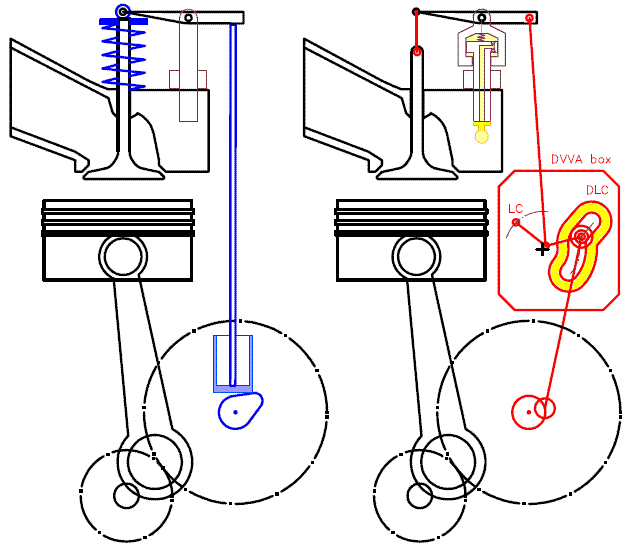
the revs and the peak power of a V8 (or of a side-cam engine, in general) increase.
As compared to the conventional engine with the one only valve lift profile (which is used at all revs and loads, from the idling to the peak power), the DVVA provides infinite valve lift profiles, instantly available, like:
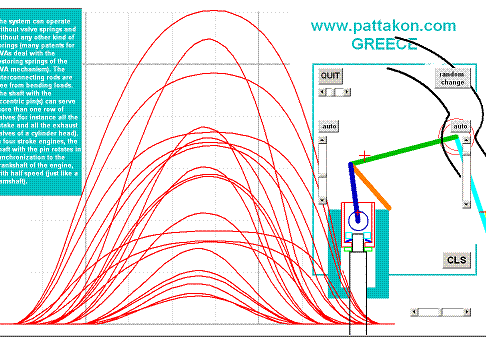
resulting in more fuel efficient and green operation.
For more: http://www.pattakon.com/pattakonDesmo.htm
Thanks
the revs and the peak power of a V8 (or of a side-cam engine, in general) increase.
As compared to the conventional engine with the one only valve lift profile (which is used at all revs and loads, from the idling to the peak power), the DVVA provides infinite valve lift profiles, instantly available, like:
resulting in more fuel efficient and green operation.
For more: http://www.pattakon.com/pattakonDesmo.htm
Thanks
Thread Starter
Teching In
Joined: Sep 2006
Posts: 18
Likes: 0
No.
Ducati operates in a single mode.
Ducati uses the same valve lift profile for all conditions, from idling to the rev limit.
Ducati's desmo is based on sliding friction.
If, in the motoGP, Ducati's driver needs a flatter torque curve (because of raining weather, for instance), the team needs to open the engine to replace the camshafts.
Here we are talking for the pattakon Desmodromic system that provides infinite valve lift profiles instantly available; it is based on rolling friction; it has hydraulic lash adjustment (if desirable); it enables throttle-less operation if desirable, etc.
Ducati's desmo needs a throttle valve to control the load.
The DVVA of pattakon uses - if desirable - the intake valves for the throttling (load control).
For instance:
With 0.2mm intake valve lift the DVVA engine idles, minimizing the pumping loss.
The same engine needs no more than 2mm intake valve lift to follow the urban traffic in the greenest way.
The same engine with 5mm intake valve lift cruises for hours on the highway, at top mileage.
And with 14mm valve lift the same engine makes its peak power at the revs the underneath mechanism (pistons, con-rods, crankshaft, block) can stand.
It is like having infinite camshafts and use the best one for the instant conditions the engine operates.
Thanks
Ducati operates in a single mode.
Ducati uses the same valve lift profile for all conditions, from idling to the rev limit.
Ducati's desmo is based on sliding friction.
If, in the motoGP, Ducati's driver needs a flatter torque curve (because of raining weather, for instance), the team needs to open the engine to replace the camshafts.
Here we are talking for the pattakon Desmodromic system that provides infinite valve lift profiles instantly available; it is based on rolling friction; it has hydraulic lash adjustment (if desirable); it enables throttle-less operation if desirable, etc.
Ducati's desmo needs a throttle valve to control the load.
The DVVA of pattakon uses - if desirable - the intake valves for the throttling (load control).
For instance:
With 0.2mm intake valve lift the DVVA engine idles, minimizing the pumping loss.
The same engine needs no more than 2mm intake valve lift to follow the urban traffic in the greenest way.
The same engine with 5mm intake valve lift cruises for hours on the highway, at top mileage.
And with 14mm valve lift the same engine makes its peak power at the revs the underneath mechanism (pistons, con-rods, crankshaft, block) can stand.
It is like having infinite camshafts and use the best one for the instant conditions the engine operates.
Thanks

TECH Addict
Joined: Sep 2009
Posts: 2,481
Likes: 5
From: PA/MD
Just read the whole article, this setup is amazing and simple at the same time!
I wondrous if and when it will catch on...I would think we would see it in the near future with the rose in fuel prices
I wondrous if and when it will catch on...I would think we would see it in the near future with the rose in fuel prices
Thread Starter
Teching In
Joined: Sep 2006
Posts: 18
Likes: 0
Regarding the DVVA mechanism for push-rod (side cam) engines shown at the first post:
If, during operation, the DLC yellow track is rotated counter-clock-wise for a few degrees about the black cross , the valve duration is decreased.
If, also during operation, the pin LC is rotated clock-wise for a few degrees about the black cross, the lift of the valve decreases.
The valve lash remains unchanged.
The acceleration and jerk remain normal.
I.e. you can change, on-the-fly, the characteristics of the valve lift profile in order to be optimized for the instant needs.
It is like having an infinity of camshafts in the "pocket" of the DVVA, and use, each moment, the best for the instant conditions of operation.
And because the valve lift varies from almost zero, a throttle valve is no longer necessary because the intake valves make the throttling.
Think of the cost of a decent ITB.
The DVVA idles more smoothly at lower revs at lower consumption, the DVVA provides more flat torque curve, the DVVA can make more power, the DVVA has lower consumption and emissions at all revs-loads, and so on.
This is so because the valve lift profile the DVVA operates can be adjusted / optimized for the instant operational conditions.
Below is shown schematically the Over Head version of the DVVA, with a single "camshaft".
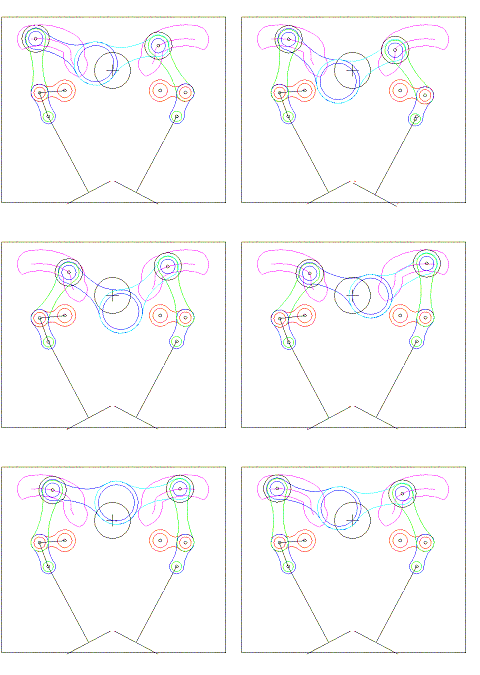
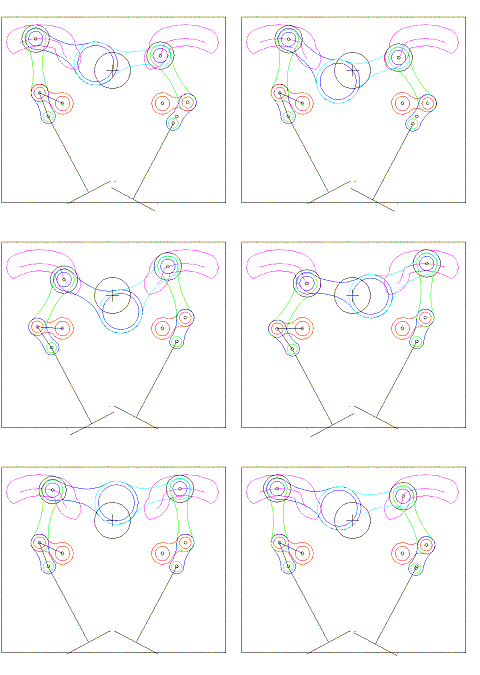
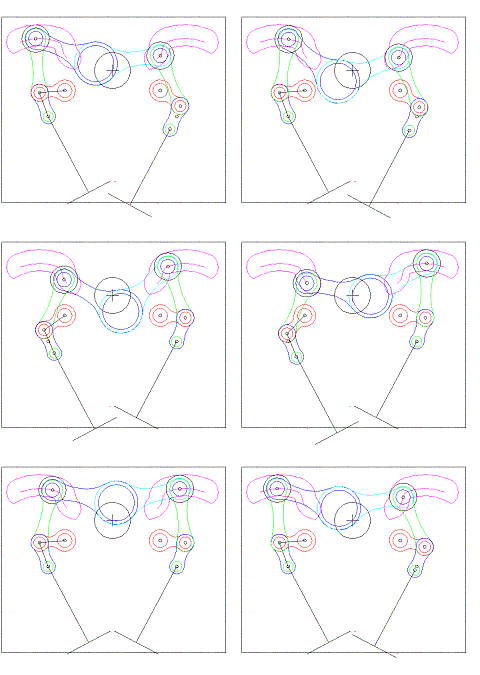
Left: the two "Lost Motion Control Shafts" (each having a track or groove or slot -magenta- along which the yoke roller and its pin roll, being in simultaneous abutment to both sides/surfaces/walls of the track) are at angles providing short duration and negative overlap.
Middle: the Lost Motion Control Shafts are at angles providing long duration, while the Constant Duration Control Shafts (they displace the pin of the big end of the red rods) are at angles providing medium valve lift. Here the angular overlap is long while the actual overlap (valve-time area) is medium.
Right: the Lost Motion Control Shafts are at angles providing long duration, while the Constant Duration Control Shafts are at angles providing high valve lift. The angular overlap is long. The actual overlap (valve-time area) is extreme.
The external ring (yoke) of the roller rolls along the upper surface of the track and has nothing to do with the lower surface of the track; similarly the pin of the roller rolls along the lower surface of the track and has nothing to do with the upper surface of the track. This way there is no "sliding" friction in the mechanism. The proper dimensioning of the track defines the preloading of the roller / track assembly.
The only heavy parts are the tracks; and the tracks move slowly, and only when a different valve duration is necessary. All the rest quick moving parts are lightweight and are rid of bending loads.
Compare it to the single-mode Ducati desmo.
Thanks
If, during operation, the DLC yellow track is rotated counter-clock-wise for a few degrees about the black cross , the valve duration is decreased.
If, also during operation, the pin LC is rotated clock-wise for a few degrees about the black cross, the lift of the valve decreases.
The valve lash remains unchanged.
The acceleration and jerk remain normal.
I.e. you can change, on-the-fly, the characteristics of the valve lift profile in order to be optimized for the instant needs.
It is like having an infinity of camshafts in the "pocket" of the DVVA, and use, each moment, the best for the instant conditions of operation.
And because the valve lift varies from almost zero, a throttle valve is no longer necessary because the intake valves make the throttling.
Think of the cost of a decent ITB.
The DVVA idles more smoothly at lower revs at lower consumption, the DVVA provides more flat torque curve, the DVVA can make more power, the DVVA has lower consumption and emissions at all revs-loads, and so on.
This is so because the valve lift profile the DVVA operates can be adjusted / optimized for the instant operational conditions.
Below is shown schematically the Over Head version of the DVVA, with a single "camshaft".
Left: the two "Lost Motion Control Shafts" (each having a track or groove or slot -magenta- along which the yoke roller and its pin roll, being in simultaneous abutment to both sides/surfaces/walls of the track) are at angles providing short duration and negative overlap.
Middle: the Lost Motion Control Shafts are at angles providing long duration, while the Constant Duration Control Shafts (they displace the pin of the big end of the red rods) are at angles providing medium valve lift. Here the angular overlap is long while the actual overlap (valve-time area) is medium.
Right: the Lost Motion Control Shafts are at angles providing long duration, while the Constant Duration Control Shafts are at angles providing high valve lift. The angular overlap is long. The actual overlap (valve-time area) is extreme.
The external ring (yoke) of the roller rolls along the upper surface of the track and has nothing to do with the lower surface of the track; similarly the pin of the roller rolls along the lower surface of the track and has nothing to do with the upper surface of the track. This way there is no "sliding" friction in the mechanism. The proper dimensioning of the track defines the preloading of the roller / track assembly.
The only heavy parts are the tracks; and the tracks move slowly, and only when a different valve duration is necessary. All the rest quick moving parts are lightweight and are rid of bending loads.
Compare it to the single-mode Ducati desmo.
Thanks

TECH Fanatic
Joined: Jun 2002
Posts: 1,979
Likes: 3
From: Upstate NY
I would be intrested in actual engine hardware demonstrations of the pushrod version at high rpm (8000+). While I understand the advantages for part throttle driving, fuel efficiency and perhaps emissions control, full throttle, high rpm power is important to many folks, especially those frequenting this forum. Rpm is the key to more specific power (hp/cube), and is often the limiting factor. Traditionally desmo sysems were used to achieve higher rpm.
We can fairly readily control LS engines to 8000 with hydraulic lifters, coil springs and pushrods. These systems are elegant in their simplicity.
My concern is the large number of parts in this desmo design and their mass, spring rate and part strength. Inertia loads on the small delicate parts may cause high rpm problems.
I hope real world engine demonstrations are soon to be available.
We can fairly readily control LS engines to 8000 with hydraulic lifters, coil springs and pushrods. These systems are elegant in their simplicity.
My concern is the large number of parts in this desmo design and their mass, spring rate and part strength. Inertia loads on the small delicate parts may cause high rpm problems.
I hope real world engine demonstrations are soon to be available.

TECH Apprentice
Joined: Oct 2005
Posts: 320
Likes: 0
From: Norwalk, CT
Check out the Valvetronic system used by BMW. It was released in 2002 in the E65 7 series V8's. It also offered variable lift and duration. That system had tons of driveability problems and it took years of software and some hardware changes to make it work properly. These are NOT very durable systems due to the number of small moving parts. They are great for fuel efficiency in regular street driven vehicles. If there was any benefit to a high performance application they would have used Valvetronic in the M cars....but that will not likely happen any time soon.
Trending Topics
I think it's all about execution. The performance benefits of this system are obvious, being able to have any "cam" profile at any RPM or load means being able to fully utilize every cubic inch of displacement, right up to the physical limits of the engine internals. Maybe for a pure race car the benefits would be smaller but for any engine that spends any time at less than 100% load it would be a revolution. I'm fascinated by the possibilities of a camless valvetrain, but it's not going to happen anytime soon. It's as close as you can get to re-inventing the wheel, and everyone who knows how to make an engine run properly will basically have to re-learn from scratch. Not to mention the mechanical challenges that will need to be met. But I will say that if there are still internal combustion engines being produced 50 years from now they will almost certainly not have camshafts.
The last time I read up on this topic the method that was proposed was solenoid actuated valves, but the problem was that a car's 12V electrical system did not produce enough voltage to operate such a system, the plan was to covert cars to a 48V electrical system.
The last time I read up on this topic the method that was proposed was solenoid actuated valves, but the problem was that a car's 12V electrical system did not produce enough voltage to operate such a system, the plan was to covert cars to a 48V electrical system.
LS1 Tech Stories
The Best V8 Stories One Small Block at Time

6 Common C5 Corvette Failures and What's Involved In Repairing Them
Pouria Savadkouei
Retro Modern Bandit Pontiac Trans AM Comes With Burt Reynolds' Autograph
Verdad Gallardo
Top 10 Greatest Cadillac V Series Performance Models Ever, Ranked
Pouria Savadkouei
Top 10 Most Powerful Chevy Trucks Ever Made!

Hennessey's New Supercharged Silverado ZR2 Has 700 HP
Verdad Gallardo
Coachbuilt N2A Anteros Is an LS2-Powered C6 Corvette In Italian Clothes
Verdad Gallardo
Awesome K5 Blazer Restomod Comes With C7 Corvette Power
Verdad Gallardo
10 Camaros You Should Never Buy

10 LS Engine Myths That Refuse to Die
Verdad Gallardo Thread Starter
Teching In
Joined: Sep 2006
Posts: 18
Likes: 0
I would be intrested in actual engine hardware demonstrations of the pushrod version at high rpm (8000+). While I understand the advantages for part throttle driving, fuel efficiency and perhaps emissions control, full throttle, high rpm power is important to many folks, especially those frequenting this forum. Rpm is the key to more specific power (hp/cube), and is often the limiting factor. Traditionally desmo sysems were used to achieve higher rpm.
We can fairly readily control LS engines to 8000 with hydraulic lifters, coil springs and pushrods. These systems are elegant in their simplicity.
My concern is the large number of parts in this desmo design and their mass, spring rate and part strength. Inertia loads on the small delicate parts may cause high rpm problems.
I hope real world engine demonstrations are soon to be available.
We can fairly readily control LS engines to 8000 with hydraulic lifters, coil springs and pushrods. These systems are elegant in their simplicity.
My concern is the large number of parts in this desmo design and their mass, spring rate and part strength. Inertia loads on the small delicate parts may cause high rpm problems.
I hope real world engine demonstrations are soon to be available.
In the original B16A2 1600cc VTEC high revving engine of Honda:
Intake valve: 45 gr
Intake valve springs : 50 gr
Intake valve + (Intake valve springs)/2 + Retainer = 85 gr
I.e. releasing the valve train from the valve spring and the retainer, the reciprocating mass drops a lot.
In the side cam V8 engines, the valve spring has to be hard enough (and necessarily heavy) in order to restore safely (even at the red line) the valve, the valve spring, the valve retainer, the rocker arm, the push-rod, the hydraulic lash adjuster and the bucket lifter.
At the current red-line revs (i.e. wherein the valve train of the original V8 comes to its limit and the valve is near to start floating) the necessary maximum force from the “push-rod” to the rocker arm of the DVVA-V8 is way smaller, because the rocker arm has neither a valve spring to displace, nor a retainer to displace, nor a preloaded valve spring to compress; the only thing the rocker arm displaces is the valve.
This way the original rocker arm is capable to control the valve motion safely at way higher revs.
The basic motion converting mechanism of the V8 handles forces of a few tons and operates at high mean piston speeds:
crankshaft to con-rod to piston moving along a cylinder-liner.
Compare it to the basic mechanism of the DVVA-V8:
crankshaft to con-rod to yoke-roller moving along a track.
The crankshaft (in the place of the conventional camshaft) of the DVVA has a few times smaller stroke, rotates at half main-crankshaft speed and handles forces several times lower than the inertia and combustion forces of the basic motion converting mechanism of the engine.
I.e. the mechanism of the DVVA-V8 from the “camshaft” to the track is capable for revs several times the current red line revs of the conventional V8.
By a connecting rod (not a “floating” push rod, but a connecting rod) the rocker arm is coupled to the main DVVA mechanism.
What I am explaining is that the problem is no longer at what revs the side cam DVVA can operate reliably, but at what revs the underneath mechanism (pistons, block, con-rods, crankshaft) of the V8 fails / explodes.
Friction and DVVA:
It is stupid (yet it is the rule today) to operate an engine at low revs (say 1000 rpm) using many times harder restoring springs than what is really necessary.
A valve spring capable of restoring a valve at 7000 rpm (typical rev limit) is some 50 times (7x7=49) harder than what is necessary to restore the same valve at only 1000 rpm, provided either at 7000 or at 1000 rpm the valve follows the same valve-lift profile. In case of reduced valve lift at the low revs, the necessary hardness of the valve spring is even lower (say some 200 times at 1000 rpm and full load).
The DVVA applies to the valve only the force that is necessary to make it follow the selected valve lift profile.
Thanks
Last edited by manolis; Jun 12, 2011 at 03:09 AM.
Thread Starter
Teching In
Joined: Sep 2006
Posts: 18
Likes: 0
Check out the Valvetronic system used by BMW. It was released in 2002 in the E65 7 series V8's. It also offered variable lift and duration. That system had tons of driveability problems and it took years of software and some hardware changes to make it work properly. These are NOT very durable systems due to the number of small moving parts. They are great for fuel efficiency in regular street driven vehicles. If there was any benefit to a high performance application they would have used Valvetronic in the M cars....but that will not likely happen any time soon.
And compare it to BMW’s valvetronic.
In the video http://www.pattakon.com/vvar/OnBoard/A1.MOV :
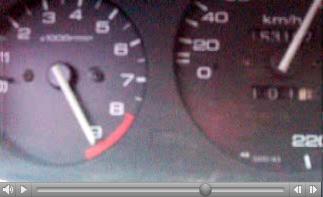
the prototype car is tested on the road at 9000 rpm.
The same engine idles at 330 rpm on stoichiometric, with 1 lit of fuel per three hours idling.
The torque curve is flat from below 1000 rpm to above 9000 rpm.
The engine is throttle-less: the intake valves make the throttling. The top-back dise of the original engine plenum is cut away to make a true-free-flow zero-cost ITB.
Here is the mechanism at low (left) medium and high (right) lift:
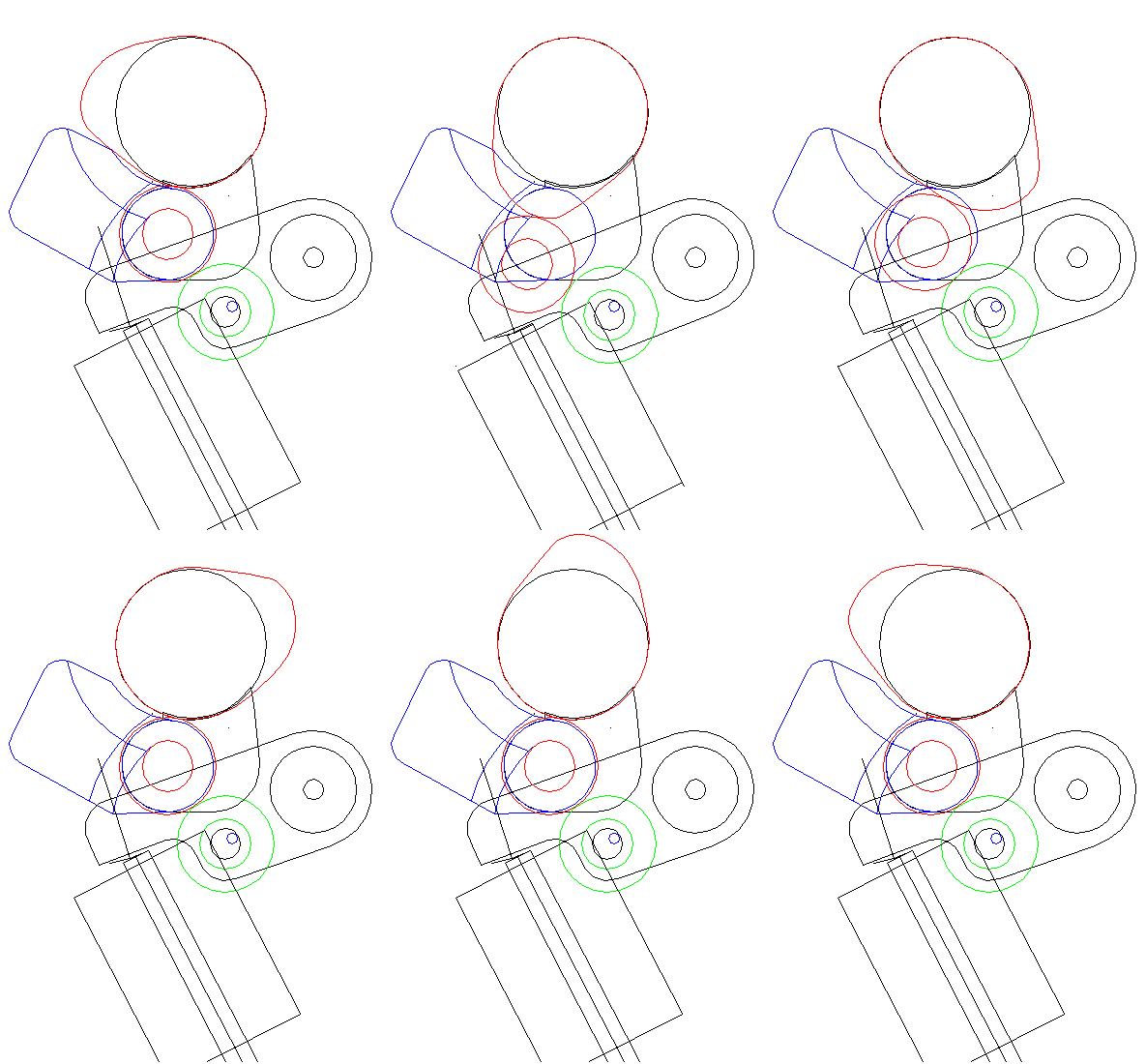
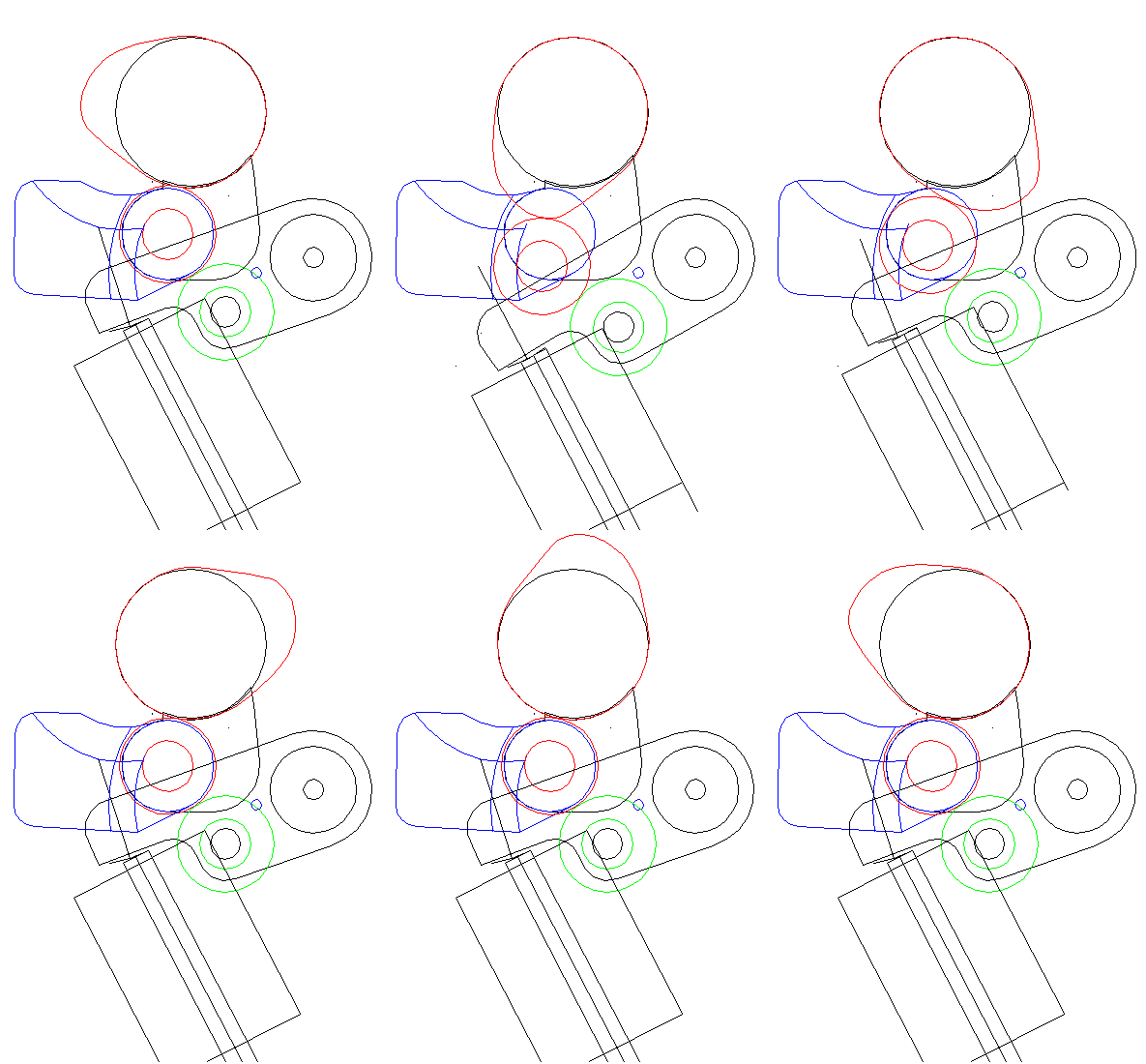
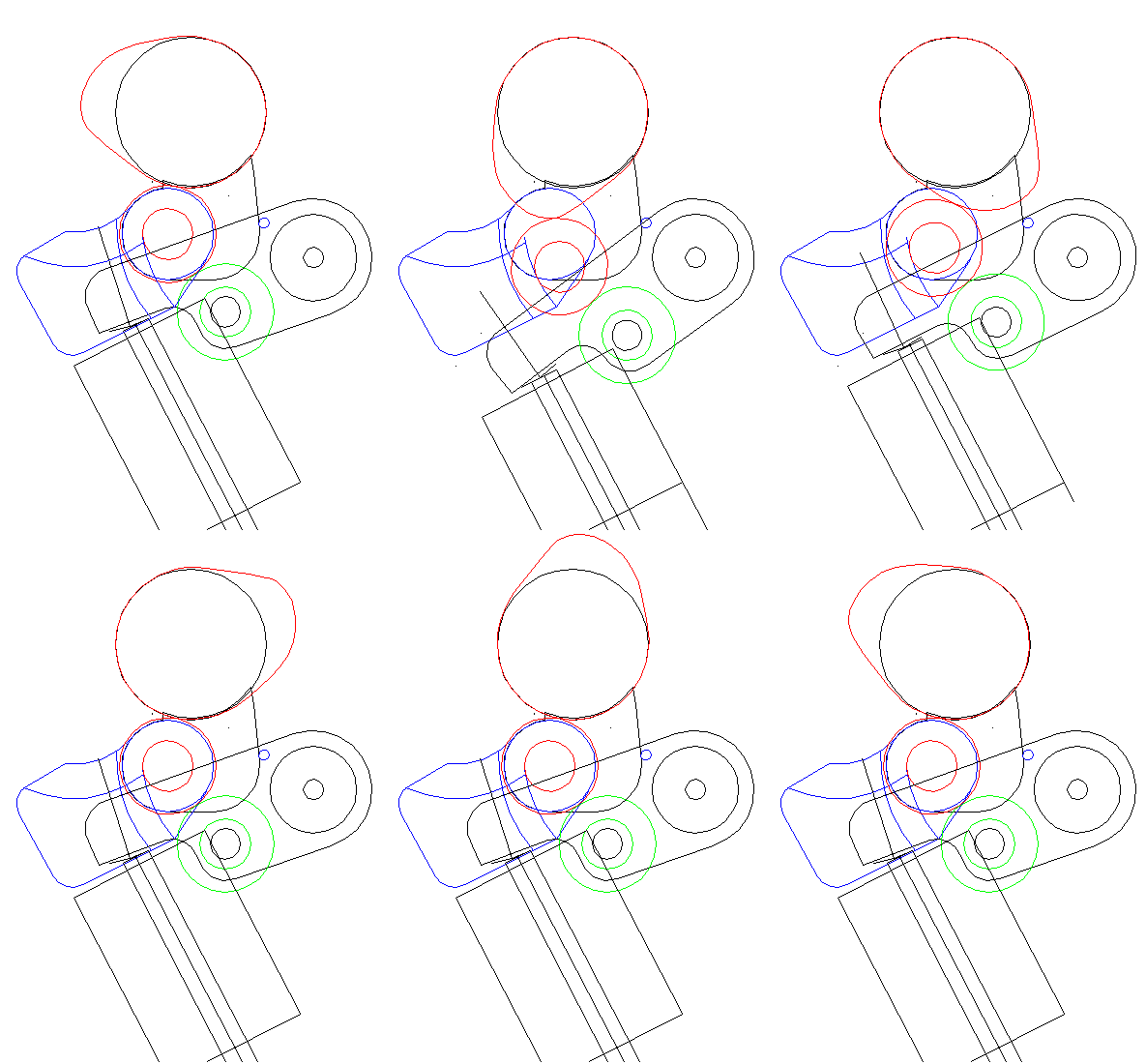
As compared to a simple conventional valve train, the VVA roller adds a control shaft for all the intake valves and a “free roller” per pair of intake valves (the same for the exhaust side).
The control shafts are directly connected to the gas pedal by the gas cable. The deeper the gas pedal is pressed, the more the control shafts rotate increasing the valve stroke. When the gas pedal is released the normal valve springs restore the control shafts to their "idling" position.
Depending on the control shafts angular position the valve lift profile varies continuously from zero (for valve deactivation if desirable), to tiny (for idling), to mild, to medium, to racing (top curve), all in the same engine, all instantly available:
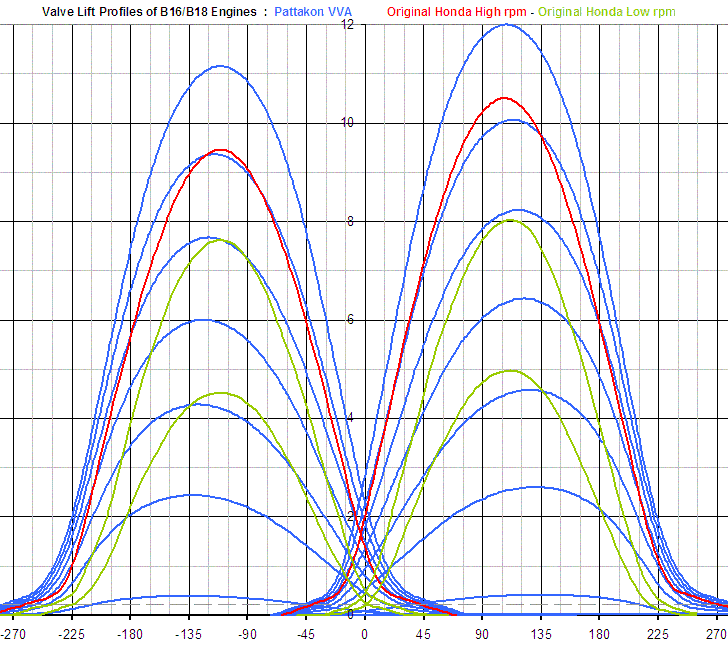
As compared to the only two valve lift profiles of the original (and more complicated with hydraulic control, spool valve, lock pins, heavy three-piece rocker arms, deep hole at the middle of the torque curve etc and with more friction) B16A2 Honda VTEC engine (the red curves are for the high rpm, the green curves – two because at low rpm the one intake valve moves differently than the other, and the one exhaust valve moves differently than the other),
the simpler pure-mechanical Pattakon VVA-roller-version provides infinite valve lift profiles, with many of them being above the high rpm profile (red) of the original Honda VTEC for higher peak power and racing operation, and with many others being below the low rpm profile (green) of the orignial VTEC, for more civilized / torquie / green / driver-friendly operation in urban traffic.
The DVVA (Desmodromic fully-Variable Valve Actuation) system is the combination / evolution of the above pattakon VVA roller version and of the pattakon VVA rod version (at http://www.pattakon.com/pattakonRod.htm )
The DVVA (here in its overhead compact version):
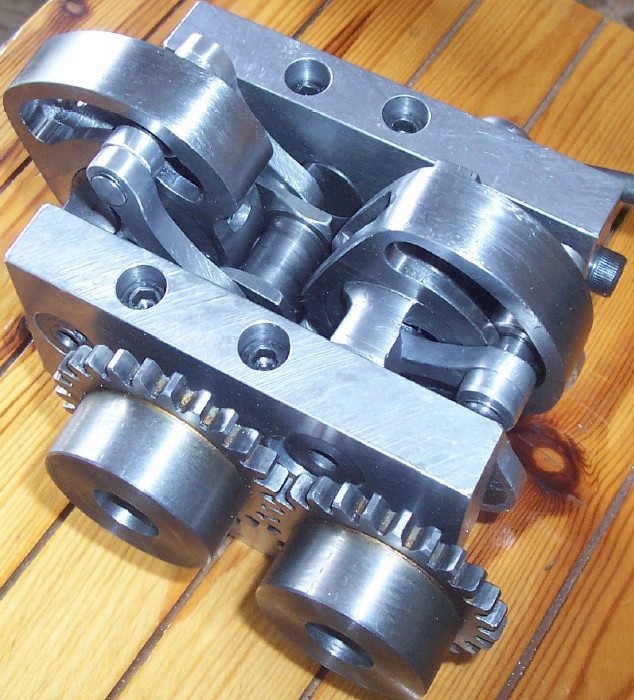
provides infinite times more valve lift profiles than the valvetronic of BMW.
For each valve lift, the valvetronic has only one available valve duration, while the DVVA has infinite.
Similarly for each valve duration, the valvetronic has only one available valve lift, while the DVVA has infinite.
This is the meaning of the fully variable VVA.
In other words, the DVVA can better approach the ideal valve lift profile for the instant conditions of operation.
The more variable the valve-lift-profile, the better the engine (Toyota uses the valvematic, Nissan Infinity uses the VVEL, Fiat uses the MultiAir, BMW use the valvetronic and so on).
Your conventional V8 and the old desmodromic engines run, from the idling to the red line, at a single point –like the C – of the Lift-Duration plot below:

the BMW’s valvetronic runs at any point along the LMVVA curve,
and the pattakon DVVA runs according any point in the FVVA hatched area (for more: http://www.pattakon.com/pattakonFVVA.htm ).
The BMW valvetronic mechanism comprises many, and relatively-heavy, parts: among others, it needs four or five roller bearings per valve and additional springs (besides the conventional valve springs) for the restoring of the parts of the valvetronic mechanism.
BMW knows the limitations of their valvetronic and decided not to use it at their high revving sport cars.
Nissan's VVEL avoids the additional restoring springs of the valvetronic (semi-desmodromic) and increases the rev limit of Infinity.
pattakon's DVVA is for way higher revs, providing at the same time infinite times more valve lift profiles.
Thanks

