




![Ethan[ws6]'s Avatar](https://ls1tech.com/forums/customavatars/avatar139269_2.gif)



Where does RPM come from?
 Where does RPM come from?
 I'm doing some light research on high RPM engines. I have a few questions about the subject, thus far?
1. What is the single, most influence in spinning an engine to, let's say, 9500 rpm?
A lightweight rotating assembly?
A short stroke?
Head flow in terms of cfm?
Camshaft specs?
Induction setup?
Anything else?
I'm just curious to know what is needed to create, sustain and harness good power, at 9000 plus RPM.
1. What is the single, most influence in spinning an engine to, let's say, 9500 rpm?
A lightweight rotating assembly?
A short stroke?
Head flow in terms of cfm?
Camshaft specs?
Induction setup?
Anything else?
I'm just curious to know what is needed to create, sustain and harness good power, at 9000 plus RPM.
Last edited by sixt9er; Apr 18, 2012 at 07:50 AM.
Well, if you have parts that aren't going to come apart and valvesprings that actually have enough pressure to sustain that RPM range, any engine dimension can do it in theory. But don't expect to get there for cheap.
Edit: Btw, Higgs Boson, nice name! haha
Edit: Btw, Higgs Boson, nice name! haha
Trending Topics
http://www.spintron.com/vtrain.htm
In general, the lighter the valvetrain components, the better provided durability isn't compromised. The rest of it will depend on what you're building.
LS1 Tech Stories
The Best V8 Stories One Small Block at Time

Topdon ONE vs. Artidiag 800 BT2: Which is the Diagnostic Tablet For You?
Pouria Savadkouei
Gas Monkey Built a 6-Wheel Ferrari Testarossa With a Corvette LT4 Engine
Verdad Gallardo
7 Most Reliable High-Performance Engines GM Has Ever Built
Verdad Gallardo
Amazing '71 Camaro Restomod Is Modern Muscle Car Under the Skin
Verdad Gallardo
6 Common C5 Corvette Failures and What's Involved In Repairing Them
Pouria Savadkouei
Retro Modern Bandit Pontiac Trans AM Comes With Burt Reynolds' Autograph
Verdad Gallardo
Top 10 Greatest Cadillac V Series Performance Models Ever, Ranked
Pouria Savadkouei
Top 10 Most Powerful Chevy Trucks Ever Made!

Hennessey's New Supercharged Silverado ZR2 Has 700 HP
Verdad Gallardo
Teching In
Joined: Nov 2008
Posts: 23
Likes: 0
I'm doing some light research on high RPM engines. I have a few questions about the subject, thus far?
1. What is the single, most influence in spinning an engine to, let's say, 9500 rpm?
A lightweight rotating assembly?
A short stroke?
Head flow in terms of cfm?
Camshaft specs?
Induction setup?
Anything else?
I'm just curious to know what is needed to create, sustain and harness good power, at 9000 plus RPM.
1. What is the single, most influence in spinning an engine to, let's say, 9500 rpm?
A lightweight rotating assembly?
A short stroke?
Head flow in terms of cfm?
Camshaft specs?
Induction setup?
Anything else?
I'm just curious to know what is needed to create, sustain and harness good power, at 9000 plus RPM.
Decreasing stroke is one way to get a lower piston acceleration at higher rpms.
So the lighter you are able to keep the moving components, the faster they will ultimately be able to move in an engine. This obviously doesnt take into account the valvetrain you'd need as others have mentioned or the airflows you'll need to support that (there is a reason high revving engines are a little smaller).

you dont have any where near the information to answer the questions. you need all the spec of engine and what you what to do with it .
10k rpms for 2 second is way different then 10k for 30 second than 10k for 5 mins,
same thing 100 hp vs 500 vs 1000
a 10k 4 cyl will have different needs then a v8 a ford v8 will have different needs then a LEX v8
you can build a motor that will live at 10k rpms but cause of miss match parts will eat it self if run at 8k for 30 seconds
THE BIGGEST THING WITH HIGH RPM ENGINES IS MONEY MONEY AND MORE MONEY
10k rpms for 2 second is way different then 10k for 30 second than 10k for 5 mins,
same thing 100 hp vs 500 vs 1000
a 10k 4 cyl will have different needs then a v8 a ford v8 will have different needs then a LEX v8
you can build a motor that will live at 10k rpms but cause of miss match parts will eat it self if run at 8k for 30 seconds
THE BIGGEST THING WITH HIGH RPM ENGINES IS MONEY MONEY AND MORE MONEY
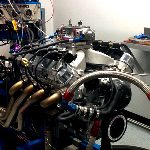


What an engine needs to be efficient at high RPM is sufficient airflow through the entire intake tract, the entire exhaust system and the proper camshaft timing.
What an engine needs to survive at those rpm levels is sufficient strength to weight ratios on all moving parts.
The engine will also need a supporting cast of sufficient fuel system, gearing, cooling and reduced accessory system speeds.
Once you determine your target power levels and the RPM required to achieve them are, you can get specific on the components needed.
What an engine needs to survive at those rpm levels is sufficient strength to weight ratios on all moving parts.
The engine will also need a supporting cast of sufficient fuel system, gearing, cooling and reduced accessory system speeds.
Once you determine your target power levels and the RPM required to achieve them are, you can get specific on the components needed.
@speedtigger...thanks...the stat ements that you posted put things into more perspective for me. I specifically started this thread to discuss some theories and facts and experiences from people that have very hi-winding lsx engines, that make hi-power at those rpm levels.
@ Big Rich 954 RR...I didn't think that anyone needed specs for an engine to discuss theories of what it takes to achieve a specific RPM range. I do not have engine specs, because I do not have an engine that will spin 9500 rpm, nor am I trying to build one...yet...lol. What I do have, is a interest in learning from others with experience and knowledge , that are willing to share ideas, thoughts, etc. Thank you for your input, though...
@ Big Rich 954 RR...I didn't think that anyone needed specs for an engine to discuss theories of what it takes to achieve a specific RPM range. I do not have engine specs, because I do not have an engine that will spin 9500 rpm, nor am I trying to build one...yet...lol. What I do have, is a interest in learning from others with experience and knowledge , that are willing to share ideas, thoughts, etc. Thank you for your input, though...
i dont care how light and strong your bottom end is if its not balanced it wont live at high RPM, which is where my answer "balance" comes from.
a well balanced heavy combo will outspin a lighter out of balance setup everytime.
supporting mods would be everything else needed to make the power in that range.
ITS ALL IN THE COMBO, but when talking about high rpm you have to start with balance.
a well balanced heavy combo will outspin a lighter out of balance setup everytime.
supporting mods would be everything else needed to make the power in that range.
ITS ALL IN THE COMBO, but when talking about high rpm you have to start with balance.
@speedtigger...thanks...the stat ements that you posted put things into more perspective for me. I specifically started this thread to discuss some theories and facts and experiences from people that have very hi-winding lsx engines, that make hi-power at those rpm levels.
@ Big Rich 954 RR...I didn't think that anyone needed specs for an engine to discuss theories of what it takes to achieve a specific RPM range. I do not have engine specs, because I do not have an engine that will spin 9500 rpm, nor am I trying to build one...yet...lol. What I do have, is a interest in learning from others with experience and knowledge , that are willing to share ideas, thoughts, etc. Thank you for your input, though...
@ Big Rich 954 RR...I didn't think that anyone needed specs for an engine to discuss theories of what it takes to achieve a specific RPM range. I do not have engine specs, because I do not have an engine that will spin 9500 rpm, nor am I trying to build one...yet...lol. What I do have, is a interest in learning from others with experience and knowledge , that are willing to share ideas, thoughts, etc. Thank you for your input, though...
Ok i guess we are just not going to be able to understand each other. Cause i dont see how you can discuss theories of a engine if you dont have any spec /goals or building a engine to fit a planned event.
Ive played with a few high rpm engines i was one of the first people that start to play with 180 degree cranks and 3 inch strokes for the small block when everbody wanted 4inch.
RPM is not just a number to shoot for like i want to rev to 10k rpms the load and time spent at said rpm means more then a number.
There has to be a said reason to rev a engine that high and for a LS engine there not many good reasons to.
EX take a stock ls2 engine destroke it to 2.75 put stronger valve springs in it high duration cam with easy rollers and med lift spin it to 12k rpms.
WILL IT REV TO 10-12k yes will it be good for much NO but will make a lot of noise for a short time.
i dont care how light and strong your bottom end is if its not balanced it wont live at high RPM, which is where my answer "balance" comes from.
a well balanced heavy combo will outspin a lighter out of balance setup everytime.
supporting mods would be everything else needed to make the power in that range.
ITS ALL IN THE COMBO, but when talking about high rpm you have to start with balance.
a well balanced heavy combo will outspin a lighter out of balance setup everytime.
supporting mods would be everything else needed to make the power in that range.
ITS ALL IN THE COMBO, but when talking about high rpm you have to start with balance.
What are you talking about ( a balanced heavy combo will outspin a lighter out of balance one )?? What is this outspin you talk of ?
Last edited by BigRich954RR; Apr 20, 2012 at 06:16 AM.
Most of my back ground is cars and aerospace engineering. I know a huge amount of info and love to talk thoerys. but you guys arent giving any thing to be able to talk about.
What are you talking about ( a balanced heavy combo will outspin a lighter out of balance one )?? What is this outspin you talk of ?
What are you talking about ( a balanced heavy combo will outspin a lighter out of balance one )?? What is this outspin you talk of ?
so the balanced combination will spin higher (more RPM) before catastrophic failure.
the reason i dont bring up much else is because he isnt very specific in what he was wanting, if you bring up power production and efficiency at XXXXx rpm then this conversation would be totally different, but i'm taking all that out and being as basic as possible, if that makes sense.
basically saying what you are, time spent at xxx rpm is a very valid subject when asking a question like this. is he asking about power or reliability at xxxx rpm? who knows...
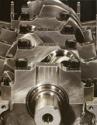

well, we know ANYTHING can spin until catastrophic failure, what i am saying is that threshold is much higher on a balanced bottom end than an unbalanced one, correct?
so the balanced combination will spin higher (more RPM) before catastrophic failure.
the reason i dont bring up much else is because he isnt very specific in what he was wanting, if you bring up power production and efficiency at XXXXx rpm then this conversation would be totally different, but i'm taking all that out and being as basic as possible, if that makes sense.
basically saying what you are, time spent at xxx rpm is a very valid subject when asking a question like this. is he asking about power or reliability at xxxx rpm? who knows...
so the balanced combination will spin higher (more RPM) before catastrophic failure.
the reason i dont bring up much else is because he isnt very specific in what he was wanting, if you bring up power production and efficiency at XXXXx rpm then this conversation would be totally different, but i'm taking all that out and being as basic as possible, if that makes sense.
basically saying what you are, time spent at xxx rpm is a very valid subject when asking a question like this. is he asking about power or reliability at xxxx rpm? who knows...
I think the OP is looking more for design aspects for high RPM, since he mentioned airflow and lightweight components.
That being the case, I think that a stable valvetrain is #1. The components in the valvetrain need to as stiff and light as possible, and the camshaft needs to be designed with those components in mind so that it will not cause the valvetrain to be unstable at the target RPM range.