




Intake Manifold MAX Boost/Not SC

Thread Starter
FormerVendor
iTrader: (1)
Joined: Nov 2008
Posts: 2,155
Likes: 18
From: Santa Ana, CA. USA
 Intake Manifold MAX Boost/Not SC
 Hi All, the design of the Intake Manifold can supercharge the engine if correct.
My 65mm ITB's supercharge the engine by 18 KPA, a measurement of 118 KPA with BARO of 100 KPA.
So I ask what is your record ?
Lance
My 65mm ITB's supercharge the engine by 18 KPA, a measurement of 118 KPA with BARO of 100 KPA.
So I ask what is your record ?
Lance
Last edited by pantera_efi; Oct 30, 2017 at 03:44 PM.

TECH Addict

Joined: Oct 2016
Posts: 2,513
Likes: 480
From: PDX-OR-USA
As I always was taught,, Not the same thing, any NA system builds momentum in the incoming air charge, But if you were to put a T on the intake runner and put a balloon on it it wont inflate... But add a turbo or SC and it will. Because its continuous pressure not the short pulse momentum of the NA air flow.
I am not a flow engineer, this is just my perception of what happens, be glad to have someone with the real story put an oar in the water on this one,, interesting thought..
I am not a flow engineer, this is just my perception of what happens, be glad to have someone with the real story put an oar in the water on this one,, interesting thought..
Thread Starter
FormerVendor
iTrader: (1)
Joined: Nov 2008
Posts: 2,155
Likes: 18
From: Santa Ana, CA. USA
Pumping Losses Defined + MAP Reads Hi G, as always thanks.
You both ask the same question with different observation, a different description of the cause/case.
The G question answer is NO though this can happen OFTEN when the intake/exhaust is "tuned" to benefit each other's RPM band. (positive pressure exists)
That second "velocity" question answer is YES with consideration for air mass/tuning pressure wave timing.
The PDX "balloon" concept is NOT the operation method of a four stroke engine with respect to the Intake Port/Cylinder Filling.
YOUR idea of a Balloon being held (good idea) in your hand is the result of air pressure INSIDE of that vessel with respect to the pressure of the air at sea level, 14.7 .lbs OR 104 KPA.
NOW, think of THAT vessel as the piston inside (under crown) that underside pressure (crankcase pressure 104 KPA+) with the top (crown) seeing a much lower pressure of 30 KPA when throttled, a force of 150 .lbs. (4" bore = 3.14 x 4 of area x 14.7) for a period of 1/4 of the crankshaft rotation each cylinder x four.
A name of this type of loss is Pumping Losses.
Let the air volume of the manifold enter with respect to area from the butterfly to the cylinder with the ITB vs common air door GM LS intake considered.
The air pressure of 104 KPA fills each style of intake at DIFFERENT rates which explains WHY ITB's have instant throttle response when the butterfly is opened.
This is now stated, the idea, why a well shaped inlet runner can supercharge the cylinder buy the mass of air (weight) and the pressure wave created by the opening/closing of the inlet valve.
The GMPP LS-1 intake (PML) was tested with my IGN-8 that included a MPX4115AP internal board mounted sensor the will read 125 KPA with reports of 106 KPA (max read) on a 100 BARO day. (at song)
THIS report states that the manifold design "supercharged" the engines inlet port.
There is MUCH tech here with exhaust length/size requests with NO easy method of measurement reported.
When the intake/exhaust is tuned, the MAP read inside the intake, the MAX PRESSURE READ, can be observed.
Lance
You both ask the same question with different observation, a different description of the cause/case.
The G question answer is NO though this can happen OFTEN when the intake/exhaust is "tuned" to benefit each other's RPM band. (positive pressure exists)
That second "velocity" question answer is YES with consideration for air mass/tuning pressure wave timing.
The PDX "balloon" concept is NOT the operation method of a four stroke engine with respect to the Intake Port/Cylinder Filling.
YOUR idea of a Balloon being held (good idea) in your hand is the result of air pressure INSIDE of that vessel with respect to the pressure of the air at sea level, 14.7 .lbs OR 104 KPA.
NOW, think of THAT vessel as the piston inside (under crown) that underside pressure (crankcase pressure 104 KPA+) with the top (crown) seeing a much lower pressure of 30 KPA when throttled, a force of 150 .lbs. (4" bore = 3.14 x 4 of area x 14.7) for a period of 1/4 of the crankshaft rotation each cylinder x four.
A name of this type of loss is Pumping Losses.
Let the air volume of the manifold enter with respect to area from the butterfly to the cylinder with the ITB vs common air door GM LS intake considered.
The air pressure of 104 KPA fills each style of intake at DIFFERENT rates which explains WHY ITB's have instant throttle response when the butterfly is opened.
This is now stated, the idea, why a well shaped inlet runner can supercharge the cylinder buy the mass of air (weight) and the pressure wave created by the opening/closing of the inlet valve.
The GMPP LS-1 intake (PML) was tested with my IGN-8 that included a MPX4115AP internal board mounted sensor the will read 125 KPA with reports of 106 KPA (max read) on a 100 BARO day. (at song)
THIS report states that the manifold design "supercharged" the engines inlet port.
There is MUCH tech here with exhaust length/size requests with NO easy method of measurement reported.
When the intake/exhaust is tuned, the MAP read inside the intake, the MAX PRESSURE READ, can be observed.
Lance
An engine exceeding 100% volumetric efficiency is pulling more air than it's physical size. I don't know that that means there is positive pressure in the manifold though. It may mean that there is increased negative pressure in the cylinders during the intake stroke. The effect should be the same - more air.
Trending Topics

TECH Senior Member


Joined: Jun 2016
Posts: 22,291
Likes: 3,616
From: Central Cal.
Gotta remember- what we think of as "no pressure", or atmospheric pressure, is actually about 15psi. 0psi is a total vacuum. So what some might call a vacuum is just lower pressure less than 15psi. I guess my question above, which Lance answered, should have been more correctly phrased, "is it possible to exceed 100% VE @ atmospheric pressure?"
LS1 Tech Stories
The Best V8 Stories One Small Block at Time

6 Common C5 Corvette Failures and What's Involved In Repairing Them
Pouria Savadkouei
Retro Modern Bandit Pontiac Trans AM Comes With Burt Reynolds' Autograph
Verdad Gallardo
Top 10 Greatest Cadillac V Series Performance Models Ever, Ranked
Pouria Savadkouei
Top 10 Most Powerful Chevy Trucks Ever Made!

Hennessey's New Supercharged Silverado ZR2 Has 700 HP
Verdad Gallardo
Coachbuilt N2A Anteros Is an LS2-Powered C6 Corvette In Italian Clothes
Verdad Gallardo
Awesome K5 Blazer Restomod Comes With C7 Corvette Power
Verdad Gallardo
10 Camaros You Should Never Buy

10 LS Engine Myths That Refuse to Die
Verdad Gallardo
Launching!

Joined: Jan 2008
Posts: 225
Likes: 1
From: Fargo, ND
This actually isnt all that uncommon. A properly designed header and matched intake system, with the proper cam events will achieve well over 100% VE on a table. Pro stocks are well past 130% IIRC. Atmospheric conditions effect the number as well. Pressure waves make power.


Thread Starter
FormerVendor
iTrader: (1)
Joined: Nov 2008
Posts: 2,155
Likes: 18
From: Santa Ana, CA. USA
VOL Measuement Tool = MAP Sensor Hi All, many here measure AFR spending good money for a UEGO sensor tool.
I measure Crankshaft Acceleration and MAP often to check the tune and those values are recorded by the Data Logger chip.
The intake pressure waves/exhaust pressure waves ARE "seen" in the intake manifold by the MAP sensor.
My software "Logviewer" can graph values of sensor outputs called, such as a graph of RPM/MAX MAP KPA.
Thus a simple low cost tool could be a MAP gauge combined with the RPM measurement.
I would like someone to name that gauge ?
Lance
I measure Crankshaft Acceleration and MAP often to check the tune and those values are recorded by the Data Logger chip.
The intake pressure waves/exhaust pressure waves ARE "seen" in the intake manifold by the MAP sensor.
My software "Logviewer" can graph values of sensor outputs called, such as a graph of RPM/MAX MAP KPA.
Thus a simple low cost tool could be a MAP gauge combined with the RPM measurement.
I would like someone to name that gauge ?
Lance
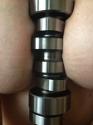
Yes a NA engine can exceed 100% VE. Mine does. It’s really not that difficult. It’s a combination of cam, headers, and intake manifold.
With high overlap, after EVO, the cyl pressure blows down. The resulting vacuum wave from cooling and expanding exhaust gas pulls air into the cylinder during the overlap cycle — while the piston is still on its way up. This is sometimes called the “fifth cycle” on a four cycle engine. Jump starts the cylinder full if you will.
The piston drops and continues the depression - relative to intake manifold pressure.
At BDC, you’d think air influx stops, but momentum allows the cylinder to fill even as the piston is in its way up.
Greatly oversimplified but hopefully it helps you imagine it in your head.
With high overlap, after EVO, the cyl pressure blows down. The resulting vacuum wave from cooling and expanding exhaust gas pulls air into the cylinder during the overlap cycle — while the piston is still on its way up. This is sometimes called the “fifth cycle” on a four cycle engine. Jump starts the cylinder full if you will.
The piston drops and continues the depression - relative to intake manifold pressure.
At BDC, you’d think air influx stops, but momentum allows the cylinder to fill even as the piston is in its way up.
Greatly oversimplified but hopefully it helps you imagine it in your head.
Originally Posted by G Atsma
How to be as clueless as possible in this conversation...

Restricted User
Joined: Mar 2014
Posts: 7,192
Likes: 109
From: Ohio
We've had positive MAP sensor readings on an intake manifold on a 4-cylinder before.
The intake manifold used a very large forward facing throttle body that stuck through the hood. The car ran 9s N/A. Once it crossed the 1000' mark, the throttle body was being fed more air than the motor could swallow. kPa was around 120 crossing the line.
I'm not sure I've ever seen positive pressure on an N/A intake manifold while stationary. Even with the correct design, the physics doesn't support true positive intake pressure.
The intake manifold used a very large forward facing throttle body that stuck through the hood. The car ran 9s N/A. Once it crossed the 1000' mark, the throttle body was being fed more air than the motor could swallow. kPa was around 120 crossing the line.
I'm not sure I've ever seen positive pressure on an N/A intake manifold while stationary. Even with the correct design, the physics doesn't support true positive intake pressure.
Thread Starter
FormerVendor
iTrader: (1)
Joined: Nov 2008
Posts: 2,155
Likes: 18
From: Santa Ana, CA. USA
Manometer # AR1890P2 Hi all, the name of that GAUGE is a Manometer and the one specified has TWO probes/two areas of pressure measurement.
I would place one probe into the intake runner AND the other probe into the crankcase.
This Manometer's cost is $50.00 (Amazon)
This gauge MEASURES Min/Max and differential pressures with a "save value" function.
Now Joe, I measure intake pressure ALWAYS with my ECU-882C. (Board mount MAP and BARO.
I also KNOW that the "inside" of an intake manifold there is MUCH pressure change related to the inlet valves opening/closing, surly you AGREE.
As far as a constant pressure, NO.
Lance
I would place one probe into the intake runner AND the other probe into the crankcase.
This Manometer's cost is $50.00 (Amazon)
This gauge MEASURES Min/Max and differential pressures with a "save value" function.
Now Joe, I measure intake pressure ALWAYS with my ECU-882C. (Board mount MAP and BARO.
I also KNOW that the "inside" of an intake manifold there is MUCH pressure change related to the inlet valves opening/closing, surly you AGREE.
As far as a constant pressure, NO.
Lance
Originally Posted by JoeNova
We've had positive MAP sensor readings on an intake manifold on a 4-cylinder before.
The intake manifold used a very large forward facing throttle body that stuck through the hood. The car ran 9s N/A. Once it crossed the 1000' mark, the throttle body was being fed more air than the motor could swallow. kPa was around 120 crossing the line.
I'm not sure I've ever seen positive pressure on an N/A intake manifold while stationary. Even with the correct design, the physics doesn't support true positive intake pressure.
The intake manifold used a very large forward facing throttle body that stuck through the hood. The car ran 9s N/A. Once it crossed the 1000' mark, the throttle body was being fed more air than the motor could swallow. kPa was around 120 crossing the line.
I'm not sure I've ever seen positive pressure on an N/A intake manifold while stationary. Even with the correct design, the physics doesn't support true positive intake pressure.
 ITB's...
 Curios...What displacement is your engine? 65mm bore itb's are very large😶...interesting arrangement with the perpendicular pivots...is that an optical tps sensor on the rear itb?
Is there a common plenum?
Are your blades CNC cut and then hand blueprinted for clearance?
Do you knife edge your blades?
I use a set of 50mm cross ram itb's that are a bit finicky to balance...but they offer exceptional throttle response on my built 6.0l...(Australian design)
Trev
Is there a common plenum?
Are your blades CNC cut and then hand blueprinted for clearance?
Do you knife edge your blades?
I use a set of 50mm cross ram itb's that are a bit finicky to balance...but they offer exceptional throttle response on my built 6.0l...(Australian design)
Trev
Originally Posted by topfuelman
Curios...What displacement is your engine? 65mm bore itb's are very large😶...interesting arrangement with the perpendicular pivots...is that an optical tps sensor on the rear itb?
Is there a common plenum?
Are your blades CNC cut and then hand blueprinted for clearance?
Do you knife edge your blades?
I use a set of 50mm cross ram itb's that are a bit finicky to balance...but they offer exceptional throttle response on my built 6.0l...(Australian design)
Trev
Is there a common plenum?
Are your blades CNC cut and then hand blueprinted for clearance?
Do you knife edge your blades?
I use a set of 50mm cross ram itb's that are a bit finicky to balance...but they offer exceptional throttle response on my built 6.0l...(Australian design)
Trev