



How to make torque at higher RPM...

TECH Resident
Joined: Dec 2004
Posts: 881
Likes: 1

Originally Posted by Black LS1 T/A
Unless I have belt slip, my SC increases boost as RPMs increase.
Also, Turbo lag may be there in theory, but in practice, the power can come on for a Turbocharged vehicle a LOT stronger and faster than some Supercharged applications. The old conventional wisdom about turbos and lag are really only a myth for more modern street/strip turbos.
Also, Turbo lag may be there in theory, but in practice, the power can come on for a Turbocharged vehicle a LOT stronger and faster than some Supercharged applications. The old conventional wisdom about turbos and lag are really only a myth for more modern street/strip turbos.
David
P.S.
The Twin Charger is a 1.4L (97cid) engine with 177 hp, all current and near future emissions requirements, and near diesel mileage in a Golf. If an LS7 had the same output, it would make 885hp.

FormerVendor
Joined: Nov 2001
Posts: 3,065
Likes: 6
From: Houston, Tx.

Originally Posted by DavidNJ
Erik,
Would you like to revise this quote? While it is correct through the words 'airflow drops off'. that is not dependent on 'rpm rises'.
I'm pretty sure most of your NA race engines have much higher volumetric efficiencies when the intake, exhaust, and cam tuning 'come on the cam'. And your forced induction motors may have an even more pronouced preference for higher engine speeds. To the best of my knowledge, all of the big, 1000+hp Supras don't do anything until over 5500 or so.
David
Would you like to revise this quote? While it is correct through the words 'airflow drops off'. that is not dependent on 'rpm rises'.
I'm pretty sure most of your NA race engines have much higher volumetric efficiencies when the intake, exhaust, and cam tuning 'come on the cam'. And your forced induction motors may have an even more pronouced preference for higher engine speeds. To the best of my knowledge, all of the big, 1000+hp Supras don't do anything until over 5500 or so.
David
Power adders don't change that. Of course up to certain point airflow to the cyinders is increasing and then it hits a certain level and it starts falling off and becoming very inefficient. You are just thinking of engines that are small and have bigger turbos that don't make boost very fast or way down low as well. Turbos tend to bring down the engine at high rpm overall because of exhaust reversion usually. Some are like a built in rev limiter.
Originally Posted by racer7088
FWIW most "college and university professors" like "engineers" know little to nothing about the internal combustion engine or how it works.


TECH Fanatic
Joined: Jun 2002
Posts: 1,979
Likes: 3
From: Upstate NY
Originally Posted by racer7088
Bifster,
At least your learning something now. Any engine will start to lose tq and hp as the airflow drops off to the cylinders as the rpm rises. This will always happen. When this happens in terms of rpm is dependent on the heads and cam and the stroke of the engine in question. You can make peak tq at 2000 rpm or 12000 rpm depending on how the engine is designed. There's no arbitrary rpm limits but rather mechanical and aerodynamic limits.
FWIW most "college and university professors" like "engineers" know little to nothing about the internal combustion engine or how it works. The ones that really do know wouldn't have told you that. Almost everyone I know is an engineer of some type yet more than 90 percent don't know much about what we are talking about. The ones that do and the ones that ARE familiar with the subject are capable of probably a much better understanding of this stuff than the normal Joe Q. Public.
At least your learning something now. Any engine will start to lose tq and hp as the airflow drops off to the cylinders as the rpm rises. This will always happen. When this happens in terms of rpm is dependent on the heads and cam and the stroke of the engine in question. You can make peak tq at 2000 rpm or 12000 rpm depending on how the engine is designed. There's no arbitrary rpm limits but rather mechanical and aerodynamic limits.
FWIW most "college and university professors" like "engineers" know little to nothing about the internal combustion engine or how it works. The ones that really do know wouldn't have told you that. Almost everyone I know is an engineer of some type yet more than 90 percent don't know much about what we are talking about. The ones that do and the ones that ARE familiar with the subject are capable of probably a much better understanding of this stuff than the normal Joe Q. Public.

FWIW, total airflow probably increases until hp peak is reached, but VE often peaks around torque peak rpm and then decreases. BMEP does about the same thing. BMEP is equivalent to "brake torque per cube", or how efficiently the engine uses air. An example would be a 3.0L F1 engine from a few years ago with a 12,500 rpm torque peak BMEP of 231 psi and a 16,000 rpm hp peak BMEP of 195 psi.
[Anyone who wants extra credit: what was peak torque and peak hp on that engine? You only need to look up one constant. Google is your friend.]
If you had 100% VE at a 5000 rpm torque peak and only 90% VE at a 6500 rpm power peak, there would still be about 17% more total airflow at power peak than at torque peak due to the faster but less efficient cycling.
If you used the same heads, intake, exhaust, etc. on a 383 and a 350 engine, you would get approximately the same maximum hp (total airflow), but it would be at a lower rpm for the 383. The total airflow is limited as you said. At any given rpm the 383 should have more torque than the 350.
Originally Posted by Old SStroker
Some Automotive Engineers probably fit into the 10% who do. I have met a few.
FWIW, total airflow probably increases until hp peak is reached, but VE often peaks around torque peak rpm and then decreases. BMEP does about the same thing. BMEP is equivalent to "brake torque per cube", or how efficiently the engine uses air. An example would be a 3.0L F1 engine from a few years ago with a 12,500 rpm torque peak BMEP of 231 psi and a 16,000 rpm hp peak BMEP of 195 psi.
[Anyone who wants extra credit: what was peak torque and peak hp on that engine? You only need to look up one constant. Google is your friend.]
If you had 100% VE at a 5000 rpm torque peak and only 90% VE at a 6500 rpm power peak, there would still be about 17% more total airflow at power peak than at torque peak due to the faster but less efficient cycling.
If you used the same heads, intake, exhaust, etc. on a 383 and a 350 engine, you would get approximately the same maximum hp (total airflow), but it would be at a lower rpm for the 383. The total airflow is limited as you said. At any given rpm the 383 should have more torque than the 350.
FWIW, total airflow probably increases until hp peak is reached, but VE often peaks around torque peak rpm and then decreases. BMEP does about the same thing. BMEP is equivalent to "brake torque per cube", or how efficiently the engine uses air. An example would be a 3.0L F1 engine from a few years ago with a 12,500 rpm torque peak BMEP of 231 psi and a 16,000 rpm hp peak BMEP of 195 psi.
[Anyone who wants extra credit: what was peak torque and peak hp on that engine? You only need to look up one constant. Google is your friend.]
If you had 100% VE at a 5000 rpm torque peak and only 90% VE at a 6500 rpm power peak, there would still be about 17% more total airflow at power peak than at torque peak due to the faster but less efficient cycling.
If you used the same heads, intake, exhaust, etc. on a 383 and a 350 engine, you would get approximately the same maximum hp (total airflow), but it would be at a lower rpm for the 383. The total airflow is limited as you said. At any given rpm the 383 should have more torque than the 350.
If VE = Torque
And Airflow = VE x RPM
You can substitute Airflow = Torque x RPM
and of course Torque x RPM = HP
Even looking at some old log files, I can see my maf flow start to trail off the last couple framed before letting off at the 6800 limiter. My Peak HP is at 6300.

TECH Resident
Joined: Dec 2004
Posts: 845
Likes: 0
From: K-W, Ontario
Originally Posted by Old SStroker
Anyone who wants extra credit: what was peak torque and peak hp on that engine? You only need to look up one constant. Google is your friend.
TECH Resident
Joined: Dec 2004
Posts: 881
Likes: 1
Erik, while it does drop of past its most efficient points, it also drops off below those points. And that was the point I was trying to make, it drops off on either side, not just above.
Old SStroker, wouldn't bmep be a combination of volumetric efficency and thermal efficency? If so, do you have some examples of engines where peak bmep is not at peak VE?
Old SStroker, wouldn't bmep be a combination of volumetric efficency and thermal efficency? If so, do you have some examples of engines where peak bmep is not at peak VE?
FormerVendor
Joined: Nov 2001
Posts: 3,065
Likes: 6
From: Houston, Tx.
Peak BMEP is probably never right at Peak VE but it's always pretty close. As Guitsboy said there's also the friction curve starting to eat into BMEP.
You need to look at IMEP if you want to look at the airflow vs rpm vs VE phenomenon. There's guys that measure it! They wear the big hats and are hated by all.
BMEP is whats left after everything else takes it's bite out of the TQ at any rpm. It's not all breathing related at all. Good breathing and VE alone will not get you good BMEP.
You need to look at IMEP if you want to look at the airflow vs rpm vs VE phenomenon. There's guys that measure it! They wear the big hats and are hated by all.
BMEP is whats left after everything else takes it's bite out of the TQ at any rpm. It's not all breathing related at all. Good breathing and VE alone will not get you good BMEP.
LS1 Tech Stories
The Best V8 Stories One Small Block at Time

Top 10 Greatest Cadillac V Series Performance Models Ever, Ranked
Pouria Savadkouei
Top 10 Most Powerful Chevy Trucks Ever Made!

Hennessey's New Supercharged Silverado ZR2 Has 700 HP
Verdad Gallardo
Coachbuilt N2A Anteros Is an LS2-Powered C6 Corvette In Italian Clothes
Verdad Gallardo
Awesome K5 Blazer Restomod Comes With C7 Corvette Power
Verdad Gallardo
10 Camaros You Should Never Buy

10 LS Engine Myths That Refuse to Die
Verdad Gallardo
Five Reasons the Camaro Was the Most Pivotal Player in the Pony Car Wars 2.0
Brett Foote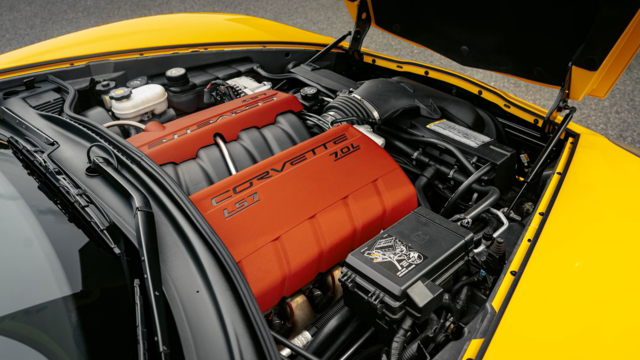
10 Reasons the LS7 Is GM's Most Extreme Naturally Aspirated V8 Engine Ever
Verdad Gallardo FormerVendor
Joined: Nov 2001
Posts: 3,065
Likes: 6
From: Houston, Tx.
Still all this aside the way to make torque at higher rpm is better heads vs the inches. This is where the big bore short stroke act comes in. You have a bigger port on the same cubic inches therefore you can maintain tq higher up in rpm and make more power!
The bigger port is the reason not the shorter stroke though. The shorter stroke just keep the cubes the same with the bigger bore.
If we kept the stroke the same and used the larger bore we'd make more power but not change our rpm that much. If we kept the biggest bore and even added more stroke we'd start losing pm but would make even more power.
Basically making tq at higher rpm means making more power and that means better breathig through better heads and intake and camshafts.
The bigger port is the reason not the shorter stroke though. The shorter stroke just keep the cubes the same with the bigger bore.
If we kept the stroke the same and used the larger bore we'd make more power but not change our rpm that much. If we kept the biggest bore and even added more stroke we'd start losing pm but would make even more power.
Basically making tq at higher rpm means making more power and that means better breathig through better heads and intake and camshafts.
TECH Resident
Joined: Dec 2004
Posts: 845
Likes: 0
From: K-W, Ontario
I've been looking for an answer, but i'm coming up empty handed.
If you work through the arithmetic, you find that BMEP is simply a multiple of the torque per cubic inch of displacement. A torque output of 1.0 lb-ft per cubic inch of displacement equals a BMEP of 150.8 psi. So a very practical way to calculate BMEP is:
BMEP = 150.8 x TORQUE (lb-ft) / DISPLACEMENT (ci)
The definition of BMEP is: the average (mean) pressure which, if imposed on the pistons uniformly from the top to the bottom of each power stroke, would produce the measured (brake) power output.
Give me (us) some hints please.
If you work through the arithmetic, you find that BMEP is simply a multiple of the torque per cubic inch of displacement. A torque output of 1.0 lb-ft per cubic inch of displacement equals a BMEP of 150.8 psi. So a very practical way to calculate BMEP is:
BMEP = 150.8 x TORQUE (lb-ft) / DISPLACEMENT (ci)
The definition of BMEP is: the average (mean) pressure which, if imposed on the pistons uniformly from the top to the bottom of each power stroke, would produce the measured (brake) power output.
Give me (us) some hints please.
FormerVendor
Joined: Nov 2001
Posts: 3,065
Likes: 6
From: Houston, Tx.
Originally Posted by DavidNJ
Ok, new test...what is 150.8? Hint, one term is Pi.
But net, I was hoping for some examples of engines where the thermal efficencies or friction losses move the bmep significantly away from peak VE.
But net, I was hoping for some examples of engines where the thermal efficencies or friction losses move the bmep significantly away from peak VE.
TECH Fanatic
Joined: Jun 2002
Posts: 1,979
Likes: 3
From: Upstate NY
Originally Posted by racer7088
You'll have to hope that the two guys on here that have some F1 connections can post an old graph of IMEP VS TQ. VERY few people have the ability to do IMEP testing but it's getting cheaper.
IMEP = BMEP + FMEP
IMEP is the average pressure on the piston which would produce the torque/cubic inch, so it is a more theoretical way of comparing engines using measured values. Because it compares output per cubic inch, virtually any engines can be compared with BMEP.
If you measured Brake torque (absorbtion dyno) and Friction torque (motoring dyno) you could get Indicated torque and therefore IMEP with calculations.
Most good simulator programs output BMEP, IMEP and FMEP which they calculate from brake and friction torques.
There is some dynamic in-cylinder pressure measurements going on in NASCAR. The published results are confusing even to the people doing the work; pressure pattern varies from cylinder to cylinder significantly, and not predictibly.
TECH Fanatic
Joined: Jun 2002
Posts: 1,979
Likes: 3
From: Upstate NY
Originally Posted by Adrenaline_Z
I've been looking for an answer, but i'm coming up empty handed.
If you work through the arithmetic, you find that BMEP is simply a multiple of the torque per cubic inch of displacement. A torque output of 1.0 lb-ft per cubic inch of displacement equals a BMEP of 150.8 psi. So a very practical way to calculate BMEP is:
BMEP = 150.8 x TORQUE (lb-ft) / DISPLACEMENT (ci)
The definition of BMEP is: the average (mean) pressure which, if imposed on the pistons uniformly from the top to the bottom of each power stroke, would produce the measured (brake) power output.
Give me (us) some hints please.
If you work through the arithmetic, you find that BMEP is simply a multiple of the torque per cubic inch of displacement. A torque output of 1.0 lb-ft per cubic inch of displacement equals a BMEP of 150.8 psi. So a very practical way to calculate BMEP is:
BMEP = 150.8 x TORQUE (lb-ft) / DISPLACEMENT (ci)
The definition of BMEP is: the average (mean) pressure which, if imposed on the pistons uniformly from the top to the bottom of each power stroke, would produce the measured (brake) power output.
Give me (us) some hints please.
In what case would the constant be 75.4?
TECH Resident
Joined: Dec 2004
Posts: 881
Likes: 1
it is 4*Pi*12, the last term used to convert feet to inches.
Don't we have some example where the peak VE occurs at a point where the friction or combustion inefficencies kill the BMEP? Some old, big bearing engine with runners and headers for high revs and an old mis-shapen combustion chamber that can't burn well at peak VE engine speeds?
Don't we have some example where the peak VE occurs at a point where the friction or combustion inefficencies kill the BMEP? Some old, big bearing engine with runners and headers for high revs and an old mis-shapen combustion chamber that can't burn well at peak VE engine speeds?
TECH Resident
Joined: Dec 2004
Posts: 845
Likes: 0
From: K-W, Ontario
Originally Posted by Old SStroker
It's probably not critical to know the derivation of the 150.8 constant, but a hint would be [792,000/5252].
In what case would the constant be 75.4?
In what case would the constant be 75.4?
http://www.overboost.com/print.asp?id=1267
The horse was tied to a 12-foot long arm attached to the capstan. It took 180 pounds of force to move the capstan and the horse was working at a rate of 2.4 RPM (about 181 feet/min). The horse's work rate was 32,580 ft-lbs per minute which we round up to 33,000 today.
The 792,000 comes from:
5252 * ~ 150.8
1 lb-ft of torque in one minute (1 rpm) = [6.283 lb-ft / min] / [33,000 lb-ft / min] = 1 / 5252 of 1 hp.
396,000 can be totalled by:
( 33,000 / 4Pi ) * 150.8
TECH Resident
Joined: Dec 2004
Posts: 881
Likes: 1
what does 792,000 have to do with the price of tea in China?
bmep = work/displacement = (2*Pi*torque*number of revs/cycle)/displacement
bmep is a pressure in lbf/in², torque is in lbf-ft, displacement is in in^3
The 12 is 12 in/ft to convert the torque to lbf-in.
bmep = work/displacement = (2*Pi*torque*number of revs/cycle)/displacement
bmep is a pressure in lbf/in², torque is in lbf-ft, displacement is in in^3
The 12 is 12 in/ft to convert the torque to lbf-in.
TECH Resident
Joined: Dec 2004
Posts: 845
Likes: 0
From: K-W, Ontario
Originally Posted by DavidNJ
bmep = work/displacement = (2*Pi*torque*number of revs/cycle)/displacement
the math to be somewhere in the ballpark for a BMEP constant of 75.4
This is in reference to Oldss' question in post # 155

