



Cam specs: LSA and advance

Thread Starter
TECH Enthusiast


Joined: Sep 2003
Posts: 730
Likes: 66
 Cam specs: LSA and advance
 In the following 3 examples, the intake valve closing point is 46 on all. The overlap increases as you tighten up the LSa and get rid of the advance.
1- 232/242 .595/.610 114+4
2- 232/242 .595/.610 112+2
3- 232/242 .595/.610 110+0
Since the idle deteriorates and drivabiltiy suffers what would be the other characteristics of the 3 cams. It would seem the one to run would be the wider LSA with the advance but are there other advantages to running the tighter LSA and no advance? What would happen to the 3 cams' powerbands by altering only the LSA and advance?
DCR is the same for all 3. I believe all 3 would have the same P/V clearance too. The real changes have more to do with the exhaust valve opening later and closing later.
Would this have a higher exhaust velocity due to higher pressure from the delay in exhaust duration?
Will it cause reversion into the intake tract? Thats a N2O no-no I imagine.
The increased overlap would spill into the exahaust side more at lower RPM?
What would the effect have on a not so free flowing exhaust?
I imagine the use of N20 would like the wider LSA but is there any other advantage I would lose by not going with the tighter LSA and no advance?
Mods: C6/LG headers with cats and Z06 mufflers with the exhaust flaps operational (cuttouts). L92 heads (exhaust side only ported to make for a better intake/exhaust ratio)/ported L76 with a small N20 dry shot varying from 75-120. I want to maximize N/A operation without causing problems on the bottle. I can always re-jet for efficiency lost due to overlap, but I cant get back N/A power lost in a fixed spec.
I'm new to this level of understanding cams and have some spreadsheets that can help me understand some terms/specs if someone has some examples for me to follow. The goal here is more education than getting this cam pick right.
1- 232/242 .595/.610 114+4
2- 232/242 .595/.610 112+2
3- 232/242 .595/.610 110+0
Since the idle deteriorates and drivabiltiy suffers what would be the other characteristics of the 3 cams. It would seem the one to run would be the wider LSA with the advance but are there other advantages to running the tighter LSA and no advance? What would happen to the 3 cams' powerbands by altering only the LSA and advance?
DCR is the same for all 3. I believe all 3 would have the same P/V clearance too. The real changes have more to do with the exhaust valve opening later and closing later.
Would this have a higher exhaust velocity due to higher pressure from the delay in exhaust duration?
Will it cause reversion into the intake tract? Thats a N2O no-no I imagine.
The increased overlap would spill into the exahaust side more at lower RPM?
What would the effect have on a not so free flowing exhaust?
I imagine the use of N20 would like the wider LSA but is there any other advantage I would lose by not going with the tighter LSA and no advance?
Mods: C6/LG headers with cats and Z06 mufflers with the exhaust flaps operational (cuttouts). L92 heads (exhaust side only ported to make for a better intake/exhaust ratio)/ported L76 with a small N20 dry shot varying from 75-120. I want to maximize N/A operation without causing problems on the bottle. I can always re-jet for efficiency lost due to overlap, but I cant get back N/A power lost in a fixed spec.
I'm new to this level of understanding cams and have some spreadsheets that can help me understand some terms/specs if someone has some examples for me to follow. The goal here is more education than getting this cam pick right.
I set up the simulation in Dynomation assuming a 5.7 L LS1 with AFR 205 heads, 1.75" long tube headers with mufflers, a FAST intake and each of the three cams (see below). I'll leave the speculation to others for now.

Thread Starter
TECH Enthusiast
Joined: Sep 2003
Posts: 730
Likes: 66
With these 3 cams it is. Everything else is a constant. It seems there isnt much lost in the low end at all. The high rpm performance is better presumably from the tighter lobe separation's helping clear out the spent gasses.
I didnt specify the motor is an LS2 with L92 heads with ported exhaust runners only and a ported L76 manifold from Cory Harris. LG headerswith cats and a 3" Z06 exhaust (effectively they are cuttouts in loud mode).
Is a tight LSA bad for N2O? My guess is no since it is actually more efficient at high RPMS which is where nitrous is fired.
I didnt specify the motor is an LS2 with L92 heads with ported exhaust runners only and a ported L76 manifold from Cory Harris. LG headerswith cats and a 3" Z06 exhaust (effectively they are cuttouts in loud mode).
Is a tight LSA bad for N2O? My guess is no since it is actually more efficient at high RPMS which is where nitrous is fired.
Trending Topics
LS1 Tech Stories
The Best V8 Stories One Small Block at Time

Topdon ONE vs. Artidiag 800 BT2: Which is the Diagnostic Tablet For You?
Pouria Savadkouei
Gas Monkey Built a 6-Wheel Ferrari Testarossa With a Corvette LT4 Engine
Verdad Gallardo
7 Most Reliable High-Performance Engines GM Has Ever Built
Verdad Gallardo
Amazing '71 Camaro Restomod Is Modern Muscle Car Under the Skin
Verdad Gallardo
6 Common C5 Corvette Failures and What's Involved In Repairing Them
Pouria Savadkouei
Retro Modern Bandit Pontiac Trans AM Comes With Burt Reynolds' Autograph
Verdad Gallardo
Top 10 Greatest Cadillac V Series Performance Models Ever, Ranked
Pouria Savadkouei
Top 10 Most Powerful Chevy Trucks Ever Made!

Hennessey's New Supercharged Silverado ZR2 Has 700 HP
Verdad Gallardo This was only a simulation. however, a lot of real world testing was used to develop the modeling for the simulation program. I'd have to say that the simulation is relative and representative of the differences, but you'd have to run some real controlled tests to know significantly more.
About two years ago, there was a Primedia magazine article on cams with the same lobes (lift and durations) and the variable was the LSA. Then they took one LSA and varied the duration (as I recall). This was on a small block Chevy (again according to my recollection).
Maybe someone can research this if they are interested.
Steve
About two years ago, there was a Primedia magazine article on cams with the same lobes (lift and durations) and the variable was the LSA. Then they took one LSA and varied the duration (as I recall). This was on a small block Chevy (again according to my recollection).
Maybe someone can research this if they are interested.
Steve

TECH Resident
Joined: Jul 2007
Posts: 844
Likes: 0
From: Florida
i read an article not to long ago, i think it was the one where they tool the LS2 and did all sorts of stuff to it, and ended the test with adding a magnison TVS blower to it for 750hp.
they tested cams with tighter LSA's and determined that the lower LSA number upped power.
i can find the article if people want. just want to make sure there is a desire for it before i go digging.
they tested cams with tighter LSA's and determined that the lower LSA number upped power.
i can find the article if people want. just want to make sure there is a desire for it before i go digging.

with the huge intake valve of the L92s,you'll want to keep overlap down to reduce reversion..those heads like a different cam than LS6/2 heads..if it was me,i would contact somebody with a lot of experience with L92 combos..

No not really (on the peaking earlier) Intake valve closes at same point. If exh system is restricted... maybe then.
Doing testing on some of our cam only stuff, tighter LSA versions made little more power 6000-6500, wider made more 4500-6000 and 6500 andup. Throw that simulator out of the window, its not even CLOSE, looks like someone forgot it had a 15" long runner somewhere along the line. If the torque curve of the engine is all wrong, I think you can throw the validity out with it. Unfortunately thats why we all have to go test stuff for real. And the trends I saw you will not see if you over or undercam the exh lobe - trends can change, or strap a choked exh system up to it etc, trends will change.
Lot of kooky idea on LS1tech concerning cam. Tightening LSA up on nitrous stuff isnt usually going to find you power in the top of the powerband. Your trying to blow down a cylinder full of burnt garbage very quickly
Doing testing on some of our cam only stuff, tighter LSA versions made little more power 6000-6500, wider made more 4500-6000 and 6500 andup. Throw that simulator out of the window, its not even CLOSE, looks like someone forgot it had a 15" long runner somewhere along the line. If the torque curve of the engine is all wrong, I think you can throw the validity out with it. Unfortunately thats why we all have to go test stuff for real. And the trends I saw you will not see if you over or undercam the exh lobe - trends can change, or strap a choked exh system up to it etc, trends will change.
Lot of kooky idea on LS1tech concerning cam. Tightening LSA up on nitrous stuff isnt usually going to find you power in the top of the powerband. Your trying to blow down a cylinder full of burnt garbage very quickly
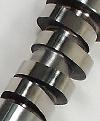

A naturally aspirated motor is going to want certain valve events to match the mods and needs of the combo. For a nitrous motor, you're going to want basically the same IVO, IVC, EVC and overlap of what worked best with the NA combo, but you're going to need to open the exhaust valve earlier to avoid huge pumping losses. Nitrous burns the mixture much quicker and will need the earlier EVO. How much earlier depends on how big of a shot you're running.
Let's say that the ideal valve events for a street/strip 346 with an LS6 intake were
232/236 111LSA +1 advance.
Here are the valve events.
IVO 6 degrees BTDC at .050"
IVC 46 degrees ABDC
EVO 50 degrees BBDC
EVC 6 degrees ATDC
overlap = 12 degrees.
Now let's say you're running a 250 shot. For this size, I'd recommend opening the exhaust valve 8 degrees earlier, but leave everything else the same. The resultant cam looks like this:
232/244 113LSA +3 advance.
Here are the valve events. Notice all are the same except EVO.
IVO 6 degrees BTDC at .050"
IVC 46 degrees ABDC
EVO 58 degrees BBDC (notice 8 degrees earlier)
EVC 6 degrees ATDC
overlap = 12 degrees.
Make sense?
Let's say that the ideal valve events for a street/strip 346 with an LS6 intake were
232/236 111LSA +1 advance.
Here are the valve events.
IVO 6 degrees BTDC at .050"
IVC 46 degrees ABDC
EVO 50 degrees BBDC
EVC 6 degrees ATDC
overlap = 12 degrees.
Now let's say you're running a 250 shot. For this size, I'd recommend opening the exhaust valve 8 degrees earlier, but leave everything else the same. The resultant cam looks like this:
232/244 113LSA +3 advance.
Here are the valve events. Notice all are the same except EVO.
IVO 6 degrees BTDC at .050"
IVC 46 degrees ABDC
EVO 58 degrees BBDC (notice 8 degrees earlier)
EVC 6 degrees ATDC
overlap = 12 degrees.
Make sense?
__________________
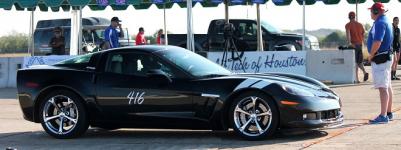
2013 Corvette Grand Sport A6 LME forged 416, Greg Good ported TFS 255 LS3 heads, 222/242 .629"/.604" 121LSA Pat G blower cam, ARH 1 7/8" headers, ESC Novi 1500 Supercharger w/8 rib direct drive conversion, 747rwhp/709rwtq on 93 octane, 801rwhp/735rwtq on race fuel, 10.1 @ 147.25mph 1/4 mile, 174.7mph Half Mile.
2016 Corvette Z51 M7 Magnuson Heartbeat 2300 supercharger, TSP LT headers, Pat G tuned, 667rwhp, 662rwtq, 191mph TX Mile.
2009.5 Pontiac G8 GT 6.0L, A6, AFR 230v2 heads. 506rwhp/442rwtq. 11.413 @ 121.29mph 1/4 mile, 168.7mph TX Mile
2000 Pewter Ram Air Trans Am M6 heads/cam 508 rwhp/445 rwtq SAE, 183.092 TX Mile
2022 Cadillac Escalade 6.2L A10 S&B CAI, Corsa catback.
2023 Corvette 3LT Z51 soon to be modified.
Custom LSX tuning in person or via email press here.
2013 Corvette Grand Sport A6 LME forged 416, Greg Good ported TFS 255 LS3 heads, 222/242 .629"/.604" 121LSA Pat G blower cam, ARH 1 7/8" headers, ESC Novi 1500 Supercharger w/8 rib direct drive conversion, 747rwhp/709rwtq on 93 octane, 801rwhp/735rwtq on race fuel, 10.1 @ 147.25mph 1/4 mile, 174.7mph Half Mile.
2016 Corvette Z51 M7 Magnuson Heartbeat 2300 supercharger, TSP LT headers, Pat G tuned, 667rwhp, 662rwtq, 191mph TX Mile.
2009.5 Pontiac G8 GT 6.0L, A6, AFR 230v2 heads. 506rwhp/442rwtq. 11.413 @ 121.29mph 1/4 mile, 168.7mph TX Mile
2000 Pewter Ram Air Trans Am M6 heads/cam 508 rwhp/445 rwtq SAE, 183.092 TX Mile
2022 Cadillac Escalade 6.2L A10 S&B CAI, Corsa catback.
2023 Corvette 3LT Z51 soon to be modified.
Custom LSX tuning in person or via email press here.

No not really (on the peaking earlier) Intake valve closes at same point. If exh system is restricted... maybe then.
Doing testing on some of our cam only stuff, tighter LSA versions made little more power 6000-6500, wider made more 4500-6000 and 6500 andup. Throw that simulator out of the window, its not even CLOSE, looks like someone forgot it had a 15" long runner somewhere along the line. If the torque curve of the engine is all wrong, I think you can throw the validity out with it. Unfortunately thats why we all have to go test stuff for real. And the trends I saw you will not see if you over or undercam the exh lobe - trends can change, or strap a choked exh system up to it etc, trends will change.
Lot of kooky idea on LS1tech concerning cam. Tightening LSA up on nitrous stuff isnt usually going to find you power in the top of the powerband. Your trying to blow down a cylinder full of burnt garbage very quickly
Doing testing on some of our cam only stuff, tighter LSA versions made little more power 6000-6500, wider made more 4500-6000 and 6500 andup. Throw that simulator out of the window, its not even CLOSE, looks like someone forgot it had a 15" long runner somewhere along the line. If the torque curve of the engine is all wrong, I think you can throw the validity out with it. Unfortunately thats why we all have to go test stuff for real. And the trends I saw you will not see if you over or undercam the exh lobe - trends can change, or strap a choked exh system up to it etc, trends will change.
Lot of kooky idea on LS1tech concerning cam. Tightening LSA up on nitrous stuff isnt usually going to find you power in the top of the powerband. Your trying to blow down a cylinder full of burnt garbage very quickly

