







Custom Steam Vent Q's

http://prattmiller.com/
Pratt & Miller (Pratt & Miller Engineering New Hudson Michigan) and Dr. Jamie Meyer (head of GM Performance) both say that the rear two should stay blocked off.
I used to advocate having fittings that went to -4an on all 4 steam vents feeding into a coolant swirl pot, which then drained back into the lower hose or return heater line... this is a setup that was used successfully by a few race teams, but it looks like this was a band-aid once I got 'real' information from REAL race teams.
The issue is not flow - the coolant passages flow plenty - it's pressure.* When driven hard, engines need coolant pressure to "scrape" the steam bubbles that form on hot spots in the head off the wall of the passage.* With all 4 ports open, there's not enough pressure locally (in the head) to promote proper heat transfer unless you run your overall coolant pressure extremely high (30psi or so).* Indy and F1 cars run MUCH higher than that, due to higher hp/liter (heat concentration).
The proper setup all my LSx racers are using is, assuming the top of your radiator is below the steam vent port:
*The rear vents blocked off, the front tee'd (LS6-style).
*Radiator cap replaced with "open" cap (free flow through radiator overflow port)
*Steam vent tee and radiator "overflow"/free flow feeding into coolant swirl pot (aka expansion tank)
*Swirl pot has pressurized radiator cap, bottom drains to non-thermostat-controlled water pump return
I used to advocate having fittings that went to -4an on all 4 steam vents feeding into a coolant swirl pot, which then drained back into the lower hose or return heater line... this is a setup that was used successfully by a few race teams, but it looks like this was a band-aid once I got 'real' information from REAL race teams.
The issue is not flow - the coolant passages flow plenty - it's pressure.* When driven hard, engines need coolant pressure to "scrape" the steam bubbles that form on hot spots in the head off the wall of the passage.* With all 4 ports open, there's not enough pressure locally (in the head) to promote proper heat transfer unless you run your overall coolant pressure extremely high (30psi or so).* Indy and F1 cars run MUCH higher than that, due to higher hp/liter (heat concentration).
The proper setup all my LSx racers are using is, assuming the top of your radiator is below the steam vent port:
*The rear vents blocked off, the front tee'd (LS6-style).
*Radiator cap replaced with "open" cap (free flow through radiator overflow port)
*Steam vent tee and radiator "overflow"/free flow feeding into coolant swirl pot (aka expansion tank)
*Swirl pot has pressurized radiator cap, bottom drains to non-thermostat-controlled water pump return
Thanks for the reply. I did google that guys name, that is how I found out he is the marketing director for the parts division. Didn't find any quotes about cooling.
I don't fully understand that quote. There is a thing called nucleate boiling where steam bubbles form along the surface of a heat transfer surface resulting in improved cooling. I was always told the steam bubbles tend to break up the boundary layer along the surface. But since the cooling system is pressurized and the bulk of the coolant is subcooled well below the saturation temperature the bubbles quickly collapse once they break free. This is why I always have issues when people start talking about steam collecting in the top of the heads. it simply isn't that simple.
The quote below is almost arguing against using the vents. It is saying you need to keep the pressure high, I'm guessing to keep the saturation temp up?
They do talk about increased heat load making the problem worse and modifying the system pressure to keep the temps well below saturation.
Can't argue with what works, that is essentially what that quote is saying, what works for the high end racers. I still maintain the real reason for the vents is to get all the air out, doesn't take a thermodynamics degree to understand air doesn't cool as well as water, and that is why I brought up the manual vents other manufactures use. So I will keep my 15# pressure cap and 160° thermostat and be confident that gives me all the margin I need against departure from nucleate boiling.
I don't fully understand that quote. There is a thing called nucleate boiling where steam bubbles form along the surface of a heat transfer surface resulting in improved cooling. I was always told the steam bubbles tend to break up the boundary layer along the surface. But since the cooling system is pressurized and the bulk of the coolant is subcooled well below the saturation temperature the bubbles quickly collapse once they break free. This is why I always have issues when people start talking about steam collecting in the top of the heads. it simply isn't that simple.
The quote below is almost arguing against using the vents. It is saying you need to keep the pressure high, I'm guessing to keep the saturation temp up?
They do talk about increased heat load making the problem worse and modifying the system pressure to keep the temps well below saturation.
Can't argue with what works, that is essentially what that quote is saying, what works for the high end racers. I still maintain the real reason for the vents is to get all the air out, doesn't take a thermodynamics degree to understand air doesn't cool as well as water, and that is why I brought up the manual vents other manufactures use. So I will keep my 15# pressure cap and 160° thermostat and be confident that gives me all the margin I need against departure from nucleate boiling.
Heres a trick i learmed while working at the dealership that works great for refilling the cooling system on a ls engine...
-on a truck engine put a funnel in the pipe on the water pump that the upper radiator hose goes on then fill it up as much as you can. After its filled up to the height of the pipe install the hose and finish filling it from the radiator or surge tank depending on the system.
-same deal on cars and others with the upper radiator pipe that comes out the front instead of the top but you put the upper hose on the water pump and take it off at the radiator side. Hold the end of the hose up and fill the system as much as possible using the hose as like a funnel.
This works like a charm for me and ive never had one overheat or be hard to get the thermostat to open up the first time since i started doing it this way. Before jist filling it through the radiator/surge tank the thermostat would always seem to stick closed and damn near overheat the engine until they passed the air bubble out.
-on a truck engine put a funnel in the pipe on the water pump that the upper radiator hose goes on then fill it up as much as you can. After its filled up to the height of the pipe install the hose and finish filling it from the radiator or surge tank depending on the system.
-same deal on cars and others with the upper radiator pipe that comes out the front instead of the top but you put the upper hose on the water pump and take it off at the radiator side. Hold the end of the hose up and fill the system as much as possible using the hose as like a funnel.
This works like a charm for me and ive never had one overheat or be hard to get the thermostat to open up the first time since i started doing it this way. Before jist filling it through the radiator/surge tank the thermostat would always seem to stick closed and damn near overheat the engine until they passed the air bubble out.

Thread Starter
Joined: Dec 2007
Posts: 1,645
Likes: 430
From: Dakota Territory
Here is the quote I got it from. Quote was taken from this site. Though I don't see it any longer. It's all over the WEB if you do a google search.
The proper setup all my LSx racers are using is, assuming the top of your radiator is below the steam vent port:
*The rear vents blocked off, the front tee'd (LS6-style).
The proper setup all my LSx racers are using is, assuming the top of your radiator is below the steam vent port:
*The rear vents blocked off, the front tee'd (LS6-style).
This is how my 5.3 Suburban donor was routed originally...I wish I would have just left it alone now, instead of wasting all that time searching for a 4-corner steam tube and converting it over...(except for the fact that the top of my rad is a lot higher than my steam ports.)
This is what I finally did...worked great.
Thanks for the reply. I did google that guys name, that is how I found out he is the marketing director for the parts division. Didn't find any quotes about cooling.
I don't fully understand that quote. There is a thing called nucleate boiling where steam bubbles form along the surface of a heat transfer surface resulting in improved cooling. I was always told the steam bubbles tend to break up the boundary layer along the surface. But since the cooling system is pressurized and the bulk of the coolant is subcooled well below the saturation temperature the bubbles quickly collapse once they break free. This is why I always have issues when people start talking about steam collecting in the top of the heads. it simply isn't that simple.
The quote below is almost arguing against using the vents. It is saying you need to keep the pressure high, I'm guessing to keep the saturation temp up?
They do talk about increased heat load making the problem worse and modifying the system pressure to keep the temps well below saturation.
Can't argue with what works, that is essentially what that quote is saying, what works for the high end racers. I still maintain the real reason for the vents is to get all the air out, doesn't take a thermodynamics degree to understand air doesn't cool as well as water, and that is why I brought up the manual vents other manufactures use. So I will keep my 15# pressure cap and 160° thermostat and be confident that gives me all the margin I need against departure from nucleate boiling.
I don't fully understand that quote. There is a thing called nucleate boiling where steam bubbles form along the surface of a heat transfer surface resulting in improved cooling. I was always told the steam bubbles tend to break up the boundary layer along the surface. But since the cooling system is pressurized and the bulk of the coolant is subcooled well below the saturation temperature the bubbles quickly collapse once they break free. This is why I always have issues when people start talking about steam collecting in the top of the heads. it simply isn't that simple.
The quote below is almost arguing against using the vents. It is saying you need to keep the pressure high, I'm guessing to keep the saturation temp up?
They do talk about increased heat load making the problem worse and modifying the system pressure to keep the temps well below saturation.
Can't argue with what works, that is essentially what that quote is saying, what works for the high end racers. I still maintain the real reason for the vents is to get all the air out, doesn't take a thermodynamics degree to understand air doesn't cool as well as water, and that is why I brought up the manual vents other manufactures use. So I will keep my 15# pressure cap and 160° thermostat and be confident that gives me all the margin I need against departure from nucleate boiling.

TECH Resident
Joined: Feb 2014
Posts: 954
Likes: 9
From: Encinitas CA
I bought a -6AN weld in flange and TIG'd it to an Aluminum tube and added the steam vent to the upper radiator hose in this fashion. Since the steam vent line is under the radiator hose it isn't immediately obvious. Of course, the break in the radiator hose is.
Lots of ways to do this.
I think the line should trend upwards to avoid steam being trapped, which I believe is the purpose of the vent in the first place. Seems like my perspective is shared here plenty.
Doug
Lots of ways to do this.
I think the line should trend upwards to avoid steam being trapped, which I believe is the purpose of the vent in the first place. Seems like my perspective is shared here plenty.
Doug
LS1 Tech Stories
The Best V8 Stories One Small Block at Time

Topdon ONE vs. Artidiag 800 BT2: Which is the Diagnostic Tablet For You?
Pouria Savadkouei
Gas Monkey Built a 6-Wheel Ferrari Testarossa With a Corvette LT4 Engine
Verdad Gallardo
7 Most Reliable High-Performance Engines GM Has Ever Built
Verdad Gallardo
Amazing '71 Camaro Restomod Is Modern Muscle Car Under the Skin
Verdad Gallardo
6 Common C5 Corvette Failures and What's Involved In Repairing Them
Pouria Savadkouei
Retro Modern Bandit Pontiac Trans AM Comes With Burt Reynolds' Autograph
Verdad Gallardo
Top 10 Greatest Cadillac V Series Performance Models Ever, Ranked
Pouria Savadkouei
Top 10 Most Powerful Chevy Trucks Ever Made!

Hennessey's New Supercharged Silverado ZR2 Has 700 HP
Verdad Gallardo
"Radiator cap replaced with "open" cap (free flow through radiator overflow port)
*Steam vent tee and radiator "overflow"/free flow feeding into coolant swirl pot (aka expansion tank)
*Swirl pot has pressurized radiator cap, bottom drains to non-thermostat-controlled water pump return "
Sounds a bit like the Vette system.
*Steam vent tee and radiator "overflow"/free flow feeding into coolant swirl pot (aka expansion tank)
*Swirl pot has pressurized radiator cap, bottom drains to non-thermostat-controlled water pump return "
Sounds a bit like the Vette system.

TECH Addict


Joined: Aug 2005
Posts: 2,305
Likes: 126
From: Monroe,NY
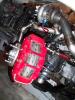
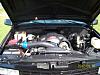
I have a 2004 5.3 in a 1992 chevy pickup and I have just the front 2 steam ports connected to the top of the water pump(just like your first picture) and the 2 backs blocked off .They were like that from the factory. I have had this setup for 2 years now and changed my thermostat once and never had any cooling problems. I probably put 10000 miles on truck with 5.3. When ever I refill the coolant I leave my cap off until the thermostat opens the add fluid until I am full. I have done this with other ls motors and never had any problems with the cooling systems.
