









Fuel tank mod, adding a recessed panel with Epoxy

Thread Starter
Joined: Apr 2012
Posts: 2,179
Likes: 726
From: Ruckersville, VA
 Fuel tank mod, adding a recessed panel with Epoxy
 Hey guys,
I am looking to get some advice from anyone who has done this type of modification before. I know that the body panel adhesives have come a long way, and I think rather than welding on my gas tank, I want to try using an epoxy to add my recessed panel for fuel injection. (I am adding a vaporworx modded 5th gen fuel pump assembly to my 1968 Camaro tank)
The piece of metal that I bought to make my recess from is 18 gauge stainless steel, and I need to bond it to the stock fuel tank. I started looking at the JB weld products, as they are able to withstand fuels. But is there a better product out there? I know there are panel adhesives by 3M, but there are so many out there, I don't want to choose the wrong one. Can anyone comment on what works, or what doesn't?
Thanks,
Ryan
I am looking to get some advice from anyone who has done this type of modification before. I know that the body panel adhesives have come a long way, and I think rather than welding on my gas tank, I want to try using an epoxy to add my recessed panel for fuel injection. (I am adding a vaporworx modded 5th gen fuel pump assembly to my 1968 Camaro tank)
The piece of metal that I bought to make my recess from is 18 gauge stainless steel, and I need to bond it to the stock fuel tank. I started looking at the JB weld products, as they are able to withstand fuels. But is there a better product out there? I know there are panel adhesives by 3M, but there are so many out there, I don't want to choose the wrong one. Can anyone comment on what works, or what doesn't?
Thanks,
Ryan
I've successfully used JB weld to patch small holes. The patch held for years, I wouldn't hesitate to use it again. But I would worry about mechanical rigidity of gluing in an entire recess panel. You will need to overlap the patch panel just right to give it some strength and make it able to withstand the twisting and pulling it will experience on a moving car with 50-100 pounds of gas sloshing around inside of it.
Having said all that I think the better way is welding or soldering. My OEM tank was soldered from the factory. You can then use a JB weld or a polysulfide adhesive to seal any pinholes. We use polysulfides on our military radars all the time.
http://www.masterbond.com/products/p...s-and-coatings
Putting a torch, welder or even grinder to a fuel tank is really not that big of a deal, just follow the appropriate precautions and keep air moving through it the whole time. You will need to get all the fumes out anyway just to cut the panel opening. If you are really nervous about it take it to a radiator shop for final assembly.
Having said all that I think the better way is welding or soldering. My OEM tank was soldered from the factory. You can then use a JB weld or a polysulfide adhesive to seal any pinholes. We use polysulfides on our military radars all the time.
http://www.masterbond.com/products/p...s-and-coatings
Putting a torch, welder or even grinder to a fuel tank is really not that big of a deal, just follow the appropriate precautions and keep air moving through it the whole time. You will need to get all the fumes out anyway just to cut the panel opening. If you are really nervous about it take it to a radiator shop for final assembly.

TECH Resident
Joined: Feb 2014
Posts: 954
Likes: 9
From: Encinitas CA
Interesting problem. I believe vaporworx has excellent customer support. Did you ask them?
Another thought:
Fuel cells are bolted together, at least the pickup / return line and filling flange to the bladder and can. Using an appropriate gasket material should work fine. I might steer you towards that route without more detail on the looks of the recessed panel.
mcmaster has an array of sheet gasket materials from which you could select.
Another thought:
Fuel cells are bolted together, at least the pickup / return line and filling flange to the bladder and can. Using an appropriate gasket material should work fine. I might steer you towards that route without more detail on the looks of the recessed panel.
mcmaster has an array of sheet gasket materials from which you could select.
Can't help you on your adhesive question, but if you already have the 5th gen. fuel module, why don't you just buy a stamped steel fuel tank from "Restomod" that already is made to accept the 5th gen. module and is a bolt in for your 1st gen. camaro?
Trending Topics
Thread Starter
Joined: Apr 2012
Posts: 2,179
Likes: 726
From: Ruckersville, VA
I've successfully used JB weld to patch small holes. The patch held for years, I wouldn't hesitate to use it again. But I would worry about mechanical rigidity of gluing in an entire recess panel. You will need to overlap the patch panel just right to give it some strength and make it able to withstand the twisting and pulling it will experience on a moving car with 50-100 pounds of gas sloshing around inside of it.
Having said all that I think the better way is welding or soldering. My OEM tank was soldered from the factory. You can then use a JB weld or a polysulfide adhesive to seal any pinholes. We use polysulfides on our military radars all the time.
http://www.masterbond.com/products/p...s-and-coatings
Putting a torch, welder or even grinder to a fuel tank is really not that big of a deal, just follow the appropriate precautions and keep air moving through it the whole time. You will need to get all the fumes out anyway just to cut the panel opening. If you are really nervous about it take it to a radiator shop for final assembly.
Having said all that I think the better way is welding or soldering. My OEM tank was soldered from the factory. You can then use a JB weld or a polysulfide adhesive to seal any pinholes. We use polysulfides on our military radars all the time.
http://www.masterbond.com/products/p...s-and-coatings
Putting a torch, welder or even grinder to a fuel tank is really not that big of a deal, just follow the appropriate precautions and keep air moving through it the whole time. You will need to get all the fumes out anyway just to cut the panel opening. If you are really nervous about it take it to a radiator shop for final assembly.
And to answer the other questions, I know that restomod makes a tank that will accept the 5th gen fuel pump assembly, but for $400 bucks, I figured I could modify my tank for a little cheaper. I currently have about $15 bucks into the materials
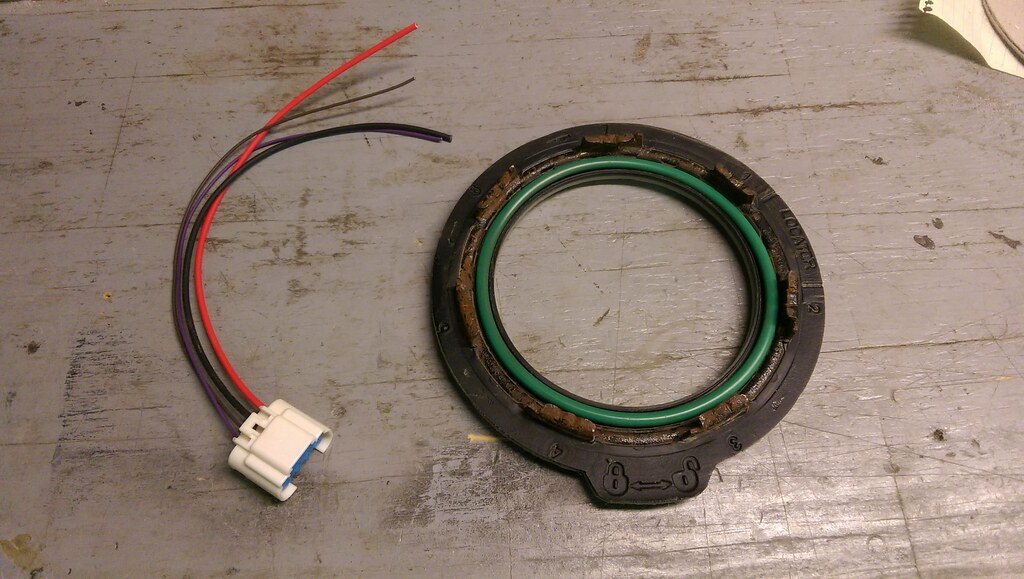
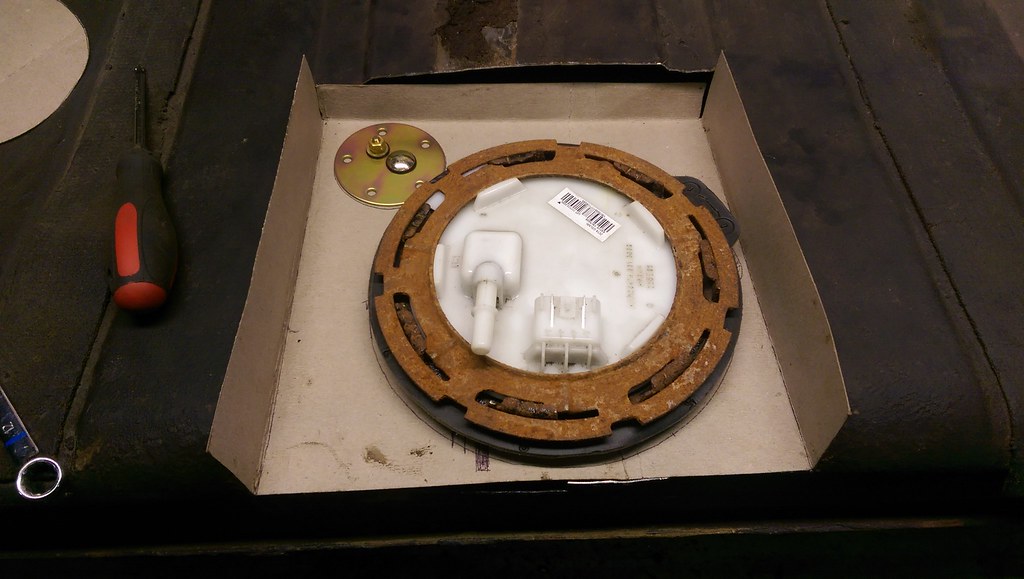
Here are some pictures if anyone is intersted in what I am doing. "adapter" I made from cutting the top off of a '09 Colorado fuel tank
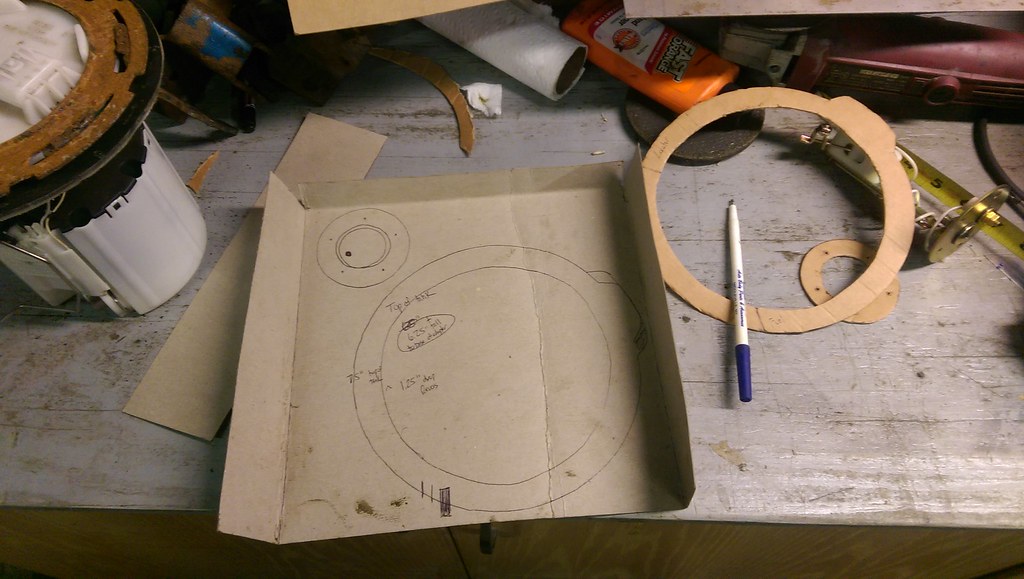
My template
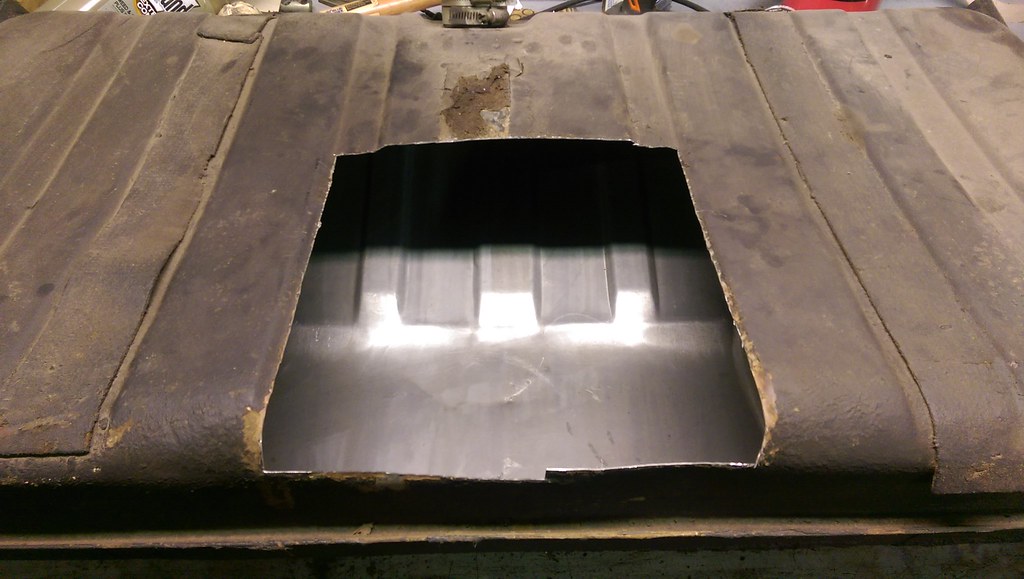
Luckily it fit right in between the two ribs on the tank.
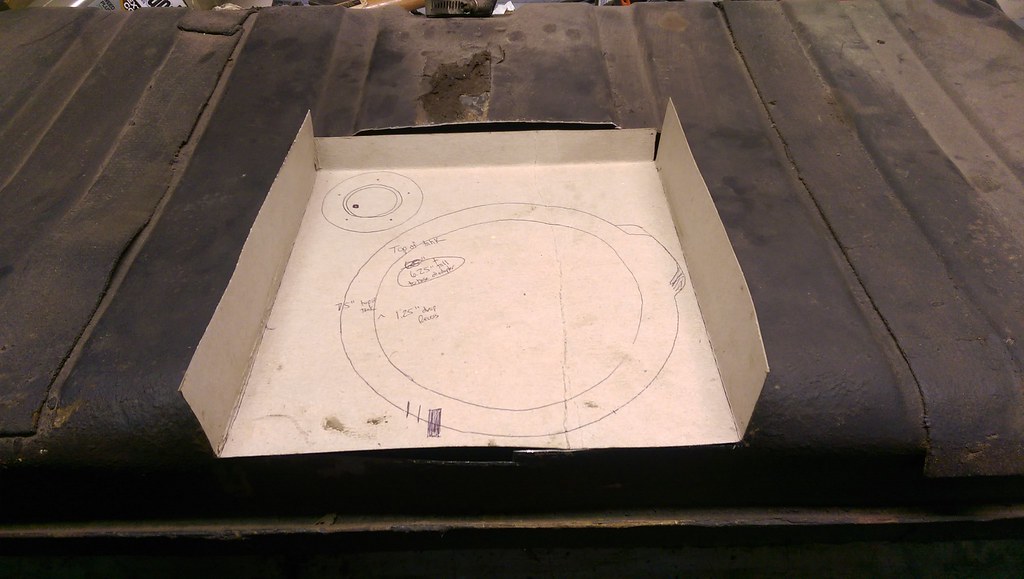
And test fit, it is going to work perfectly. I wanted the compressed height of the assembly to be between 6.25" and 6.5" and it measured in right at 6.5" with my template. Perfect. Now for those wondering, the fully compressed height for the assembly is 5.75" and the fully extended height is 7.125". So somewhere in the middle is right where I want to be.
Final Piece

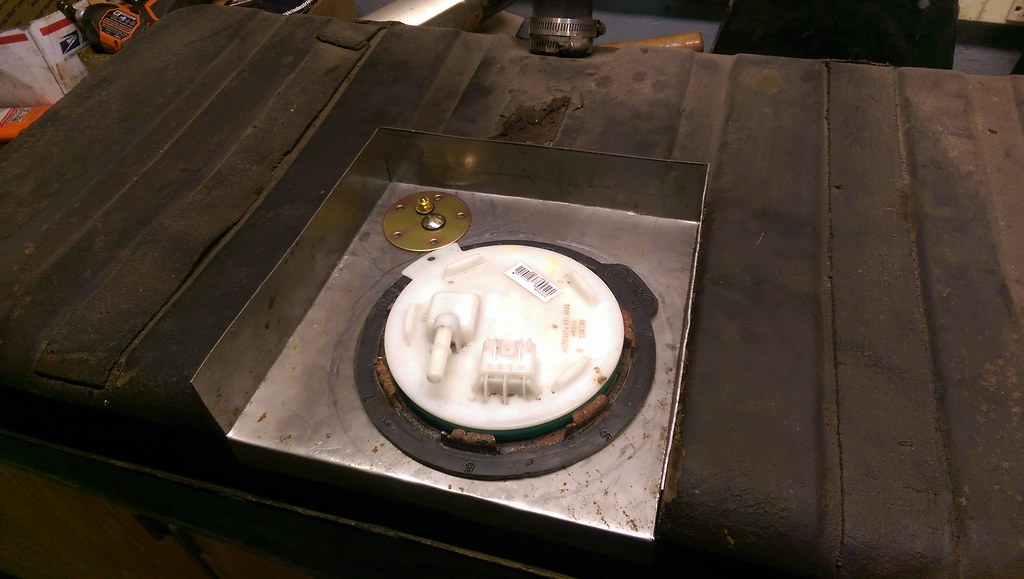
I am now at a point, where I can either use the epoxy, or weld it together since both are steel. I may give the soldering a try and see what it looks like when finished. Still need to measure the exact height and make my bends for the overlap.
LS1 Tech Stories
The Best V8 Stories One Small Block at Time

6 Common C5 Corvette Failures and What's Involved In Repairing Them
Pouria Savadkouei
Retro Modern Bandit Pontiac Trans AM Comes With Burt Reynolds' Autograph
Verdad Gallardo
Top 10 Greatest Cadillac V Series Performance Models Ever, Ranked
Pouria Savadkouei
Top 10 Most Powerful Chevy Trucks Ever Made!

Hennessey's New Supercharged Silverado ZR2 Has 700 HP
Verdad Gallardo
Coachbuilt N2A Anteros Is an LS2-Powered C6 Corvette In Italian Clothes
Verdad Gallardo
Awesome K5 Blazer Restomod Comes With C7 Corvette Power
Verdad Gallardo
10 Camaros You Should Never Buy

10 LS Engine Myths That Refuse to Die
Verdad Gallardo

JB weld and ethanol don't get along at all. My E85 JBweld patch leaked immediately. I'd assume since most fuel has at least 10% ethanol in it JBweld isn't the product to use these days.
I ended up using a product from permatex called right stuff. It's not as hard as JBweld, but it is much stronger than silicone and would most likely be fine in your situation. We used this stuff on a stamped steel oil pan and literally had to use a hammer and chisel to remove the pan...which it destroyed. It's strong stuff...
good luck!
http://www.all-spec.com/Catalog/Adhe...FcEdgQodZA0EUg
I ended up using a product from permatex called right stuff. It's not as hard as JBweld, but it is much stronger than silicone and would most likely be fine in your situation. We used this stuff on a stamped steel oil pan and literally had to use a hammer and chisel to remove the pan...which it destroyed. It's strong stuff...
good luck!
http://www.all-spec.com/Catalog/Adhe...FcEdgQodZA0EUg

I would bond it with 3M 8115 and then seal up the joints with one of these.
http://www.aircraftspruce.com/menus/...ksealants.html
On aircraft most adhesives have to be coated with sealant as they don't like fuel.
I would try to modify your patch pannel to have a return so you can bond flat to flat and not a small bond at the corrner surface area is you friend. With all bonding prep is key.
degrease everything until you get a clean rag.
Sand with 120-240 grit sand paper or grit blast with 100 Grit aluminum oxide
Wipe area clean with acetone followed by IPA until you get a clean rag
Bond within the hour
When bonding you want a apply clamping force to get squeeze out all around the joint and don't release it until your epoxy has reach handling strength. a few holes for clecos go a long way to making this easier.
http://www.aircraftspruce.com/menus/...ksealants.html
On aircraft most adhesives have to be coated with sealant as they don't like fuel.
I would try to modify your patch pannel to have a return so you can bond flat to flat and not a small bond at the corrner surface area is you friend. With all bonding prep is key.
degrease everything until you get a clean rag.
Sand with 120-240 grit sand paper or grit blast with 100 Grit aluminum oxide
Wipe area clean with acetone followed by IPA until you get a clean rag
Bond within the hour
When bonding you want a apply clamping force to get squeeze out all around the joint and don't release it until your epoxy has reach handling strength. a few holes for clecos go a long way to making this easier.
If you bend the edges of the recessed panel down so it overlaps the top by 1/4 to 1/2 inch you will have a perfect flange to solder or glue. Like mentioned above prep is the key to a sound joint. You should have flanged the corners as well, i.e. cut little tabs to bend over, just butting up the corners like that gives you nothing to overlap. Overlap the edges and the solder will be as strong as a weld with less chance of pinholes. My 40 year old stock tanks is two halves soldered together with soldered on penetrations.
Should mention the JB weld patch I did was to a steel tank. It held for years. When I finally had the tank refurbished the radiator shop had to use a chisel to get the JB weld off. As per their FAQ it is completely resistant to fuels but does not bond to plastics, so don't use it on plastic fuel tanks.
http://www.jbweld.com/pages/faqs
Should mention the JB weld patch I did was to a steel tank. It held for years. When I finally had the tank refurbished the radiator shop had to use a chisel to get the JB weld off. As per their FAQ it is completely resistant to fuels but does not bond to plastics, so don't use it on plastic fuel tanks.
http://www.jbweld.com/pages/faqs