






Diagnostic Codes -- CEL's
 Diagnostic Codes -- CEL's
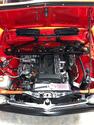
 Got my LS3 conversion up and running. Brand new crate LS3 into my 82 Volvo 242. PSI conversions maf sensor, O2's, gas pedal, harness and 08 Vette ecu that they set up for the conversion.
Started on first try - first two drives flawless. Third drive a check engine light comes on about 2 seconds after start up. Stays on for a couple of drives. Car sits for a few days - no CEL on the next start up. Drive for a bit, shut if off to get gas. Crank it back up and CEL lights a couple of seconds after start up. Car sits for a week -- crank back up, no CEL. Idles up to temp while I'm playing with DashCommand app (new toy). Shut if off for a bit and recrank to pull codes - CEL comes on about 2 seconds after start up.
No stored or permanent codes. 3 pending codes -- P0106 (BAP/MAP range performance issue); and P0172/P0175 (System too rich sides 1 and 2). Drivability has remained flawless.
Any ideas, experience about what might cause this? I let PSI supply the bits they did so I'd have a good shot at matching components. I placed the O2 sensors in the head pipes as close to the exhaust manifold flanges as I could get them (similar location as Corvette) - perhaps 2" below flanges, same location, pointing same direction of each side.
Thanks in advance for ideas....
Started on first try - first two drives flawless. Third drive a check engine light comes on about 2 seconds after start up. Stays on for a couple of drives. Car sits for a few days - no CEL on the next start up. Drive for a bit, shut if off to get gas. Crank it back up and CEL lights a couple of seconds after start up. Car sits for a week -- crank back up, no CEL. Idles up to temp while I'm playing with DashCommand app (new toy). Shut if off for a bit and recrank to pull codes - CEL comes on about 2 seconds after start up.
No stored or permanent codes. 3 pending codes -- P0106 (BAP/MAP range performance issue); and P0172/P0175 (System too rich sides 1 and 2). Drivability has remained flawless.
Any ideas, experience about what might cause this? I let PSI supply the bits they did so I'd have a good shot at matching components. I placed the O2 sensors in the head pipes as close to the exhaust manifold flanges as I could get them (similar location as Corvette) - perhaps 2" below flanges, same location, pointing same direction of each side.
Thanks in advance for ideas....
Cel I had the same problem with the Rich codes only mine were too lean on both banks. Turns out mine was low fuel pressure. Have you checked your fuel pressure? May be too high. Have you checked your long term fuel trims? Get the Torque APP and you will be able to monitor the trims to see if that's causing the problem or maybe the O2 sensors but the APP will be able to monitor them also.
All components brand new including the GM pressure regulator filter. Suppose it could be too high, but seems unlikely. However, I'll hold that in my back pocket while I trace down the MAP/BAP code. The fuel system was in place with the previous engine and worked flawlessly as did the fuel pump.
DashCommand will let me look at fuel trims, although I have no idea what to do with that info or what it means. I recall seeing a screen that had fuel trims on it.
I found some data that said one cause of the the too-rich condition can be a defective MAP/BAP sensor -- and since I'm getting a code for that too, I'll run that down first.
Everything brand new which has me scratching my head about defective components. I realize they can be bad out of the gate - but it doesn't happen very often.
Where is the MAP/BAP sensor on this motor -- is that the connection right behind the throttle body on the intake manifold?
Thanks for your response!
DashCommand will let me look at fuel trims, although I have no idea what to do with that info or what it means. I recall seeing a screen that had fuel trims on it.
I found some data that said one cause of the the too-rich condition can be a defective MAP/BAP sensor -- and since I'm getting a code for that too, I'll run that down first.
Everything brand new which has me scratching my head about defective components. I realize they can be bad out of the gate - but it doesn't happen very often.
Where is the MAP/BAP sensor on this motor -- is that the connection right behind the throttle body on the intake manifold?
Thanks for your response!
Upon further investigation - looks like there are a whole host of possibilities for the P0106 code. Gonna check the sensor and be sure the intake tract/maf are clean and all connections are tight (no leaking air).
TECH Regular

Joined: Sep 2007
Posts: 443
Likes: 3
From: Kansas City, MO
The MAP should read roughly 95-100kpa depending on your altitude with the key on engine off. If it's anything different, you need to verify that the 5v, ground, and signal circuits are pinned correctly. Then jump the 5v to the signal wire at the map connector. It should read 5v on a scan tool. Then with a volt meter check the voltage from the 5v to the ground (low ref) wire on the map sensor. It should read 5v. If all of that is correct, it needs a map sensor.
Thanks -- picked up a good bit of trouble shooting along the lines mentioned above with a google search. Brand new crate motor - unlikely the MAP sensor is bad, but I'll check it with vacuum today. More likely -- the inlet pipe arrangement I built for the car is leaking air into the intake tract downstream of the maf sensor. Checking this morning -- the black crinkle paint on it (to match valve covers) combined with a clamp that wasn't very tight may be the culprit. So - fix that up, check MAP - and go drive it some more.


MAP sensor, harness checked out OK as expected being all brand new. Ground, reference and signal V as they should be with and without vacuum applied.
Off to "reseal" all the connections on the air inlet pipe.
Off to "reseal" all the connections on the air inlet pipe.
Trending Topics
After I resealed the intake tract and cleared the codes -- no more check engine light....so far. More importantly, the little bit of popping I was hearing on deceleration (from "too rich") has stopped. So I'm pretty sure I was leaking air in somewhere between MAF and throttle blade. A few pictures for future reference -- perhaps this will help someone trouble-shoot their install in the future.
1) Crinkle paint on the aluminum intake tube -- because of it's rough surface, it can cause a bad seal between it and the rubber gaskets/elbows/seals. I took a small screw driver, and removed the crinkle paint that was on the MAF housing gasket seal surface. Just didn't think it was that critical - but now the MAF sensor rubber seal sits against the smooth, bare aluminum of the housing as it was designed to.
2) Crinkle paint part deux -- where my 90 degree rubber elbow cinches up against the aluminum intake tube. I lightly sanded the crinkle finish where the elbow slides over the intake tube to smooth it out. Then lightly greased the elbow rubber, the aluminum tube and the clamp so that everything would "slide" and not bind. Also greased the elbow/clamp on the throttle body connection for the same reason. Light white grease or Armor All works well for this.
3) I fabricated a reinforcement band out of a stainless steel clamp to go INSIDE the rubber elbow. If I had any significant flow restriction there, I didn't want the elbow to collapse any significant amount. I drilled three holes in the elbow -- as you're looking at the picture - at noon, 3 o'clock and 6 o'clock. I used pop rivets through the elbow to attach the ring that's inside. Well - it occurred to me that air might leak past those rivet holes. So I sealed the top of the rivets with a bit of RTV - high temp black.
Those 3 steps seemed to have solved the problem. Given the newness of all vacuum hoses/connections and the fact that I had rock solid steady and very high levels of vacuum readings at idle, I was pretty sure I didn't have a vacuum leak.
20 mile round trip this morning to Cars&Coffee -- no check engine light, and no popping on deceleration. So far, so good.
Now on the getting the VSS working right...


1) Crinkle paint on the aluminum intake tube -- because of it's rough surface, it can cause a bad seal between it and the rubber gaskets/elbows/seals. I took a small screw driver, and removed the crinkle paint that was on the MAF housing gasket seal surface. Just didn't think it was that critical - but now the MAF sensor rubber seal sits against the smooth, bare aluminum of the housing as it was designed to.
2) Crinkle paint part deux -- where my 90 degree rubber elbow cinches up against the aluminum intake tube. I lightly sanded the crinkle finish where the elbow slides over the intake tube to smooth it out. Then lightly greased the elbow rubber, the aluminum tube and the clamp so that everything would "slide" and not bind. Also greased the elbow/clamp on the throttle body connection for the same reason. Light white grease or Armor All works well for this.
3) I fabricated a reinforcement band out of a stainless steel clamp to go INSIDE the rubber elbow. If I had any significant flow restriction there, I didn't want the elbow to collapse any significant amount. I drilled three holes in the elbow -- as you're looking at the picture - at noon, 3 o'clock and 6 o'clock. I used pop rivets through the elbow to attach the ring that's inside. Well - it occurred to me that air might leak past those rivet holes. So I sealed the top of the rivets with a bit of RTV - high temp black.
Those 3 steps seemed to have solved the problem. Given the newness of all vacuum hoses/connections and the fact that I had rock solid steady and very high levels of vacuum readings at idle, I was pretty sure I didn't have a vacuum leak.
20 mile round trip this morning to Cars&Coffee -- no check engine light, and no popping on deceleration. So far, so good.
Now on the getting the VSS working right...


LS1 Tech Stories
The Best V8 Stories One Small Block at Time

Topdon ONE vs. Artidiag 800 BT2: Which is the Diagnostic Tablet For You?
Pouria Savadkouei
Gas Monkey Built a 6-Wheel Ferrari Testarossa With a Corvette LT4 Engine
Verdad Gallardo
7 Most Reliable High-Performance Engines GM Has Ever Built
Verdad Gallardo
Amazing '71 Camaro Restomod Is Modern Muscle Car Under the Skin
Verdad Gallardo
6 Common C5 Corvette Failures and What's Involved In Repairing Them
Pouria Savadkouei
Retro Modern Bandit Pontiac Trans AM Comes With Burt Reynolds' Autograph
Verdad Gallardo
Top 10 Greatest Cadillac V Series Performance Models Ever, Ranked
Pouria Savadkouei
Top 10 Most Powerful Chevy Trucks Ever Made!
