



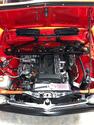





Passing emissions testing in Phoenix

Thread Starter
Teching In
Joined: Feb 2016
Posts: 3
Likes: 0
 Passing emissions testing in Phoenix
 Hi,
I'm hoping someone can shed some light on this. I live in Maricopa County, Arizona. We have to have our cars emissions tested. I have heard that the county is failing cars with swapped engines. Someone told me that their testing equipment can detect the GM ECU and if your car is say a BMW or Porsche, they fail you.
Anyone have any experience with this?
Thanks!
I'm hoping someone can shed some light on this. I live in Maricopa County, Arizona. We have to have our cars emissions tested. I have heard that the county is failing cars with swapped engines. Someone told me that their testing equipment can detect the GM ECU and if your car is say a BMW or Porsche, they fail you.
Anyone have any experience with this?
Thanks!

http://www.myazcar.com/
Admittedly I’m reading between the lines. But it looks like if you have a functioning OBDII system on board and there are no codes/check engine lights - you’ll pass. As the previous poster indicated - you’re ultimately going to have to scope it out with the folks that administer the inspection.
Admittedly I’m reading between the lines. But it looks like if you have a functioning OBDII system on board and there are no codes/check engine lights - you’ll pass. As the previous poster indicated - you’re ultimately going to have to scope it out with the folks that administer the inspection.
The toughest thing about a state is when it is inconsistent. CA is tough, but it is pretty clear you have to have 100% of equipment matching the donor, or the replacement needs an EO. Outside that, you're against having to prove to the referee station the parts you're using aren't a negative impact, and were warranted (fit usually.)
AZ in the early 10 years of OBD-II let a lot of cars slide as long as the OBD-II scan told them it was cool. Trouble codes for rear cats deleted, and all. Now that they're tightening up, you need to have your stuff in order.
There is no law against a GM PCM and engine in anything. So either you misinderstood, or you are listening to others who don't understand. But, if it is registered in certain places, it is required by Fed. law to have all the original emissions related equipment intact. The problem is the uneducated focus harder on what they can get by with, and then calling that "legal," than just trying to follow the law in the first place.
Have no doubt, you're a LOT more likely to get by with aftermarket cats, relocation of cats, air cleaner kits with no E.O. etc. in AZ than in CA. But it is also not impossible to do it legit, and pass. You're just not going to get a silver platter answer from the state on what parts are okay, if they're aftermarket. It is an inconsistent state. Good luck.
AZ in the early 10 years of OBD-II let a lot of cars slide as long as the OBD-II scan told them it was cool. Trouble codes for rear cats deleted, and all. Now that they're tightening up, you need to have your stuff in order.
There is no law against a GM PCM and engine in anything. So either you misinderstood, or you are listening to others who don't understand. But, if it is registered in certain places, it is required by Fed. law to have all the original emissions related equipment intact. The problem is the uneducated focus harder on what they can get by with, and then calling that "legal," than just trying to follow the law in the first place.
Have no doubt, you're a LOT more likely to get by with aftermarket cats, relocation of cats, air cleaner kits with no E.O. etc. in AZ than in CA. But it is also not impossible to do it legit, and pass. You're just not going to get a silver platter answer from the state on what parts are okay, if they're aftermarket. It is an inconsistent state. Good luck.

TECH Addict

Joined: Oct 2016
Posts: 2,513
Likes: 480
From: PDX-OR-USA
What I was told at the DEQ station up here in Oregon is that the FED and the states kinda came to some in committee agreements that the old rule of
"Same year or newer engine same class vehicle" is now only for Pre-obd II vehicles, and as long as it passes the tailpipe they are happy, if you jump to an OBDII (96+) rig it has to pass full scan on all systems, and OBDIII will be engines from same make only and same class vehicle only. So no more cross the vendor swaps eventually.. The only odd exception they mentioned is that in utility vehicles (he wasn't sure what that meant) and vehicles over 8500 GVW (IIRC) you can use a certified re-power kit to convert to a diesel. IE the Cummins Re-Power packages.
Oregon is actually tougher than CA on a lot of this stuff, except that we only test in the big cities so a good out of area address can get you by.. For OBD1 we finally got rid of the dyno testing..
For instance you can't convert a gas to diesel here already unless its the Cummins kit..
"Same year or newer engine same class vehicle" is now only for Pre-obd II vehicles, and as long as it passes the tailpipe they are happy, if you jump to an OBDII (96+) rig it has to pass full scan on all systems, and OBDIII will be engines from same make only and same class vehicle only. So no more cross the vendor swaps eventually.. The only odd exception they mentioned is that in utility vehicles (he wasn't sure what that meant) and vehicles over 8500 GVW (IIRC) you can use a certified re-power kit to convert to a diesel. IE the Cummins Re-Power packages.
Oregon is actually tougher than CA on a lot of this stuff, except that we only test in the big cities so a good out of area address can get you by..
For OBD1 we finally got rid of the dyno testing.. For instance you can't convert a gas to diesel here already unless its the Cummins kit..
The toughest thing about a state is when it is inconsistent. CA is tough, but it is pretty clear you have to have 100% of equipment matching the donor, or the replacement needs an EO. Outside that, you're against having to prove to the referee station the parts you're using aren't a negative impact, and were warranted (fit usually.)
AZ in the early 10 years of OBD-II let a lot of cars slide as long as the OBD-II scan told them it was cool. Trouble codes for rear cats deleted, and all. Now that they're tightening up, you need to have your stuff in order.
There is no law against a GM PCM and engine in anything. So either you misinderstood, or you are listening to others who don't understand. But, if it is registered in certain places, it is required by Fed. law to have all the original emissions related equipment intact. The problem is the uneducated focus harder on what they can get by with, and then calling that "legal," than just trying to follow the law in the first place.
Have no doubt, you're a LOT more likely to get by with aftermarket cats, relocation of cats, air cleaner kits with no E.O. etc. in AZ than in CA. But it is also not impossible to do it legit, and pass. You're just not going to get a silver platter answer from the state on what parts are okay, if they're aftermarket. It is an inconsistent state. Good luck.
AZ in the early 10 years of OBD-II let a lot of cars slide as long as the OBD-II scan told them it was cool. Trouble codes for rear cats deleted, and all. Now that they're tightening up, you need to have your stuff in order.
There is no law against a GM PCM and engine in anything. So either you misinderstood, or you are listening to others who don't understand. But, if it is registered in certain places, it is required by Fed. law to have all the original emissions related equipment intact. The problem is the uneducated focus harder on what they can get by with, and then calling that "legal," than just trying to follow the law in the first place.
Have no doubt, you're a LOT more likely to get by with aftermarket cats, relocation of cats, air cleaner kits with no E.O. etc. in AZ than in CA. But it is also not impossible to do it legit, and pass. You're just not going to get a silver platter answer from the state on what parts are okay, if they're aftermarket. It is an inconsistent state. Good luck.
Google is your friend. Looks like they just simplified the laws
http://tucson.com/news/local/govt-an...afa538bf6.html
I am thinking of retiring to Queen Creek some day so this is good news?
http://tucson.com/news/local/govt-an...afa538bf6.html
I am thinking of retiring to Queen Creek some day so this is good news?
Trending Topics
LS1 Tech Stories
The Best V8 Stories One Small Block at Time

6 Common C5 Corvette Failures and What's Involved In Repairing Them
Pouria Savadkouei
Retro Modern Bandit Pontiac Trans AM Comes With Burt Reynolds' Autograph
Verdad Gallardo
Top 10 Greatest Cadillac V Series Performance Models Ever, Ranked
Pouria Savadkouei
Top 10 Most Powerful Chevy Trucks Ever Made!

Hennessey's New Supercharged Silverado ZR2 Has 700 HP
Verdad Gallardo
Coachbuilt N2A Anteros Is an LS2-Powered C6 Corvette In Italian Clothes
Verdad Gallardo
Awesome K5 Blazer Restomod Comes With C7 Corvette Power
Verdad Gallardo
10 Camaros You Should Never Buy

10 LS Engine Myths That Refuse to Die
Verdad Gallardo
Thread Starter
Teching In
Joined: Feb 2016
Posts: 3
Likes: 0
This is a LONG post from a company called Mo-Tech in Feb 2017. They do LS swaps into Jeeps.
Arizona is a state in transition trying to step up enforcement. We had 2 LS JK's certified in Arizona over the last 6 months. AZ now wants to plug into the DLC and see the chassis VIN# so we have been having to program the JK VIN into the ECM for AZ conversions. I do believe there is a lot of ambiguity as to the actual emission laws in AZ. More progressive states like California and Colorado have technicians better trained in engine changes. A lot comes down to who you talk to but AZ still enforces USEPA laws as far as I know. Here is the USEPA rules for engine conversions, you will notice they emphasize no tampering and using a certified configuration. Hybrid(LS inside of a Chrysler OS), missing modules (BCM's and TCM's), turning off monitors, etc.... is not a "certified configuration". I had this argument with the Salt Lake lab recently when they pointed to the Federal regs so we looked at the Federal regs and the customer got registered. You will notice the regs state cross manufacturer swap are more difficult but not prohibited. In a way the full GM network conversion has many advantages over the hacked and patched Hemi conversions.
UNITED STATES ENVIRONMENTAL PROTECTION AGENCY
WASHINGTON, D.C. 20460
ENGINE SWITCHING FACT SHEET
UNITED STATES ENVIRONMENTAL PROTECTION AGENCY
WASHINGTON, D.C. 20460
March 13, 1991
OFFICE OF AIR AND RADIATION
Pursuant to frequent requests for information received by the U.S. Environmental Protection Agency (EPA) regarding the legality and effects of engine switching, this document will summarize federal law and policy pertaining to this matter and will discuss other related issues.
A. Federal Law
The federal tampering prohibition is contained in section 203(a)(3) of the Clean Air Act (Act), 42
U.S.C. 7522(a)(3). Section 203(a)(3)(A) of the Act prohibits any person from removing or rendering inoperative any emission control device or element of design installed on or in a motor vehicle or motor vehicle engine prior to its sale and delivery to an ultimate purchaser and prohibits any person from knowingly removing or rendering inoperative any such device or element of design after such sale and delivery, and the causing thereof. The maximum civil penalty for a violation of this section by a manufacturer or dealer is $25,000; for any other person, $2,500. Section 203(a)(3)(B) of the Act prohibits any person from manufacturing or selling, or offering to sell, or installing, any part or component intended for use with, or as part of, any motor vehicle or motor vehicle engine where a principal effect of the part or component is to bypass, defeat, or render inoperative any device or element of design installed on or in a motor vehicle or motor vehicle engine, and where the person knows or should know that such part or component is being offered for sale or is being installed for such use. The maximum civil penalty for a violation of this section is $2,500. EPA received many questions regarding the application of this law to a situation where one engine is removed from a vehicle and another engine is installed in its place. EPA's policy regarding "engine switching" is covered under the provisions of Mobile Source Enforcement Memorandum No. lA (Attachment 1). This policy states that EPA will not consider any modification to a "certified configuration" to be a violation of federal law if there is a reasonable basis for knowing that emissions are not adversely affected. In many cases, proper emission testing according to the Federal Test Procedure would be necessary to make this determination.
A "certified configuration" is an engine or engine chassis design which has been "certified" (approved) by EPA prior to the production of vehicles with that design. Generally, the manufacturer submits an application for certification of the designs of each engine or vehicle it proposes to manufacture prior to production. The application includes design requirements for all emission related parts, engine calibrations, and other design parameters for each different type of engine (in heavy-duty vehicles), or engine chassis combination (in light-duty vehicles). EPA then "certifies" each acceptable design for use, in vehicles of the upcoming model year.
For light-duty vehicles, installation of a light-duty eng~ne into a different light-duty vehicle by any
person would be considered tampering unless the resulting vehicle is identical (with regard to all
emission related parts, engine design parameters, and engine calibrations) to a certified configuration of the same or newer model year as the vehicle chassis, or if there is a reasonable basis for knowing that emissions are not adversely affected as described in Memo 1A. The appropriate source for technical information regarding the certified configuration of a vehicle of a particular model year is the vehicle manufacturer.
For heavy-duty vehicles, the resulting vehicle must contain a heavy-duty engine which is identical to a certified configura- tion of a heavy-duty engine of the same model year or newer as the year of the installed engine. Under no circumstances, however, may a heavy-duty engine ever be installed in a light-duty vehicle.
The most common engine replacement involves replacing a gasoline engine in a light-duty vehicle with another gasoline engine. Another type of engine switching which commonly occurs, however, involves diesel powered vehicles where the diesel engine is removed and replaced with a gasoline engine. Applying the above policy, such a replacement is legal only if the resulting engine-chassis configuration is equivalent to a certified configuration of the same model year or newer as the chassis. If the vehicle chassis in question has been certified with gasoline, as well as diesel engines (as is common), such a conversion could be done legally.
Another situation recently brought to EPA's attention involves the offering for sale of used foreign-built engines. These engines are often not covered by a certified configuration for any vehicle sold in this country. In such a case, there is no way to install such an engine legally. EPA has recently brought enforcement actions against certain parties who have violated the tampering prohibition by performing illegal engine switches.
It should be noted that while EPA's policy allows engine switches as long as the resulting vehicle matches exactly to anv certified configuration of the same or newer model year as the chassis, there are some substantial practical limitations to performing such a replacement. Vehicle chassis and engine designs of one vehicle manufacturer are very distinct from those of another, such that it is generally not possible to put an engine into a chassis of a different manufacturer and have it match up to a certified configuration. Therefore, practical considerations will generally limit engine switches to installation of another engine which was certified to be used in that same make and model (or a "twin" of that make
and model, e.g., Pontiac Grand Am and Oldsmobile Calais). In addition, converting a vehicle into a different certified configuration is likely to be very difficult, and the cost may prove prohibitive.
B. State Laws
Many states also have statutes or regulations prohibiting tampering in general. Most of these laws specifically prohibit tampering by individuals. A few specifically prohibit engine switching, using provisions similar to those stated in EPA's policy. To determine the state law in any given state, the state's Attorney General's office should be contacted. In addition, many states have state or local antitampering inspection programs which require a periodic inspection of vehicles in that area, to determine the integrity of emission control systems. Many programs have established policies for vehicles which have been engine switched. While EPA does not require these programs to fail engine switched vehicles which are not in compliance with federal policy, the Agency does strongly recommend that these programs set their requirements so as to be consistent with the federal law. State or local programs which pass illegally engine switched vehicles may mislead federally regulated parties into believing that engine switching is allowed by federal law.
Arizona is a state in transition trying to step up enforcement. We had 2 LS JK's certified in Arizona over the last 6 months. AZ now wants to plug into the DLC and see the chassis VIN# so we have been having to program the JK VIN into the ECM for AZ conversions. I do believe there is a lot of ambiguity as to the actual emission laws in AZ. More progressive states like California and Colorado have technicians better trained in engine changes. A lot comes down to who you talk to but AZ still enforces USEPA laws as far as I know. Here is the USEPA rules for engine conversions, you will notice they emphasize no tampering and using a certified configuration. Hybrid(LS inside of a Chrysler OS), missing modules (BCM's and TCM's), turning off monitors, etc.... is not a "certified configuration". I had this argument with the Salt Lake lab recently when they pointed to the Federal regs so we looked at the Federal regs and the customer got registered. You will notice the regs state cross manufacturer swap are more difficult but not prohibited. In a way the full GM network conversion has many advantages over the hacked and patched Hemi conversions.
UNITED STATES ENVIRONMENTAL PROTECTION AGENCY
WASHINGTON, D.C. 20460
ENGINE SWITCHING FACT SHEET
UNITED STATES ENVIRONMENTAL PROTECTION AGENCY
WASHINGTON, D.C. 20460
March 13, 1991
OFFICE OF AIR AND RADIATION
Pursuant to frequent requests for information received by the U.S. Environmental Protection Agency (EPA) regarding the legality and effects of engine switching, this document will summarize federal law and policy pertaining to this matter and will discuss other related issues.
A. Federal Law
The federal tampering prohibition is contained in section 203(a)(3) of the Clean Air Act (Act), 42
U.S.C. 7522(a)(3). Section 203(a)(3)(A) of the Act prohibits any person from removing or rendering inoperative any emission control device or element of design installed on or in a motor vehicle or motor vehicle engine prior to its sale and delivery to an ultimate purchaser and prohibits any person from knowingly removing or rendering inoperative any such device or element of design after such sale and delivery, and the causing thereof. The maximum civil penalty for a violation of this section by a manufacturer or dealer is $25,000; for any other person, $2,500. Section 203(a)(3)(B) of the Act prohibits any person from manufacturing or selling, or offering to sell, or installing, any part or component intended for use with, or as part of, any motor vehicle or motor vehicle engine where a principal effect of the part or component is to bypass, defeat, or render inoperative any device or element of design installed on or in a motor vehicle or motor vehicle engine, and where the person knows or should know that such part or component is being offered for sale or is being installed for such use. The maximum civil penalty for a violation of this section is $2,500. EPA received many questions regarding the application of this law to a situation where one engine is removed from a vehicle and another engine is installed in its place. EPA's policy regarding "engine switching" is covered under the provisions of Mobile Source Enforcement Memorandum No. lA (Attachment 1). This policy states that EPA will not consider any modification to a "certified configuration" to be a violation of federal law if there is a reasonable basis for knowing that emissions are not adversely affected. In many cases, proper emission testing according to the Federal Test Procedure would be necessary to make this determination.
A "certified configuration" is an engine or engine chassis design which has been "certified" (approved) by EPA prior to the production of vehicles with that design. Generally, the manufacturer submits an application for certification of the designs of each engine or vehicle it proposes to manufacture prior to production. The application includes design requirements for all emission related parts, engine calibrations, and other design parameters for each different type of engine (in heavy-duty vehicles), or engine chassis combination (in light-duty vehicles). EPA then "certifies" each acceptable design for use, in vehicles of the upcoming model year.
For light-duty vehicles, installation of a light-duty eng~ne into a different light-duty vehicle by any
person would be considered tampering unless the resulting vehicle is identical (with regard to all
emission related parts, engine design parameters, and engine calibrations) to a certified configuration of the same or newer model year as the vehicle chassis, or if there is a reasonable basis for knowing that emissions are not adversely affected as described in Memo 1A. The appropriate source for technical information regarding the certified configuration of a vehicle of a particular model year is the vehicle manufacturer.
For heavy-duty vehicles, the resulting vehicle must contain a heavy-duty engine which is identical to a certified configura- tion of a heavy-duty engine of the same model year or newer as the year of the installed engine. Under no circumstances, however, may a heavy-duty engine ever be installed in a light-duty vehicle.
The most common engine replacement involves replacing a gasoline engine in a light-duty vehicle with another gasoline engine. Another type of engine switching which commonly occurs, however, involves diesel powered vehicles where the diesel engine is removed and replaced with a gasoline engine. Applying the above policy, such a replacement is legal only if the resulting engine-chassis configuration is equivalent to a certified configuration of the same model year or newer as the chassis. If the vehicle chassis in question has been certified with gasoline, as well as diesel engines (as is common), such a conversion could be done legally.
Another situation recently brought to EPA's attention involves the offering for sale of used foreign-built engines. These engines are often not covered by a certified configuration for any vehicle sold in this country. In such a case, there is no way to install such an engine legally. EPA has recently brought enforcement actions against certain parties who have violated the tampering prohibition by performing illegal engine switches.
It should be noted that while EPA's policy allows engine switches as long as the resulting vehicle matches exactly to anv certified configuration of the same or newer model year as the chassis, there are some substantial practical limitations to performing such a replacement. Vehicle chassis and engine designs of one vehicle manufacturer are very distinct from those of another, such that it is generally not possible to put an engine into a chassis of a different manufacturer and have it match up to a certified configuration. Therefore, practical considerations will generally limit engine switches to installation of another engine which was certified to be used in that same make and model (or a "twin" of that make
and model, e.g., Pontiac Grand Am and Oldsmobile Calais). In addition, converting a vehicle into a different certified configuration is likely to be very difficult, and the cost may prove prohibitive.
B. State Laws
Many states also have statutes or regulations prohibiting tampering in general. Most of these laws specifically prohibit tampering by individuals. A few specifically prohibit engine switching, using provisions similar to those stated in EPA's policy. To determine the state law in any given state, the state's Attorney General's office should be contacted. In addition, many states have state or local antitampering inspection programs which require a periodic inspection of vehicles in that area, to determine the integrity of emission control systems. Many programs have established policies for vehicles which have been engine switched. While EPA does not require these programs to fail engine switched vehicles which are not in compliance with federal policy, the Agency does strongly recommend that these programs set their requirements so as to be consistent with the federal law. State or local programs which pass illegally engine switched vehicles may mislead federally regulated parties into believing that engine switching is allowed by federal law.
Dang guys. Read this, it answers the question
http://tucson.com/news/local/govt-an...afa538bf6.html
He doesn't care what California or even the feds think, only what Arizona is going to require
http://tucson.com/news/local/govt-an...afa538bf6.html
He doesn't care what California or even the feds think, only what Arizona is going to require

Teching In
Joined: Apr 2006
Posts: 13
Likes: 0
From: Phoenix Arizona - Ahwatukee
I've had converted vehicles tested in Phoenix for years. The newest was a 1988.
Frankly, the emissions techs don't care (or even know for the most part) and telling them just confuses them.
All you need to do is pass the tailpipe sniffer, show that you have cats and that your gas tank cap seals.
I suppose if you get conversions up into the years where they plug into the OBD2 port I imagine you'd have problems unless you can successfully make the emission readiness test faults go away.
The issues I mostly have is the cheap aftermarket cats going dead and intake vac leaks causing lean conditions. I've put grease on the seal of my gas cap on the way to the emission station more than once to get it to pass the gas cap seal test.
Frankly, the emissions techs don't care (or even know for the most part) and telling them just confuses them.
All you need to do is pass the tailpipe sniffer, show that you have cats and that your gas tank cap seals.
I suppose if you get conversions up into the years where they plug into the OBD2 port I imagine you'd have problems unless you can successfully make the emission readiness test faults go away.
The issues I mostly have is the cheap aftermarket cats going dead and intake vac leaks causing lean conditions. I've put grease on the seal of my gas cap on the way to the emission station more than once to get it to pass the gas cap seal test.