


Advice on grounding - LS3 in c2 corvette

Thread Starter
On The Tree


Joined: Apr 2007
Posts: 126
Likes: 1
From: SE, AZ
 Advice on grounding - LS3 in c2 corvette
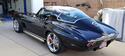
 I have my LS3 in the 67 Corvette. New wiring harness and LS3 Computer. Was wonder if anyone had good pointers on wiring the grounds. Will be using all new stuff so really just need to ensure I get the aluminum motor, bell housing and trans grounded with the steel chassis (aftermarket) and the fiberglass body...thanks for suggestions/advice.

TECH Fanatic


Joined: Sep 2008
Posts: 1,645
Likes: 526
On my C3 LS swap I ran the main ground from the battery to the frame. Then ground straps one on each side from the frame to the engine block. I like to either drill and tap for ground strap bolts or weld a stud onto the frame for the ground strap. I make the frame to engine ground straps out the same gauge cable as the main ground strap. Might be a bit over kill but it has worked well for me.


TECH Addict

Joined: Oct 2016
Posts: 2,513
Likes: 480
From: PDX-OR-USA
Take no prisoners solution..... (I learned this on boats. with lots of electronics and fiberglass hulls.. )
Go to any place that sells electrical panel for buildings, Buy a short copper ground bar with studs and bolt it near/on the back of the engine,
The electrical supplier you got the ground bar from sells special lock washers made of bronze that have teeth that really
dig in when you tighten the bolts. (Specially for electrical connections) Use bronze studs if you can as well, with the matching nuts.
Use dielectric grease on all the connections to seal them.
1 wire from Neg on Battery to the Engine block. OO cable.
1 wire from the block end of first cable to the ground bar. O cable
1 wire to each Head, and 1 to the transmission to the ground bar. #10 or #8.
1 wire alternator frame to ground bar. (I've run across them that don't ground well through the mounting brackets.. )
Ground the ignition box to the ground bar and any other ground circuits that you
want to make sure never fail. (Like headlights... )
)
This seems to really help reduce noise and problems with high current ignitions..
I've done this with both regular and magneto fired engines and the spark always looks cleaner on a scope.. YMMV
(Obviously there is no alternator on a mag fired engine normally.. )
)
My experience on corvettes is EVERY single circuit has a hot and a ground ALL the way, don't use the frame at all..
So for lights, and all your electrical, 100% full length wire is your friend.. I typically on a fiberglass body add a ground bar
in the back of the car that gets a O gage all the way to the front ground bar.. (Just to reduce volume of wire.. )
So rear lighting, fuel pumps etc have a nice hard ground close and easy to wire.. No weak connections..
Use GOOD crimp pliers,, not the cheap stamped ones, if you solder ,, don't let the solder wick back in the wire,
it should be a good mechanical crimped connection first with just a small dab of solder on the connection side
of the crimp so your wires remain flexible, and the electrical connection is solid. If the copper changes dark blue
color your cooking it,, and making it brittle..
For less important stuff I mostly use crimp connections with the really good sealing connectors, you crimp them then hit them with a
heat gun and there is a internal glue that melts and seals the crimp.. I've never had one fail not even bikes and sand toys.....
Go to any place that sells electrical panel for buildings, Buy a short copper ground bar with studs and bolt it near/on the back of the engine,
The electrical supplier you got the ground bar from sells special lock washers made of bronze that have teeth that really
dig in when you tighten the bolts. (Specially for electrical connections) Use bronze studs if you can as well, with the matching nuts.
Use dielectric grease on all the connections to seal them.
1 wire from Neg on Battery to the Engine block. OO cable.
1 wire from the block end of first cable to the ground bar. O cable
1 wire to each Head, and 1 to the transmission to the ground bar. #10 or #8.
1 wire alternator frame to ground bar. (I've run across them that don't ground well through the mounting brackets.. )
Ground the ignition box to the ground bar and any other ground circuits that you
want to make sure never fail. (Like headlights...
)This seems to really help reduce noise and problems with high current ignitions..
I've done this with both regular and magneto fired engines and the spark always looks cleaner on a scope.. YMMV
(Obviously there is no alternator on a mag fired engine normally..
)My experience on corvettes is EVERY single circuit has a hot and a ground ALL the way, don't use the frame at all..
So for lights, and all your electrical, 100% full length wire is your friend.. I typically on a fiberglass body add a ground bar
in the back of the car that gets a O gage all the way to the front ground bar.. (Just to reduce volume of wire.. )
So rear lighting, fuel pumps etc have a nice hard ground close and easy to wire.. No weak connections..
Use GOOD crimp pliers,, not the cheap stamped ones, if you solder ,, don't let the solder wick back in the wire,
it should be a good mechanical crimped connection first with just a small dab of solder on the connection side
of the crimp so your wires remain flexible, and the electrical connection is solid. If the copper changes dark blue
color your cooking it,, and making it brittle..
For less important stuff I mostly use crimp connections with the really good sealing connectors, you crimp them then hit them with a
heat gun and there is a internal glue that melts and seals the crimp.. I've never had one fail not even bikes and sand toys.....









