





Rules On Coolant Reservoir Placement?? HELP!

TECH Senior Member


Joined: Jun 2016
Posts: 22,303
Likes: 3,619
From: Central Cal.

The expansion is into the expansion tank, which DOES have airspace in it, or it will overflow past the pressure cap out the puke tube. The radiator then does not need expansion space.
TECH Senior Member
Joined: Jun 2016
Posts: 22,303
Likes: 3,619
From: Central Cal.
In a system with a coolant recovery system, there is no airspace in the radiator. Since the overflow tube is submerged, any air is pushed out under any excess pressure past the cap, leaving nothing but coolant in the pressure system. Upon cooling, the system sucks coolant out of the overflow tank, as the cap acts as a one-way valve. Coolant can leave only by exceeding cap pressure, but can get sucked back in anytime when the pressure drops to less than ambient.
TECH Senior Member
Joined: Jun 2016
Posts: 22,303
Likes: 3,619
From: Central Cal.
If at ambient pressure, there is nothing to push the coolant out of the expansion tank. IF there was a leak anywhere in the system, THEN air would be admitted, and the expansion tank would fill up and spill out if the cap is removed. But in a sealed system, coolant would not rise in the tank because there is nothing to take its place in the system.
But you've said that the way you fill the system is through the cap in the reservoir --- you can't fill the system past the top of the reservoir in that case. Which means anything above that in the system is filled with air.
Now - if you have a cap or fill point in the radiator too - different situation. Then you put reservoir cap on first and fill through rad - trapping some air in the reservoir. However, in that case - it makes no sense to even have a removable cap on the reservoir - if you remove it with the system full, it will immediately overflow until you've drained the system back down to the top of the reservoir. And the only way to get air back in the reservoir is to drain the system to below the bottom of the reservoir, put the cap back on and refill through the rad. Just doesn't make any sense to me why any system would be designed that way.
Guess I should add, all this is top of mind. Within the last 3-4 weeks I've done coolant changes on my wife's Crosstrek and my daughter's Fit. I just changed the coolant in the LS/Volvo this afternoon. The first two have a pressurized cap in the rad (it's the high point) and non-pressurized overflow bottles with tubes to the bottom for the old blow/suck on heat up/cool down. The Volvo has no cap on the rad, and a pressurized reservoir that is the highest point in the system, with cap. The air space in the bottle acts as the expansion space - with levels showing somewhere between the marked "MIN" and "MAX" depending on how cold or hot, respectively, the system is.
Now - if you have a cap or fill point in the radiator too - different situation. Then you put reservoir cap on first and fill through rad - trapping some air in the reservoir. However, in that case - it makes no sense to even have a removable cap on the reservoir - if you remove it with the system full, it will immediately overflow until you've drained the system back down to the top of the reservoir. And the only way to get air back in the reservoir is to drain the system to below the bottom of the reservoir, put the cap back on and refill through the rad. Just doesn't make any sense to me why any system would be designed that way.
Guess I should add, all this is top of mind. Within the last 3-4 weeks I've done coolant changes on my wife's Crosstrek and my daughter's Fit. I just changed the coolant in the LS/Volvo this afternoon. The first two have a pressurized cap in the rad (it's the high point) and non-pressurized overflow bottles with tubes to the bottom for the old blow/suck on heat up/cool down. The Volvo has no cap on the rad, and a pressurized reservoir that is the highest point in the system, with cap. The air space in the bottle acts as the expansion space - with levels showing somewhere between the marked "MIN" and "MAX" depending on how cold or hot, respectively, the system is.
Once again - if the rad has no cap, the reservoir is the fill point. You can't fill the system past the top of the reservoir, and if the top of the reservoir is LOWER than the top of the rad - you can't fill the rad.
TECH Senior Member
Joined: Jun 2016
Posts: 22,303
Likes: 3,619
From: Central Cal.
It's a slow fill. Fill as much as you can thru the top hose into the engine. Hook everything up, and fill the tank. As it warms, air will burp out of the system thru the bleed line at the top of the system(there has to be one, and always is...) Keep topping the tank. Air compresses, coolant doesn't. It might take a few warmup/cooldown cycles.
After that you top up into the reservoir.
After that you top up into the reservoir.
LS1 Tech Stories
The Best V8 Stories One Small Block at Time

Gas Monkey Built a 6-Wheel Ferrari Testarossa With a Corvette LT4 Engine
Verdad Gallardo
7 Most Reliable High-Performance Engines GM Has Ever Built
Verdad Gallardo
Amazing '71 Camaro Restomod Is Modern Muscle Car Under the Skin
Verdad Gallardo
6 Common C5 Corvette Failures and What's Involved In Repairing Them
Pouria Savadkouei
Retro Modern Bandit Pontiac Trans AM Comes With Burt Reynolds' Autograph
Verdad Gallardo
Top 10 Greatest Cadillac V Series Performance Models Ever, Ranked
Pouria Savadkouei
Top 10 Most Powerful Chevy Trucks Ever Made!

Hennessey's New Supercharged Silverado ZR2 Has 700 HP
Verdad Gallardo
Coachbuilt N2A Anteros Is an LS2-Powered C6 Corvette In Italian Clothes
Verdad Gallardo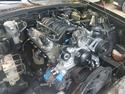
Just got through changing the coolant on mine. If you can do it this way -- foolproof set up. Reservoir cap/air space slightly higher than top of rad (see pic); top of rad connected to reservoir airspace (1/4" hose); bottom of reservoir connected to radiator tank (mine has side tanks). To drain - open rad drain valve and remove reservoir cap -- boom, coolant dump into pan. Tighten rad drain valve. To fill - 2.5 gallons of coolant into the reservoir through a funnel as quick as I could poor it in. Air in the system comes to the top of the rad, through the little hose and vents to atmosphere through the open reservoir cap. Put it halfway between min and max. Crank it with cap cracked and heater valve open - let heater circulate for a bit. Just got back from a drive -- level didn't move at all. Which means all air came out as I was pouring coolant in. No trapped air. No "burping" the system for 3 days. No front end of the car on jack stands. No bleed valves at the top of the system to open/make a mess. Easy street.
If you can do it....

If you can do it....


Wow guys.. Lot's of good information in this post. Let me update what I've done... I bought the 2012 Chevy Cruze reservoir, Dorman #603-383 and made a bracket and installed it on the firewall right where the old heater box bolted to the firewall. Since I have an after-market A/C system going in the truck, there is just a plate that covers all the factory holes, and then 2 heater hoses, and 2 A/C lines come out of the cab through the plate. Anyway, I mounted the reservoir so that the cap would have only a 1/2" air gap before hitting the underside of the hood. In this position the reservoir is the highest component in the cooling system. I should have all of the final pieces to have it DONE this time tomorrow. I will try and post a pic to see if I can get the LS1TECH stamp of approval.
Remember - top of rad has to be connected to top of reservoir so air can escape/rad can fill.
Late add -- I did a good bit of research on the function of the "steam vents". Just about everywhere I turned, it seems that in addition to venting steam pockets under high load/heat conditions, they also serve to allow air OUT of the engine/heads during a refill as they're at the very top of the engine part of the system. Given that, you can see I chose to connect them to the highest part of my system as well --- the hose between the top of the radiator and the top of the reservoir. If you connect that steam vent to some location that's lower than the the vent itself (water pump, for example), seems to me that there's a good chance that some air is going to be trapped in the heads during a refill. Now, it should work itself out with a bit of run time/cap off. But I decided - why take the chance? Clearly this approach helps with a refill - I slightly overfilled (beyond my 'normal' cold level) the reservoir thinking that a bit of air would have to come out when I first cranked it. Wrong. Zero trapped air. Actually had to turkey baster a bit of coolant back out of the reservoir to keep it from being too full when the engine warmed up.
Late add -- I did a good bit of research on the function of the "steam vents". Just about everywhere I turned, it seems that in addition to venting steam pockets under high load/heat conditions, they also serve to allow air OUT of the engine/heads during a refill as they're at the very top of the engine part of the system. Given that, you can see I chose to connect them to the highest part of my system as well --- the hose between the top of the radiator and the top of the reservoir. If you connect that steam vent to some location that's lower than the the vent itself (water pump, for example), seems to me that there's a good chance that some air is going to be trapped in the heads during a refill. Now, it should work itself out with a bit of run time/cap off. But I decided - why take the chance? Clearly this approach helps with a refill - I slightly overfilled (beyond my 'normal' cold level) the reservoir thinking that a bit of air would have to come out when I first cranked it. Wrong. Zero trapped air. Actually had to turkey baster a bit of coolant back out of the reservoir to keep it from being too full when the engine warmed up.
Last edited by Michael Yount; Jul 25, 2018 at 06:26 AM.