





Rules On Coolant Reservoir Placement?? HELP!
 Rules On Coolant Reservoir Placement?? HELP!
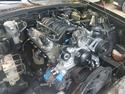
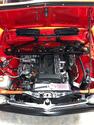
 I've swapped a rebuilt 5.3L LS engine & 4L60E trans into a '70 Chevrolet C-10 truck. I'm at the point where I just got the radiator, and electric cooling fan mounted, and now I need to focus on mounting the coolant reservoir. I'm using the factory 2000 Silverado reservoir that I removed from the donor truck.
My questions focus mostly on how high the reservoir needs to be mounted. Is there a rule on it's placement? Since this is a '70 truck the engine is already a little bit lower than the radiator. Please give me some pointers on where to place this thing. I don't want problems with the engine over-heating.
Things I've thought of;
Does the outlet on the reservoir need to be higher than the heater hose connections/outlets on the water pump? If so, how much higher? When I look at factory trucks, the reservoir sits on the passenger fender really high. I "think" I can make the reservoir the highest point of the cooling system, but it is going to stick out like a sore thumb if I do so. Can I just mount it so that the cap on the reservoir is the highest point?
Any advice would be appreciated.
My questions focus mostly on how high the reservoir needs to be mounted. Is there a rule on it's placement? Since this is a '70 truck the engine is already a little bit lower than the radiator. Please give me some pointers on where to place this thing. I don't want problems with the engine over-heating.
Things I've thought of;
Does the outlet on the reservoir need to be higher than the heater hose connections/outlets on the water pump? If so, how much higher? When I look at factory trucks, the reservoir sits on the passenger fender really high. I "think" I can make the reservoir the highest point of the cooling system, but it is going to stick out like a sore thumb if I do so. Can I just mount it so that the cap on the reservoir is the highest point?
Any advice would be appreciated.
I was just cruising around on-line and found that the 2012 Chevrolet Cruze uses a much smaller reservoir, and yet it still has the same outlets (2 of them) as the truck reservoir uses. I think I will be buying one of those reservoirs for packaging purposes.
Is this a pressurized reservoir or merely an overflow container? It is a pressurized reservoir. On a factory V8 equipped truck if you unscrew the reservoir cap after the engine has been run, it will vent pressure.
I'm still not 100% sure where my placement should be in height relative to the engine. I guess I will just buy & install the Cruze reservoir, and place it as high as I can in the engine compartment in an unobtrusive location, and then testing by driving it.
I'm still not 100% sure where my placement should be in height relative to the engine. I guess I will just buy & install the Cruze reservoir, and place it as high as I can in the engine compartment in an unobtrusive location, and then testing by driving it.
If you place it LOWER than the top of the rad, then it's going to fill completely up with coolant when you fill the system -- it can't function as a 'reservoir' unless there's an air space in it. So the cap of the reservoir has to be HIGHER than the top of the rad. So as you fill - rad fills, and then the reservoir fills, last. Pic below -- mine is above top of radiator, pressurized cap on reservoir - you fill the system through it. You can't see - there's a connection (5/8"hose) from bottom of reservoir to the radiator tank about 2/3 of the way up the side of the radiator. Then there's a small air vent connection (1/4" hose) from top of rad to top of reservoir. The steam vent line "T's" into the air vent line. Level in reservoir varies between "Low" and "Full" marks depending on temp of coolant.
Attachment 713890
Attachment 713890
Trending Topics
Fantastic work getting that engine into that car! It looks very well engineered..
Thanks too for the information on the placement of the reservoir. My problem lies in the fact that the TOP of my radiator is perfectly level with the top of the core support. So, I would need to place the reservoir HIGHER than the top of the radiator core support. I will have to check and see if I have enough hood clearance to do that. Due to the shape of the hood, I believe I can do it.. Man is it going to be butt-ugly though when you raise the hood and the reservoir is the HIGHEST component sticking out of the engine compartment.
Thanks too for the information on the placement of the reservoir. My problem lies in the fact that the TOP of my radiator is perfectly level with the top of the core support. So, I would need to place the reservoir HIGHER than the top of the radiator core support. I will have to check and see if I have enough hood clearance to do that. Due to the shape of the hood, I believe I can do it.. Man is it going to be butt-ugly though when you raise the hood and the reservoir is the HIGHEST component sticking out of the engine compartment.
LS1 Tech Stories
The Best V8 Stories One Small Block at Time

Gas Monkey Built a 6-Wheel Ferrari Testarossa With a Corvette LT4 Engine
Verdad Gallardo
7 Most Reliable High-Performance Engines GM Has Ever Built
Verdad Gallardo
Amazing '71 Camaro Restomod Is Modern Muscle Car Under the Skin
Verdad Gallardo
6 Common C5 Corvette Failures and What's Involved In Repairing Them
Pouria Savadkouei
Retro Modern Bandit Pontiac Trans AM Comes With Burt Reynolds' Autograph
Verdad Gallardo
Top 10 Greatest Cadillac V Series Performance Models Ever, Ranked
Pouria Savadkouei
Top 10 Most Powerful Chevy Trucks Ever Made!

Hennessey's New Supercharged Silverado ZR2 Has 700 HP
Verdad Gallardo
Coachbuilt N2A Anteros Is an LS2-Powered C6 Corvette In Italian Clothes
Verdad Gallardo maybe I can put it close to the firewall as the hood slopes a little downward from the firewall towards the front of the truck. If I put the reservoir level with the hood at the firewall, it may not look so bad. I would then have to run longer hoses but that can more easily be over-come than bad placement of the reservoir.
Interesting.. When you say "put the drain hose off the t-stat blow-off"... What exactly is a t-stat blow off.. Is this the RETURN line to the radiator? Also, if I go that route, where do I then place the steam line hose?
Is this a pressurized reservoir or merely an overflow container? It is a pressurized reservoir. On a factory V8 equipped truck if you unscrew the reservoir cap after the engine has been run, it will vent pressure.
 This is where rat rodders sometimes place a PBR can or Jack Daniels bottle to collect any overflow. If you are going to a track, then you are required to have a catch can.
 As for the coolant steam vent you can tap the WP (well documented) or use a JTR (Jags That Run) inline "T" off the upper rad hose.
FWIW the stock C10 radiator works just fine. I've been running for a few year w/o issue. Even in Dallas TX heat for a year with no problems at all. Mechanical fan as well. Don't get sucked into the $$$ vortex of needless LS spending. LS engines are very efficient.

TECH Senior Member


Joined: Jun 2016
Posts: 22,298
Likes: 3,619
From: Central Cal.
APillow- Cars have been running coolant recovery systems for about 40 years now. NOBODY runs the overflow hose to the atmosphere anymore. The overflow hose runs to the bottom of the reservoir, which can be anywhere, even below the top of the radiator.
The newer systems include the reservoir in the pressure system. Even then it can be below the radiator top. In this case the radiator has no cap. The pressure cap is on the reservoir. My 2013 F150 is set up exactly this way
The newer systems include the reservoir in the pressure system. Even then it can be below the radiator top. In this case the radiator has no cap. The pressure cap is on the reservoir. My 2013 F150 is set up exactly this way
APillow- Cars have been running coolant recovery systems for about 40 years now. NOBODY runs the overflow hose to the atmosphere anymore. The overflow hose runs to the bottom of the reservoir, which can be anywhere, even below the top of the radiator.
The newer systems include the reservoir in the pressure system. Even then it can be below the radiator top. In this case the radiator has no cap. The pressure cap is on the reservoir. My 2013 F150 is set up exactly this way
The newer systems include the reservoir in the pressure system. Even then it can be below the radiator top. In this case the radiator has no cap. The pressure cap is on the reservoir. My 2013 F150 is set up exactly this way
So, it really depends on what radiator the OP is using...?
TECH Senior Member
Joined: Jun 2016
Posts: 22,298
Likes: 3,619
From: Central Cal.
ANY radiator can use a coolant recovery system. Just run the overflow hose to a recovery jug(from junkyard, etc.) and fill the jug with coolant to about 1/2 full. This jug will not be under pressure, and can be located about anywhere. Though your truck does not have it, haven't you seen it on newer cars from the last 30 years?
If the pressurized reservoir is BELOW the top of the radiator the 'air expansion gap' will be the portion of the radiator that's higher than the top of the reservoir - you won't be able to fill the radiator all the way to the top. Every pressurized reservoir system I've seen has the reservoir cap as the highest point in the system.
TECH Senior Member
Joined: Jun 2016
Posts: 22,298
Likes: 3,619
From: Central Cal.
I think the radiator IS full, but by possibly filling it thru a "high hose" as above, then once the system is sealed, the expansion tank can be lowered below the radiator level. As I said, my truck is this way. There might even be a bleed valve near the top to bleed pressurized air out once up to temp.
TECH Senior Member
Joined: Jun 2016
Posts: 22,298
Likes: 3,619
From: Central Cal.
Yeah, "expansion tank" would be a pressurized tank in the pressure system, where an "overflow tank" is a tank that the pressure cap "sneezes" into when needed, then sucks it back out when cooling.
I think the radiator IS full, but by possibly filling it thru a "high hose" as above, then once the system is sealed, the expansion tank can be lowered below the radiator level. As I said, my truck is this way. There might even be a bleed valve near the top to bleed pressurized air out once up to temp.