



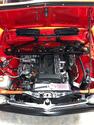






Emissions...Anyone?

Thread Starter
Teching In
Joined: Dec 2019
Posts: 5
Likes: 0
 Emissions...Anyone?
 I'm using 2 new aluminum fuel cells in an Erod LS3 6.2 swap.
I heard that I had to create an area (air/fuel bubble) at the top of one of the fuel cells in order for the emissions to get a reading of the fuel vapor...is this true?
Can anyone help me out?
I heard that I had to create an area (air/fuel bubble) at the top of one of the fuel cells in order for the emissions to get a reading of the fuel vapor...is this true?
Can anyone help me out?
I don't think it's "sampling fuel vapor" -- it's checking for pressure in the tank to be sure the system is not venting to atmosphere. I think.... On my car, I had them delete those functions in the ECM as part of the "tune" for the swap. When I pull codes -- nothing about that shows up at all. And no check-engine-light.
Thread Starter
Teching In
Joined: Dec 2019
Posts: 5
Likes: 0
That makes sense.
The vehicle is an 1986 and it has 2 long fuel filler necks that are mounted high in the body, with the fuels cell well below.
I was thinking of tying the fuel filler necks together with a hose, then teeing off of the hose to the emissions.
I under stand that I would also have to change the filler necks to the screw in type, and same with the fuel caps.
According to GM, because its an ERod LS3, the fuel system has be be ups=dated to a vehicle that is 2006 or newer.
If newer vehicle are not allowed to vent vapor into the atmosphere, then how does Ford get away with the cap less system?
The vehicle is an 1986 and it has 2 long fuel filler necks that are mounted high in the body, with the fuels cell well below.
I was thinking of tying the fuel filler necks together with a hose, then teeing off of the hose to the emissions.
I under stand that I would also have to change the filler necks to the screw in type, and same with the fuel caps.
According to GM, because its an ERod LS3, the fuel system has be be ups=dated to a vehicle that is 2006 or newer.
If newer vehicle are not allowed to vent vapor into the atmosphere, then how does Ford get away with the cap less system?
Trending Topics
I don't think it's "sampling fuel vapor" -- it's checking for pressure in the tank to be sure the system is not venting to atmosphere. I think.... On my car, I had them delete those functions in the ECM as part of the "tune" for the swap. When I pull codes -- nothing about that shows up at all. And no check-engine-light.
LS1 Tech Stories
The Best V8 Stories One Small Block at Time

Topdon ONE vs. Artidiag 800 BT2: Which is the Diagnostic Tablet For You?
Pouria Savadkouei
Gas Monkey Built a 6-Wheel Ferrari Testarossa With a Corvette LT4 Engine
Verdad Gallardo
7 Most Reliable High-Performance Engines GM Has Ever Built
Verdad Gallardo
Amazing '71 Camaro Restomod Is Modern Muscle Car Under the Skin
Verdad Gallardo
6 Common C5 Corvette Failures and What's Involved In Repairing Them
Pouria Savadkouei
Retro Modern Bandit Pontiac Trans AM Comes With Burt Reynolds' Autograph
Verdad Gallardo
Top 10 Greatest Cadillac V Series Performance Models Ever, Ranked
Pouria Savadkouei
Top 10 Most Powerful Chevy Trucks Ever Made!

Hennessey's New Supercharged Silverado ZR2 Has 700 HP
Verdad Gallardo That makes sense.
The vehicle is an 1986 and it has 2 long fuel filler necks that are mounted high in the body, with the fuels cell well below.
I was thinking of tying the fuel filler necks together with a hose, then teeing off of the hose to the emissions.
I under stand that I would also have to change the filler necks to the screw in type, and same with the fuel caps.
According to GM, because its an ERod LS3, the fuel system has be be ups=dated to a vehicle that is 2006 or newer.
If newer vehicle are not allowed to vent vapor into the atmosphere, then how does Ford get away with the cap less system?
The vehicle is an 1986 and it has 2 long fuel filler necks that are mounted high in the body, with the fuels cell well below.
I was thinking of tying the fuel filler necks together with a hose, then teeing off of the hose to the emissions.
I under stand that I would also have to change the filler necks to the screw in type, and same with the fuel caps.
According to GM, because its an ERod LS3, the fuel system has be be ups=dated to a vehicle that is 2006 or newer.
If newer vehicle are not allowed to vent vapor into the atmosphere, then how does Ford get away with the cap less system?

TECH Fanatic


Joined: Sep 2013
Posts: 1,007
Likes: 126
From: Mechanicsburg, PA
Your vehicle, being a 1986, has a simple Evaporative emissions system in place. It basically draws the vapors stored in the charcoal canister into the intake to be burned via the purge valve. If the original system is there, I'd run the vapor hose (the line from the tank to the charcoal canister) to the top of the fuel cell. Put a loop or two in the line before it goes into the fuel cell to prevent liquid fuel getting into the charcoal canister. That's a death sentence to a charcoal canister. Your ECM is OBD1, so no worries as far as check engine light coming on. Evap isn't monitored till 1996 models.

Thread Starter
Teching In
Joined: Dec 2019
Posts: 5
Likes: 0
The filler necks are so high in the body work that I'm not worried about fuel getting into the canister.
The original fuel system was a Bosch K-Jet, which was thrown to the curb, but it did have a check valve located in the upper section of the quarter panel.
Do I need to put a check valve back into the E-Rod system or is the idea to create as much of a fuel tank vacuum as possible?
The original fuel system was a Bosch K-Jet, which was thrown to the curb, but it did have a check valve located in the upper section of the quarter panel.
Do I need to put a check valve back into the E-Rod system or is the idea to create as much of a fuel tank vacuum as possible?
The filler necks are so high in the body work that I'm not worried about fuel getting into the canister.
The original fuel system was a Bosch K-Jet, which was thrown to the curb, but it did have a check valve located in the upper section of the quarter panel.
Do I need to put a check valve back into the E-Rod system or is the idea to create as much of a fuel tank vacuum as possible?
The original fuel system was a Bosch K-Jet, which was thrown to the curb, but it did have a check valve located in the upper section of the quarter panel.
Do I need to put a check valve back into the E-Rod system or is the idea to create as much of a fuel tank vacuum as possible?
Elaborating on Andrew’s response, doesn’t take much vacuum to collapse a fuel tank. And pressure creates a volatile situation. Be sure vacuum can’t be pulled and pressure can’t build. My swapper had Bosch injection too (early 80’s) - I left the oem tank venting set up in place up to the charcoal canister. Vented the canister into the air inlet piping upstream of the mass air sensor. All the tank monitoring/purge valve software was disabled in the tune. Year 5 of the beta test. Sadly, doubt this approach will appease the CA smog ***** if they’re thorough.