



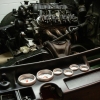



purge and evap line

Thread Starter
TECH Apprentice
Joined: Oct 2005
Posts: 384
Likes: 0
From: florida
 purge and evap line
 I know on one of my trucks im doing(92 s10),the evap line runs to the black canister,to help stop the gas fumes,what is the purge solenio for?do you hook there together or no?

Teching In
Joined: Oct 2006
Posts: 30
Likes: 0
From: Auburn, WA
From what I understand you'd hook the solenoid up to the fuel tank vent line. Instead of the black canister, the solenoid purges the fumes directly into the intake manifold. A good way to vent the tank.
Here is a little of the GM Manual description. Let me know if you need more.
EVAP System Operation
The evaporative emission (EVAP) control system limits fuel vapors from escaping into the atmosphere. Fuel tank vapors are allowed to move from the fuel tank, due to pressure in the tank, through the vapor pipe into the EVAP canister. Carbon in the canister absorbs and stores the fuel vapors. Excess pressure is vented through the vent line and EVAP vent valve to the atmosphere. The EVAP canister stores the fuel vapors until the engine is able to use them. At an appropriate time, the control module will command the EVAP purge valve ON open, allowing engine vacuum to be applied to the EVAP canister. With the EVAP vent valve OFF open, fresh air will be drawn through the valve and vent line to the EVAP canister. Fresh air is drawn through the canister, pulling fuel vapors from the carbon. The air/fuel vapor mixture continues through the EVAP purge pipe and EVAP purge valve into the intake manifold to be consumed during normal combustion. The EVAP system is capable of detecting a leak as small as 0.04 inch. The control module uses several tests to determine if the EVAP system is leaking.
EVAP System Operation
The evaporative emission (EVAP) control system limits fuel vapors from escaping into the atmosphere. Fuel tank vapors are allowed to move from the fuel tank, due to pressure in the tank, through the vapor pipe into the EVAP canister. Carbon in the canister absorbs and stores the fuel vapors. Excess pressure is vented through the vent line and EVAP vent valve to the atmosphere. The EVAP canister stores the fuel vapors until the engine is able to use them. At an appropriate time, the control module will command the EVAP purge valve ON open, allowing engine vacuum to be applied to the EVAP canister. With the EVAP vent valve OFF open, fresh air will be drawn through the valve and vent line to the EVAP canister. Fresh air is drawn through the canister, pulling fuel vapors from the carbon. The air/fuel vapor mixture continues through the EVAP purge pipe and EVAP purge valve into the intake manifold to be consumed during normal combustion. The EVAP system is capable of detecting a leak as small as 0.04 inch. The control module uses several tests to determine if the EVAP system is leaking.

Joined: Sep 2004
Posts: 3,148
Likes: 12
From: Downers Grove, IL
Hook the line from the black canister to the EVAP purge valve on the intake.
You do not want to hook the vent line from the gas tank directly to the purge valve because then the fuel tank will not be properly vented. The canister is needed because it is always open to the atmosphere through the charcoal filter, the solenoid will only allow air flow when it is opened, and it will not open when the engine is shut off so if you car is parked and it the air temperature increases the fuel in the tank will expand but since the EVAP solenoid is closed the pressure inside the tank will increase.
You do not want to hook the vent line from the gas tank directly to the purge valve because then the fuel tank will not be properly vented. The canister is needed because it is always open to the atmosphere through the charcoal filter, the solenoid will only allow air flow when it is opened, and it will not open when the engine is shut off so if you car is parked and it the air temperature increases the fuel in the tank will expand but since the EVAP solenoid is closed the pressure inside the tank will increase.
Thread Starter
TECH Apprentice
Joined: Oct 2005
Posts: 384
Likes: 0
From: florida
Well hell,I was trying to make a mountain out of an ant hill!.....I somewhat understand the purge valve on the ls1 motor and what it does.It lets the fuel vapors escape into the intake instead of out where you can smell them?.So even on a ls1 swap(any project truck/car)the purge will open when ever it feels like?or it it deleated or added in the tune?Thanks for helping me understand this.
Trending Topics
LS1 Tech Stories
The Best V8 Stories One Small Block at Time

Topdon ONE vs. Artidiag 800 BT2: Which is the Diagnostic Tablet For You?
Pouria Savadkouei
Gas Monkey Built a 6-Wheel Ferrari Testarossa With a Corvette LT4 Engine
Verdad Gallardo
7 Most Reliable High-Performance Engines GM Has Ever Built
Verdad Gallardo
Amazing '71 Camaro Restomod Is Modern Muscle Car Under the Skin
Verdad Gallardo
6 Common C5 Corvette Failures and What's Involved In Repairing Them
Pouria Savadkouei
Retro Modern Bandit Pontiac Trans AM Comes With Burt Reynolds' Autograph
Verdad Gallardo
Top 10 Greatest Cadillac V Series Performance Models Ever, Ranked
Pouria Savadkouei
Top 10 Most Powerful Chevy Trucks Ever Made!

Hennessey's New Supercharged Silverado ZR2 Has 700 HP
Verdad Gallardo EVAP Deleted Yes, I pushed a rubber cap over the nipple sticking out of the intake & simply plugged the small line coming from the fuel tank. Someday when I take the bed off the truck again & have easier access to the top of the fuel tank, where the fuel lines all go in, I will cap it off more permanently. The tank is still vented by another hose that goes up to your fuel fill area. Gar
