






It's a Pusher (coolant loss)

Thread Starter
Joined: Aug 2011
Posts: 4,729
Likes: 814
From: Portland, OR
 It's a Pusher (coolant loss)
 Not a push truck. Not a pushover!
A water pusher.
A month or so ago, I noted that my overflow was near full. Holds 1.5 quarts.
Dumped it back in the rad, ran 6 or so more passes. Full again.
Made my license passes, full again! So this time I just dumped it, didn't put it back. Hoping the rad was just finding it's happy level.
Tonight 3 passes. On the third, it overflowed the can. Ran 180 on the run, but was 250 by the time I got to my pit.
Sigh.
LS1 MLS gaskets and china studs. 14.5 PSI. No detonation.
Wondering why I'm having this issue, others seem to use the LS1 gaskets to much higher boost.
I torqued the studs to 75 ft lbs. I didn't do a retorque after running it.
Heads were shaved .oo4" to clean them up.
Ideas?
I thought I'd just recheck the stud torque before I take it apart just to see if they are still at 75.
Ron
A water pusher.
A month or so ago, I noted that my overflow was near full. Holds 1.5 quarts.
Dumped it back in the rad, ran 6 or so more passes. Full again.
Made my license passes, full again! So this time I just dumped it, didn't put it back. Hoping the rad was just finding it's happy level.
Tonight 3 passes. On the third, it overflowed the can. Ran 180 on the run, but was 250 by the time I got to my pit.
Sigh.
LS1 MLS gaskets and china studs. 14.5 PSI. No detonation.
Wondering why I'm having this issue, others seem to use the LS1 gaskets to much higher boost.
I torqued the studs to 75 ft lbs. I didn't do a retorque after running it.
Heads were shaved .oo4" to clean them up.
Ideas?
I thought I'd just recheck the stud torque before I take it apart just to see if they are still at 75.
Ron
Last edited by RonSSNova; Jul 21, 2014 at 03:55 AM.
time for some ls9 gaskets . sucks but it is a lot cheaper than anything else that can break. I have ls9 and gmpp bolts and it has been good and I rattled it good once before I installed an intercooler.
bummer-I wonder if your rad. cap could be weak, water pushing past the seal to the overflow, if not a head gasket issue
I ordered the cheap studs, main and head-I didn't get any torq. specs in the box, so I emailed them, they said look at the Ebay add, they put the specs there-daaaa, lol
anyway, on my head studs they have 60-65 for the torq-either the mains or head studs were listed as ARP, with their lube, i'll have to ck, but I suspect their not
what's diff about the LS9 gaskets, more layers?
I ordered the cheap studs, main and head-I didn't get any torq. specs in the box, so I emailed them, they said look at the Ebay add, they put the specs there-daaaa, lol
anyway, on my head studs they have 60-65 for the torq-either the mains or head studs were listed as ARP, with their lube, i'll have to ck, but I suspect their not
what's diff about the LS9 gaskets, more layers?
I think the ls9 gaskets are 7 layer. and from what ive seen they are as good of as a gasket that can be bought for an ls engine. they are under a hundred bucks at the dealer as well. made for boost.
bummer-I wonder if your rad. cap could be weak, water pushing past the seal to the overflow, if not a head gasket issue
I ordered the cheap studs, main and head-I didn't get any torq. specs in the box, so I emailed them, they said look at the Ebay add, they put the specs there-daaaa, lol
anyway, on my head studs they have 60-65 for the torq-either the mains or head studs were listed as ARP, with their lube, i'll have to ck, but I suspect their not
what's diff about the LS9 gaskets, more layers?
I ordered the cheap studs, main and head-I didn't get any torq. specs in the box, so I emailed them, they said look at the Ebay add, they put the specs there-daaaa, lol
anyway, on my head studs they have 60-65 for the torq-either the mains or head studs were listed as ARP, with their lube, i'll have to ck, but I suspect their not
what's diff about the LS9 gaskets, more layers?
There are bone stock LS1's that have never even had the heads off with torque to yield bolts boosting higher than you are and never had an issue. Maybe try a coolant leakdown and maybe you can pinpont the problem?
Trending Topics
Thread Starter
Joined: Aug 2011
Posts: 4,729
Likes: 814
From: Portland, OR
I drove it all over the place in 90+ outside temps with not a drop in the overflow tank. Only happens when racing.
I installed the gaskets dry.
I agree that this shouldn't be happening.
This is an L33 alum block. I know everyone uses the LS9 gaskets. But it seems like they may be too big for the sealing surface. Iron block no worries.
I installed the gaskets dry.
I agree that this shouldn't be happening.
This is an L33 alum block. I know everyone uses the LS9 gaskets. But it seems like they may be too big for the sealing surface. Iron block no worries.
LS1 Tech Stories
The Best V8 Stories One Small Block at Time

6 Common C5 Corvette Failures and What's Involved In Repairing Them
Pouria Savadkouei
Retro Modern Bandit Pontiac Trans AM Comes With Burt Reynolds' Autograph
Verdad Gallardo
Top 10 Greatest Cadillac V Series Performance Models Ever, Ranked
Pouria Savadkouei
Top 10 Most Powerful Chevy Trucks Ever Made!

Hennessey's New Supercharged Silverado ZR2 Has 700 HP
Verdad Gallardo
Coachbuilt N2A Anteros Is an LS2-Powered C6 Corvette In Italian Clothes
Verdad Gallardo
Awesome K5 Blazer Restomod Comes With C7 Corvette Power
Verdad Gallardo
10 Camaros You Should Never Buy

10 LS Engine Myths That Refuse to Die
Verdad Gallardo Thread Starter
Joined: Aug 2011
Posts: 4,729
Likes: 814
From: Portland, OR
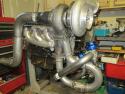
Just getting started on this. Got the pass side rockers and manifold off. Checked the torque on the studs. The two middle ones under the rockers turned 1/8 turn before clicking at 75 ft lbs. all the rest didn't budge.
I'll see tomorrow what the drive side does.
It's still getting new gaskets.
I'll see tomorrow what the drive side does.
It's still getting new gaskets.
you hate to have to tear it apart but its better to check everything out and do it once right.
I never thought about that small bore aluminum block and the ls9 gaskets. you will have to see how much sealing surface you have and see if they will seal on the sleave. I think the ls9s are a 4.065 bore . i'll look it up . good luck.
I never thought about that small bore aluminum block and the ls9 gaskets. you will have to see how much sealing surface you have and see if they will seal on the sleave. I think the ls9s are a 4.065 bore . i'll look it up . good luck.
Just getting started on this. Got the pass side rockers and manifold off. Checked the torque on the studs. The two middle ones under the rockers turned 1/8 turn before clicking at 75 ft lbs. all the rest didn't budge.
I'll see tomorrow what the drive side does.
It's still getting new gaskets.
I'll see tomorrow what the drive side does.
It's still getting new gaskets.
It was probably pretty loose as usually you have to deal with the break-away tq which is pretty high.


seems like the ls9 are better, people push sometimes on the stock gasket at 20ish or high timing and lower boost. or some just seem to push more than others, seems like ls9s work great for those guys having problems.
ive honestly never built a setup that pushes water. im sure itll happen one day
ive honestly never built a setup that pushes water. im sure itll happen one day
seems like the ls9 are better, people push sometimes on the stock gasket at 20ish or high timing and lower boost. or some just seem to push more than others, seems like ls9s work great for those guys having problems.
ive honestly never built a setup that pushes water. im sure itll happen one day
ive honestly never built a setup that pushes water. im sure itll happen one day


I just went through this as well with my Alum Gen4 motor with china studs. Granted I was running 25-26lbs. Impossible to say 100% but I really think a retorque (esp. with the cheapo studs) is necessary. I did not retorque mine either. And eventually pushed a gasket and took the block and head out in the process. I did see warnings signs of coolant in the catch can as well. Though nothing as severe as yours. Just little smears of green in my oil sludge. IMO as soon as you see ANY type of coolant in the catch can it’s time for a retorque at minimum.
Kurt Urban also pointed out to me that the raised portion of the gasket (energizer) designed to help keep the gasket in place is not seated on the iron sleeve of an ALUM 5.3 when running LS9 gaskets. I know some have had luck running them, but running an LS9 gasket on an alum 5.3 is not an optimal situation as far as HG sealing/movement is concerned. Better off with the simple cheap felpro MLS gasket. It has been proven to over 30lb on a gt55-88 with china studs on an iron 5.3. My other argument would be not all china studs are created equally. A few good torque, loosen, and retorque cycles should probably be implemented as well as a few re-torques after heat cycling. All sound good on paper… In reality its a pain in the butt! have to remove quite a bit of the hotside to get to my aft passenger side head bolts.
I ordered the ARP's this time around and just cycled all my head bolts 5 times. Seemed a little excessive!
Good luck!
This is from a diesel site regarding ARP studs and torque procedures...
Here is another suggesting 5 cycles on ARP studs before final torque.
https://ls1tech.com/forums/generatio...fasteners.html
Kurt Urban also pointed out to me that the raised portion of the gasket (energizer) designed to help keep the gasket in place is not seated on the iron sleeve of an ALUM 5.3 when running LS9 gaskets. I know some have had luck running them, but running an LS9 gasket on an alum 5.3 is not an optimal situation as far as HG sealing/movement is concerned. Better off with the simple cheap felpro MLS gasket. It has been proven to over 30lb on a gt55-88 with china studs on an iron 5.3. My other argument would be not all china studs are created equally. A few good torque, loosen, and retorque cycles should probably be implemented as well as a few re-torques after heat cycling. All sound good on paper… In reality its a pain in the butt! have to remove quite a bit of the hotside to get to my aft passenger side head bolts.
I ordered the ARP's this time around and just cycled all my head bolts 5 times. Seemed a little excessive!
Good luck!
This is from a diesel site regarding ARP studs and torque procedures...
I have installed many studs in mains and heads on gassers in the past. I've read almost every thread here in reguards to torquing head studs down. And it seems every one I read is incorrect, at least to ARP's specs. First this is right off of ARP's site.
1. The friction factor changes from one application to the next. That is, the friction is at its highest value when the fastener is first tightened. Each additional time the fastener is torqued and loosened, this value gets smaller. Eventually the friction levels out and becomes constant for all following repetitions. Therefore, new fasteners should be tightened and loosened through several cycles before applying final torque. The number of times depends on the lubricant. For all situations where ARP lubricants are used, five cycles are required before final torquing.
2. The lubricant used is the main factor in determining friction, and therefore, the torque for a particular installation. Motor oil is a commonly used lubricant because of it’s ready availability. If less friction is desired in order to install the fasteners with less torque, special low friction lubricants are available. With special lubes, the required torque can be reduced as much as 20 to 30 percent. It is important to keep in mind that the reverse is also true. If the torque value has been specified for a particular fastener on the basis of low friction lube, installing the fastener with motor oil will result in insufficient preload; the torque has to be increased to compensate for the extra friction caused by the motor oil
1. The friction factor changes from one application to the next. That is, the friction is at its highest value when the fastener is first tightened. Each additional time the fastener is torqued and loosened, this value gets smaller. Eventually the friction levels out and becomes constant for all following repetitions. Therefore, new fasteners should be tightened and loosened through several cycles before applying final torque. The number of times depends on the lubricant. For all situations where ARP lubricants are used, five cycles are required before final torquing.
2. The lubricant used is the main factor in determining friction, and therefore, the torque for a particular installation. Motor oil is a commonly used lubricant because of it’s ready availability. If less friction is desired in order to install the fasteners with less torque, special low friction lubricants are available. With special lubes, the required torque can be reduced as much as 20 to 30 percent. It is important to keep in mind that the reverse is also true. If the torque value has been specified for a particular fastener on the basis of low friction lube, installing the fastener with motor oil will result in insufficient preload; the torque has to be increased to compensate for the extra friction caused by the motor oil
https://ls1tech.com/forums/generatio...fasteners.html
Last edited by Forcefed86; Jul 21, 2014 at 09:09 PM.
i dont think it is a price differance with the ls9 vs cometic gaskets i have heard of guys having luck with both and i have heard of guys removing cometics and going back to the ls9 gaskets. good and bad stories with both. i have had issues with a couple procharged cars pushing water with cometics even with the block and heads being resurfaced. i think they are all about surface prep . we went back to felpro composite gaskets and all is good. in my opinion if it pushes water take it apart. dont retorque i have seen this turn into a torched head /block . on my lq4 i run ls9 gaskets and they work and i think they might be a little more forgiving to block/head prep due to being a production line part. JMHO.
These engine and gaskets etc are pushed to the extremes...way outside the design parameters. I think a retorque would be a great idea. Although, I'd be worried about causing an issue doing it! Maybe snug them all 1/16 of a turn??


I have LS9's and ARP studs on mine. I guess I always went by the philosophy that I plan on having an LS motor in the car for many many years. So I spent the extra money on ARP studs. I will be able to reuse them till I die probably. lol
So far I like my LS9's, but I really haven't put any stress on them yet. I've been to 14psi max. But mine is a 370ci motor. A little more sealing surface than the 5.3.
Good luck with working it out though Ron! I know you'll get it.
So far I like my LS9's, but I really haven't put any stress on them yet. I've been to 14psi max. But mine is a 370ci motor. A little more sealing surface than the 5.3.
Good luck with working it out though Ron! I know you'll get it.
Last edited by 93camaro_zzz; Jul 21, 2014 at 05:30 PM.