









Crank Case Evacuation on Daily Driver

In daily driver applications, I prioritize oil quality over power output. That means, as MM was saying, we can choose to give up some WOT power by using a slightly restrictive air filter (like the OEM paper, it doesn't need to be excessive) in order to supply a vacuum to the crankcase during wide open throttle, scavenging crankcase vapors which helps keep the oil clean. During cruise/light load/vacuum situations, the OEM pcv system often includes some form of restriction, on cars equipped with turbos from the factory, such as this one:
http://www.supercars.net/gallery/132464/1737/946320.jpg
This small diameter tube connects the crankcase, so that as vacuum is applied to the crank case from the other side of the engine via PCV valve (during engine vacuum when the pcv valve is open), only so much air is allowed to enter the crankcase through that hole, which is increasing the vacuum in the crankcase to some equilibrium point. Too much vacuum in the crank case can suck in an oil seal, just like too much pressure can push one out, so we must be careful when modifying restriction points such as that one.
During WOT, the only place to find a pressure below atmospheric on a turbo car is the turbo inlet (pre compressor, just after the air filter). Low pressure signal here is very weak during WOT when we use very good flowing air filters, so there is barely any pcv action as MM was saying. But it still is the only "good" spot and thus all OEM manufacturers use it for their pcv during WOT (none of them goto the exhaust system for emissions purposes).
The difference between MM and me, is that he prioritizes power output over engine longevity and oil quality. He prefers to dump the excess crank case pressure by the easiest means necessary, often directly to the atmosphere. He is also saying, correctly, that turbo driven and exhaust driven pcv solutions provide barely any extra vacuum signal during WOT, it almost isn't worth it (from a power perspective, it really isn't) but that is not the job of the OEM pcv system. The OEM pcv system is designed to help keep the engine clean, not improve its power output.
For a daily driver application, from my point of view, again I consider the question, "how to keep the oil cleanest, and how to keep the air the cleanest, for the cleanest engine possible". That means that ANY system which allows crankcase blow-by gasses to exit directly into the exhaust system, even only during some of the time, rather than passing through the intake manifold and combustion chamber first, is desirable. So I would strongly encourage an exhaust driven PCV solution, even if it provides little/no pcv action, simply because it allows us to bypass the intake/combustion chamber completely and go directly to the exhaust (for WOT), thus keeping the engine cleaner inside. This also allows us to use any air filter, the biggest best filter, and we will not be hurting PCV action during WOT since it is solely exhaust driven. PCV action during cruise/idle is still obtained via intake manifold vacuum, we do NOT want to disable that side of the pcv system because it is very important in a daily driver application for keeping clean oil, and the exhaust cannot be depended upon to generate the kind of pcv action we want to see during cruise in the crank case. If the manifold vacuum is poor (you have a huge cam for example) then you can use a restrictor like the one in the picture above to improve cruise/idle pcv signal the crank case.
cliffs:
for daily drivers where oil quality and engine cleanliness is important:
-run the best air filter you can, even if it means reduced power output (like the OEM paper elements). IMO
-use pre-compressor (turbo inlet) for WOT pcv action, OR, use exhaust driven solution (prefer exhaust driven to bypass combustion chamber).
-use OEM routing for cruise/idle/vacuum pcv action (pcv valve off the intake manifold is fine, with the shortest line to the crank case, and adjust the restrictor on the fresh air inlet side to achieve desired crankcase vacuum signal during highest cruise vacuum situation.)
-avoid belt driven vacuum pumps, because:
A: there are better ways to spend $700 as MM was saying
B: you risk damaging the engine if you are not careful, vacuum in the crankcase supplied by such a device pulls against the oil pump in wet sump application and has other risks as well as MM was saying
C: there are maintenance and reliability concerns when using external belt driven pumps that need not be associated with reliable daily driver vehicles
http://www.supercars.net/gallery/132464/1737/946320.jpg
This small diameter tube connects the crankcase, so that as vacuum is applied to the crank case from the other side of the engine via PCV valve (during engine vacuum when the pcv valve is open), only so much air is allowed to enter the crankcase through that hole, which is increasing the vacuum in the crankcase to some equilibrium point. Too much vacuum in the crank case can suck in an oil seal, just like too much pressure can push one out, so we must be careful when modifying restriction points such as that one.
During WOT, the only place to find a pressure below atmospheric on a turbo car is the turbo inlet (pre compressor, just after the air filter). Low pressure signal here is very weak during WOT when we use very good flowing air filters, so there is barely any pcv action as MM was saying. But it still is the only "good" spot and thus all OEM manufacturers use it for their pcv during WOT (none of them goto the exhaust system for emissions purposes).
The difference between MM and me, is that he prioritizes power output over engine longevity and oil quality. He prefers to dump the excess crank case pressure by the easiest means necessary, often directly to the atmosphere. He is also saying, correctly, that turbo driven and exhaust driven pcv solutions provide barely any extra vacuum signal during WOT, it almost isn't worth it (from a power perspective, it really isn't) but that is not the job of the OEM pcv system. The OEM pcv system is designed to help keep the engine clean, not improve its power output.
For a daily driver application, from my point of view, again I consider the question, "how to keep the oil cleanest, and how to keep the air the cleanest, for the cleanest engine possible". That means that ANY system which allows crankcase blow-by gasses to exit directly into the exhaust system, even only during some of the time, rather than passing through the intake manifold and combustion chamber first, is desirable. So I would strongly encourage an exhaust driven PCV solution, even if it provides little/no pcv action, simply because it allows us to bypass the intake/combustion chamber completely and go directly to the exhaust (for WOT), thus keeping the engine cleaner inside. This also allows us to use any air filter, the biggest best filter, and we will not be hurting PCV action during WOT since it is solely exhaust driven. PCV action during cruise/idle is still obtained via intake manifold vacuum, we do NOT want to disable that side of the pcv system because it is very important in a daily driver application for keeping clean oil, and the exhaust cannot be depended upon to generate the kind of pcv action we want to see during cruise in the crank case. If the manifold vacuum is poor (you have a huge cam for example) then you can use a restrictor like the one in the picture above to improve cruise/idle pcv signal the crank case.
cliffs:
for daily drivers where oil quality and engine cleanliness is important:
-run the best air filter you can, even if it means reduced power output (like the OEM paper elements). IMO
-use pre-compressor (turbo inlet) for WOT pcv action, OR, use exhaust driven solution (prefer exhaust driven to bypass combustion chamber).
-use OEM routing for cruise/idle/vacuum pcv action (pcv valve off the intake manifold is fine, with the shortest line to the crank case, and adjust the restrictor on the fresh air inlet side to achieve desired crankcase vacuum signal during highest cruise vacuum situation.)
-avoid belt driven vacuum pumps, because:
A: there are better ways to spend $700 as MM was saying
B: you risk damaging the engine if you are not careful, vacuum in the crankcase supplied by such a device pulls against the oil pump in wet sump application and has other risks as well as MM was saying
C: there are maintenance and reliability concerns when using external belt driven pumps that need not be associated with reliable daily driver vehicles
I would never suggest restricting the clean side in a stock PCV configuration in order to achieve higher crank vac. That inlet port is a key place (in manifold boosted app the ONLY place) where blowby will exit in a pressurization event. Restricting this will bust a seal in a heartbeat.
i am somewhat delighted that you are turning the corner, i think you may actually be doing some listening now.
I am sure not going to sacrifice performance (hey this is the forced induction section) for a scrap of crank deposits generated at that instant; and I don't need to.
The pcv cycle kicks back into 'cleaning' mode as soon as we are back to vac. (which is the 99% of the usage on the engine) and all is right with the world.
i am somewhat delighted that you are turning the corner, i think you may actually be doing some listening now.
I am sure not going to sacrifice performance (hey this is the forced induction section) for a scrap of crank deposits generated at that instant; and I don't need to.
The pcv cycle kicks back into 'cleaning' mode as soon as we are back to vac. (which is the 99% of the usage on the engine) and all is right with the world.
Does anyone have any examples or evidence of serious engine longevity issue with not running any pcv? Do manufactures do it first for emission reasons and 2nd for any added engine longevity reasons?
Reason I ask it I have been running 2 breathers on both valve covers for about 6 years. Have about 10k miles on the engine and I change the oil about every 1500 miles. Rotella 5w40 synthetic.
I understand thats not many miles and I change the oil often so maybe my car is not a great example. I am wondering if anyone out there has put a good amount of miles on there car with the crank case simply vented to atmosphere.
Alex
Reason I ask it I have been running 2 breathers on both valve covers for about 6 years. Have about 10k miles on the engine and I change the oil about every 1500 miles. Rotella 5w40 synthetic.
I understand thats not many miles and I change the oil often so maybe my car is not a great example. I am wondering if anyone out there has put a good amount of miles on there car with the crank case simply vented to atmosphere.
Alex
Does anyone have any examples or evidence of serious engine longevity issue with not running any pcv? Do manufactures do it first for emission reasons and 2nd for any added engine longevity reasons?
Reason I ask it I have been running 2 breathers on both valve covers for about 6 years. Have about 10k miles on the engine and I change the oil about every 1500 miles. Rotella 5w40 synthetic.
I understand thats not many miles and I change the oil often so maybe my car is not a great example. I am wondering if anyone out there has put a good amount of miles on there car with the crank case simply vented to atmosphere.
Alex
Reason I ask it I have been running 2 breathers on both valve covers for about 6 years. Have about 10k miles on the engine and I change the oil about every 1500 miles. Rotella 5w40 synthetic.
I understand thats not many miles and I change the oil often so maybe my car is not a great example. I am wondering if anyone out there has put a good amount of miles on there car with the crank case simply vented to atmosphere.
Alex
I wish I knew more about diesel engines. It would be interesting to compare 500k-miles diesel engines and examine the original plans for those engines, what keeps the oil clean etc... would love to hear more. I know they run a lower RPM and have much heavier rotating assemblies so perhaps this is apples/orange but oil is still oil.
Last edited by kingtal0n; Mar 1, 2016 at 08:17 AM.
nothing is complicated about it, clean air in dirty out, it only makes sense, same reason you have an engine oil filter a fuel filter and and an air filter
if you are indeed the type that changes the oil at 1500 miles then is no big deal (assuming you and all your passengers are perfectly happy with the crankcase fume smell saturating your nice vehicle)
I don't think it will ever be apples to apples, I ran a full pcv system on my 1200 horse 3k mile oil change t/a for 30k miles and felt good about it, there was no down side.
I'm sure there are cars with tons of miles and open crank vent, but there are also tons of people still using dial up internet.
if you are indeed the type that changes the oil at 1500 miles then is no big deal (assuming you and all your passengers are perfectly happy with the crankcase fume smell saturating your nice vehicle)
I don't think it will ever be apples to apples, I ran a full pcv system on my 1200 horse 3k mile oil change t/a for 30k miles and felt good about it, there was no down side.
I'm sure there are cars with tons of miles and open crank vent, but there are also tons of people still using dial up internet.
Launching!

Joined: May 2013
Posts: 270
Likes: 30
From: Detroit
To me there is no good reason not to run a PCV setup via intake vacuum off boost. I don't want the smell, nor potential engine gunk.
The only question in my mind, which I have posed a couple times in this thread, and I don't see a consensus on, is how to get PCV action under boost.
Some say use between turbo/air cleaner, MM says, no value, 99% no boost anyway.
I haven't settled it in my mind anyway. Both are pretty good arguments.
Leaning toward adding the turbo/air cleaner because it seems more prudent. I am also concerned about building crankcase pressure during a long WOT pull.
The only question in my mind, which I have posed a couple times in this thread, and I don't see a consensus on, is how to get PCV action under boost.
Some say use between turbo/air cleaner, MM says, no value, 99% no boost anyway.
I haven't settled it in my mind anyway. Both are pretty good arguments.
Leaning toward adding the turbo/air cleaner because it seems more prudent. I am also concerned about building crankcase pressure during a long WOT pull.
LS1 Tech Stories
The Best V8 Stories One Small Block at Time

6 Common C5 Corvette Failures and What's Involved In Repairing Them
Pouria Savadkouei
Retro Modern Bandit Pontiac Trans AM Comes With Burt Reynolds' Autograph
Verdad Gallardo
Top 10 Greatest Cadillac V Series Performance Models Ever, Ranked
Pouria Savadkouei
Top 10 Most Powerful Chevy Trucks Ever Made!

Hennessey's New Supercharged Silverado ZR2 Has 700 HP
Verdad Gallardo
Coachbuilt N2A Anteros Is an LS2-Powered C6 Corvette In Italian Clothes
Verdad Gallardo
Awesome K5 Blazer Restomod Comes With C7 Corvette Power
Verdad Gallardo
10 Camaros You Should Never Buy

10 LS Engine Myths That Refuse to Die
Verdad Gallardo The only way to get useful crank vac at full load is with a mechanical vacuum pump. The term 'useful' meaning a performance benefit vs. free air venting.
Any person or business claiming they can or are doing it at the air filter, to the point that it has a measured increase in hp, has made a bad assumption, is wrong, has not measured, has a 'trick' in their test, or all of the above.
It's application for vehicles across all major OEM platforms is 100% emissions regulated. (not at all oil life or performance related.. at all).
This is an open call out to anyone interested in providing data to the contrary. I would absolutely love to see it. Sounds like others too!
This is not to confuse my advice to source PCV supply air from the main engine filter, I absolutely do recommend that, especially for MAF users.
Launching!
Joined: May 2013
Posts: 270
Likes: 30
From: Detroit
Understood very well, thank you. It's clearer to me at least that you specify performance benefit under full load, vs PVC action.
Performance aside, is there not a concern about pressurizing the crankcase under full load?
Or, are you advocating a breather on valve cover on full load for that.
If that is the case, I would prefer pre turbo to prevent odor.
Performance aside, is there not a concern about pressurizing the crankcase under full load?
Or, are you advocating a breather on valve cover on full load for that.
If that is the case, I would prefer pre turbo to prevent odor.
Last edited by Jwooky; Mar 1, 2016 at 11:19 AM.
It's for emissions, anyone to argue other is on crack
We have non emission diesels with simple atmosphere breathers that run huge oil change intervals and oil analysis says to push it farther. We are talking 700hrs+
We have non emission diesels with simple atmosphere breathers that run huge oil change intervals and oil analysis says to push it farther. We are talking 700hrs+
I am not advocating any restriction at all for release of crank vapors, this includes forcing it down some hose to the air filter.
PCV action, when you need it (IMO) is the 90% plus time you spend in intake manifold vac. driving around. by definition you can actually only have 'PCV' by using the intake manifold
PCV action, when you need it (IMO) is the 90% plus time you spend in intake manifold vac. driving around. by definition you can actually only have 'PCV' by using the intake manifold
To me there is no good reason not to run a PCV setup via intake vacuum off boost. I don't want the smell, nor potential engine gunk.
The only question in my mind, which I have posed a couple times in this thread, and I don't see a consensus on, is how to get PCV action under boost.
Some say use between turbo/air cleaner, MM says, no value, 99% no boost anyway.
The only question in my mind, which I have posed a couple times in this thread, and I don't see a consensus on, is how to get PCV action under boost.
Some say use between turbo/air cleaner, MM says, no value, 99% no boost anyway.
What may not be immediately apparent is that oil is acting like a filter, trapping hydrophobic molecules and then facilitating side reactions as it heats up, forming a slew of unrecognizable compounds and then visiting every corner of the engines internals where those compounds are deposited on top of other compounds previously deposited called "build up".
Of key importance is the air filter quality, since we are pulling "clean air" through it to feed our crankcase, perhaps several fold as many quantity of air than enters via the rings. So... if the air filter quality is poor, the pcv system is pulling filthy air into the engine oil and chambers. OEM pcv systems depend on a high quality air filter, it all starts with the air filter. Ideally, we humans wouldn't breath the atmosphere without some kind of filter, and I am afraid those days are numbered with what is coming out of factories over seas.
What I recommend for daily drivers is, use a (or several in a custom box) paper element (OEM style) large enough to feed whatever monster you have with a 1 to 3" pressure drop, and then on track/dyno days swap to the "better" worse filter like the K&N for max performance. You can install a gauge that reads inches of water (0" to 50" of water should be ok) to tell when its time to change the filter.

Staging Lane

Joined: Oct 2009
Posts: 71
Likes: 1
Static Pressure Drop I can't give you a consensus but I can give a professional opinion.
The only way to get useful crank vac at full load is with a mechanical vacuum pump. The term 'useful' meaning a performance benefit vs. free air venting.
Any person or business claiming they can or are doing it at the air filter, to the point that it has a measured increase in hp, has made a bad assumption, is wrong, has not measured, has a 'trick' in their test, or all of the above.
It's application for vehicles across all major OEM platforms is 100% emissions regulated. (not at all oil life or performance related.. at all).
This is an open call out to anyone interested in providing data to the contrary. I would absolutely love to see it. Sounds like others too!
This is not to confuse my advice to source PCV supply air from the main engine filter, I absolutely do recommend that, especially for MAF users.
The only way to get useful crank vac at full load is with a mechanical vacuum pump. The term 'useful' meaning a performance benefit vs. free air venting.
Any person or business claiming they can or are doing it at the air filter, to the point that it has a measured increase in hp, has made a bad assumption, is wrong, has not measured, has a 'trick' in their test, or all of the above.
It's application for vehicles across all major OEM platforms is 100% emissions regulated. (not at all oil life or performance related.. at all).
This is an open call out to anyone interested in providing data to the contrary. I would absolutely love to see it. Sounds like others too!
This is not to confuse my advice to source PCV supply air from the main engine filter, I absolutely do recommend that, especially for MAF users.
There IS a vacuum source available at high power conditions (700+hp) when you start looking at what is the important pressure when calculating flow through a system.
The discussion thus far has been about vacuum created by the pressure drop across the filter and how minimal this is. However, there is another 'pressure drop'. That is, the drop in static pressure by ramming ~1.5 lbm/s of air through your inlet pipe.
I am going to use the inlet for my F1A procharger as an example (3.5" diameter). I am going to neglect the filter pressure loss to make these calcs even more conservative. At WOT and 4k RPM, my motor will pull approximately 1.16 lbm/s of air. This means the Mach number in my inlet pipe is approximately 0.217.
Assuming Std. atmosphere conditions for the ambient:
The total pressure of the air in the inlet pipe will still be 14.7 psia, but at Mach 0.217, the static pressure will be 14.22psia. This is 13" of H2O vacuum relative to ambient. At 7,000 RPM, the velocity of the air increases even further to Mach 0.285 and the vacuum created increases to 22" H2O. If you tie your crankcase breather into the wall of this inlet piping, this will be the 'pressure' that the crankcase will see. So long as your fitting is perpendicular to the wall
Staging Lane
Joined: Oct 2009
Posts: 71
Likes: 1
But, I also have been on the internet long enough to know that I'm not going to change your mind at this point with anything but measurement proof. I am just 'some guy' on the internet and don't have much a reputation here afterall. With that said, I still feel a sense of obligation to state the following.
This is the same phenomenon that allows a wing to generate lift, or eductor/jet pumps to work. Ever used a torpedo heater and wonder how they pump fuel against gravity 15" or so without a fuel pump? That's right, high speed air through a tube creates the vacuum on the fuel line. I have seen high subsonic flow (Mach 0.8+) through a turbine engine duct cause the duct the fail in radial buckling. This required many psi in static pressure differential. This is actually a documented lesson learned where I work, and now must be addressed in design reviews.
2 other points:
Think about how the old draft tubes worked. Now think how much higher the air velocity is in the filter inlet at WOT.
On the car in my avatar, I used to measure static pressure at the venturi throat so I could use the pressure to back calculate the flow. I routinely would measure over 100" H2O of vacuum at WOT.
Understand I truly mean no disrespect with any of what I've said. I just find it frustrating when I get to use my skills on something that relates to my years of education, training, and firsthand experience, and then get told, "Oh, that's just for fun, go spend some money and time running a test, then we'll believe you".
Now to the point at hand, I am debating whether to go spend the time/effort it will take to measure this. While it may seem silly to just try and prove a point on the internet, I do think this would benefit the community. I'll have to ponder on what I think it would take to get a good reliable measurement and post it up later.
Launching!
Joined: May 2013
Posts: 270
Likes: 30
From: Detroit
I appreciate your thoughts, and I am familiar with bernoulli principle and spend a lot of time using CFD analysis. It is only as good as the assumptions that went into it. I have seen many actuarte as I have inaccurate.
For example, the inlet condition here is not ambient pressure like it appears you are assuming, these are boosted engines. That is enough to make your model invalid.
So, yes, you stating a theory, like all will be met with skepticism. Like all theories, they require proof.
For example, the inlet condition here is not ambient pressure like it appears you are assuming, these are boosted engines. That is enough to make your model invalid.
So, yes, you stating a theory, like all will be met with skepticism. Like all theories, they require proof.

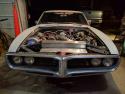
What I always do in my non LS "V configuration" turbo cars is a filter on 1 valve cover to pull clean air into, then plumb off the other valve cover into a large catch can mounted lower than top of engine, then come out of the catch can with 2 lines, both with check valves, 1 goes to intake manifold and 1 goes to turbo(s) compressor inlet. With this you get crankcase evacuation in vacuum and boost. I catch ALOT of **** this way....oil, fuel and water.
On my turbo LS motor, I pull fresh air from the back of the drivers side valve cover, seal the passenger valve cover up, and come out of the valley cover into the catch can. Then from the catch can it is plumbed the same as I mentioned above.
This is the best plumbing in my opinion for turbo'd V-style engines.
On my turbo LS motor, I pull fresh air from the back of the drivers side valve cover, seal the passenger valve cover up, and come out of the valley cover into the catch can. Then from the catch can it is plumbed the same as I mentioned above.
This is the best plumbing in my opinion for turbo'd V-style engines.
What I always do in my non LS "V configuration" turbo cars is a filter on 1 valve cover to pull clean air into, then plumb off the other valve cover into a large catch can mounted lower than top of engine, then come out of the catch can with 2 lines, both with check valves, 1 goes to intake manifold and 1 goes to turbo(s) compressor inlet. With this you get crankcase evacuation in vacuum and boost. I catch ALOT of **** this way....oil, fuel and water.
On my turbo LS motor, I pull fresh air from the back of the drivers side valve cover, seal the passenger valve cover up, and come out of the valley cover into the catch can. Then from the catch can it is plumbed the same as I mentioned above.
This is the best plumbing in my opinion for turbo'd V-style engines.
On my turbo LS motor, I pull fresh air from the back of the drivers side valve cover, seal the passenger valve cover up, and come out of the valley cover into the catch can. Then from the catch can it is plumbed the same as I mentioned above.
This is the best plumbing in my opinion for turbo'd V-style engines.
I've got mightymouse's catch can that I have yet to put on, right now I just have a filter on the DS rear valve cover. I need an LS6 valley cover to attach in the same fashion as you previously mentioned.
Staging Lane
Joined: Oct 2009
Posts: 71
Likes: 1
I appreciate your thoughts, and I am familiar with bernoulli principle and spend a lot of time using CFD analysis. It is only as good as the assumptions that went into it. I have seen many actuarte as I have inaccurate.
For example, the inlet condition here is not ambient pressure like it appears you are assuming, these are boosted engines. That is enough to make your model invalid.
So, yes, you stating a theory, like all will be met with skepticism. Like all theories, they require proof.
For example, the inlet condition here is not ambient pressure like it appears you are assuming, these are boosted engines. That is enough to make your model invalid.
So, yes, you stating a theory, like all will be met with skepticism. Like all theories, they require proof.
Anyways, you seem to be familiar with the principles at play here. So let's talk about those assumptions you call into question. I think you misunderstood me when I talked about ambient pressure. I’m talking the pressure upstream of the 'boost'. Prior to the compressor, the air doesn't know whether it's a boosted engine or not, it’s just being pulled. I am absolutely not talking about the air after it has been pressurized, that’s a whole different ball game. The total pressure is increased during compression due the mechanical work added, and so the Mach number falls dramatically after that. Total and statics are much closer to one another on the boost side.
What I AM talking about is ramming a large quantity of unpressurized air through what is nearly an OEM sized pipe. I’m just using my specific example here because it’s what I have to work with, but my procharger inlet is about the same diameter as the OEM, NA airbox piping. But, now instead of running 330whp through it, I’m trying to run 800+. This is almost 2.5x as much air through the same diameter.
My point is that while the OEM has sized the air inlet to try and keep below Mach 0.1, (75mph) for the OEM flow, I am now running airflow at about 190 mph. Many things in airflow scale with velocity scquared, so that 2.5x increase in velocity affects things like losses and dynamic pressure head by 6x.