


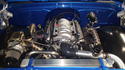




Air Filter for Turbo?


Well guys I got a bigger filter on the turbo. I go back to the tuner next Friday. I'll do a run with the old filter and the new to see if there is any difference. Maybe ill do a pull with no filter as well.
Nice! If it's a restriction surely a 2-3x bigger filter should help.

9 Second Club
Joined: Nov 2003
Posts: 13,616
Likes: 185
From: Norn Iron
You could easily went for a much larger base to taper down, or one with an offset hole slightly and larger filter body.
Either way as long as that is a reputable brand it should be fine.
If your wideband is reading different at idle, whatever you had before must have been diabolically **** or the engine just needs tuned properly.
Either way as long as that is a reputable brand it should be fine.
If your wideband is reading different at idle, whatever you had before must have been diabolically **** or the engine just needs tuned properly.
9 Second Club
Joined: Nov 2003
Posts: 13,616
Likes: 185
From: Norn Iron
Fit the biggest good quality filter you can in the space you have available.
As you can measure that, you are the best person to decide what fits.
To the op what brand filter is that? Also, it appears you are running your catch can to the filter base. If so could you please post pics of how you tapped it into the filter, as well as the rest of your hose routing? Thx a lot
You could easily went for a much larger base to taper down, or one with an offset hole slightly and larger filter body.
Either way as long as that is a reputable brand it should be fine.
If your wideband is reading different at idle, whatever you had before must have been diabolically **** or the engine just needs tuned properly.
Either way as long as that is a reputable brand it should be fine.
If your wideband is reading different at idle, whatever you had before must have been diabolically **** or the engine just needs tuned properly.
LS1 Tech Stories
The Best V8 Stories One Small Block at Time

6 Common C5 Corvette Failures and What's Involved In Repairing Them
Pouria Savadkouei
Retro Modern Bandit Pontiac Trans AM Comes With Burt Reynolds' Autograph
Verdad Gallardo
Top 10 Greatest Cadillac V Series Performance Models Ever, Ranked
Pouria Savadkouei
Top 10 Most Powerful Chevy Trucks Ever Made!

Hennessey's New Supercharged Silverado ZR2 Has 700 HP
Verdad Gallardo
Coachbuilt N2A Anteros Is an LS2-Powered C6 Corvette In Italian Clothes
Verdad Gallardo
Awesome K5 Blazer Restomod Comes With C7 Corvette Power
Verdad Gallardo
10 Camaros You Should Never Buy

10 LS Engine Myths That Refuse to Die
Verdad Gallardo
TECH Enthusiast


Joined: Dec 2016
Posts: 547
Likes: 49
From: Texas
i know when i was running a small filter like you had on there i hurt boost by 3 or 4 lbs. it fell off one day and i didnt know it and the truck had waaayy more power. i have a larger filter on there now along with a 90 elbow off a cummins truck since the filter was too large to fit.

This guy picked up 60rwhp and 1.5psi on his blower by ditching the filter. I am not sure on the details of is filter setup.
http://www.camaro5.com/forums/showth...=519233&page=3
http://www.camaro5.com/forums/showth...=519233&page=3
This guy picked up 60rwhp and 1.5psi on his blower by ditching the filter. I am not sure on the details of is filter setup.
http://www.camaro5.com/forums/showth...=519233&page=3
http://www.camaro5.com/forums/showth...=519233&page=3


https://ls1tech.com/forums/generatio...l#post19848560
19 PSI last weekend on a stock bottom end 5.3 on 93 octane no meth. Still running no issues and the plugs and oil look great. Been running over a year as a DAILY DRIVER.
19 PSI last weekend on a stock bottom end 5.3 on 93 octane no meth. Still running no issues and the plugs and oil look great. Been running over a year as a DAILY DRIVER.
I never said it was impossible to do 20 or 25psi on 93 octane. I run 2L and 3L all the time at 22psi on 93 for example.
I said it wouldn't last as a daily driver setting, for the simple reason that the number of watts produced is mathematically incompatible with gasoline at any reasonable compression ratio for a daily driver using stock engine components.
For example, take your 20psi on 93 setup and put it on a load dyno at WOT for 45 seconds, the way a boat would run, hold it at say 5k rpm for a minute or so. Can you guess what would happen? Without superior method of cooling (like H2O injection or water cooled exhaust manifolds) it will have a meltdown in short order due to the number of watts being produced at that power level.
Completely different thing, fooling around on the street, vs holding a steady state RPM with gasoline at 22psi for a minute straight.
Hey I love details. Lets play the details game. If you wish to discuss this at length I will show you exactly dyno graphs/video dyno runs of engines running 25psi on pump fuels. NP for a dyno pass on a cold engine.
I never said it was impossible to do 20 or 25psi on 93 octane. I run 2L and 3L all the time at 22psi on 93 for example.
I said it wouldn't last as a daily driver setting, for the simple reason that the number of watts produced is mathematically incompatible with gasoline at any reasonable compression ratio for a daily driver using stock engine components.
For example, take your 20psi on 93 setup and put it on a load dyno at WOT for 45 seconds, the way a boat would run, hold it at say 5k rpm for a minute or so. Can you guess what would happen? Without superior method of cooling (like H2O injection or water cooled exhaust manifolds) it will have a meltdown in short order due to the number of watts being produced at that power level.
Completely different thing, fooling around on the street, vs holding a steady state RPM with gasoline at 22psi for a minute straight.
I never said it was impossible to do 20 or 25psi on 93 octane. I run 2L and 3L all the time at 22psi on 93 for example.
I said it wouldn't last as a daily driver setting, for the simple reason that the number of watts produced is mathematically incompatible with gasoline at any reasonable compression ratio for a daily driver using stock engine components.
For example, take your 20psi on 93 setup and put it on a load dyno at WOT for 45 seconds, the way a boat would run, hold it at say 5k rpm for a minute or so. Can you guess what would happen? Without superior method of cooling (like H2O injection or water cooled exhaust manifolds) it will have a meltdown in short order due to the number of watts being produced at that power level.
Completely different thing, fooling around on the street, vs holding a steady state RPM with gasoline at 22psi for a minute straight.

Its called safety factor. How do you know the driver isn't going to overwhelm the OEM systems? Lots of people buy brand new vette Z06's or whatever, take them to the track and still manage to break things and complain about it. Related to the output in Watts.
Drag racing passes are over and there is "cooldown" time necessary for many combinations, due to the number of Watts involved.
Even a factory engine at 0psi under the worst climate conditions, isn't that far from trouble. Stuff like a Low octane map exists for flexibility in these situations, even with just 0psi atmospheric pressure can be a challenge. This is because factory will raise compression ratio trying to conserve fuel against the nature of that fuel to cause damage when conditions are at their worst. Nevermind the 7psi or 9psi of boost you want to add on top of that worst possible condition that the unaware driver who's car you just tuned is doing to it (or 19psi, yeah right).
In any situation where there is X minutes or seconds to meltdown, then No steady state possible. Then this is TYPICAL of high power drag racing setup. You make a single "PASS" and then cooldown is a ROUTINE everyday common experience. A well known idea, nothing new here. Get it yet? The number of WATTS is very high, so the single "pass" becomes a thing, there is no steady state possible.
And that is absolutely fine for a daily driver, which is essentially a light to light drag race car combined with some manner of distance-ability, if you know what you are doing and how to avoid catastrophic situations.
But we are not in the business of driving people's cars after we tune them. We tune the car, then hand the driver the key and say "go for it". You hand that kind of power over to 200 or 500 random people and 1 of them or more is going to hold the pedal down in 5th or 6th gear for ten simultaneous highway drag races to 160mph in overdrive. Because why not? That is essentially what I like to do as well with my own daily, WOT on the highway then back to cruise speed then WOT again is the ultimate stress test for my car, do that for 400 miles, race every cloud in the sky I can see in Florida's daytime ambient. I could not imagine doing that with 19psi of boost on a stock 5.3L engine without water injection, sorry. I am sure it would happen a couple times, maybe even a couple months. But it would not be reliable.
I would never let that happen to somebody. So either I warn them explicitly about the dangers and possible ways to overcome potential over heating, make sure when I hand them the key that this is what you can do with the engine, and this is what you don't want to do with it unless you have to, and here are the precautions you will take if you wanted to, I will email you a list.
Drag racing passes are over and there is "cooldown" time necessary for many combinations, due to the number of Watts involved.
Even a factory engine at 0psi under the worst climate conditions, isn't that far from trouble. Stuff like a Low octane map exists for flexibility in these situations, even with just 0psi atmospheric pressure can be a challenge. This is because factory will raise compression ratio trying to conserve fuel against the nature of that fuel to cause damage when conditions are at their worst. Nevermind the 7psi or 9psi of boost you want to add on top of that worst possible condition that the unaware driver who's car you just tuned is doing to it (or 19psi, yeah right).
In any situation where there is X minutes or seconds to meltdown, then No steady state possible. Then this is TYPICAL of high power drag racing setup. You make a single "PASS" and then cooldown is a ROUTINE everyday common experience. A well known idea, nothing new here. Get it yet? The number of WATTS is very high, so the single "pass" becomes a thing, there is no steady state possible.
And that is absolutely fine for a daily driver, which is essentially a light to light drag race car combined with some manner of distance-ability, if you know what you are doing and how to avoid catastrophic situations.
But we are not in the business of driving people's cars after we tune them. We tune the car, then hand the driver the key and say "go for it". You hand that kind of power over to 200 or 500 random people and 1 of them or more is going to hold the pedal down in 5th or 6th gear for ten simultaneous highway drag races to 160mph in overdrive. Because why not? That is essentially what I like to do as well with my own daily, WOT on the highway then back to cruise speed then WOT again is the ultimate stress test for my car, do that for 400 miles, race every cloud in the sky I can see in Florida's daytime ambient. I could not imagine doing that with 19psi of boost on a stock 5.3L engine without water injection, sorry. I am sure it would happen a couple times, maybe even a couple months. But it would not be reliable.
I would never let that happen to somebody. So either I warn them explicitly about the dangers and possible ways to overcome potential over heating, make sure when I hand them the key that this is what you can do with the engine, and this is what you don't want to do with it unless you have to, and here are the precautions you will take if you wanted to, I will email you a list.
Its called safety factor. How do you know the driver isn't going to overwhelm the OEM systems? Lots of people buy brand new vette Z06's or whatever, take them to the track and still manage to break things and complain about it. Related to the output in Watts.
Drag racing passes are over and there is "cooldown" time necessary for many combinations, due to the number of Watts involved.
Even a factory engine at 0psi under the worst climate conditions, isn't that far from trouble. Stuff like a Low octane map exists for flexibility in these situations, even with just 0psi atmospheric pressure can be a challenge. This is because factory will raise compression ratio trying to conserve fuel against the nature of that fuel to cause damage when conditions are at their worst. Nevermind the 7psi or 9psi of boost you want to add on top of that worst possible condition that the unaware driver who's car you just tuned is doing to it (or 19psi, yeah right).
In any situation where there is X minutes or seconds to meltdown, then No steady state possible. Then this is TYPICAL of high power drag racing setup. You make a single "PASS" and then cooldown is a ROUTINE everyday common experience. A well known idea, nothing new here. Get it yet? The number of WATTS is very high, so the single "pass" becomes a thing, there is no steady state possible.
And that is absolutely fine for a daily driver, which is essentially a light to light drag race car combined with some manner of distance-ability, if you know what you are doing and how to avoid catastrophic situations.
But we are not in the business of driving people's cars after we tune them. We tune the car, then hand the driver the key and say "go for it". You hand that kind of power over to 200 or 500 random people and 1 of them or more is going to hold the pedal down in 5th or 6th gear for ten simultaneous highway drag races to 160mph in overdrive. Because why not? That is essentially what I like to do as well with my own daily, WOT on the highway then back to cruise speed then WOT again is the ultimate stress test for my car, do that for 400 miles, race every cloud in the sky I can see in Florida's daytime ambient. I could not imagine doing that with 19psi of boost on a stock 5.3L engine without water injection, sorry. I am sure it would happen a couple times, maybe even a couple months. But it would not be reliable.
I would never let that happen to somebody. So either I warn them explicitly about the dangers and possible ways to overcome potential over heating, make sure when I hand them the key that this is what you can do with the engine, and this is what you don't want to do with it unless you have to, and here are the precautions you will take if you wanted to, I will email you a list.
Drag racing passes are over and there is "cooldown" time necessary for many combinations, due to the number of Watts involved.
Even a factory engine at 0psi under the worst climate conditions, isn't that far from trouble. Stuff like a Low octane map exists for flexibility in these situations, even with just 0psi atmospheric pressure can be a challenge. This is because factory will raise compression ratio trying to conserve fuel against the nature of that fuel to cause damage when conditions are at their worst. Nevermind the 7psi or 9psi of boost you want to add on top of that worst possible condition that the unaware driver who's car you just tuned is doing to it (or 19psi, yeah right).
In any situation where there is X minutes or seconds to meltdown, then No steady state possible. Then this is TYPICAL of high power drag racing setup. You make a single "PASS" and then cooldown is a ROUTINE everyday common experience. A well known idea, nothing new here. Get it yet? The number of WATTS is very high, so the single "pass" becomes a thing, there is no steady state possible.
And that is absolutely fine for a daily driver, which is essentially a light to light drag race car combined with some manner of distance-ability, if you know what you are doing and how to avoid catastrophic situations.
But we are not in the business of driving people's cars after we tune them. We tune the car, then hand the driver the key and say "go for it". You hand that kind of power over to 200 or 500 random people and 1 of them or more is going to hold the pedal down in 5th or 6th gear for ten simultaneous highway drag races to 160mph in overdrive. Because why not? That is essentially what I like to do as well with my own daily, WOT on the highway then back to cruise speed then WOT again is the ultimate stress test for my car, do that for 400 miles, race every cloud in the sky I can see in Florida's daytime ambient. I could not imagine doing that with 19psi of boost on a stock 5.3L engine without water injection, sorry. I am sure it would happen a couple times, maybe even a couple months. But it would not be reliable.
I would never let that happen to somebody. So either I warn them explicitly about the dangers and possible ways to overcome potential over heating, make sure when I hand them the key that this is what you can do with the engine, and this is what you don't want to do with it unless you have to, and here are the precautions you will take if you wanted to, I will email you a list.
There is no misleading statement, I merely review what I had already said.
Pls go find a single misleading statement I will gladly delete my account and never post again. Just find one. You are assuming things, again.
Pls go find a single misleading statement I will gladly delete my account and never post again. Just find one. You are assuming things, again.
I already did...post 195. Please delete your account now. Thanks.

https://ls1tech.com/forums/generatio...l#post19848560
I already did...post 195. Please delete your account now. Thanks.
I already did...post 195. Please delete your account now. Thanks.
https://ls1tech.com/forums/generatio...l#post19848560
I already did...post 195. Please delete your account now. Thanks.
I already did...post 195. Please delete your account now. Thanks.
obviously if you build a daily driver, make one dyno pass at 600rwhp and 22psi, then let it sit in the garage for 10 years, you could say "I have a 600rwhp 93 octane 22psi car running fine for 10 years". The length of time in terms of ownership, or years is irrelivant. Knowing this, you must take another perspective.
Miles doesn't work for the same reason. I can drive it 9999999 miles using less than 20% throttle position after my 600rwhp dyno pass the same way I could park it in the garage.
So miles being irrelivant, we go to minutes of WOT.
How many minutes of WOT can it take? 1? 2? 5? You won't have it for long, it won't be very many minutes. There is no other way to describe the time frame for when it explodes than to point out the lack of steady state and how this leads to unreliability in the hands of noobs.