





Calling all turbo daily drivers

From what I’ve seen quoted so far for numbers, you’re worrying about nothing at all. Most gen 4 ls stuff sits at 210-215 all day long, my cars I have fan on at 210 and off at 200, 195* thermo. I’d bump my temps up so the fans will come off and on above the thermo setting and see how she runs.
You’re referencing the incorrect head gasket? I agree that should be fixed, and agree with everything you said. I was speaking as if everything was correct and the temps were his only concern, which I believe was the case before he found out about the headgasket.

Thread Starter
TECH Enthusiast


Joined: Dec 2011
Posts: 531
Likes: 5
Still working on this, hope to have it buttoned back up in a few days or so. Haven't found anything wrong other than the one HG I put on backwards. It's taking me a little more time than it would just to fix the one HG b/c I'm putting in a new cam, timing set, lifters, and a Trick Flow timing damper.
Cwarta: The temps were usually ok, but ocassionally I saw a little creep, likely due to the HG being on backwards on that one side. Also, I recently have come around to the school of thought that while 215*F is what a lot of stock LS engines run, and while it may be OK for a turbo application, it is probably better (safer) to run things cooler. I know when I get this thing buttoned back up my target operating temp is going to be between 160*-180*F which I will control by playing around with holes drilled in factory thermostats.
Cwarta: The temps were usually ok, but ocassionally I saw a little creep, likely due to the HG being on backwards on that one side. Also, I recently have come around to the school of thought that while 215*F is what a lot of stock LS engines run, and while it may be OK for a turbo application, it is probably better (safer) to run things cooler. I know when I get this thing buttoned back up my target operating temp is going to be between 160*-180*F which I will control by playing around with holes drilled in factory thermostats.
Last edited by ElQueFør; May 23, 2018 at 11:28 AM.
On The Tree

Joined: Oct 2015
Posts: 105
Likes: 1
From: Amelia, Ohio
Thread Starter
TECH Enthusiast
Joined: Dec 2011
Posts: 531
Likes: 5
Little update guys. Almost got everything back together with the head gaskets both on the correct way. So far so good. I used a roloc finger bristle disc to clean the gasket mating surfaces of the heads and the block..... Little research after the fact and apparently that is not the preferred way because you can gouge into the metal if you're not careful. I was very easy on the gasket surfaces while doing this and I have mucho experience running a roloc so I think there was no problem there. But, to be on the safe side I block sanded the heads and deck surfaces..... Stuffed rags over the valley holes and lifter holes in the block and went to town. After finished this I removed the grit and debris from that process using compressed air, brake cleaner and rags..... I was sure not to turn the engine over until I had wiped all of this crud away...... I'm thinking I should have got a good 90% of it that way and while the oil and filter are fresh, I will change the oil and filter in a hundred miles or so just to be sure.
To clarify: I researched the use of bristle discs and find much conflicting information on using them... I really don't see how it's a problem if you know what you're doing, but if you working with aluminum and not paying the **** attention it's going to possibly get shitty. No-one agrees. on the use of bristle discs or not, at least from my research. Regardless, next time I do this job I'll just go straight to the sanding block to begin with.
And another thing I couldn't find agreement on is the use of what grit number??? I couldn't tell much difference between 180 and 400 grit in this case so after dicking around with 400 grit for a while I decided that 180 would be good enough. Feels real smooth that way and every bit as good or better than the factory finish.
It's really crazy just how non flat the factory pieces are, the heads mainly. You can see the high spots get shiny as the come off first with the sanding block and as you keep going you eventually have everything all shiny and flat.
I can already tell that even though the sloppy stage 2 cam is just a generic off the shelf cam and not a custom cam, that I am going to love it.
The bolts that cam with the Trick Flow timing damper were a complete ******* joke, spent way too much time dicking around with that to get it going. One of them I had to replace the button head allen bolt with a regular hex that I ground down to the same height. Seriously though, the bolts that are supplied with that are such a ******* piece of ****. And the instructions.... Equally garbage. Buuuuuuuuuuuuuttt...... I got it on there.
To clarify: I researched the use of bristle discs and find much conflicting information on using them... I really don't see how it's a problem if you know what you're doing, but if you working with aluminum and not paying the **** attention it's going to possibly get shitty. No-one agrees. on the use of bristle discs or not, at least from my research. Regardless, next time I do this job I'll just go straight to the sanding block to begin with.
And another thing I couldn't find agreement on is the use of what grit number??? I couldn't tell much difference between 180 and 400 grit in this case so after dicking around with 400 grit for a while I decided that 180 would be good enough. Feels real smooth that way and every bit as good or better than the factory finish.
It's really crazy just how non flat the factory pieces are, the heads mainly. You can see the high spots get shiny as the come off first with the sanding block and as you keep going you eventually have everything all shiny and flat.
I can already tell that even though the sloppy stage 2 cam is just a generic off the shelf cam and not a custom cam, that I am going to love it.
The bolts that cam with the Trick Flow timing damper were a complete ******* joke, spent way too much time dicking around with that to get it going. One of them I had to replace the button head allen bolt with a regular hex that I ground down to the same height. Seriously though, the bolts that are supplied with that are such a ******* piece of ****. And the instructions.... Equally garbage. Buuuuuuuuuuuuuttt...... I got it on there.
Thread Starter
TECH Enthusiast
Joined: Dec 2011
Posts: 531
Likes: 5
Well I've put some drive time on it since...... Now I have a stupid question. Is it possible to leak oil from the head gasket on an LS? I don't see how but I wanted to ask anyways.
I found that one of my valve covers was leaking oil and it was running down on the block and head on the back of the driver side. I thought it was water leaking past the HG but upon closer inspection it was definitely oil. Guess I didn't get the valve cover gasket back in it's little machined groove all the way so there was about an inch or so that was poking out allowing oil to get all over the place......
I didn't see any damage to the block or head on that side I accidentally put the gasket on backwards and I did a home deck job which many (including on this forum) have reported doing with success on these JY LS builds.
Oil is good and doesn't have water in it. Water looks good and doesn't appear to have oil in it..... Water doesn't appear to go down after some driving. I'm thinking at this point I might ought to test the cooling system to see if everything is back the way it ought to be...... The question is. Which is better.... A test to detect combustion gas in the water in the cooling system? OR, a test to pressurize the cooling system and look for leaks....
I have a 212*F thermostat in there (100*C) that I drilled 4 1/4 inch holes in. That seems to have dropped the operating temp down to between 185*F to 192*F from the 212*F it started off as. While these temperatures are definitely not alarming. I still want to run this thing cooler though...... I think a 160*F T-stat is in order here. I think FOR NOW, I'm going to try just removing the T-stat outright and see what that does.
My fan appears as adequate for now anyways as it will drop the temp down to about 189*F and hold it there while sitting still. I still haven't figured out how the HPTuners parameters to shut if off above a certain speed come into play..... It actually says in the parameter notes in the bottom of the window something about "V6 ONLY"..
Here are my questions:
Can a LS head gasket leak oil?
Which type of test is better to check for further coolant leaks involving a head gasket? Pressure test or combustion gas test?
I found that one of my valve covers was leaking oil and it was running down on the block and head on the back of the driver side. I thought it was water leaking past the HG but upon closer inspection it was definitely oil. Guess I didn't get the valve cover gasket back in it's little machined groove all the way so there was about an inch or so that was poking out allowing oil to get all over the place......
I didn't see any damage to the block or head on that side I accidentally put the gasket on backwards and I did a home deck job which many (including on this forum) have reported doing with success on these JY LS builds.
Oil is good and doesn't have water in it. Water looks good and doesn't appear to have oil in it..... Water doesn't appear to go down after some driving. I'm thinking at this point I might ought to test the cooling system to see if everything is back the way it ought to be...... The question is. Which is better.... A test to detect combustion gas in the water in the cooling system? OR, a test to pressurize the cooling system and look for leaks....
I have a 212*F thermostat in there (100*C) that I drilled 4 1/4 inch holes in. That seems to have dropped the operating temp down to between 185*F to 192*F from the 212*F it started off as. While these temperatures are definitely not alarming. I still want to run this thing cooler though...... I think a 160*F T-stat is in order here. I think FOR NOW, I'm going to try just removing the T-stat outright and see what that does.
My fan appears as adequate for now anyways as it will drop the temp down to about 189*F and hold it there while sitting still. I still haven't figured out how the HPTuners parameters to shut if off above a certain speed come into play..... It actually says in the parameter notes in the bottom of the window something about "V6 ONLY"..
Here are my questions:
Can a LS head gasket leak oil?
Which type of test is better to check for further coolant leaks involving a head gasket? Pressure test or combustion gas test?
Thread Starter
TECH Enthusiast
Joined: Dec 2011
Posts: 531
Likes: 5
No I'm not sure lol. I should have checked it when I had the intake off earlier. I'll keep an eye on it and see if oil continues to get on there and if so I'll be checking the valley cover gasket.
I guess after some driving around if the water level isn't going down that's a good sign.
What are you doing for a Tstat in your boosted car? 160?? Any holes drilled in it??
I guess after some driving around if the water level isn't going down that's a good sign.
What are you doing for a Tstat in your boosted car? 160?? Any holes drilled in it??
LS1 Tech Stories
The Best V8 Stories One Small Block at Time

Topdon ONE vs. Artidiag 800 BT2: Which is the Diagnostic Tablet For You?
Pouria Savadkouei
Gas Monkey Built a 6-Wheel Ferrari Testarossa With a Corvette LT4 Engine
Verdad Gallardo
7 Most Reliable High-Performance Engines GM Has Ever Built
Verdad Gallardo
Amazing '71 Camaro Restomod Is Modern Muscle Car Under the Skin
Verdad Gallardo
6 Common C5 Corvette Failures and What's Involved In Repairing Them
Pouria Savadkouei
Retro Modern Bandit Pontiac Trans AM Comes With Burt Reynolds' Autograph
Verdad Gallardo
Top 10 Greatest Cadillac V Series Performance Models Ever, Ranked
Pouria Savadkouei
Top 10 Most Powerful Chevy Trucks Ever Made!

Hennessey's New Supercharged Silverado ZR2 Has 700 HP
Verdad Gallardo I had a valley cover leak and it threw me for a loop for a little until I realized that's what it was.
I usually run 160 stats. I'm paranoid about coolant and want it 175 to 195 always. I think I did drill a small hole in the SS but not required especially if you fill it through the top rad hose. Turbo setups generate alot of heat so 160 stat,LT1 radiator cause they're thicker and cheap, and good fans are a must IMO.
I usually run 160 stats. I'm paranoid about coolant and want it 175 to 195 always. I think I did drill a small hole in the SS but not required especially if you fill it through the top rad hose. Turbo setups generate alot of heat so 160 stat,LT1 radiator cause they're thicker and cheap, and good fans are a must IMO.

It’s a bad idea to run no thermostat. You can run a restrictor but you need something that restricts waterflow otherwise cooling goes to ****.
Easy way is to pump air air into spark plug hole with the valves closed or the engine for that matter with all the rockers off and see if you get any air in the cooling system. You can also pressurize the cooling system and see if it leaks. Both test different things.
I run a 160*F me gasket Tstat on my turbo 5.3 and Engine temps are in the 180 range and might dip into the 170s or high 160s in cooler air and on the highway with light load. This is on 80-95*F days. I did drill 3 3/16” holes more for air bleeding than anything else.
Easy way is to pump air air into spark plug hole with the valves closed or the engine for that matter with all the rockers off and see if you get any air in the cooling system. You can also pressurize the cooling system and see if it leaks. Both test different things.
I run a 160*F me gasket Tstat on my turbo 5.3 and Engine temps are in the 180 range and might dip into the 170s or high 160s in cooler air and on the highway with light load. This is on 80-95*F days. I did drill 3 3/16” holes more for air bleeding than anything else.
Rad, fans and airflow are key. You need a good rad and fans period. 31x19 Afco dual 1” core and a new Chevy traverse OE fan with integrated Shroud keeps my temps below 190 even boosting. I have 100% core coverage and dual 13” fans that flow 3000cfm+ estimated.
FWIW BECOOL uses the same radiators in there 400-1000hp setups, only things that change are the fans and shrouds. You want to cover 80-90% of the core and pull 3000cfm or more.
Also dual 1” cores are better than that cheap *** champion 3-4core crap bc there cores are only 5/8” wide and have less surface area.
Other than rad efficency and size...fans only matter below 35-40mph and after that they are useless. So around that speed the air from outside should be the main cooling source so make sure you have good airflow to the radiator (air dam if equipped) and make sure the front area to the rad is sealed up to make sure air doesn’t try to flow around.
FWIW BECOOL uses the same radiators in there 400-1000hp setups, only things that change are the fans and shrouds. You want to cover 80-90% of the core and pull 3000cfm or more.
Also dual 1” cores are better than that cheap *** champion 3-4core crap bc there cores are only 5/8” wide and have less surface area.
Other than rad efficency and size...fans only matter below 35-40mph and after that they are useless. So around that speed the air from outside should be the main cooling source so make sure you have good airflow to the radiator (air dam if equipped) and make sure the front area to the rad is sealed up to make sure air doesn’t try to flow around.
Anything’s possible, but it’s not likely to be leaking oil. Did you heave the head dowel pins installed? I’d bet its coming from above and dripping down. Make to torque the valve covers properly and in the correct sequence with good gaskets.
I never bought big into the “sniffer” tests. Seems like anything can set them off. IMO the best test is a data logged pressure gauge on the coolant system. Super easy to see any kind of leaks there. Going along with the JY spirit of things I’d just go flog it a few times at the lowest boost you can manage. Its likely fine.
Rad. puke tank is another good indication. Need a decent 16-18 psi + radiator cap. Assuming your coolant temps are under control start out with a nice clean clear puke tank for the radiator. Then make a pass. It should remain empty. If it’s full of fluid you likely have an issue.
Holes in the thermo are a bad idea, period. They don’t flow much and cooling is all about flow. The main passage/valve that allows flow is still thermostatically controlled and not opening till 212. It’s a really bad “sloppy” practice made popular by people that don’t know how the system works... or plain don’t care how well the cooling system works.
Unfortunately by design you can’t just remove the thermo with an LS water pump either. There is a large hole connecting the high and low side of the system that must be plugged if you run no thermostat.
When the thermo is closed this hole is open allowing a TON of coolant to bypass the radiator so the engine warms up quickly. As the thermostat opens this port is blocked off forcing flow through the radiator. If you do not plug this large passage when running no thermo, it will overheat. Plugging this hole and running no thermo will get you the best flow and cooling possible. But it will also cause the car to warm up more slowly which is bad for many other reasons.
Simplest option is an aftermarket high flow 160*-180* thermostat. If you don’t care about getting up to operating temps quickly and change you oil a ton, put a freeze plug on the thermo passage and run no thermostat for the best possible cooling.
I never bought big into the “sniffer” tests. Seems like anything can set them off. IMO the best test is a data logged pressure gauge on the coolant system. Super easy to see any kind of leaks there. Going along with the JY spirit of things I’d just go flog it a few times at the lowest boost you can manage. Its likely fine.
Rad. puke tank is another good indication. Need a decent 16-18 psi + radiator cap. Assuming your coolant temps are under control start out with a nice clean clear puke tank for the radiator. Then make a pass. It should remain empty. If it’s full of fluid you likely have an issue.
Holes in the thermo are a bad idea, period. They don’t flow much and cooling is all about flow. The main passage/valve that allows flow is still thermostatically controlled and not opening till 212. It’s a really bad “sloppy” practice made popular by people that don’t know how the system works... or plain don’t care how well the cooling system works.
Unfortunately by design you can’t just remove the thermo with an LS water pump either. There is a large hole connecting the high and low side of the system that must be plugged if you run no thermostat.
When the thermo is closed this hole is open allowing a TON of coolant to bypass the radiator so the engine warms up quickly. As the thermostat opens this port is blocked off forcing flow through the radiator. If you do not plug this large passage when running no thermo, it will overheat. Plugging this hole and running no thermo will get you the best flow and cooling possible. But it will also cause the car to warm up more slowly which is bad for many other reasons.
Simplest option is an aftermarket high flow 160*-180* thermostat. If you don’t care about getting up to operating temps quickly and change you oil a ton, put a freeze plug on the thermo passage and run no thermostat for the best possible cooling.
You don’t want ANY restriction in a cooling system. The less restriction and the faster you get the water in/out of any heat exchanger the better. I explain why just removing the thermo doesn’t work above.
Thread Starter
TECH Enthusiast
Joined: Dec 2011
Posts: 531
Likes: 5
Picked up a 160 Tstat last night. It has the little flappy nipple thing in it like the others which is apparently some type of bleed hole I guess?
I always take the upper radiator hose off and hold it up in the air while pouring water straight into the block. Then I top off what little room is left in the radiator through the rad neck itself.
Wouldn't surprise me if my valley cover gasket was leaking. I reused that gasket and noticed that part of the rubber had seperated from the metal frame part of the gasket. I used it anyways thinking I can get back to it real easy if need be.
The radiator I'm using is one of the biggest OEM radiators for these trucks.... It's one of them that would be used in a one ton with a big block. There is one other OEM radiator for these trucks that is marginally bigger than this one although for some reason it is significantly more expensive even though it's barely bigger.
I have the "smaller" one of the two here:
https://www.oreillyauto.com/shop/b/c...rwd?q=radiator
What are my options for datalogging coolant system pressure? I'm using HPTuners so can it be logged with that software? What is the best place to plumb in a gauge and what kind of gauge should I be looking for?
I always take the upper radiator hose off and hold it up in the air while pouring water straight into the block. Then I top off what little room is left in the radiator through the rad neck itself.
Wouldn't surprise me if my valley cover gasket was leaking. I reused that gasket and noticed that part of the rubber had seperated from the metal frame part of the gasket. I used it anyways thinking I can get back to it real easy if need be.
The radiator I'm using is one of the biggest OEM radiators for these trucks.... It's one of them that would be used in a one ton with a big block. There is one other OEM radiator for these trucks that is marginally bigger than this one although for some reason it is significantly more expensive even though it's barely bigger.
I have the "smaller" one of the two here:
https://www.oreillyauto.com/shop/b/c...rwd?q=radiator
What are my options for datalogging coolant system pressure? I'm using HPTuners so can it be logged with that software? What is the best place to plumb in a gauge and what kind of gauge should I be looking for?
I don’t use HP tuners but I’d assume any pressure input could be used. You just need a pressure transducer. 0-100psi work well and can be had for around $16. But you’d need software that can be setup for that sensor. With the GM software you may be limited to GM sensors. So like an oil pressure sensor tapped into the swirl pot/overflow would be the way to go.
I’m not sure what you mean by a “flappy nipple” but the disc on the aft side with the 4 holes is what blocks the coolant bypass hole once the thermo is opened up.

I’m not sure what you mean by a “flappy nipple” but the disc on the aft side with the 4 holes is what blocks the coolant bypass hole once the thermo is opened up.

As forcefed said do not remove the thrmostat without blocking the block bypass port
The whole drilling the thermostat thing comes from the old sbc days
The cooling systems and thermostats are very different
In an LS that thermostat is two valves in one assembly.
When the thermostat is closed the the block bypass is wide open circulating full flow through the block
As the thermostat opens... The block bypass is closed with the lower doak.
This means the LS can force 100% bypass or 100% radiator flow
When you ditch the tstat and don't block the bypass you have lost forced rad flow
The whole drilled stat thing comes from the sbc. They cannot force rad flow.. the small bypass is always open
So people will block the bypass but they will need to have some flow across the tstat or the water would be dead headed and zero circulation
Anyway on to the whole combustion gas/pressure
Very very easy to check for the presence of CO
Put a good CO detector in a ziplock bag. Zip the bag over the radiator cap and overflow port. The bag will trap the gas when you open the cap. If there is even a hair of combustion gas present you will know in 1 second
The whole drilling the thermostat thing comes from the old sbc days
The cooling systems and thermostats are very different
In an LS that thermostat is two valves in one assembly.
When the thermostat is closed the the block bypass is wide open circulating full flow through the block
As the thermostat opens... The block bypass is closed with the lower doak.
This means the LS can force 100% bypass or 100% radiator flow
When you ditch the tstat and don't block the bypass you have lost forced rad flow
The whole drilled stat thing comes from the sbc. They cannot force rad flow.. the small bypass is always open
So people will block the bypass but they will need to have some flow across the tstat or the water would be dead headed and zero circulation
Anyway on to the whole combustion gas/pressure
Very very easy to check for the presence of CO
Put a good CO detector in a ziplock bag. Zip the bag over the radiator cap and overflow port. The bag will trap the gas when you open the cap. If there is even a hair of combustion gas present you will know in 1 second
Thread Starter
TECH Enthusiast
Joined: Dec 2011
Posts: 531
Likes: 5
Firstly, thanks for the replies guys, I appreciate it.
Found this pressure transducer on fleabay, guess I'll have to just buy it and see if I can make it work with HPTuners. What about just a regular gauge? Could an oil pressure gauge of the generic type be used for monitoring coolant pressure?
https://www.ebay.com/i/261260635816?chn=ps
I have the stock TBI pickup cap on the radiator..... No idea what the PSI of the TBI truck cooling system is but maybe I need a different cap to work with the LS engine that's in there???? Anyone confirm this?
The flappy nipple thing I was talking about is the little brass thing on the right hand side of the Tstat on the top ring portion. On the Tstats I've seen here, they're all loose fitting and can see daylight through them.
ddnspider: You're using HPTuners IIRC, do you think that transducer I found above could be made to work? What about a stock LS oil pressure sending unit?
I put the 160 stat in and I still see temps that seem high to me for a 160 Tstat..... I seem to recall reading that these LS engines typically will run 10-20 degrees hotter than what ever the Tstat is?
rotary I believe I recall reading where you did ditch the Tstat. WHat did you use to block off the hole in the water pump itself?
As far as checking for CO.... I guess just a garden variety household CO detector will work? Obviously done when the engine is cold....
Anyone that has HPTuners if you would please take a look at this log from tonight with the 160 Tstat. Driving around for a while the temps start to creep up, even when just cruising around at speed. If I stop and idle like at the end of the log the one fan I have is able to bring the temp DOWN from 207*F to 192*F....... I still haven't figure out how to get the fan MPH OFF settings to work... So I think that's why it's heating up while driving is the fan comes on and then it's fighting the airflow going down the road causing it to heat up.
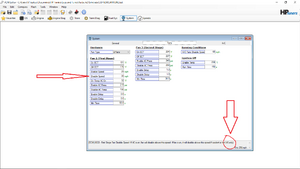
Check out this screenshot it says in HPTuners that the fan disable speed works on "V6 ONLY"...... That has to be bullshit right???? There has to be a way to set the fan to shut off at MPH.... Hell I can do that with a stone age TBI ECM so why can't the 411 PCM do it???? I'm just setting something incorrectly but the question is WHAT??
Found this pressure transducer on fleabay, guess I'll have to just buy it and see if I can make it work with HPTuners. What about just a regular gauge? Could an oil pressure gauge of the generic type be used for monitoring coolant pressure?
https://www.ebay.com/i/261260635816?chn=ps
I have the stock TBI pickup cap on the radiator..... No idea what the PSI of the TBI truck cooling system is but maybe I need a different cap to work with the LS engine that's in there???? Anyone confirm this?
The flappy nipple thing I was talking about is the little brass thing on the right hand side of the Tstat on the top ring portion. On the Tstats I've seen here, they're all loose fitting and can see daylight through them.
ddnspider: You're using HPTuners IIRC, do you think that transducer I found above could be made to work? What about a stock LS oil pressure sending unit?
I put the 160 stat in and I still see temps that seem high to me for a 160 Tstat..... I seem to recall reading that these LS engines typically will run 10-20 degrees hotter than what ever the Tstat is?
rotary I believe I recall reading where you did ditch the Tstat. WHat did you use to block off the hole in the water pump itself?
As far as checking for CO.... I guess just a garden variety household CO detector will work? Obviously done when the engine is cold....
Anyone that has HPTuners if you would please take a look at this log from tonight with the 160 Tstat. Driving around for a while the temps start to creep up, even when just cruising around at speed. If I stop and idle like at the end of the log the one fan I have is able to bring the temp DOWN from 207*F to 192*F....... I still haven't figure out how to get the fan MPH OFF settings to work... So I think that's why it's heating up while driving is the fan comes on and then it's fighting the airflow going down the road causing it to heat up.
Check out this screenshot it says in HPTuners that the fan disable speed works on "V6 ONLY"...... That has to be bullshit right???? There has to be a way to set the fan to shut off at MPH.... Hell I can do that with a stone age TBI ECM so why can't the 411 PCM do it???? I'm just setting something incorrectly but the question is WHAT??

I usually use EFI Live, but also have HPT. I believe HPT also supports analog inputs so yes you should be able to wire the transducer to the EGR wires and read pintle position, or just wire it straight into the analog inputs and make a custom PID. I'm sure someone has already done it on HPT site if you search for it. I know it was done on EFI Live as well.
It's a 31mm freeze plug. I tapped mine in with some hi-tac permatex sealer in an LS7 water pump. It defiantly made a difference with my small radiator setup in the RX7. Some say to drill an 1/8th inch hole in it. I didn't.

This may also work. I was playing with a junk thermo and took it apart completely. It still blocks the bypass port and warms up quick. Cooling ok in my mustang anyway. shouldn't really need any wizardry. Good low temp thermo with a nice radiator and fan setup. This stuff will only help marginally in my experience.
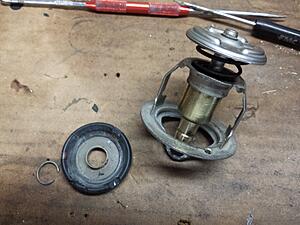
This may also work. I was playing with a junk thermo and took it apart completely. It still blocks the bypass port and warms up quick. Cooling ok in my mustang anyway. shouldn't really need any wizardry. Good low temp thermo with a nice radiator and fan setup. This stuff will only help marginally in my experience.
