When you click on links to various merchants on this site and make a purchase, this can result in this site earning a commission. Affiliate programs and affiliations include, but are not limited to, the eBay Partner Network.
The best working factory systems we see are setup like this.
1) Intercooler, a/c condenser, radiator, then fans mounted in a shroud. Many companies now use one piece condenser/trans cooler units.
2) The intercooler, condenser and radiator are sealed to one another so no air can go around them. If one has a smaller surface area, it will just be hanging in front of the next part in the stack.
3) The air coming in the front of the car is made to go only through the component stack. Shrouded/sealed around all 4 sides to direct all the airflow through.
4) The fan shroud has simple rubber "flaps" that hang shut at low vehicle speeds to allow the puller fans to do there job. Then as vehicle speed increases, fans shut off about 35 mph and the the force of natural airflow through the component stack forces the flaps open to overcome the fan blade induced restriction and allow maximum airflow.
Factory condenser and radiator typically have >1" gap between cores. The core spacing is different between the 2 so need to allow air to transition from cond thru rad. Around the perimeter of the cond core to rad is typically foam sealed to allow the rad fan to pull air thru the cond and allow AC cooling at stand still or slow speeds.
Leave at least a 1" gap between FMIC and cond or rad core to allow air to transition as needed.
Side note - covering open areas around rad to insure air is forced thru rad core is key for improved highway cooling.
Factory condenser and radiator typically have >1" gap between cores. The core spacing is different between the 2 so need to allow air to transition from cond thru rad. Around the perimeter of the cond core to rad is typically foam sealed to allow the rad fan to pull air thru the cond and allow AC cooling at stand still or slow speeds.
Leave at least a 1" gap between FMIC and cond or rad core to allow air to transition as needed.
Side note - covering open areas around rad to insure air is forced thru rad core is key for improved highway cooling.
never seen any with 1” gap. You want as tight as possible, with foam sealing.
Side note - covering open areas around rad to insure air is forced thru rad core is key for improved highway cooling.
Yeah some friends who run Drag Week said this is important. I plan to make some block off plates for the sides of my radiator (easy) but under it might require some fancy fab work that I won't get to this season.
The best working factory systems we see are setup like this.
1) Intercooler, a/c condenser, radiator, then fans mounted in a shroud. Many companies now use one piece condenser/trans cooler units.
2) The intercooler, condenser and radiator are sealed to one another so no air can go around them. If one has a smaller surface area, it will just be hanging in front of the next part in the stack.
3) The air coming in the front of the car is made to go only through the component stack. Shrouded/sealed around all 4 sides to direct all the airflow through.
4) The fan shroud has simple rubber "flaps" that hang shut at low vehicle speeds to allow the puller fans to do there job. Then as vehicle speed increases, fans shut off about 35 mph and the the force of natural airflow through the component stack forces the flaps open to overcome the fan blade induced restriction and allow maximum airflow.
Hope that all makes sense.
All true but very few use the flaps anymore. Costly and not that helpful.
When fans are able to be off, they will just let it windmill.
You want as little gap as necessary but you also don't want them to touch each other. Many cars have a cooling package shroud either factory (top, bottom, and sides) or as an aftermarker upgrade so no air gets in or out from between the cores.
Here are some examples of stacking cores:
This is off an 18 wheeler, notice the condenser is out front because the intercooler is so large. They are bolted together as a unit.
Gap between radiator and intercooler is fairly large but only because of the large dimensions and bracing for weight. The condenser has almost no gap.
This is off an Infiniti G37, integrated condensor/radiator setup to keep gap at a minimum and cover the sides to prevent air from escaping. This design is cheaper for the OEM but sucks for the consumer.
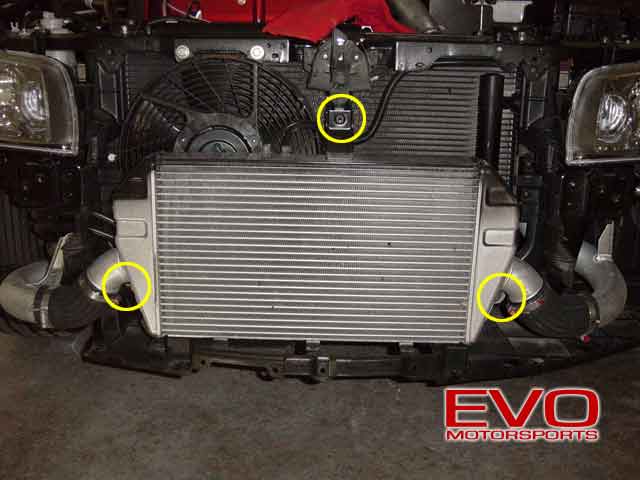
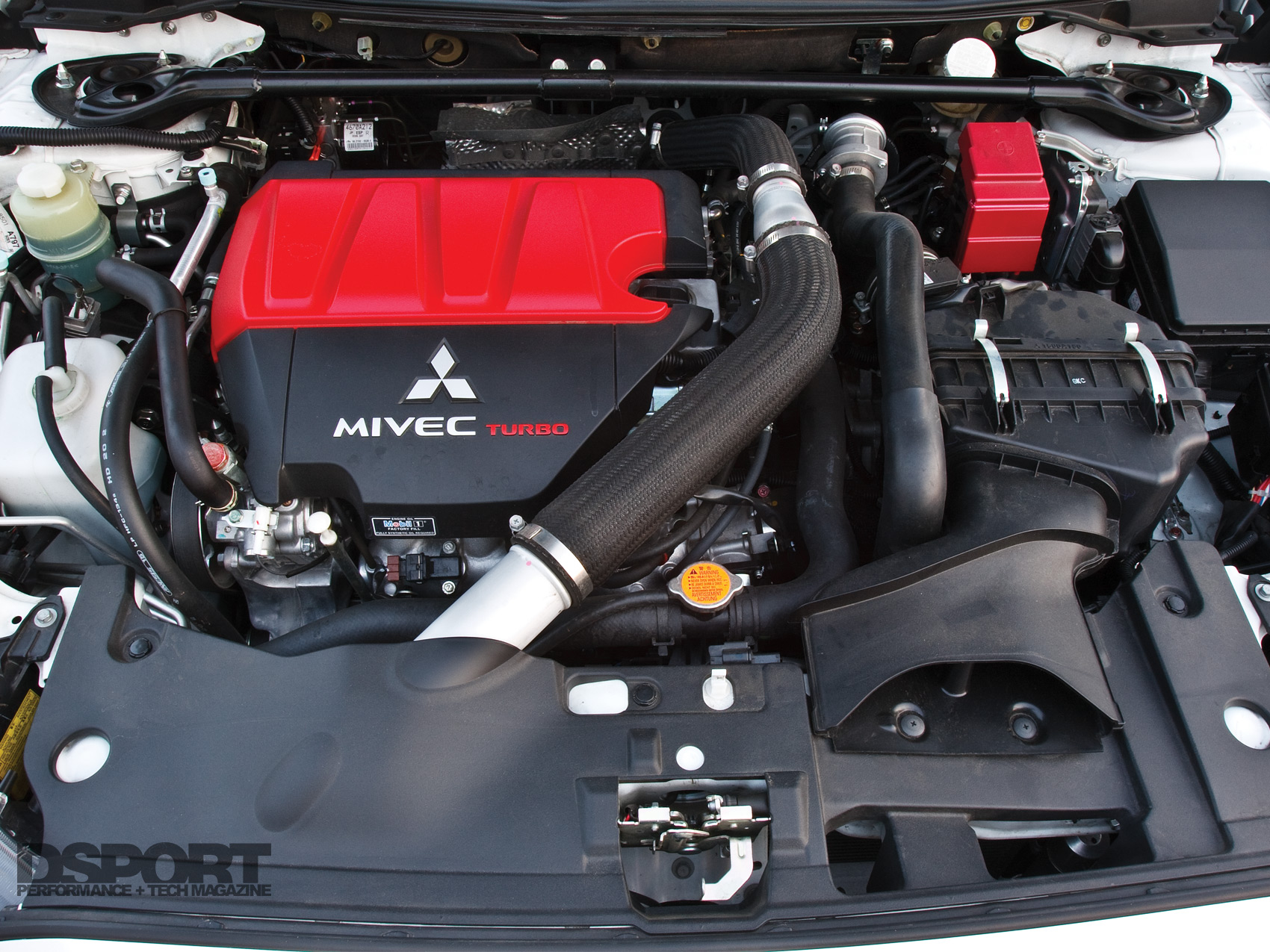
Mitsubishi Lancer Evo X, gap is at a minimum but intercooler mounts to chassis separately.
Mitsubishi Lancer Evo 8: huge gap between oem intercooler and radiator. Designed on purpose, turbocharger sits close to RH side of radiator. RH side has a chassis mounted pusher and LH radiator mounted pull fan.
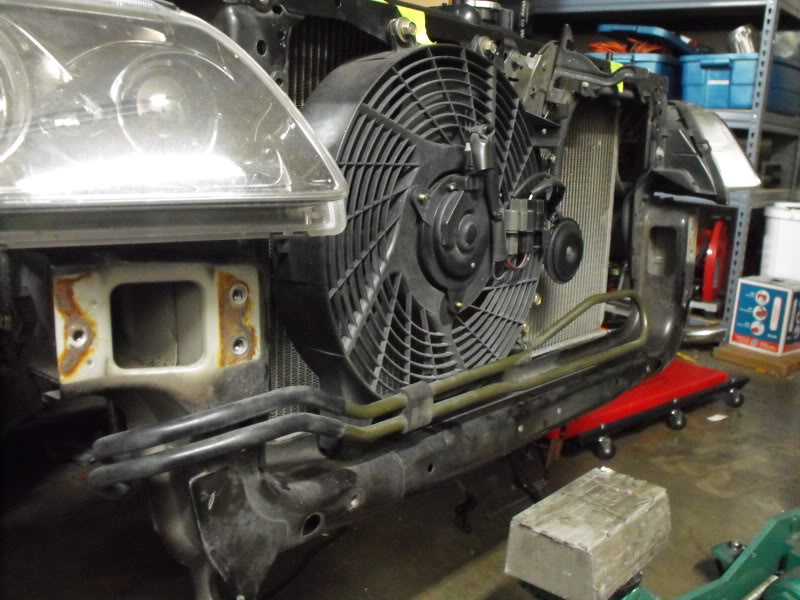
Typical aftermarket shroud to block gap between condenser and radiator:
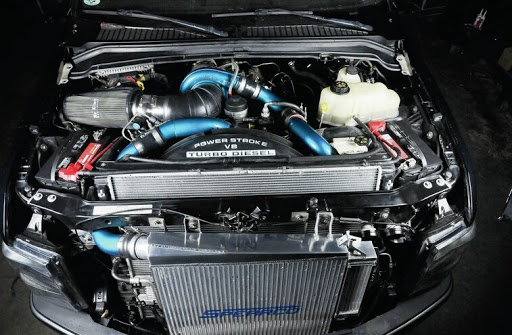
Ford F-series super duty 6.4 powerstroke, There is 6 different coolers on the front end from the factory:
If you just want better cooling while idling then just box the setup so all air is channeled through your air inlet. The support bar you have is a good mounting point. Make a plastic or aluminum panel to seal the top so it doesn't vent upwards, same thing for the bottom. It doesn't need to be perfect. The sides you can try rubber trim on the outside of the pipe.
I think everyone agrees that the condenser needs to be tight to the radiator since it needs airflow even while the vehicle is stopped. Since the FMIC doesn't really need that as much, is it actually better to have a gap between radiator and FMIC so that the radiator, fans and shroud don't limit the airflow that can travel through the FMIC at high speed and also allow for less air resistance for the fans to pull air through the radiator at low speed?
I think everyone agrees that the condenser needs to be tight to the radiator since it needs airflow even while the vehicle is stopped. Since the FMIC doesn't really need that as much, is it actually better to have a gap between radiator and FMIC so that the radiator, fans and shroud don't limit the airflow that can travel through the FMIC at high speed and also allow for less air resistance for the fans to pull air through the radiator at low speed?
No the exact opposite, the more gap between them the slower the air moves, the more resistance. The evo 8 literally has a fan between the radiator and intercooler because the gap is so large.
For a street/strip car, 1.5 inch gap will be fine if the radiator is big enough. If you are having cooling problems its a different story.
My STi had at least a 1.5" gap between the radiator and FMIC when I took off the condenser (when the car was still 4 cylinder). That is extremely common on WRX/STI/EVO and nobody except the time attack guys complain (600whp+ road racing).
edit: forgot to mention, but that setup doesn't have any gap on the bottom usually. the sides are blocked by the radiator support and the top usually everyone has some fancy shroud covering the rad support. The stock grille blocks some of the air on top.
Last edited by Sway Tale; Apr 20, 2021 at 05:42 PM.
Quote Sway Tale "You want as little gap as necessary but you also don't want them to touch each other."
Can you define necessary? 1/16", 1/8" or ~1"
Originally Posted by Sway Tale
No the exact opposite, the more gap between them the slower the air moves, the more resistance. The evo 8 literally has a fan between the radiator and intercooler because the gap is so large.
Looks like a couple points being presented here. If you desire to use the rad cooling fan to pull air through the FMIC, seal the perimeter between the 2 assemblies. If you want max air flow through both assemblies you can't stack cores against each other since the core spacing is different. A smoke flow test will reveal the issue. Typical gap between cores is no closer than 3/4". Seal between the assemblies is key for air to flow through and not around the 2nd core.
You want as little gap as necessary but you also don't want them to touch each other.
I mean as little as your construction allows you. Sometimes the gap between the cores is because the end tanks don't allow them to be closer than say for an example, 1 inch.
You have to take into account how its mounted. Specifically does your intercooler move around? Is it mounted solid or rubber hangers?
Most intercoolers are shorter than the radiator anyway, and plenty of airflow hits the radiator.
Up to 2" gap won't cause issues on common size radiators but you have to block most of the air from escaping between cores, that is important.
The fin density, the gap between cores, intercooler centered perfectly in the middle, whether its 1" or 1/16" is irrelevant......unless you're trying to set records in Global Time Attack, NHRA, or you are trying to do 140MPH+ for longer than 10 seconds. There are other things you can do to help cooling.
Cliff notes:
Large gaps are not needed at all, but its OK if you have to have them.
1 inch gap or less is great.
Up to 2" gap won't cause issues on common size radiators but you have to block most of the air from escaping between cores, that is important.
Can you explain why this is important? Doesn't a larger gap between the radiator and FMIC allow more air to be pulled through the radiator since there will be less resistance since the air doesn't all have to flow through the FMIC? Also won't a larger gap also have more flow across the FMIC and allow for more cooling of the FMIC at highway speeds since the air exiting the FMIC doesn't have as much resistance by forcing all of it to go through the radiator also?
The air slows down after the first core trying to fill up the gap between cores. Give air less space to fill up, a large gap just cause the air to go around FMIC. Resistance will force the air into a lower pressure zone, which is more open space in this case.
I don't mean the small gap between them will keep the air from escaping. I mean around the whole stack, you want to put the cores inside a tunnel. Force the air to go through a core and its only exit is another core.
If you can't tunnel it then keep gap at a minimum.
6 Common C5 Corvette Failures and What's Involved In Repairing Them
Slideshow: From wobbling harmonic balancers to failed EBCMs, these are the issues that define long-term C5 ownership and what repairs typically involve.
Retro Modern Bandit Pontiac Trans AM Comes With Burt Reynolds' Autograph
Slideshow: A modern Camaro transformed into a retro icon, this limited-run "Bandit" build blends nostalgia with brute force in a way few revivals manage.
Top 10 Greatest Cadillac V Series Performance Models Ever, Ranked
Slideshow: Cadillac didn't just crash the high-performance luxury vehicle party, it showed up loud, supercharged, and occasionally a little unhinged...
Coachbuilt N2A Anteros Is an LS2-Powered C6 Corvette In Italian Clothes
Slideshow: A one-off sports car that looks like a vintage Italian exotic-but hides a C6 Corvette underneath-just sold for the price of a new mid-engine Corvette.